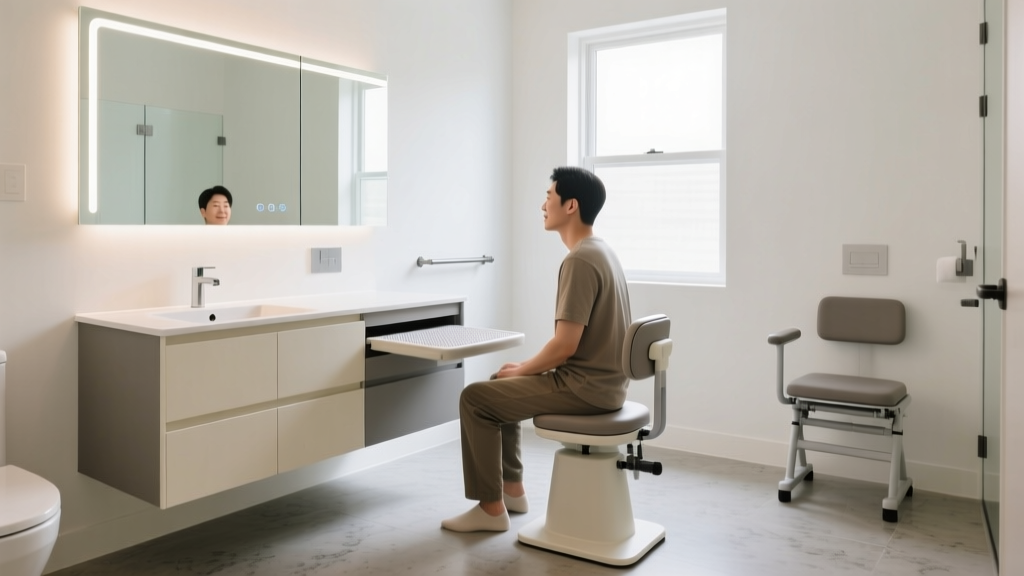
Accessible Bathroom Vanities: Seated & Adjustable for 2026
The Vanity as Independence Station
The bathroom vanity is where daily self-care happens — brushing teeth, washing face, applying medication, grooming. For people with limited mobility or who use wheelchairs, a standard 36-inch vanity can be a daily obstacle. The good news is that accessible vanity design has evolved far beyond institutional-looking installations. Modern accessible vanities are genuinely beautiful while solving real functional problems.
Height Options That Work
Standard vanity height is 36 inches. For aging-friendly design, consider two alternatives:
- Comfort height (34 inches) — Slightly lower than standard, reducing shoulder strain for shorter users and those with limited arm reach. This works for most standing users
- Seated height (28-32 inches) — Designed for use from a seated position, either on a stool or wheelchair. The knee space underneath allows a wheelchair user to roll in close
The ideal solution for couples with different needs is a dual vanity with one standard-height sink and one seated-height sink. This looks intentional and designer — not medical.
Open Vanity Design for Wheelchair Access
An open vanity (no cabinet doors below the sink) allows wheelchair users to roll underneath. The key design elements:
- Knee clearance — Minimum 27 inches high, 30 inches wide, and 17 inches deep under the counter
- Insulated pipes — Hot water pipes under the sink must be insulated or enclosed to prevent leg burns
- Shallow sink basin — 5-6 inches deep rather than the standard 8 inches, making it easier to reach the faucet and basin from a seated position
Hide the open space with a decorative skirt or curtain panel if you prefer a more finished look. Or leave it open and style the exposed plumbing with a beautiful pipe cover in brushed brass or matte black.
Smart Storage Solutions
Accessible storage means everything is reachable without bending, stretching, or standing on tiptoes:
- Pull-out organizers — Full-extension drawer slides bring contents to you rather than requiring you to reach into deep cabinets
- Tilt-out trays — The false drawer front below the sink becomes functional storage for small items
- Side-mounted towel bars — Reachable from a seated position, unlike bars mounted on distant walls
- Open shelving at seated height — Daily-use items visible and accessible without opening doors
Faucet and Hardware Choices
Arthritis and reduced grip strength make standard faucet handles difficult. The best options:
- Single-lever faucets — Operate with the back of the hand, wrist, or even elbow
- Touch-activated faucets — A tap anywhere on the fixture turns water on/off
- Motion-sensor faucets — Completely hands-free operation
Pair with D-shaped cabinet pulls (easier to hook fingers through) rather than small knobs that require pinch grip.
Making It Beautiful
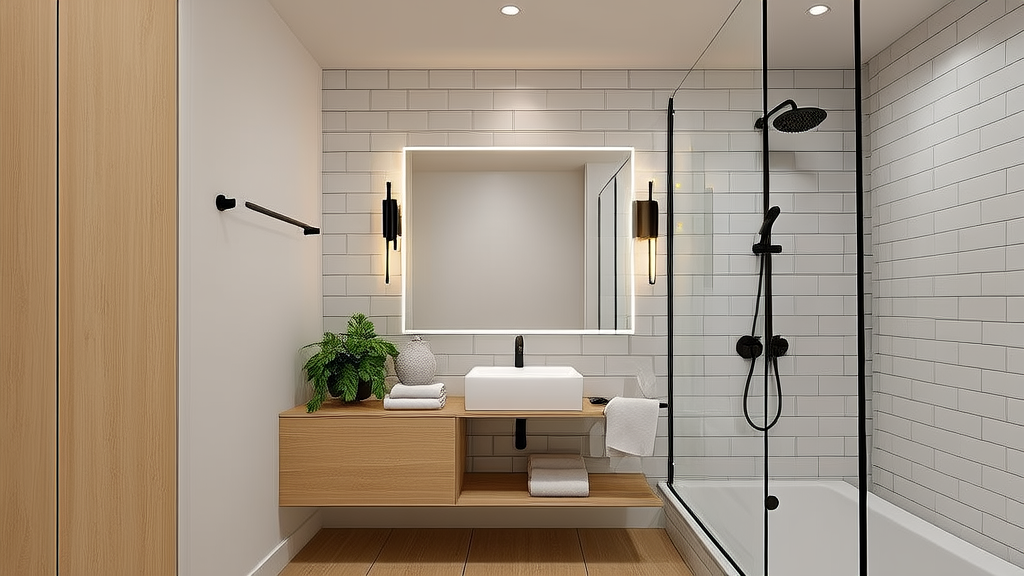
Accessible vanities look best when they're treated as design features, not compromises. A floating walnut vanity at seated height with a vessel sink, wall-mounted faucet, and brass hardware is genuinely more interesting than a standard builder-grade vanity. The accessibility features become the design statement.
More Articles
 12 Small Bathroom Storage Ideas for 2026 (No Renovation!)
 Smart Materials for Kitchen Countertops & Cabinets 2026
 Best Family Bathroom Tiles for Kids & Water in 2026
 Bathroom Tile Trends 2026: What Designers Pick
 Bathroom Mirror Ideas That Transform Spaces
 Freestanding Bathtub Buying Guide (2026)
 Best Bathroom Flooring Options Ranked
 Accessible Bathroom Design That Feels Luxurious
 Bathroom Remodel: Budget-Smart Decisions
 How to Choose Homes: A Data-Driven Guide