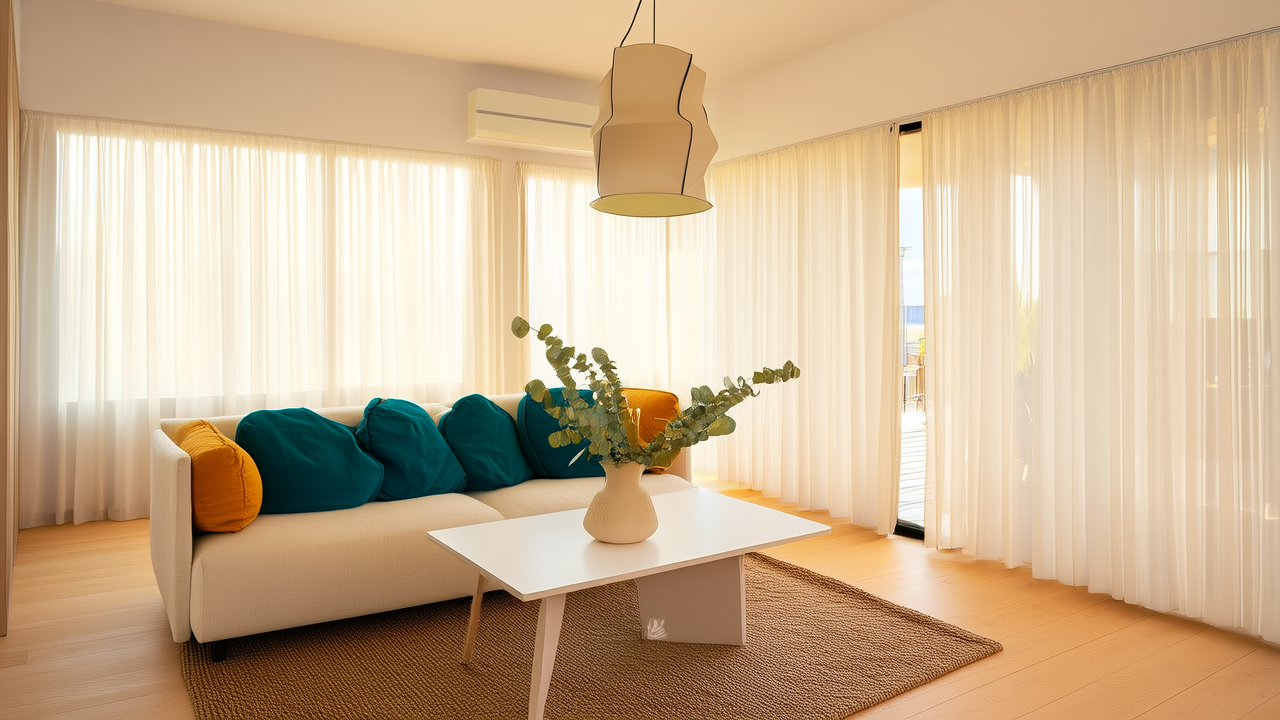
Living Room Trends 2026: Modular & Healthy Design
Alternatives Trends 2026: A Practical Overview
Alternatives trends in 2026 point toward living rooms that do more with less: modular seating, healthier materials, adaptable lighting, and design choices that support work, rest, and hosting without clutter. The movement is not a single style but a set of practical swaps: ceramic-coated textiles for washability, FSC-certified oak instead of fast furniture, 3000K dimmable lamps instead of harsh overhead light, and 8-foot sofas with reversible chaise modules instead of fixed layouts. This article maps the most useful alternative directions for small apartments, family homes, and shared households, using real product examples from IKEA, West Elm, Article, Sabai, Herman Miller, CB2, and Crate & Barrel, plus measurements and performance data you can apply immediately.
For living room design, alternatives means choosing a solution that replaces a conventional assumption. Instead of buying one large sectional, you buy three or four modules that can be rearranged when the household changes. Instead of a glossy laminate bookshelf that yellows, you choose powder-coated steel and FSC-certified wood. Instead of one ceiling fixture that flattens the room, you use layered lighting at 2400K to 3000K. The 2026 buyer is not chasing a single aesthetic; they are chasing flexibility, durability, lower maintenance, and spaces that remain useful after a move, a work-from-home shift, or a new baby.
Alternative Materials Replace Single-Purpose Finishes
The first major alternatives trend in 2026 is material substitution. Designers are moving away from surfaces that look finished but fail in daily life. A white boucle sofa may photograph well, but it stains quickly in a home with children or pets. A high-gloss oak dining table may look luxurious, but it shows fingerprints and scratches under a 300-lux reading lamp. The alternative is not plainness; it is engineered practicality. Look for performance fabrics, low-VOC finishes, recycled substrates, and materials that can be repaired or replaced in parts rather than thrown out.
Textiles are leading this shift. Brands such as West Elm, Crate & Barrel, Pottery Barn, Loom, and Parachute now offer stain-resistant, washable, or tightly woven upholstery fabrics that survive 30,000 Wyzenbeek double rubs, a useful benchmark for residential durability. For homes with dogs and cats, ceramic-coated or solution-dyed acrylic textiles are stronger alternatives to delicate linen. For renters and small-space dwellers, removable covers are more valuable than exotic fibers because they can be laundered at 30 degrees Celsius without shrinking. A sofa cover that washes well is often a better long-term design choice than a sofa that looks expensive but cannot be cleaned.
Hard materials are also changing. Countertop and console brands use Paperstone, Caesarstone, Cambria, and compact laminate options that resist heat, moisture, and staining. In living rooms, the practical alternative to particleboard is plywood or solid wood with a water-based topcoat. Paperstone is made from recycled paper and resin and can be sealed like stone, while many compact laminates are thinner than 2.5 millimeters but highly scratch-resistant. For shelves, powder-coated steel from brands like CB2, Article, and IKEA offers a lower-maintenance alternative to veneer that chips at edges.
- Choose upholstery rated for 30,000 Wyzenbeek double rubs or higher for family rooms.
- Prefer water-based polyurethane or hardwax oil finishes over solvent-heavy lacquer when indoor air quality matters.
- Look for GREENGUARD Gold or equivalent certifications for mattresses, sofas, and storage pieces sold near sleeping or resting areas.
- Use FSC-certified wood or certified recycled fiberboard for bookcases, coffee tables, and sideboards.
- Swap leather-only surfaces for textile plus leather combinations if the household needs washable elements.
Wood alternatives deserve special attention in 2026. Solid oak remains desirable, but it is heavy and expensive to move. A better alternative for apartments is engineered wood with a real wood veneer over plywood, especially when it is labeled CARB Phase 2 compliant or lower. For rustic looks, reclaimed elm from brands such as Sabai, Avocado, and Floyd provides a circular-economy option. For modern interiors, heat-treated ash and bamboo offer stable alternatives to tropical woods. The key is to ask whether the material can be repaired, refinished, or disassembled, because a living room that changes every few years should not depend on furniture that can only be discarded.
Finish selection is another alternative trend. Matte and satin surfaces are replacing mirror-like gloss because they hide wear under natural daylight. A living room table finished in a 15 percent sheen or lower will show fewer scratches than one at 80 percent sheen. For floors, wide-plank engineered wood with a 3 millimeter wear layer is a practical alternative to solid hardwood in condos and rentals, where subfloor moisture and height restrictions can make solid boards risky.
Modular Furniture Becomes the Default Alternative
Modular furniture is the second big alternatives trend because it solves the problem of rooms that must change. A fixed 9-foot sectional may fill a living room once, but it fails when a desk is added, a child arrives, or the sofa needs to pass through a 30-inch doorway. In 2026, designers recommend modular systems that can be reconfigured into a 6-foot loveseat, an 8-foot sofa, an L-shape, or two facing chairs. This is not just for open-plan homes. It is essential for studios, small apartments, and households with irregular hosting schedules.
How to choose a modular system for a 12-foot living room
Start with circulation, not style. In a 12-foot by 15-foot living room, leave at least 36 inches for a main walkway and 18 inches between a sofa and coffee table. A modular sectional with 32-inch deep seats and 18-inch seat height works well because it allows the feet to rest without pressure. If the room also needs a desk, choose modules with square arms rather than rolled arms, because square arms save 2 to 4 inches of width per side. Brands such as IKEA with Söderhamn, Article with Sven, Sabai with The Essential, Burrow with Nomad, and West Elm with Harmony offer modular or semi-modular options that can be scaled to small and medium rooms.
- Measure the doorway width, stair landing, and elevator corner radius before ordering any module.
- Sketch three layouts: a straight sofa for movie nights, an L-shape for conversation, and two separate chairs for work breaks.
- Choose a base with exposed legs at least 6 inches high so a robot vacuum can pass underneath.
- Prioritize replacement parts: covers, feet, foam cushions, and connectors should be available separately.
- Test the seat depth at home; 21 to 23 inches works for many adults, but taller users often need 24 inches.
Storage alternatives also matter. A modular sofa with ottoman storage can replace a separate trunk or media bench. For a 10-foot wall, a 60-inch ottoman with 15 inches of internal height can hold board games, extra blankets, and laptop chargers without becoming a visual mass. Instead of buying one coffee table, use two smaller tables: a 24-inch square and a 16-inch round. They can be pushed together for guests or separated for kids doing homework. This alternative layout reduces the feeling of a large furniture block in the center of the room.
Modular shelving is another 2026 priority. Systems such as String, IKEA Kallax, CB2, and Vitra Eames Shelf Units can grow as books, records, plants, or equipment accumulate. The alternative to a custom built-in is a wall-mounted modular unit that leaves 2 inches of breathing room at the floor. If you live in a rental, use adjustable cleats and wall anchors rated for the drywall type rather than heavy-duty screws that may violate lease terms. Modular shelving also supports a trend away from all-white minimalism toward curated display, where open books, framed prints, and ceramics become part of the room rather than clutter.
Lighting Alternatives Move Beyond Overhead Fixtures
Lighting is one of the fastest ways to create an alternatives-based living room because it changes the room without replacing furniture. The conventional approach is one bright ceiling fixture, but in 2026 designers prefer layered lighting: ambient, task, and accent sources at different heights. A 12-foot ceiling can hold a flush mount, but the room feels better when a floor lamp at 60 inches, a table lamp at 28 inches, and a wall sconce at 66 inches work together. The goal is to avoid the flat, shadowless look that makes a living room feel institutional.
The 3000K rule for living rooms
Use 2700K to 3000K bulbs for seating areas and 3500K to 4000K for reading or craft tasks. For dimmable fixtures, choose bulbs rated for 1000 lumens or more in a small living room, but dim them to 200 to 400 lumens for evening conversation. High CRI bulbs, preferably 90 or above, make wood, textiles, and skin tones look natural. Brands such as Philips Hue, Loom, Menu, Hay, Govee, and Crate & Barrel offer smart and non-smart options that support color temperature tuning. A smart bulb with adaptive scenes can be an alternative to rewiring a room because it lets a user switch from a 3000K relaxing mode to a 4000K task mode without changing fixtures.
Natural light alternatives are important for rooms with poor orientation. If north-facing windows only provide 500 lux on an overcast day, add warm-toned reflected surfaces. A matte white wall with an LRV near 70 can bounce light deeper into the room than a dark wall with an LRV below 20. Instead of heavy blackout curtains, use sheer linen curtains from Parachute, Pottery Barn, or West Elm at 96 inches for an 8-foot ceiling. For privacy, add a 24-inch roman shade under the curtain rather than covering the entire window with a dark roller blind. These alternatives make small rooms feel larger while preserving daylight.
Color and Pattern Alternatives for 2026
Color alternatives in 2026 are less about one trending paint shade and more about creating mood without permanent commitment. Paint is still the most affordable renovation, but renters and frequent movers often prefer wall-safe alternatives: peel-and-stick wallpaper, large canvases, fabric panels, and removable decals. Brands such as Spoonflower, Tempaper, and Brewster offer patterned options that can be repositioned. For a living room, pattern should work at three distances: bold at 10 feet, readable at 3 feet, and calm at 12 inches. That last point matters because people spend close time on sofas and floors.
Renters can use temporary pattern instead of paint
Neutral palettes are evolving. Instead of stark white, designers use warm whites, clay, oatmeal, sage, and deep marine tones. A living room can use a base wall in Benjamin Moore White Dove with an LRV around 85, an accent chair in Sherwin-Williams Sea Salt with an LRV near 62, and a bookshelf painted in Benjamin Moore Hale Navy with an LRV around 8. This combination feels layered without requiring expensive furniture. For renters, the alternative is to paint furniture legs and small objects rather than walls. A 24-inch side table painted in Farrow & Ball Inchyra Blue can anchor a corner without violating a lease.
| Color alternative | Best use | Approximate LRV | Brand example |
|---|---|---|---|
| White Dove | North-facing rooms needing warmth | 85 | Benjamin Moore |
| Agreeable Gray | Open-plan rooms with gray floors | 60 | Sherwin-Williams |
| Sea Salt | Family living rooms with wood accents | 62 | Sherwin-Williams |
| Hale Navy | Accent wall or built-in bookcases | 8 | Benjamin Moore |
| Inchyra Blue | Furniture frames and small tables | 10 | Farrow & Ball |
Pattern alternatives also include texture. A living room with low contrast can feel flat, especially under LED lighting. Instead of adding loud art, use pattern through woven throws, ribbed ceramic lamps, fluted side tables, and boucle accent pillows. The 2026 approach is to keep color controlled while increasing tactile variety. A 50 by 60 inch handtufted wool rug from Ruggable, Nourison, or West Elm can define a seating area better than a painted stripe on the wall. If the rug has a subtle geometric pattern, it will not compete with television or fireplace views.
For smaller apartments, the alternative to a dark dramatic room is a tonal scheme with one saturated object. A mustard leather ottoman, a cobalt ceramic vase, or a forest-green velvet chair can create personality without overwhelming a 10-foot wall. This is especially useful in shared living rooms where two people may disagree on style. A bold accessory is easier to replace than a painted accent wall, and it can be moved to a bedroom or office when the household changes.
Workspace and Wellness Alternatives in Shared Living Spaces
Work and wellness have permanently altered living room expectations. The old model assumed a living room was only for television and conversation. In 2026, it may also be a desk zone, meditation corner, or recovery space. The alternative is not to fill the room with office equipment but to choose furniture that can transition. A 30-inch deep writing desk can be 36 inches tall for standing posture and still look residential when paired with a soft chair. Brands such as Herman Miller, Knoll, Vitra, Muuto, and Floyd offer work pieces that do not look like cubicle furniture.
Designing a desk corner that feels residential
Acoustic alternatives matter as much as visual ones. A living room with bare walls, hard floors, and glass can raise noise levels enough to disrupt calls. Add a 40-inch acoustic panel behind a monitor, a thick wool rug, and upholstered seating. If the room is 15 by 18 feet, one 24 by 48 inch panel can reduce flutter echo noticeably. For renters, use freestanding screens or bookcases filled with books instead of drilling into walls. A bookcase with 12-inch deep shelves becomes both storage and sound diffusion.
Wellness alternatives also include air and posture. ASHRAE ventilation standards and indoor air quality certifications encourage designers to choose low-emission materials and better airflow. A room that feels cozy should not feel stale. Use a window-rated ventilation strategy, a HEPA air purifier sized for the floor area, and plants only where they are manageable. For posture, pair a living room desk with a chair that offers adjustable lumbar support or a footrest raised 4 to 6 inches. If the sofa is used for work, add a firm 18 by 24 inch back cushion at the lower spine; the sofa seat height should remain around 18 inches, but the back support needs to be separate and replaceable.
A 2026 Alternatives Shopping List for Living Rooms
When shopping, think in swaps rather than purchases. The best living room alternatives are pieces that improve daily friction: less vacuuming under low furniture, fewer stains on upholstery, less glare during video calls, and easier rearrangement when the room must serve a new purpose. A practical 2026 living room should have one anchor seating piece, one flexible surface, one lighting layer, one storage system, and one wellness element. That keeps the room functional without turning it into a showroom.
For budget-conscious households, the alternative is to buy fewer but better items. A $900 modular sofa with replaceable covers may outperform a $500 sectional that cannot be moved through a stairwell. A $200 dimmable floor lamp with high CRI bulbs may improve the room more than a $400 decorative fixture with poor output. A $150 rug pad can extend the life of a $600 rug and prevent slipping. In small spaces, every purchase should answer a question: Can it be cleaned? Can it be moved? Can it be repaired? Can it be repurposed?
- Anchor seating: a modular sofa or loveseat with removable covers and exposed legs.
- Flexible surfaces: two coffee tables, a nesting side table, or an ottoman with storage.
- Lighting: one floor lamp, one table lamp, and one dimmable bulb set with 3000K and CRI 90 options.
- Storage: modular shelving, closed baskets, and a media console with cable access.
- Wellness: an air purifier sized for 250 to 400 square feet, acoustic panels, and a washable wool rug.
The strongest alternatives trend for 2026 is not a specific look. It is a design method that treats the living room as a system. The room should absorb change without being rebuilt. Materials should support health and maintenance. Furniture should scale. Lighting should adapt. Color and pattern should be adjustable. Work and rest should coexist without visual clutter. When those swaps are made together, the living room becomes a long-term solution rather than a seasonal styling exercise.
More Articles
 Kitchen Essentials 2026: Smart Layouts & Must-Haves
 Layered Lighting for Living Rooms That Work
 Best Color Guides for Smart Living Rooms
 Family-Proof Living Room Layouts That Stay Stylish
Living Room Color Blocks: Bold Pairings That Work
 Headboard Buying Checklist: 12 Must-Check Factors for 2026
 7 Proven Ways to Mix Vintage & Modern Furniture in 2026
 Living Room Ideas 2026: Room-by-Room Design Checklist
 Living Room Shelf Styling: Display Done Right
 TV Wall Units: Style Meets Storage