# Walk-In Tub vs. Curbless Shower: Which Aging-in-Place Bathroom Upgrade Is Right for You?
When planning a bathroom renovation for aging in place, the two most common upgrades are walk-in tubs and curbless (zero-threshold) showers. Both solve the fundamental problem of stepping over a tub wall, but they serve different lifestyles, budgets, and physical needs. Here's an honest comparison to help you decide.
## Walk-In Tubs: The Deep Soak Solution
Walk-in tubs feature a watertight door that opens at floor level, allowing you to step in without lifting your leg over a traditional tub wall. Once seated inside, the door seals and the tub fills with water.
### Advantages
**Therapeutic soaking:** Most walk-in tubs include jets (hydrotherapy or air) that provide pain relief for arthritis, circulation issues, and muscle stiffness. If you value soaking as part of your health routine, a walk-in tub delivers this benefit.
**Familiar routine:** For people who've taken baths their entire lives, a walk-in tub maintains that habit safely. The transition from a standard tub feels natural.
**Seated bathing:** The built-in seat means you never have to stand on a slippery surface or lower yourself to the tub floor.
### Disadvantages
**Fill-and-drain wait time:** You must sit inside the tub while it fills (15-20 minutes for a full tub) and wait for it to drain before the door opens. This can feel cold and confining.
**Higher cost:** Walk-in tubs range from $2,500-$8,000 for the unit alone, plus $1,500-$5,000 for installation. Total: $4,000-$13,000.
**Space requirements:** Walk-in tubs are typically larger than standard tubs. They may not fit in small bathrooms without removing other fixtures.
**Resale perception:** Some buyers view walk-in tubs as a sign of an "elderly home" and factor in removal costs when making offers.
## Curbless Showers: The Modern Accessibility Standard
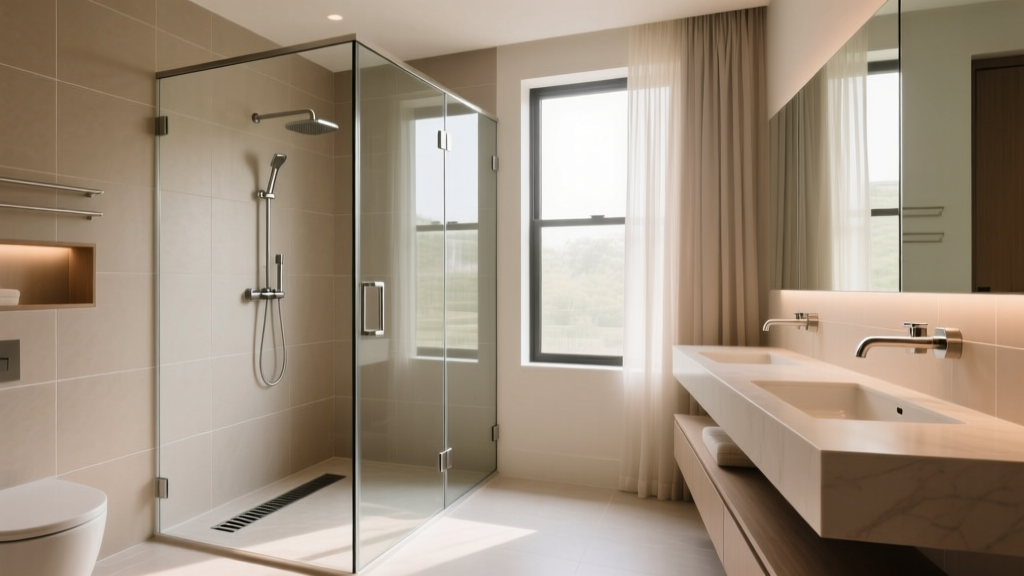
Curbless (zero-threshold) showers have no lip or step at the entrance. The floor slopes gently toward the drain, and the shower area is flush with the bathroom floor.
### Advantages
**Immediate access:** Step in and turn on the water. No filling, no waiting, no sitting in cooling water while you wait to drain.
**Universal design appeal:** Curbless showers look modern and spa-like. They appeal to all ages and abilities, not just older adults. This helps with resale value.
**Wheelchair and walker compatible:** A properly designed curbless shower can accommodate a shower chair, wheelchair, or walker without modification.
**Faster daily use:** Most people shower in 5-10 minutes. A curbless shower supports quick, efficient bathing that fits modern routines.
### Disadvantages
**No soaking option:** If you value baths for relaxation or therapy, a curbless shower eliminates that option entirely.
**Water management:** Poor design leads to water escaping the shower area. Proper slope, drain placement, and a shower curtain or glass enclosure are critical.
**Installation complexity:** Converting to a curbless shower often requires lowering the subfloor or raising the bathroom floor. This is a significant structural modification.
**Cost:** $5,000-$15,000 for a professionally installed curbless shower, depending on structural modifications needed.
## Head-to-Head Comparison
| Factor | Walk-In Tub | Curbless Shower |
|--------|-------------|-----------------|
| Entry ease | Door opens at floor level | Zero threshold, step right in |
| Daily speed | 30-45 minutes (fill, soak, drain) | 5-15 minutes |
| Therapeutic value | High (jets, heat, soak) | Low (unless steam shower added) |
| Wheelchair access | Difficult (door swing, confined space) | Excellent |
| Installation cost | $4,000-$13,000 | $5,000-$15,000 |
| Space needed | 30x52 inches minimum | 36x60 inches recommended |
| Resale impact | May deter some buyers | Appeals to broad market |
| Water usage | 40-50 gallons per use | 15-25 gallons per use |
| Maintenance | Door seal cleaning, jet flushing | Grout and glass cleaning |
## Who Should Choose a Walk-In Tub?
- You take baths regularly for pain management or relaxation
- You have good upper body strength (to operate the door and controls)
- Your bathroom has enough space for a larger tub footprint
- You don't use a wheelchair or walker
- You plan to stay in this home long-term (less concern about resale)
## Who Should Choose a Curbless Shower?
- You prefer quick showers over baths
- You use or may need a wheelchair, walker, or shower chair
- Resale value is a consideration
- Your bathroom is small (curbless showers can fit in tighter spaces)
- You want a modern, spa-like aesthetic
## The Hybrid Option: Tub-Shower Combo with Low Threshold
If you can't decide, consider a low-threshold tub-shower combination. These feature a tub wall that's only 8-12 inches high (vs. 14-20 inches standard) with a shower setup above. Add a bath seat and grab bars for safety.
**Cost:** $2,000-$5,000—significantly less than either a walk-in tub or curbless shower.
**Best for:** People who want both options but have a limited renovation budget.
## Essential Add-Ons for Either Choice
Regardless of which option you choose, include these safety features:
**Grab bars:** Install at least two, positioned at seated and standing heights. Modern grab bars come in finishes that match your fixtures—they don't have to look institutional.
**Non-slip flooring:** Textured tile or applied non-slip treatment. Wet smooth tile is dangerous at any age.
**Thermostatic shower valve:** Prevents scalding by maintaining consistent water temperature even when someone flushes a toilet or runs a dishwasher.
**Adequate lighting:** Recessed lighting in the shower/tub area plus task lighting at the vanity. Consider motion-sensor nightlights for nighttime bathroom visits.
**Shower seat:** Even if you don't need one now, having a built-in or fold-down seat adds safety and comfort for the future.
## Financing and Insurance
Medicare does not cover walk-in tubs or curbless showers, considering them home modifications rather than medical equipment. However:
- **Medicaid waivers:** Some states cover bathroom modifications through HCBS waivers
- **VA benefits:** Veterans may qualify for HISA or SHA grants
- **Tax deductions:** Medical expense deductions may apply if prescribed by a doctor
- **Local programs:** Area Agencies on Aging often have grants for home modifications
## Making the Decision
Ask yourself these questions:
1. Do I bathe or shower more often? (Choose accordingly)
2. Do I use any mobility aids now or expect to in 5 years? (Curbless shower wins)
3. Is resale value important? (Curbless shower wins)
4. Do I have chronic pain that benefits from soaking? (Walk-in tub wins)
5. What's my budget? (Both are expensive, but walk-in tubs are slightly cheaper on average)
Most aging-in-place professionals recommend curbless showers as the default choice because they serve the widest range of needs and appeal to the broadest market. But if soaking is central to your wellness routine, a walk-in tub is the right call.
## Final Thought
The best aging-in-place bathroom is one you'll actually use comfortably every day. Don't choose based on what sounds best in theory—choose based on your actual daily habits. If you haven't taken a bath in years, a walk-in tub will become an expensive storage shelf. If you dread standing in the shower, a curbless shower won't change that.
Match the renovation to your life, not to a checklist.