# Bedroom Closet Design for Limited Mobility: Pull-Down Rods and Open Shelving
A closet should make getting dressed easier, not harder. For anyone with limited mobility — whether from arthritis, a wheelchair, recovery from surgery, or natural aging — traditional closet designs create daily frustration. High rods, deep shelves, and dark corners turn a simple routine into an obstacle course. The solution is a closet designed around how your body actually works today.
## The Problems With Standard Closets
Most closets are designed for a 5'8" standing adult with full range of motion:
- **Hanging rods at 60-72 inches**: Unreachable from a seated position or with limited shoulder mobility
- **Shelves at 84 inches**: Impossible without a step stool (a fall risk)
- **Deep shelves (16-24 inches)**: Items in the back are invisible and unreachable
- **Floor-level storage**: Bending to reach shoes or bins is painful or impossible
- **Narrow doors (24-28 inches)**: Too tight for wheelchair or walker access
- **Poor lighting**: Dark closets make finding items difficult for aging eyes
Every one of these problems has an elegant solution that improves the closet for all users, not just those with mobility challenges.
## Pull-Down Hanging Rods: The Game Changer
### How They Work
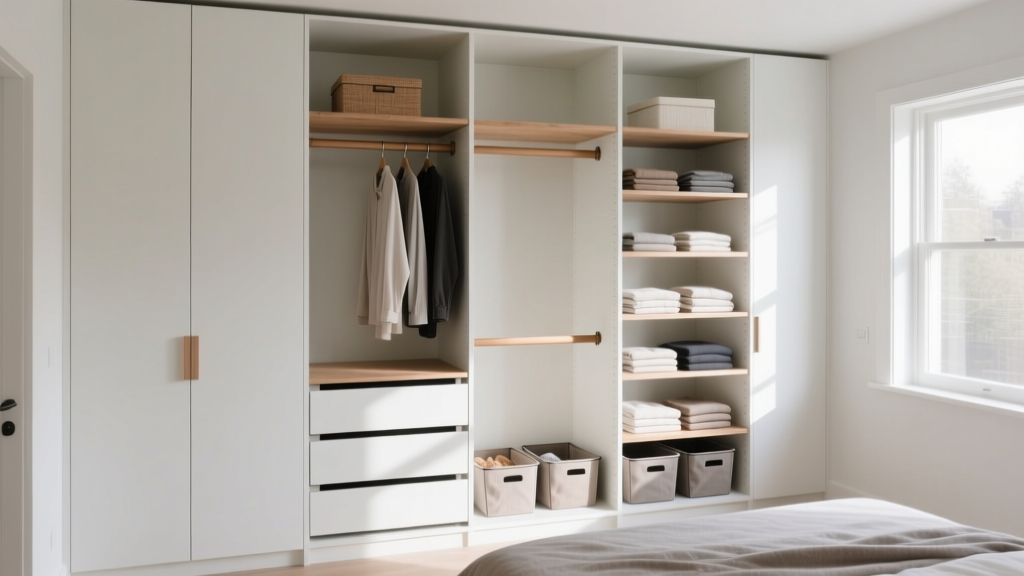
Pull-down rods mount at standard height (60+ inches) but feature a hydraulic or spring-loaded mechanism that lowers the entire rod to a comfortable reach height with a gentle pull. Once you've selected your garment, a light push returns the rod to its original position.
### Why They're Essential
- **Seated access**: The rod comes to you — no standing or reaching required
- **Shoulder-friendly**: Eliminates the overhead reaching that aggravates rotator cuff issues
- **Full visibility**: Lowered rod lets you see everything at eye level
- **Weight capacity**: Most support 30-50 pounds of clothing
- **Installation**: Retrofits into existing closets with standard mounting hardware
### Choosing the Right Pull-Down Rod
| Feature | Basic ($50-80) | Mid-Range ($80-150) | Premium ($150-250) |
|---------|---------------|--------------------|--------------------|
| Mechanism | Spring-loaded | Gas-assisted | Hydraulic smooth-close |
| Weight capacity | 25 lbs | 35 lbs | 50 lbs |
| Extension | 10 inches | 12 inches | 14 inches |
| Finish | Chrome | + Satin nickel, bronze | + Custom match |
| Width | 24-36 inches | 36-48 inches | Up to 60 inches |
**Pro tip**: Install two pull-down rods at different heights — one for shirts/jackets, one for pants. This doubles your hanging space while keeping everything within reach.
## Open Shelving: See Everything, Reach Everything
### Why Open Shelving Beats Closed Cabinets
For limited mobility users, closed cabinets create three problems:
1. **Door swing** requires clearance space and grip strength to open
2. **Hidden contents** means you can't see what's inside without opening each door
3. **Deep shelves** push items to the back where they're unreachable
Open shelving eliminates all three:
- **No doors to manage**: Everything is visible and accessible
- **Shallow depth** (8-12 inches): Everything is within arm's reach
- **Adjustable heights**: Shelves can be positioned at your optimal reach zone
### The Optimal Shelf Layout
**Comfort zone** (24-48 inches from floor): This is your prime real estate — the area reachable from both standing and seated positions without stretching or bending.
Place here:
- Daily wear items (folded shirts, sweaters, jeans)
- Undergarments and socks in open bins
- Accessories (belts, scarves, jewelry) in shallow trays
**Reach zone** (48-60 inches): Accessible when standing, with pull-down assist when seated.
Place here:
- Pull-down hanging rods
- Seasonal items in labeled baskets
- Shoes on angled shoe shelves
**Storage zone** (60+ inches): For items you use infrequently.
Place here:
- Off-season clothing in clear bins
- Travel accessories
- Items a caregiver or family member can retrieve
### Shelf Materials That Work
- **Melamine shelving**: Affordable, smooth surface, easy to clean
- **Wire shelving with liners**: Ventilated, lightweight, add shelf liners for small items
- **Solid wood floating shelves**: Beautiful, sturdy, customizable depth
- **Adjustable track systems**: Reposition shelves as your needs change without tools
## Beyond Rods and Shelves: Complete Accessible Closet Solutions
### Shoe Storage That Doesn't Require Bending
- **Pull-out shoe racks**: Mount at 12-24 inch height, slide out for easy access
- **Angled shoe shelves**: Display shoes at a visible angle without bending
- **Door-mounted organizers**: Hang on the closet door at comfortable height
- **Rotating shoe towers**: Spin to find what you need without walking or reaching
### Accessory Storage at Fingertip Level
- **Pull-out belt racks**: Mount at waist height, slide out to see all belts
- **Jewelry drawer inserts**: Shallow drawers with divided compartments
- **Hook strips on walls**: For bags, robes, and accessories at multiple heights
- **Magnetic strips**: For metal accessories (hair clips, watches, keys)
### Seating in the Closet
A built-in bench or ottoman in the closet serves multiple purposes:
- **Dressing seat**: Put on shoes and socks without balancing
- **Rest spot**: Take a break during the dressing process
- **Storage**: Lift-top bench hides off-season items
- **Transfer point**: For wheelchair users, a bench at transfer height (18-20 inches)
## Lighting: Because You Can't Use What You Can't See
### Layered Closet Lighting
- **Overhead LED panels**: General illumination (5000K daylight for true color rendering)
- **Under-shelf LED strips**: Eliminate shadows on each shelf level
- **Motion-activated lights**: Turn on when you enter, no fumbling for switches
- **Backlit hanging rods**: LED strips behind rods illuminate hanging garments
### Light Switch Placement
Install light switches at 36-42 inches from the floor (standard is 48 inches). This height works for standing adults, seated users, and children. Consider a motion sensor as primary activation with a manual switch as backup.
## Door and Entry Solutions
### Widen the Opening
If possible, widen closet doors to a minimum of 32 inches (36 inches preferred for wheelchair access). Options include:
- **Barn doors**: Slide sideways, require no swing clearance
- **Curtain panels**: Lightweight, easy to push aside, no hardware to manage
- **Pocket doors**: Disappear into the wall, full clearance when open
- **Bi-fold doors**: Fold to the side, require minimal effort
### Eliminate Thresholds
Remove any raised threshold between the bedroom and closet. A flush transition prevents tripping and allows wheelchair or walker access without bumps.
## A Sample Accessible Closet Layout
For a standard walk-in closet (6×8 feet):
**Left wall**: Double pull-down hanging rods (shirts above, pants below)
**Back wall**: Open shelving unit (12-inch depth, adjustable heights)
**Right wall**: Pull-out shoe rack below, open bins above
**Center**: Built-in bench with storage (18 inches high, 24 inches deep)
**Door**: Barn door on track, 36-inch opening
**Lighting**: Overhead LED panel + under-shelf strips + motion sensor
## Budget-Friendly Starter Upgrades
If a full closet renovation isn't in the budget, start with these high-impact changes:
1. **Install one pull-down rod** ($50-80) for daily-wear items
2. **Replace deep shelves** with shallow open shelving ($100-200)
3. **Add motion-activated LED lights** ($20-40)
4. **Lower existing rods** to 48 inches (free — just move the brackets)
5. **Add a freestanding bench** ($50-100) for seated dressing
Total investment: $220-420 for dramatically improved accessibility.
## Your Closet Should Work for You
Getting dressed shouldn't be a daily struggle. A thoughtfully designed accessible closet gives you independence, reduces fall risk, and actually looks more organized and intentional than a traditional closet. Pull-down rods and open shelving aren't compromises — they're upgrades that everyone in the household will appreciate.
 Essential for World: The Global Bedding Standards That Define Sleep Equity and Human Dignity
 Bedroom Reading Nook Ideas You'll Actually Use
 Bedroom Inspiration FAQ Answered: Real Solutions for Comfort, Style, and Function
 Bedroom Color Palettes for Better Rest (2026)
 Studio Kitchens Essentials: Smart, Space-Smart Design for Compact Living
 Cooling Bedroom Makeover: Colors, Textiles, and Airflow for Better Summer Sleep
 Bedroom Furniture Layout: Optimal Arrangement (2026)
 Guest Bedroom Essentials: The Complete Host Checklist
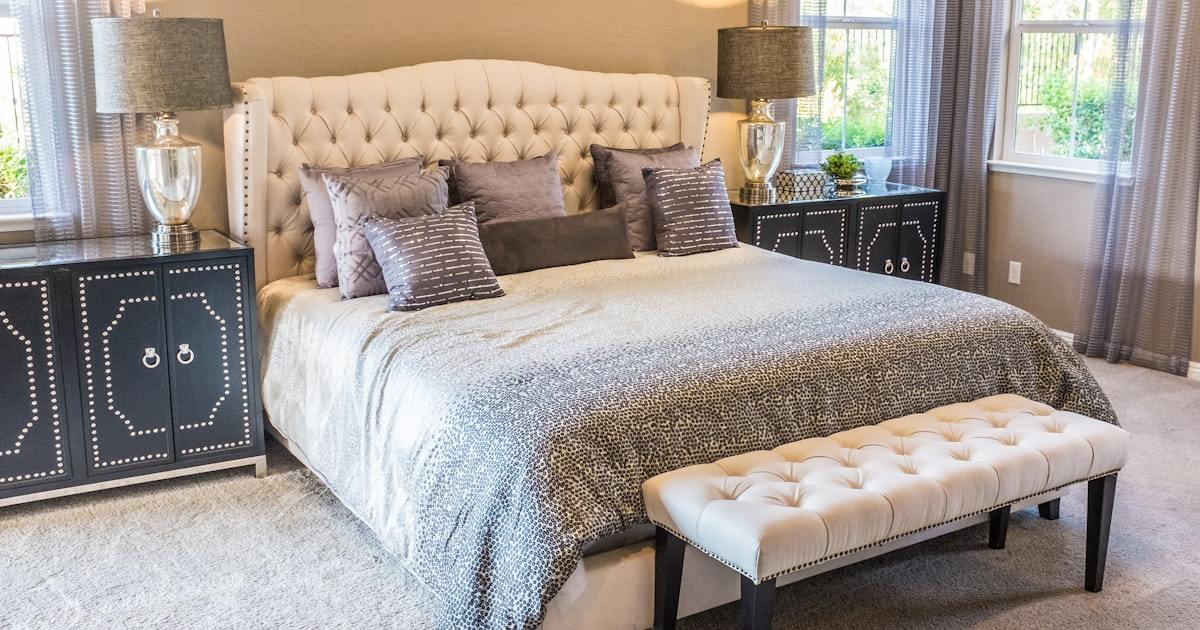 Ageless Bedroom Design: Comfort and Accessibility at Every Stage
 Precision for Colors: How Exact Hue, Value, and Chroma Transform Bedroom Comfort and Sleep Quality