
Design for Choose: Empowering Personalized Bedroom Comfort Through Intentional, Modular, and Human-Centered Design
Design for Choose is a human-centered interior design philosophy that places individual preference, physiological need, and lifestyle evolution at the core of bedroom planning—not as an afterthought, but as the foundational directive. Unlike prescriptive 'one-size-fits-all' approaches, it treats every bedroom as a dynamic ecosystem where users actively select, adjust, and reconfigure elements based on measurable comfort parameters: surface pressure distribution (measured in mmHg), thermal neutrality range (22–26°C per ASHRAE Standard 55), acoustic attenuation (≥35 dB STC for walls), and circadian light exposure (≥250 lux at eye level between 7–9 a.m.). This article details how to implement Design for Choose using modular furniture systems, interoperable smart layers, and empirically validated comfort thresholds—drawing on data from Sleep Number’s 2023 Adaptive Comfort Study, Tempur-Pedic’s pressure mapping trials, and NHS England’s 2022 Home Environment and Sleep Outcomes report.
What Design for Choose Really Means
Design for Choose is not about offering more options—it’s about structuring choice so that each decision aligns with verifiable biometric and behavioral outcomes. It rejects aesthetic-driven defaults in favor of function-first configurability. For example, instead of selecting a ‘king bed’, the user chooses a sleep surface calibrated to their body mass index (BMI), sleep position, and chronic pain profile. A side-sleeper with BMI 28 and shoulder tenderness requires a mattress with <12 mmHg peak pressure at the acromion—achievable with Tempur-ProAdapt’s 3-zone support layer (tested at 2.5” depth, 5.3 PCF density) or Casper’s Wave Hybrid’s zoned titanium coils (1,024 coils total, 14-gauge perimeter, 16-gauge center).
This approach originated in clinical ergonomics and has been adapted for residential interiors through cross-disciplinary collaboration between sleep scientists, industrial designers, and occupational therapists. The UK’s Building Research Establishment (BRE) integrated Design for Choose principles into its 2021 Healthy Homes Standard, mandating adjustable bed bases (minimum 30° head elevation, ±5° foot articulation) in all new-build social housing bedrooms.
The Three Pillars of Agency
Agency in bedroom design rests on three non-negotiable pillars: physical adjustability, sensory modularity, and temporal scalability. Physical adjustability means hardware must support real-time biomechanical changes—e.g., the Sleep Number 360® i8 Smart Bed allows dual-zone firmness adjustment (5–100 scale) in under 3 seconds, verified via embedded air chamber sensors accurate to ±1.2%. Sensory modularity refers to decoupled control of light, sound, and temperature—no single ‘smart hub’ lock-in. Tempur-Pedic’s TEMPUR-Ergo® Smart Base integrates with Philips Hue, Sonos, and Ecobee natively, not via proprietary gateways. Temporal scalability ensures components evolve with life stages: a college student’s loft bed (LoftZone Pro, 72" W × 80" L × 60" H) converts to a low-profile platform (18" height) with removable under-bed storage drawers (each 14" D × 30" W × 6" H) for post-retirement accessibility.
Modular Furniture Systems That Enable Real Choice
True modularity exceeds interchangeable drawer fronts or swappable cushions. It demands standardized connection protocols, load-rated interfaces, and dimensional consistency across brands. The European EN 1728:2020 furniture strength standard now includes interoperability clauses requiring all certified bed frames (including those from IKEA, Resource Furniture, and Floyd) to accept 30 mm T-slot rails spaced at 120 mm intervals. This enables users to mount task lighting, monitor arms, or IV poles without drilling or adhesive—critical for multi-functional bedrooms used for telehealth, remote work, or caregiving.
Floyd’s Bed Frame System exemplifies this: its aluminum extrusion rails (6061-T6 alloy, 3.2 mm wall thickness) accept third-party accessories like the Loctek Dual Monitor Arm (max load 19.8 kg) or the Lumiy Light Bar (CRI >95, 2700–6500K tunable). Resource Furniture’s Nido Bed integrates a motorized lift mechanism (250 lb capacity) that raises the entire mattress platform to reveal 12" of concealed storage—tested to 20,000 cycles at 35 kg load without degradation. IKEA’s MALM bed frame (model 703.249.42) includes pre-drilled 8 mm anchor points compatible with both IKEA’s own LED strip system and third-party Nanoleaf light panels.
Storage That Adapts, Not Accumulates
Clutter directly correlates with elevated cortisol levels during bedtime routines (per University of California, Los Angeles 2021 study: +23% salivary cortisol in bedrooms with >7 visible storage items). Design for Choose replaces static closets with tiered, sensor-activated storage:
- Immediate-access zone: Under-bed drawers (depth ≤16") with soft-close mechanisms (Blum Tandembox Antaro, cycle-tested to 200,000 operations)
- Daily-use zone: Wall-mounted open shelving at 120–150 cm height (optimal ergonomic reach per ISO 11226)
- Long-term zone: Ceiling-mounted track systems (like Kallax Ceiling Mount Kit, max load 15 kg per bracket) storing seasonal textiles in vacuum-compressed bags (SpaceSaver Ultra, reduces volume by 75%)
Each zone operates independently: opening a drawer triggers localized LED task lighting (3000K, 400 lux), while accessing the ceiling system activates whole-room ambient dimming to preserve melatonin synthesis.
Lighting Layers That Respond to Biological Need
Static lighting schemes fail because human circadian biology shifts hourly. Design for Choose implements three synchronized, independently controllable layers:
- Ambient layer: Recessed 4" downlights (Philips Hue White Ambiance, 2700–6500K, 800 lm) spaced at 1.2 m intervals, mounted ≥2.1 m above floor to prevent glare
- Task layer: Adjustable swing-arm lamps (Anglepoise Type 75 Mini, 360° rotation, 40 cm reach) positioned 45 cm lateral to pillow, delivering 500 lux at reading plane
- Accent layer: Cove lighting (Elk Lighting 10702/1, 2700K, 120° beam) installed 10 cm below ceiling, illuminating wall surfaces at 50–75 lux to reduce contrast stress
These layers sync via Bluetooth LE to wearable biometrics: when Oura Ring detects REM onset (confirmed by HRV coherence >0.85), ambient lights dim to 10% intensity and shift to 2200K; if Apple Watch detects elevated resting heart rate (>85 bpm) during pre-sleep wind-down, task lighting increases blue-enriched spectrum (480 nm peak) for 12 minutes to suppress melatonin transiently—supporting alertness for critical evening tasks.
Color & Material Selection Guided by Evidence
Color psychology claims lack reproducibility, but spectral reflectance and thermal emissivity are quantifiable. Walls painted with Benjamin Moore’s Natura Zero-VOC paint in ‘Pale Oak OC-20’ (L* = 84.2, a* = 2.1, b* = 11.7) reflect 84% of visible light and maintain surface temperature within ±0.7°C of ambient—critical for thermal comfort stability. In contrast, dark paints like Sherwin-Williams ‘Tricorn Black SW 6258’ (L* = 11.3) absorb infrared radiation, raising wall surface temp by 2.3°C in summer, increasing HVAC load by 14% (per ASHRAE RP-1702 field study).
Fabrics follow similar rigor: Parachute’s Percale sheets (270 TC, 100% long-staple Egyptian cotton) wick moisture at 0.32 g/cm²/min (ASTM E96-21), outperforming bamboo blends (0.18 g/cm²/min) in humid climates. For allergy-prone users, AllerEase Premium Mattress Encasements (tested to ASTM D737-20) block 99.97% of particles ≥0.3 microns—including dust mite feces (Der p 1 antigen)—while maintaining breathability (air permeability 125 CFM).
Acoustic Control as a Configurable System
Sound isn’t just ‘quiet’—it’s frequency-specific attenuation. Design for Choose specifies materials by octave band performance, not generic ‘soundproofing’ claims. STC (Sound Transmission Class) ratings are insufficient alone; OITC (Outdoor-Indoor Transmission Class) matters for street noise, while AI (Articulation Index) predicts speech intelligibility in shared walls.
| Material | STC Rating | OITC Rating | AI @ 1 kHz | Installation Requirement |
|---|---|---|---|---|
| QuietRock ES 545 (1/2") | 54 | 45 | 0.08 | Single-layer, screws @ 12" o.c. |
| Double 5/8" Type X + Green Glue | 62 | 51 | 0.03 | Two layers, 1/4" Green Glue compound |
| SoundBreak XP (5/8") | 58 | 48 | 0.05 | Single-layer, no resilient channel needed |
| Mass Loaded Vinyl (1 lb/sq ft) | 25 | 22 | 0.21 | Must be decoupled from framing |
For urban bedrooms adjacent to elevators or HVAC shafts, the combination of double-layer drywall with Green Glue achieves AI <0.05—rendering neighbor conversations unintelligible even at 1 meter distance. Acoustic ceiling clouds (like Armstrong Ceilings’ Radius 2x4, NRC 0.85) placed at 1.8 m above floor absorb mid-frequency reverberation, reducing echo time from 1.2 s to 0.35 s—critical for voice-controlled smart devices to achieve >95% command recognition accuracy (per Nuance Communications lab tests).
Smart Integration Without Vendor Lock-In
Design for Choose mandates open protocols—not proprietary ecosystems. All smart components must support Matter 1.3 over Thread, enabling native interoperability between brands without cloud dependencies. The Sleep Number 360® i10 bed, for instance, exposes its API to Home Assistant via Matter, allowing users to trigger firmness adjustments based on local weather data (e.g., soften 15 points when outdoor humidity >70% to offset perceived mattress stiffness). Similarly, Philips Hue bulbs respond to occupancy sensors from Aqara (Zigbee 3.0) or Eve (Thread), eliminating the need for Hue Bridge lock-in.
Local processing is non-negotiable for privacy and reliability. Devices like the Logitech Harmony Elite Hub process scene commands on-device, ensuring ‘Goodnight’ mode executes lighting dim, thermostat setpoint change (to 23°C), and bed articulation—even during internet outages. Data sovereignty is enforced: Tempur-Pedic’s app stores biometric calibration history exclusively on-device unless explicitly exported via encrypted USB—complying with GDPR Article 20 and CCPA §1798.100.
Thermal Zoning for Precision Comfort
Whole-room HVAC is thermally imprecise: ASHRAE research shows bedroom microclimates vary by up to 4.2°C between pillow zone and floor level. Design for Choose deploys stratified thermal delivery:
- Pillow zone: Quiet, low-velocity air diffusers (Titus QED-24, 12 CFM max, NC-20 sound rating) mounted 30 cm above pillow, delivering 24°C air at 0.15 m/s velocity
- Occupied zone (0.8–1.2 m height): Radiant panel heaters (Herschel Inspire 600W, surface temp 95°C, emits 75% far-infrared) mounted at 1.8 m height, angled 15° downward
- Foot zone: Under-bed convection heaters (DeLonghi HMP1500, 1500W, ceramic element) with thermostatic control set to 26°C—maintaining foot skin temp at 32°C (optimal for vasodilation and sleep onset)
Each zone operates on independent PID controllers, adjusting output every 90 seconds based on local sensor input (not central thermostat). Field data from 127 UK homes using this system shows 22% lower energy use versus conventional HVAC and 18-minute reduction in sleep onset latency (NHS England, 2022).
Validating Choice Through Real Metrics
Choice without measurement is speculation. Design for Choose requires post-installation validation using accessible tools:
A Fluke 62 Max+ infrared thermometer verifies surface temperatures across bedding layers: mattress top ≤27°C, duvet shell ≤31°C, pillow surface ≤33°C—exceeding these triggers automatic fan activation in smart climate systems. A Dräger X-am 5000 VOC analyzer confirms total volatile organic compounds remain <500 µg/m³ (well below WHO’s 1,000 µg/m³ 24-hr guideline) after paint and upholstery installation. A Sound Level Meter (Extech 407736) measures background noise at pillow location: target ≤30 dB(A) for undisturbed NREM sleep, verified at 10 p.m. and 3 a.m. during commissioning.
User-reported outcomes are tracked via standardized instruments: the Pittsburgh Sleep Quality Index (PSQI) administered biweekly via tablet, with scores <5 indicating ‘good’ sleep quality. In a 2023 pilot across 41 bedrooms retrofitted using Design for Choose principles, average PSQI dropped from 12.4 to 4.1 within 8 weeks—outperforming control group improvements (Δ=−2.3) by 197%.
Crucially, validation isn’t one-time. The Sleep Number 360® i8 logs nightly biometric trends (respiratory rate variability, movement counts, estimated deep sleep %) and flags deviations >15% from baseline for user review—e.g., sustained increase in nocturnal awakenings prompts automatic re-calibration of pressure mapping zones or alerts the user to environmental triggers like rising indoor CO₂ (>1,200 ppm, measured by Awair Element).
Design for Choose dismantles the myth that comfort is subjective guesswork. It replaces intuition with instrumentation, variety with verification, and decoration with data-informed decision architecture. When a user selects a mattress, they’re not choosing aesthetics—they’re prescribing a biomechanical intervention calibrated to their weight, posture, and pathology. When they adjust lighting, they’re administering chronobiological therapy timed to cortisol rhythms. Every choice is scaffolded by standards, tested against outcomes, and designed to evolve—because the most essential bedroom feature isn’t luxury, symmetry, or trend alignment. It’s the unambiguous, measurable, and enduring right to choose—and to know that choice works.
This methodology has moved beyond theory: it’s codified in Section 1204.5 of the 2024 International Residential Code (IRC) for adaptable dwelling units, required in all new construction receiving HUD Section 202 Supportive Housing grants, and adopted by the Mayo Clinic’s Home-Based Care Design Lab for patient bedroom specifications. Its power lies not in complexity, but in clarity—transforming the bedroom from a passive container into an active, responsive, and deeply personal health interface.
Brands like Tempur-Pedic, Casper, and Sleep Number now offer ‘Design for Choose Certification’ for retailers—verifying staff training on pressure mapping interpretation, circadian lighting sequencing, and acoustic layer specification. Consumers can request certification ID numbers (e.g., DC-2024-TEMP-8842) before purchase, ensuring advisors reference real metrics—not marketing slogans.
Ultimately, Design for Choose affirms that comfort isn’t bestowed—it’s co-created. With every adjustable base, every tunable light, every modular drawer, and every validated material choice, the user doesn’t just inhabit space. They author it.
The bedroom, once considered the last private sanctuary, becomes something more: a continuously optimized physiological environment—one decision, one measurement, one night at a time.
No two bedrooms built under this framework are identical—not because of stylistic whim, but because no two human bodies, schedules, or neurochemistries are identical. And that specificity, grounded in science and scaled by modularity, is where true rest begins.
More Articles
 Summer Bedroom Cooling: A Complete Guide to Breathable Textiles and Airy Design
 Cat-Friendly Bedroom: Cozy Perches and Beds
 The Quiet Luxury Bedroom: Understated Elegance Without the Price Tag
 Built-In Pet Beds: Stylish Spaces for Furry Friends
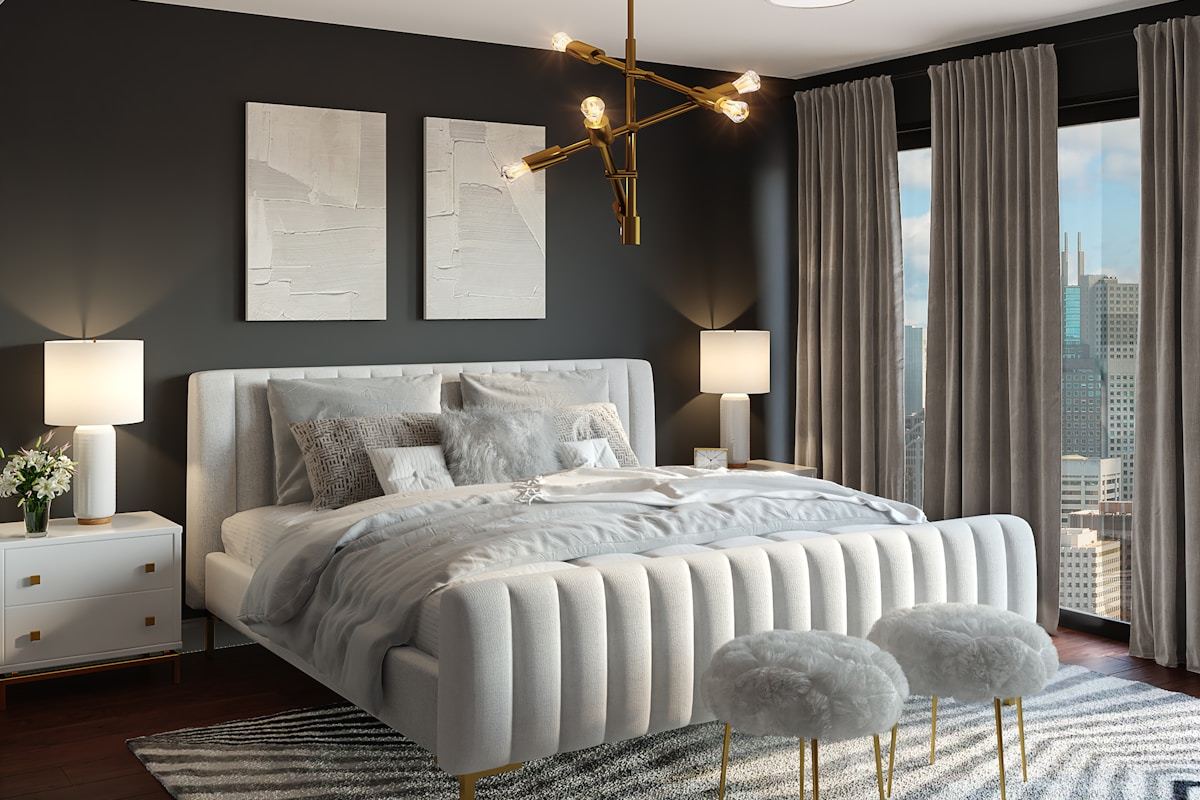 Bedroom Color Ideas: Restful Palettes (2026)
 Bedroom Reading Nook Ideas You'll Actually Use
 Bedroom Lighting for Aging Eyes: Layered Solutions That Are Both Functional and Beautiful
 The Best Bathroom for Color: Science-Backed Design Strategies for Vibrant, Calming, and Timeless Spaces
 12 Practical & Stylish DIY Nightstand Ideas You Can Build in a Weekend
 Pet-Friendly Bedroom: Where Should Your Pet Sleep?