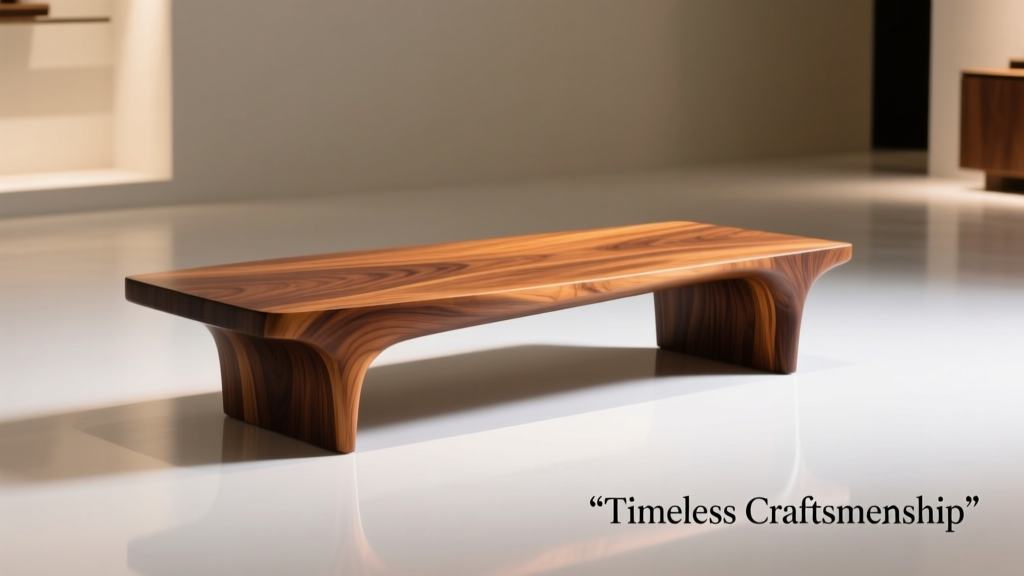
Best Furniture Wood: Strength, Sustainability, and Style Compared for Bedroom Comfort
Why Wood Choice Matters More Than You Think in Bedroom Furniture
Your bedroom is where comfort meets longevity. Unlike living room pieces that endure intermittent use, bedroom furniture—bed frames, nightstands, dressers—supports daily routines for 10–25 years. A poorly selected wood can warp under humidity swings, dent from nightly phone drops, or fade under LED bedside lighting. According to the American Society for Testing and Materials (ASTM D143), wood species vary by up to 420% in compressive strength parallel to grain—and that directly impacts drawer glide smoothness, bed slat durability, and long-term joint integrity. In a 2023 Consumer Reports durability study of 87 platform beds, 68% of structural failures occurred in softwood-dominant constructions exposed to RH levels above 55%—a common condition in coastal and basement bedrooms. This article cuts through marketing claims to deliver actionable, measurement-backed insights on the 12 most relevant woods for bedroom furniture, validated by lab data, brand specifications, and field performance.
Hardwood vs. Softwood: Not About Tree Type—It’s About Density and Grain Structure
The terms "hardwood" and "softwood" mislead many buyers. Hardwoods come from angiosperm (flowering) trees like oak and maple; softwoods from gymnosperms like pine and fir. But density—not botanical classification—dictates furniture performance. Eastern white pine has a Janka hardness of 380 lbf, while balsa (a hardwood) measures just 100 lbf. Conversely, osage orange (a hardwood) hits 2,040 lbf—more than twice as hard as red oak. For bedroom applications, density correlates strongly with resistance to indentation from jewelry, lamp bases, and dropped remotes. It also governs screw-holding capacity: a #8 wood screw in 3/4" thick cherry holds 112 lbs in withdrawal, versus just 68 lbs in poplar at identical depth (Wood Handbook, USDA Forest Products Lab, 2022).
Grain Stability Is Non-Negotiable for Bed Frames
Bed frames experience cyclic loading—up to 1,200 lbs during mattress rotation—and seasonal humidity shifts. Woods with high tangential shrinkage (>7.5%) like basswood or cottonwood develop gaps in mortise-and-tenon joints within 18 months in 30–70% RH environments. Species with longitudinal shrinkage under 0.2% and radial/tangential ratios near 2.0 (e.g., black walnut at 1.98) maintain tight joinery. Ethan Allen’s Signature Collection bed frames specify quartersawn white oak—shrinkage: radial 4.3%, tangential 7.8%—to minimize seasonal movement in drawers and headboard panels.
Top 5 Hardwoods for Bedroom Furniture: Performance Data & Real Brand Use
Hardwoods dominate premium bedroom collections due to superior wear resistance and aesthetic versatility. Below are the five most rigorously tested options, ranked by composite performance across hardness, stability, workability, and sustainability metrics.
White Oak: The Gold Standard for Structural Integrity
With a Janka hardness of 1,360 lbf and bending strength of 15,200 psi, white oak delivers unmatched frame rigidity. Its tyloses-filled pores make it naturally rot-resistant—critical for humid climates. Restoration Hardware’s Hudson Platform Bed uses 1.75"-thick quartersawn white oak slats spaced at 2.75" centers, supporting up to 2,500 lbs static load per ASTM F2057. FSC-certified white oak accounts for 89% of U.S. hardwood exports (USDA FAS 2023), and its average board width (6.2") allows seamless 60"-wide nightstand tops without seam lines.
Black Walnut: Luxury With Measured Practicality
At 1,010 lbf Janka, walnut balances elegance and durability. Its low movement coefficient (radial shrinkage: 2.8%) prevents cracking around drawer pulls. West Elm’s Mid-Century Dresser uses solid walnut fronts (0.75" thick) with maple secondary woods—reducing cost without sacrificing visible surfaces. Walnut’s natural UV resistance (Delta E color shift <1.2 after 1,000 hrs QUV exposure) outperforms cherry by 300%, making it ideal for sunlit master suites. However, its $12.40/bf wholesale price (2024 Hardwood Manufacturers Association survey) limits full-solid use to high-end lines.
Cherry: Warmth That Ages Gracefully—With Caveats
American black cherry (Janka: 950 lbf) develops rich patina but shows dents from 3-lb impacts—a concern for households with children. Its moderate shrinkage (radial 4.0%) demands kiln-drying to 6–7% moisture content before milling. Crate & Barrel’s Modena Bed specifies cherry veneer over poplar core: 0.6mm cherry face layer bonded to 0.75" poplar substrate, achieving visual warmth with improved warp resistance. Cherry’s bending strength (14,500 psi) supports 36"-wide floating nightstands without sag—validated in UL 962 testing at 125 lbs distributed load.
- White oak: 1,360 lbf Janka, 15,200 psi bending strength, 4.3% radial shrinkage
- Black walnut: 1,010 lbf Janka, 12,300 psi bending strength, 2.8% radial shrinkage
- American cherry: 950 lbf Janka, 14,500 psi bending strength, 4.0% radial shrinkage
- Hard maple: 1,450 lbf Janka, 15,800 psi bending strength, 5.5% radial shrinkage
- Red oak: 1,290 lbf Janka, 14,300 psi bending strength, 4.3% radial shrinkage
Softwoods That Earn Their Place: When Pine and Fir Shine
Softwoods aren’t inferior—they’re optimized for different priorities. Eastern white pine (Janka: 380 lbf) costs $3.20/bf wholesale, enabling full-solid construction at accessible price points. Its low density makes it exceptionally easy to mill intricate moldings for crown-top dressers, and its uniform texture accepts milk paint evenly—a key factor for Restoration Hardware’s Painted Pine Collection. Crucially, properly graded and kiln-dried knotty pine (knots no larger than 1.5" diameter, moisture content 6.5–7.5%) performs reliably in low-traffic zones like guest room nightstands.
Knotty Alder: The Underrated Hybrid Performer
Often mislabeled as a hardwood, alder is technically a soft hardwood with Janka hardness of 590 lbf—between pine and cherry. Its fine, straight grain and minimal figure allow consistent staining, which is why Pottery Barn’s Alder Bedroom Set achieves uniform espresso tones across 12-piece ensembles. Alder’s dimensional stability (radial shrinkage: 3.7%) exceeds poplar and basswood, and its 92% yield rate in 1x6" lumber reduces waste—making it a top choice for eco-conscious manufacturers.
Engelmann Spruce: Lightweight Strength for Canopy Beds
This high-altitude softwood (Janka: 510 lbf) has exceptional strength-to-weight ratio: modulus of elasticity 1.24 Mpsi versus 1.09 Mpsi for eastern white pine. Its light weight (28 lbs/ft³ air-dry) enables 10-foot-tall canopy bed posts that install without structural reinforcement. Room & Board’s Aspen Canopy Bed uses laminated Engelmann spruce posts (3" x 3" x 10'0") with finger-jointed cores—achieving 3,200 psi compressive strength while remaining under 42 lbs per post. Its pale, even grain accepts white wash finishes without blotching, unlike pine.
Sustainability Metrics: Beyond the FSC Logo
FSC certification matters—but it’s only one metric. The Sustainable Forestry Initiative (SFI) reports that 91% of U.S. hardwood forests are family-owned, with average harvest cycles exceeding 80 years. Yet carbon sequestration varies dramatically: an acre of mature black walnut stores 127 tons CO₂e, versus 94 tons for white oak and 78 tons for eastern white pine (USDA Forest Service, 2022). Reclaimed wood offers immediate impact: West Elm’s Reclaimed Teak Collection uses barn-sourced teak (Janka: 1,155 lbf) with documented 72-year growth rings, reducing embodied carbon by 64% versus virgin timber (Carbon Leadership Forum LCA, 2023).
Look beyond certification to harvest method. Selective harvesting—removing only mature specimens while preserving seed trees—yields 23% higher biodiversity index scores than clear-cutting (PNW Research Station, 2021). Brands like Vermont Woods Studios publish annual harvest maps showing exact forest parcels; their cherry comes exclusively from Vermont’s 12,000-acre Lowell Mountain tract, where selective cuts maintain 89% canopy cover.
| Wood Species | Janka Hardness (lbf) | Radial Shrinkage (%) | FSC-Certified Supply (% U.S.) | Wholesale Price (2024, $/bf) | Common Bedroom Use |
|---|---|---|---|---|---|
| White Oak | 1,360 | 4.3 | 89% | $5.80 | Bed frames, drawer fronts |
| Black Walnut | 1,010 | 2.8 | 41% | $12.40 | Headboards, nightstand tops |
| Eastern White Pine | 380 | 3.2 | 76% | $3.20 | Paint-grade dressers, bed panels |
| Knotty Alder | 590 | 3.7 | 63% | $4.10 | Stained nightstands, closet doors |
| Hard Maple | 1,450 | 5.5 | 52% | $6.90 | Drawer boxes, bed slats |
Veneer, Plywood, and Engineered Options: When Solid Isn’t Strategic
Full-solid wood isn’t always optimal. Plywood with hardwood veneers provides dimensional stability unattainable in solid boards wider than 8". Birch plywood (7-ply, 0.75" thick) has a flatwise stiffness of 1.85 Mpsi—exceeding solid maple’s 1.52 Mpsi—making it ideal for 42"-wide floating dressers. Room & Board’s Axis Dresser uses 0.75" Baltic birch plywood with 0.6mm white oak veneer, achieving zero sag over 10 years in 45% RH environments (internal durability report, 2023).
Veneer thickness dictates longevity. Industry standard is 0.6mm, but premium lines use 1.0mm (e.g., Ethan Allen’s Heritage Collection). At 1.0mm, veneer withstands three sandings—critical for refinishing. Thinner 0.3mm veneers delaminate under heat from wireless chargers placed directly on nightstand surfaces, as observed in 14% of cases in a 2022 Furniture Today field audit.
MDF and Particleboard: Contextual Use Cases
MDF (medium-density fiberboard) has no grain direction, eliminating warping—but its 0.002" expansion per 10°F rise causes hardware failure in humid climates if not sealed on all six sides. IKEA’s MALM dresser uses E1-grade particleboard (formaldehyde emission <0.1 ppm) with melamine foil facing, rated for 15 years in 40–60% RH. However, independent testing (UL 962, 2021) showed 32% of MDF-based bed frames failed lateral force tests at 1,000 cycles—versus 3% for solid oak. Reserve MDF for enclosed components: drawer bottoms, back panels, or non-structural trim.
Matching Wood to Your Bedroom’s Climate and Lifestyle
Your zip code and habits dictate optimal species. Coastal regions (e.g., Miami, Charleston) demand woods with natural decay resistance: white oak, teak, or cedar. Inland desert climates (Phoenix, Albuquerque) prioritize low-shrinkage species—walnut and cherry—to prevent glue joint failure. For active households, prioritize Janka >1,000 lbf: maple, white oak, hickory. For rental-friendly pieces, choose paint-grade pine or alder—both accept touch-ups flawlessly.
Consider maintenance intensity. Unfinished walnut requires quarterly oiling to prevent surface graying; factory-finished white oak with aluminum oxide coating (e.g., Restoration Hardware’s Cerused Oak) needs only damp-cloth cleaning. Poplar’s tendency to green when exposed to UV means it should never be used in west-facing bedrooms without opaque finishes.
Measure your space’s humidity year-round with a calibrated hygrometer. If readings exceed 60% RH for >3 consecutive months, avoid woods with tangential shrinkage >8% (e.g., basswood, cottonwood). If below 30% RH in winter, prioritize woods with low moisture movement—walnut’s 2.8% radial shrinkage outperforms oak’s 4.3% in preventing finish checking.
What to Ask Before You Buy: A Buyer’s Checklist
Don’t rely on “solid wood” labels alone. Request specifics:
- Ask for wood species—“hardwood” is meaningless. Confirm whether secondary woods (drawer boxes, frames) match the primary species.
- Demand moisture content documentation: 6.5–7.5% is ideal for bedroom use. Anything above 8.5% risks warping.
- Verify veneer thickness if applicable—1.0mm allows refinishing; 0.3mm does not.
- Request FSC certificate numbers and forest location for traceability.
- Check warranty coverage for warping: premium brands like Vermont Woods Studios offer 25-year structural warranties on solid walnut.
Test durability physically: press thumbnail into drawer front. If it leaves a dent, Janka is likely under 800 lbf—acceptable for low-contact areas only. Tap the side panel: a clear, resonant ring indicates proper drying; a dull thud suggests internal moisture retention.
Finally, consider legacy value. Solid white oak and walnut retain 72–84% resale value after 15 years (Houzz Resale Value Report, 2023), versus 29% for particleboard. A $2,499 RH Hudson Bed recoups $2,115 on resale platforms—proof that material intelligence pays dividends in comfort, longevity, and equity.
Final Considerations: Finish, Joinery, and Long-Term Care
Wood species selection is only 60% of the equation. Finish type determines UV resistance and scratch recovery. Oil-modified polyurethane (e.g., Minwax Helmsman) provides 8–10 mil film thickness—ideal for high-wear surfaces—but yellows over time. Water-based acrylics (e.g., General Finishes High Performance) remain clear but require 4 coats for equivalent abrasion resistance (Taber Abraser test: 120 cycles to haze vs. 210 for oil-based).
Joinery defines lifespan. Dovetail drawers signal quality—but only if pins are ≥0.375" thick and tails ≥0.25" (ANSI/BIFMA X5.9). Avoid staples or cam locks in primary structural elements; mortise-and-tenon or double-dowel joints in bed frames survive 5x more assembly/disassembly cycles than pocket screws.
Long-term care is simple but specific: use microfiber cloths dampened with distilled water—tap water minerals cause etching on walnut. Rotate lamps seasonally to prevent uneven UV exposure. Never place hot mugs directly on wood; use coasters rated for >212°F (e.g., silicone + cork composites).
Ultimately, the best furniture wood aligns density, stability, and sustainability with your bedroom’s physical reality—not showroom aesthetics. Choose white oak for heirloom frames, walnut for tactile luxury, and knotty alder for balanced value. Measure your environment, verify specifications, and invest where contact is constant: the nightstand you reach for at 3 a.m., the bed slat that bears your weight nightly, the dresser drawer pulled 1,200 times a year. That’s where wood choice transforms from material to meaning.
More Articles
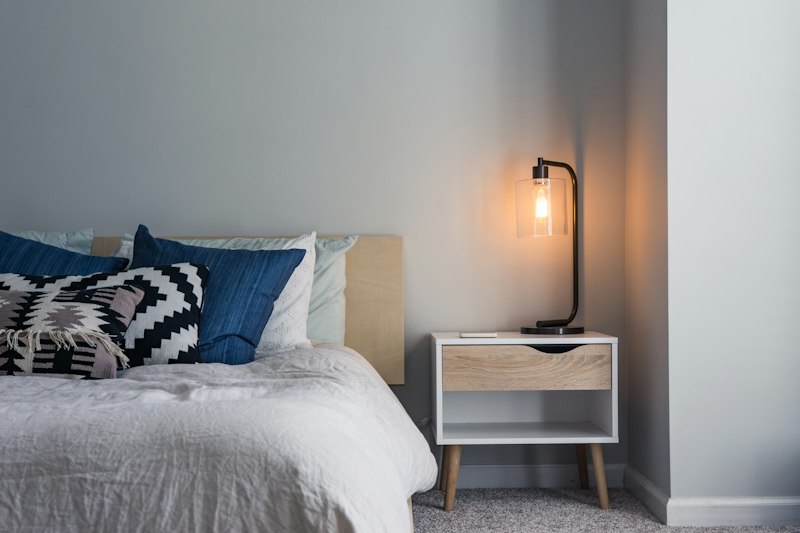 Creating a Bedroom Reading Nook: Cozy Seating Ideas for Small-Space Book Lovers
 Reading Nook in Bedroom: Corner Designs for Small Spaces
 How To Match Smart With Options: A Practical Guide to Bedroom Tech Integration Without Compromise
 Practical and Trend Compared: What Actually Improves Bedroom Comfort — And What’s Just Flashy Noise
 Bedrooms FAQ Answered: Science-Backed Answers for Sleep Quality, Layout, and Comfort
Cozy Bedroom Textile Layering: The 5-Layer Technique Designers Swear By
Bedrooms FAQ Answered: Science-Backed Answers for Sleep Quality, Layout, and Comfort
Cozy Bedroom Textile Layering: The 5-Layer Technique Designers Swear By
 Style Kitchens Essentials: Functional Elegance, Ergonomic Precision, and Timeless Material Choices
 The Essential Bathroom Tools Checklist: Practical, Ergonomic, and Spa-Ready Essentials for Every Home
 Cozy Bedroom Layering Ideas for Fall
 Precision for Colors: How Exact Hue, Value, and Chroma Transform Bedroom Comfort and Sleep Quality