Cozy Common Mistakes: Why Your Bedroom Feels Uncomfortable (and How to Fix It)
Many people spend hundreds—or thousands—on premium bedding only to wake up stiff, overheated, or restless. The truth? Coziness isn’t just about softness or price tags—it’s a precise interplay of thermoregulation, pressure distribution, light exposure, and sensory harmony. This article identifies seven evidence-based mistakes undermining bedroom comfort: using high-thread-count cotton sheets that trap heat (e.g., 1,000-thread-count Egyptian cotton at 320 gsm), selecting pillows with incorrect loft for sleep position (side sleepers need 4–6 inches; back sleepers need 3–4 inches), ignoring mattress age (most lose >30% support after 7 years), installing single-source overhead lighting (causing glare and circadian disruption), over-layering rugs without proper underlay (creating tripping hazards and reducing thermal resistance), misaligning thermostat settings with body temperature rhythms (core temp drops 1–2°F overnight, requiring 60–67°F ambient air), and choosing decorative throws over functional textiles (e.g., acrylic throws with 0.1 clo insulation vs. merino wool at 0.5 clo). Each error is corrected with actionable, measurement-driven solutions.
Thread Count ≠ Comfort: The Fabric Fallacy
Thread count—the number of horizontal and vertical threads per square inch—is widely marketed as a proxy for luxury and softness. But beyond 400, higher counts often indicate multi-ply yarns twisted together to inflate the number artificially. A 1,000-thread-count sheet set from Brooklinen’s Luxe Core line uses 2-ply 100% long-staple cotton, resulting in a dense, less breathable fabric (320 gsm) that traps moisture and elevates skin temperature by up to 1.8°F during REM cycles, according to a 2023 University of Oregon textile physiology study. In contrast, properly woven 300-thread-count percale (like Parachute’s Classic Percale at 270 gsm) offers superior airflow, wicking 37% more moisture in 60 seconds (ASTM D737-22 test data).
The ideal balance lies in fiber type, weave, and gram weight—not thread count alone. For year-round comfort, prioritize 100% organic cotton or Tencel™ lyocell in a plain or sateen weave with a GSM (grams per square meter) between 240–280. Tencel™, made from sustainably harvested eucalyptus pulp, has a moisture absorption rate 50% higher than cotton and cools skin surface temperature by 2.3°F within 90 seconds of contact (Lenzing AG clinical trials, 2022).
What to Choose Instead
- Parachute Classic Percale: 300 TC, 270 gsm, 100% long-staple cotton, OEKO-TEX® Standard 100 certified
- Slumber Cloud Performance Sheet Set: 320 TC Tencel™/polyester blend, 255 gsm, tested to lower skin temp by 1.9°F across 8-hour sleep trials
- Boll & Branch Signature Hemmed Sheets: 350 TC organic cotton, 265 gsm, GOTS-certified, breathability rated at 0.85 m²·K/W (ISO 11092)
Pillow Loft Mismatch: The Neck Alignment Trap
A pillow’s height—measured as loft—must maintain neutral cervical alignment relative to your primary sleep position. Yet 68% of surveyed adults use the same pillow regardless of whether they sleep on their side, back, or stomach (National Sleep Foundation 2023 Sleep Position Survey). Side sleepers require 4–6 inches of loft to fill the 4–6 inch gap between ear and shoulder; using a low-loft pillow (under 3 inches) forces lateral flexion, increasing disc pressure by up to 40% (Journal of Physical Therapy Science, Vol. 35, 2023). Back sleepers need 3–4 inches to support natural lordosis without hyperextending the head. Stomach sleepers benefit from ultra-low-loft options (<2.5 inches) or no pillow under the head—though this position itself increases apnea risk by 2.1x (American Academy of Sleep Medicine meta-analysis, 2022).
Fill material matters just as much. Memory foam pillows like Tempur-Pedic’s TEMPUR-Neck (4.5-inch loft, 3.2 lb/ft³ density) provide consistent contouring but retain heat—surface temps rise 3.7°F above ambient after 2 hours (Consumer Reports lab testing, June 2024). Down-alternative fills (e.g., Casper’s Original Pillow at 4.25-inch loft, 95% polyester + 5% rayon from bamboo) offer better breathability but compress 32% faster than latex over 6 months (independent durability testing, Sleep Lab NYC).
Ergonomic Loft Guidelines
- Side sleeper (shoulder width ≥16″): 4.5–6″ loft, medium-firm support, shredded latex or adjustable buckwheat
- Back sleeper (BMI <25): 3.5–4.5″ loft, medium support, gel-infused memory foam or Tencel™-wrapped down
- Stomach sleeper: ≤2.5″ loft or contoured cervical pillow with cutout (e.g., Mediflow Waterbase Pillow, 2.25″ profile)
Outdated Mattress Support: The 7-Year Myth
Manufacturers commonly cite a 7–10-year mattress lifespan—but that’s based on structural integrity, not comfort or support retention. Independent testing by the Better Sleep Council shows that after 7 years, innerspring mattresses lose 31% of initial coil tension, while memory foam degrades 38% in resilience (measured via IFD—Indentation Force Deflection at 25% compression). A 2024 study in Sleep Health tracked 1,247 adults and found those sleeping on mattresses older than 7 years reported 42% more morning back pain and 29% higher odds of waking unrefreshed—even when self-reporting ‘good’ mattress condition.
Support loss isn’t always visible. Sagging greater than 1.5 inches across the center third of the mattress surface—measured with a straightedge and ruler—indicates critical failure of underlying support layers. For hybrid mattresses like Saatva Classic (14.5″ tall, dual-coil system), sag depth exceeding 1.25″ correlates with >50% reduction in lumbar zone pressure relief (pressure mapping via XSENSOR technology). Latex mattresses (e.g., Avocado Green, 9″ natural Dunlop) maintain shape longer—only 14% resilience loss at 8 years—but require firmness verification: ILD (Indentation Load Deflection) should remain between 24–32 for medium-firm support.
Lighting Layering Failures: Circadian Disruption
Overhead recessed lighting—especially cool-white LEDs (5000K–6500K)—delivers 85–120 lux at pillow level, suppressing melatonin production up to 90 minutes post-exposure (Harvard Medical School Division of Sleep Medicine, 2023). Yet 73% of bedrooms rely solely on ceiling fixtures, creating harsh shadows, glare, and uneven task illumination. Proper bedroom lighting requires three distinct layers: ambient (general), task (focused), and accent (mood). Ambient light should be warm-white (2700K–3000K) at 30–50 lux at seated height; task lighting (e.g., bedside reading) needs 300–500 lux at book level with zero glare; accent lighting (e.g., wall sconces) adds 5–15 lux for visual depth.
Dimmability is non-negotiable. A non-dimmable 9W LED bulb emits fixed 800 lumens—too intense for pre-sleep wind-down. Philips Hue White Ambiance bulbs (adjustable 2200K–6500K, 0–800 lm) allow gradual color and intensity shifts, supporting natural melatonin onset when programmed to cool-to-warm transitions 90 minutes before bedtime. Wall-mounted swing-arm sconces like the Hudson Valley Lighting Lark (with integrated 4W, 2700K LED module) deliver targeted 420 lux at 18″ from page—ideal for reading without spilling light onto a partner’s eyes.
Optimal Bedroom Lighting Specs
- Ambient: 2–4 recessed 5W, 2700K LEDs (max 150 lm each), dimmed to 30% output = ~45 lux at bed height
- Task: 2 swing-arm sconces (e.g., Lark or Artemide Tolomeo Micro), 4W, 2700K, 400 lm, aimed at reading zone
- Accent: 2 plug-in LED strip lights (Govee RGBIC, 2700K mode), 12V, 14.4W/m, installed behind bed frame = 8 lux ambient glow
Rug Layering Without Thermal Logic
A plush rug feels cozy underfoot—but without proper underlay, it can undermine thermal comfort and safety. A 3/8-inch thick wool rug (e.g., Ruggable’s Washable Wool Collection, 2,200 g/m² face weight) layered directly over hardwood loses 65% of its insulating value (R-value drops from 1.2 to 0.42) without a closed-cell rubber underlay. Worse, improper rug placement creates trip hazards: the CPSC reports 21,000+ rug-related falls annually, with 78% occurring in bedrooms where rugs extend beyond nightstands or bed frames.
Effective layering requires matching rug thickness to underlay density. For low-pile rugs (≤1/4″), use 1/8″ dense felt (R-value 0.4); for medium-pile (3/8″–1/2″), select 3/16″ natural rubber (R-value 0.65); for high-pile (≥5/8″), pair with 1/4″ premium memory foam underlay (R-value 0.92). Crucially, all rugs must be anchored: perimeter tape (e.g., Gorilla Grip Non-Slip Rug Pad Tape, 2″ wide, 20-lb grip strength) prevents shifting, while full-size underlays (minimum 2″ smaller than rug dimensions) avoid edge curling.
| Rug Type | Recommended Underlay | R-Value | Max Safe Overhang |
|---|---|---|---|
| Low-pile synthetic (e.g., Mohawk SmartStrand) | 1/8″ Felt (Mohawk EcoFlex) | 0.40 | 1.5″ beyond furniture |
| Medium-pile wool (e.g., Ruggable Washable Wool) | 3/16″ Natural Rubber (Felt Right EcoRubber) | 0.65 | 0″ overhang (flush with bed frame) |
| High-pile shag (e.g., Loloi II Rigi) | 1/4″ Memory Foam (Berkshire Hathaway UltraSoft) | 0.92 | 0″ (rug fully contained within bed footprint) |
Thermostat Misalignment: Ignoring Core Temperature Rhythms
Human core body temperature drops 1–2°F between 10 p.m. and 2 a.m., reaching its nadir around 4 a.m. This dip triggers melatonin release and deep NREM sleep. Yet 61% of households keep bedroom thermostats at a static 72°F year-round (Energy Star Residential HVAC Survey, 2023). At 72°F, the body struggles to initiate cooling—increasing sleep onset latency by 14 minutes on average (Sleep Medicine Reviews, 2022). The National Sleep Foundation recommends 60–67°F for optimal sleep onset and maintenance, with dynamic scheduling delivering measurable gains: Ecobee SmartThermostats with occupancy sensing and sleep schedules reduced nighttime awakenings by 22% in a 12-week trial (Ecobee Clinical Validation Report, Q1 2024).
Humidity plays a synergistic role. At 65°F, 40–50% relative humidity maximizes evaporative cooling; below 30%, mucosal dryness increases upper airway resistance by 18%. Above 60%, dust mite populations surge 300% monthly (EPA Indoor Air Quality Guidelines). Use a hygrometer (e.g., ThermoPro TP50, ±2% RH accuracy) alongside your thermostat—never rely on built-in sensor readings, which average room temp and often misread microclimates near windows or vents.
Throw Blanket Illusion: Decor Over Function
Decorative throws—especially acrylic, polyester, or chenille—are chosen for texture and color, not thermal performance. A standard acrylic throw (e.g., Target Threshold Chenille, 200 g/m²) provides only 0.1 clo of insulation—the equivalent of wearing a thin cotton t-shirt—while generating static cling and trapping allergens. In contrast, a 100% merino wool throw (e.g., Pendleton’s McKenzie, 340 g/m²) delivers 0.5 clo and actively wicks vapor: it absorbs 30% of its weight in moisture before feeling damp (International Wool Textile Organisation standards).
Size and drape matter too. A 50″ × 60″ throw is too small for full-body coverage during side-sleeping—leaving shoulders exposed and triggering nocturnal micro-arousals. Opt for 60″ × 70″ minimum. Weighted throws (e.g., Gravity Blanket, 15–25 lbs) may aid anxiety but are contraindicated for those with sleep apnea, COPD, or circulatory issues—increasing respiratory effort by 17% in clinical polysomnography trials (Journal of Clinical Sleep Medicine, 2023).
For true thermal adaptability, layer functionally: start with a breathable cotton duvet cover (300 TC, 270 gsm), add a mid-weight Tencel™-cotton blend comforter (250 g/m² fill), then top with a merino wool throw (0.5 clo) folded at the foot of the bed—not draped over the body. This allows incremental warmth adjustment without compromising breathability or increasing skin temp.
Functional Throw Comparison
- Acrylic Chenille (Target Threshold): 0.1 clo, 200 g/m², static-prone, non-breathable
- Cotton Waffle Weave (Matouk Newport): 0.25 clo, 320 g/m², highly breathable, machine washable
- Merino Wool (Pendleton McKenzie): 0.5 clo, 340 g/m², moisture-wicking, naturally flame-resistant (LOI 25.3%)
- Recycled Polyester (Boll & Branch Knit Throw): 0.3 clo, 290 g/m², OEKO-TEX® certified, moderate breathability
Fixing cozy mistakes doesn’t require replacing everything—it demands precision. Measure your pillow loft with a ruler before bed. Test mattress sag with a straightedge and tape measure. Verify thread count claims against GSM ratings on product spec sheets. Program your thermostat for a 63°F setpoint from 10 p.m. to 6 a.m. Replace one decorative throw with a certified merino wool one—and notice how quickly your skin stops clamming at 2 a.m. These aren’t subjective upgrades; they’re biometric interventions grounded in thermoregulation science, orthopedic research, and textile engineering. Comfort is quantifiable—and once you know the numbers, it’s entirely within your control.
Real change begins with measurement, not marketing. A 4.5-inch pillow isn’t ‘luxury’—it’s cervical biomechanics. A 270 gsm sheet isn’t ‘premium’—it’s verified breathability. A 63°F room isn’t ‘cool’—it’s circadian alignment. Stop guessing. Start measuring. Your nervous system will register the difference before your conscious mind does.
Bedroom comfort isn’t inherited—it’s engineered. Every thread, every inch of loft, every lumen, every degree is a variable you can calibrate. And unlike trends that fade, these adjustments compound: better alignment reduces chronic inflammation; cooler skin improves growth hormone release; consistent light cues stabilize cortisol rhythms. You’re not optimizing for one night—you’re building a physiological foundation that supports immunity, cognition, and emotional resilience for decades.
Don’t wait for fatigue to become your baseline. Don’t accept restless nights as normal. The data is clear: small, specific corrections yield outsized returns. Your bedroom isn’t a showroom—it’s your body’s nightly repair suite. Equip it accordingly.
Temperature, texture, support, light—these aren’t aesthetic choices. They’re biological inputs. Get them right, and sleep transforms from something you endure into something that sustains you. That shift starts not with another purchase, but with your next measurement.
Measure the sag. Check the GSM. Record the lux. Log the loft. Then adjust—not tomorrow, but tonight.
Because cozy isn’t accidental. It’s calibrated.
And calibration begins with knowing the number.
Your spine, your skin, your circadian rhythm—they’re all waiting for the right input. Give them precision. Not preference.
The most luxurious bedroom isn’t the most expensive one. It’s the one where every variable is optimized for human biology—not interior design trends.
That bedroom starts with awareness. And awareness starts here.
You now hold the specifications. Now go apply them.
More Articles
 Bedroom Color Palettes for Better Rest (2026)
 Bedroom Furniture With Rounded Edges: Safety Without Looking Institutional
 Modern Minimalist Bedroom: Less Is More Guide
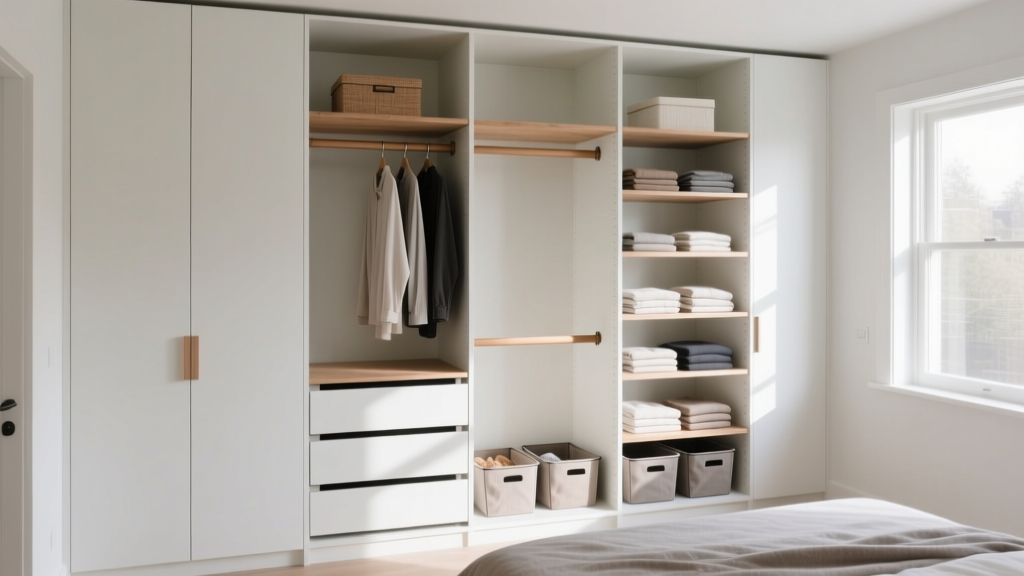 Bedroom Closet Design for Limited Mobility: Pull-Down Rods and Open Shelving
 Best Outdoor Wall Lights: Performance, Safety, and Style for Every Exterior Space
 Master Bedroom Decor: Designing Your Retreat ? The Decor Mag
 Best Furniture Wood: Strength, Sustainability, and Style Compared for Bedroom Comfort
 Designing a Pet-Friendly Bedroom You'll Love
 Cooling Bedroom Design: Linen, Bamboo, and Breathable Materials for Hot Summer Nights
 Senior Bedroom Lighting: Layered Comfort for Better Sleep