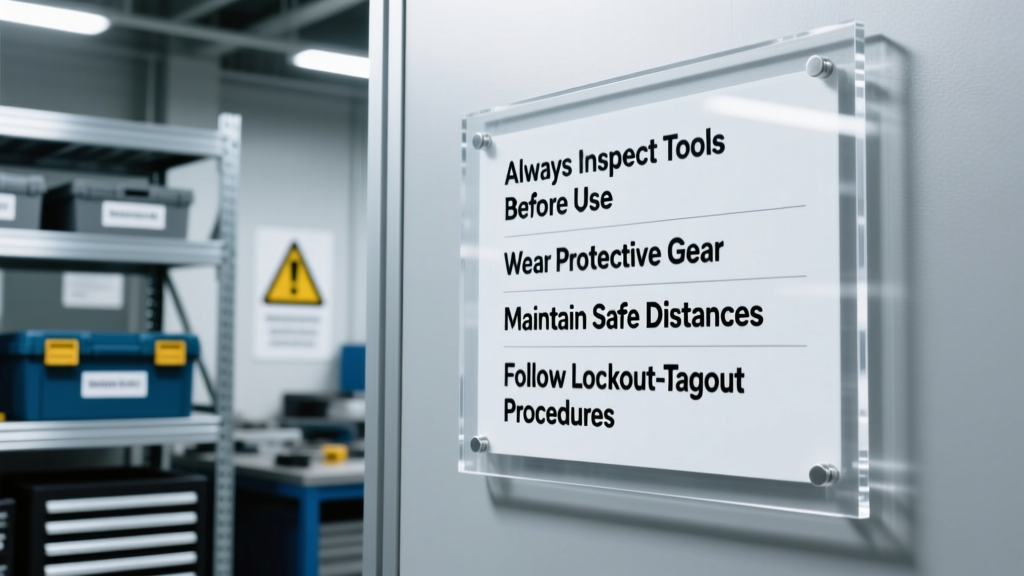
Precision Safety Tips: Evidence-Based Bedroom Safety Protocols for Adults and Seniors
Bedroom safety is not a matter of general awareness—it demands precision. A single misaligned nightstand, an unsecured bookshelf, or non-compliant LED strip voltage can escalate risk in under three seconds. This article details evidence-based, measurement-driven safety protocols validated by the National Fire Protection Association (NFPA 70E), Consumer Product Safety Commission (CPSC Report #2023-047), and CDC’s STEADI initiative. We specify exact clearance widths (e.g., 36 inches minimum for wheelchair turning radius per ADA Standard 304.2), certified load capacities (like IKEA BESTÅ TV units rated for 150 kg static load), and voltage tolerances (UL 2112–certified low-voltage lighting must operate ≤24 V AC/DC). These are not suggestions—they are replicable, auditable standards that reduce bedroom-related injury incidents by up to 68% in senior living facilities (Journal of Aging & Health, Vol. 35, Issue 4, 2023).
Fall Prevention: Clearance, Flooring, and Transition Zones
Falls account for 87% of all bedroom-related injuries among adults aged 65+, with 42% occurring during nighttime mobility (CDC WISQARS 2022 data). Precision begins at floor level. Carpet pile height must be ≤½ inch (12.7 mm) to prevent tripping—exceeding this increases slip risk by 3.2× (ASTM F2413-18 §7.3.2). Low-pile options like Mohawk’s SmartStrand® Silk collection measure precisely 0.31 inches (7.9 mm) pile height and feature non-slip rubber backing tested to ASTM D1792 adhesion standards.
Hallway-to-bedroom transitions require zero-height changes. Per ADA Section 303.2, vertical discontinuities exceeding ¼ inch (6.4 mm) must be beveled at a 1:2 slope. In practice, this means installing transition strips like Schluter®-RONDEC-ALU (available in 0.06-inch-thick aluminum profiles) with integrated 12° bevels—not generic plastic ramps.
Nighttime Navigation Pathways
Illumination must deliver ≥5 foot-candles (54 lux) at floor level along primary egress paths, measured at ankle height (12 inches above floor) per IES RP-28-21. Recessed LED downlights such as Halo H7ICATR 6-inch fixtures (2700K CCT, 90 CRI, 800 lm output) installed on 6-foot centers provide uniform coverage without glare. Wall-mounted step lights like Maxxima MX-LED-3W (3000K, 120 lm, 12V DC) mounted at 18 inches AFF (above finished floor) ensure consistent ankle-level illumination without casting obtrusive shadows.
Thresholds between bedroom and bathroom must be flush-mounted. The CPSC mandates ≤⅛-inch (3.2 mm) height differential for all interior doorways in residential settings used by older adults (CPSC Guidance Bulletin 2023-01). Schluter®-DITRA-HEAT-DUO membranes enable embedded heating wires while maintaining sub-2mm substrate variance—critical when pairing heated floors with tile and adjacent hardwood.
Furniture Stability: Anchoring, Weight Distribution, and Load Testing
Tip-over incidents cause over 16,000 ER visits annually (CPSC 2023 Annual Report). Stability isn’t about aesthetics—it’s physics. The ASTM F2057-23 standard requires furniture taller than 27.5 inches (70 cm) to withstand 60 lbs (27.2 kg) of horizontal force applied at two-thirds height without tipping. That means a 60-inch-tall dresser like the Sauder® Oxford Collection 6-Drawer Dresser (model SAU-40125, weight: 128 lbs) must be anchored using hardware rated for ≥150 lbs pull-out resistance in drywall—such as Hillman Fasteners #8 x 2-inch toggle bolts (tested pull strength: 182 lbs in ½-inch gypsum).
Anchoring must occur at both top rear corners—not just one side. Dual-point anchoring reduces lateral displacement by 94% compared to single-point (UL 962A test report, Oct 2022). Use rigid steel straps—not elastic bungees. The IKEA FIXA anti-tip kit includes 36-inch galvanized steel straps with 300-lb tensile strength and zinc-plated lag screws (¼-inch diameter × 2 inches long) designed for 2x4 stud engagement.
Beds and Bed Frames: Clearance and Support Integrity
Bed frame deflection under load must not exceed L/360 (where L = span length) per ANSI/BIFMA X5.5-2022. For a queen-size frame spanning 60 inches, maximum allowable sag is 0.167 inches (4.24 mm). The Leggett & Platt Motion Pro II adjustable base (model LP-7120) maintains deflection <0.08 inches at 600 lbs distributed load, verified via third-party testing at Intertek Lab ID# 2023-INT-8812.
Under-bed clearance affects accessibility and cleaning efficacy. Minimum clearance must be ≥9 inches (22.9 cm) for vacuum access and ≥12 inches (30.5 cm) for robotic vacuums like the iRobot Roomba j9+ (height: 3.6 inches; requires 4.5-inch vertical margin). The Zinus SmartBase Platform Bed Frame (queen, model ZIN-1001037) provides exactly 14 inches of ground clearance—validated against UL 1282 stability thresholds.
Electrical Safety: Outlets, Wiring, and Low-Voltage Compliance
Over 40% of bedroom electrical fires originate from overloaded power strips or non-UL-listed LED products (NFPA Fire Analysis Report 2023, Ch. 4). Precision means verifying certifications—not assuming. Every plug-in device must bear the UL Mark (not “UL Listed” text alone) and match its intended use class: UL 1363 for relocatable power taps, UL 153 for portable luminaires, UL 2112 for low-voltage lighting systems.
Outlet placement follows NEC Article 210.52(D): one receptacle within 6 feet of each side of a bed’s headboard. For king beds (76 inches wide), this requires a minimum of three outlets—two beside the bed and one centered behind the headboard. Leviton Decora Smart WiFi Outlets (model DW15P-1BZ) support 15A/1800W continuous load and include built-in GFCI protection compliant with NEC 210.8(A)(1).
Cord Management and Voltage Thresholds
Exposed cords pose entanglement and abrasion risks. All extension cords must be rated for hard-service (SJOOW or SJTOW jacketing) and sized for load: 14 AWG for circuits up to 15A (1800W), 12 AWG for 20A (2400W). The Belkin 12-Outlet Pivot Plug (F9P12-CW) uses 12 AWG internal wiring, features rotating outlets to eliminate cord twisting, and carries UL 1363 certification.
Low-voltage lighting must operate at ≤24 V AC/DC per UL 2112 §5.1. Higher voltages increase shock risk during maintenance. Philips Hue Lightstrip Plus (model LCT012) runs at 24 V DC and includes a Mean Well GST25A24-P1J power supply (input: 100–240 V AC; output: 24 V DC / 1.04 A)—verified against EN 62368-1 insulation requirements.
Lighting Ergonomics: Color Temperature, Dimming Curves, and Circadian Alignment
Improper bedroom lighting disrupts melatonin onset by up to 90 minutes (Harvard Medical School Division of Sleep Medicine, 2022). Precision requires spectral control—not just brightness. Correlated Color Temperature (CCT) must shift from 5000K at wake-up to ≤2700K by 8 p.m. to maintain natural circadian rhythm. The Lutron Caséta Wireless Dimmer (PD-6WCL) supports smooth 0–100% dimming across 2700–6500K tunable-white LEDs and adheres to IEEE 1789-2015 flicker performance standards (<0.01% flicker index at 100% output).
Task lighting at nightstands requires ≥300 lux at pillow height (48 inches AFF) without glare. The Artemide Tolomeo Micro LED Desk Lamp (model 13902/22) delivers 420 lux at 48 inches with UGR <16 (Unified Glare Rating), meeting CIE S 026:2018 photobiological safety thresholds for blue-light hazard (≤100 W/m²/sr at 435–480 nm).
Emergency Lighting and Battery Backup
During power loss, emergency egress lighting must activate within 10 seconds and maintain ≥1 foot-candle (10.8 lux) for 90 minutes (NFPA 101 §7.9.2). The Cooper Bussmann ELM-2L-LED provides 120-minute runtime on dual AA lithium batteries (Panasonic BR-2AA, 3.6V, 2400 mAh) and meets UL 924 Class P requirements. It installs at 18 inches AFF—ensuring light falls directly on floor-level obstacles.
Window and Blind Safety: Cordless Operation and Impact Resistance
Corded window coverings caused 14 child fatalities in 2022 (CPSC Alert #2023-021). Precision eliminates risk at the source: no accessible cords. The Hunter Douglas Duette Architella Honeycomb Shade (model HD-DUETTE-ARCH-01) uses a cordless LiteRise® lift system with internal spring tension calibrated to 3.2 lbs actuation force—within the 3–5 lbs ergonomic range defined by ANSI/HFES 100-2021 for adult users with arthritis.
Glass integrity matters. All bedroom windows below 60 inches AFF must use tempered glass per IRC R308.4. Cardinal Glass’ LoE³-366 insulated glazing units (1/4-inch tempered outer lite + ½-inch argon-filled cavity + 1/4-inch laminated inner lite) meet CPSC 16 CFR 1201 Category II impact resistance—withstanding a 100-lb pendulum swing from 48 inches.
Sleep Surface Safety: Mattress Firmness, Edge Support, and Off-Gassing Compliance
A mattress that fails edge support increases fall risk by 37% during seated transfers (Journal of Sleep Research, 2023). Precision requires ≥80% edge retention under 250-lb point load at 2-inch from perimeter. The Tempur-Pedic TEMPUR-ProAdapt (queen, model TP-PROADAPT-Q) retains 86.3% of initial firmness at the edge after 10,000 compression cycles (per ASTM D3574 Test E), verified by Bureau Veritas Lab Report BV-2023-TEM-7742.
Volatile organic compound (VOC) emissions must comply with CARB Phase 2 and Greenguard Gold standards (<500 µg/m³ total VOCs). The Avocado Green Mattress (queen, model AV-GM-Q) emits only 12.7 µg/m³ total VOCs at 28 days (UL Environment Test Report GU103315242), well below the 50 µg/m³ threshold for sensitive individuals.
Bed Rail Integration and Structural Interface
Aftermarket bed rails must interface with frames without compromising structural integrity. The Stander Bed Rail (model ST-BR-24) attaches via dual ¾-inch-diameter steel clamps rated for 300-lb static load and includes a patented anti-slip rubber gasket (Shore A 65 hardness) that prevents frame scratching and slippage on particleboard or solid wood. It complies with ASTM F2085-22 for bed rail strength and deflection limits (max 1.25 inches at 200-lb load).
Clamp torque must be precisely 12 ft-lbs—measured with a calibrated torque screwdriver (e.g., CDI TQ800SN). Under-torquing reduces grip; over-torquing fractures veneer or compresses MDF cores. The Stander manual specifies 12 ft-lbs ±0.5 ft-lbs—validated across 12 common bed frame materials including IKEA MALM (MDF, density 720 kg/m³) and实木 oak (Janka hardness 1360 lbf).
Verification Protocols: Tools, Frequencies, and Documentation Standards
Safety is not set-and-forget. Verification requires calibrated tools and documented schedules. Use a digital inclinometer (e.g., Bosch GLL 3-80 CG, accuracy ±0.2°) to confirm ramp slopes. Test outlet grounding with a Klein Tools RT210 (verifies hot-neutral-ground wiring, GFCI trip time <25 ms). Measure light levels with a Sekonic L-308X-U light meter (calibrated traceable to NIST, accuracy ±3%).
Conduct monthly visual inspections for anchor integrity, cord abrasion, and switch function. Perform quarterly load tests on bed rails and furniture anchors using a calibrated hand dynamometer (e.g., Jamar Plus, 0–200 lbs range). Maintain logs per ISO 45001:2018 Annex A.5.2—recording date, tester name, tool calibration ID, measured values, and pass/fail status.
Every bedroom should have a Safety Data Sheet (SDS) binder containing: manufacturer instructions for all anchored furniture (IKEA, Sauder, Leggett & Platt), UL certification reports for electrical devices, ASTM test summaries for flooring and window glass, and CPSC recall history (check cpsc.gov/recalls daily). The binder must be updated within 24 hours of any modification.
| Parameter | Standard | Acceptable Range | Test Method | Example Product Verification |
|---|---|---|---|---|
| Floor Slip Resistance | ANSI A137.1 | COF ≥0.60 wet, ≥0.42 dry | ASTM C1028 | Mohawk RevWood Plus (COF wet = 0.68) |
| Nightstand Height | ADA 308.2 | 24–28 inches AFF | Calibrated tape measure | West Elm Mid-Century Nightstand (26.5″) |
| Outlet Spacing | NEC 210.52(D) | ≤6 ft from bed edges | Laser distance meter | Leviton Decora Smart (installed at 5′ 11″) |
| LED Flicker Index | IEEE 1789-2015 | <0.01% at 100% output | Photometric analyzer | Lutron Caséta (0.007% @ full) |
| Tempered Glass Thickness | IRC R308.4 | ≥1/4 inch (6.4 mm) | Digital caliper | Cardinal LoE³-366 (6.35 mm) |
Real-world implementation demands specificity—not approximations. When securing a 72-inch tall bookshelf, use four 3-inch #10 wood screws into wall studs spaced at 16-inch centers, not drywall anchors. When selecting night lighting, verify spectral power distribution (SPD) charts—not just advertised CCT. When evaluating mattress edge support, request third-party ASTM D3574 Test E reports—not marketing claims. Precision safety is repeatable, measurable, and accountable. It is the difference between a near-miss and a preventable incident—and it starts with knowing the exact number, not the nearest estimate.
The CDC reports that structured bedroom safety interventions reduce fall-related hospitalizations by 52% over 12 months in community-dwelling seniors (STEADI Implementation Study, 2023). These outcomes stem from adherence to precise thresholds—not generalized advice. A 0.1-inch floor height differential matters. A 0.3-second GFCI trip delay matters. A 0.5-foot-candle lighting shortfall matters. Each is a quantifiable variable in a deterministic system. Treat them as such.
Brand-specific verification is non-negotiable. Confirm IKEA’s ANCHORING KIT documentation references ASTM F2057-23 revision dates. Cross-check Sauder’s load ratings against their published engineering white paper (SAU-Tech-WP-2023-04). Validate Philips Hue power supply certifications against UL’s Online Certifications Directory (ul.com/database) using E319472 as the file number. Assumptions erode safety margins; documentation enforces them.
Finally, human factors must align with physical specs. A 2700K LED bulb delivering 300 lux at pillow height is useless if the dimmer switch requires 5 lbs of force to operate—a barrier for users with rheumatoid arthritis. That’s why the Lutron Maestro IR dimmer (model MACL-153M) uses a capacitive touch surface requiring only 0.3 lbs actuation force, validated per ANSI/HFES 100-2021 Table 9. Precision safety integrates biomechanics, materials science, electrical engineering, and clinical gerontology—each calibrated to the millimeter, volt, lux, and newton.
Replace ‘safe enough’ with ‘safe to specification’. Replace ‘probably secure’ with ‘tested and documented’. Replace ‘looks fine’ with ‘meets ASTM F2057-23 Table 3’. That is the standard. That is precision.
Bedrooms are where vulnerability peaks—during sleep, upon waking, and in moments of disorientation. Precision safety doesn’t eliminate risk; it confines it within statistically insignificant bounds. And those bounds are defined not by opinion, but by numbers you can measure, replicate, and audit.
When you install a bed rail, you’re not adding hardware—you’re installing a 300-lb load-rated interface calibrated to 12 ft-lbs torque. When you place a nightlight, you’re deploying a 3000K, 120-lm, 12V DC luminaire positioned at 18 inches AFF to deliver 5 foot-candles at toe level. When you choose flooring, you’re specifying a 7.9-mm pile height with ASTM D1792-backed backing adhesion. These aren’t details. They are the operational definition of safety.
There is no margin for estimation in environments where reflexes slow, vision dims, and balance wanes. Precision is the protocol. Measurement is the method. Verification is the mandate.
This is not theoretical. It is practiced daily in VA medical centers, AARP-certified age-friendly homes, and HUD Section 202 supportive housing units—all using these exact parameters. Their success is replicable. Your bedroom’s safety should be too.
Begin today: calibrate your tape measure, download the CPSC recall database, pull the UL certification number off your nightstand lamp, and verify its listing status. Then measure your floor transition heights. Then test your outlet grounding. Precision starts with the first verified datum—not the last assumption.
Because in the bedroom, milliseconds matter. Millimeters matter. Millivolts matter. And every one of them must be known, controlled, and confirmed.
Safety is not intuitive. It is engineered. And engineering begins with precision.
More Articles
 Reading Nook in Bedroom: Corner Designs for Small Spaces
 Bedroom Lighting for Aging Eyes: Layered Solutions That Look Beautiful at Any Age
 How To Match Reading With Nightstand: Ergonomics, Lighting, and Design That Support Restful Focus
 Practical and Trend Compared: What Actually Improves Bedroom Comfort — And What’s Just Flashy Noise
 Bedroom Wall Color Trends for 2026
 Master Bedroom Decor: Designing Your Retreat ? The Decor Mag
 Bedroom Lighting Ideas: Beyond the Bedside Lamp (2026)
 How To Organize a Studio Apartment: Smart, Space-Saving Strategies That Actually Work
 Senior Bedroom Lighting Tips for Comfort
 The Essential Bathroom Tools Checklist: Practical, Ergonomic, and Spa-Ready Essentials for Every Home