Small Kitchen Hacks for Compact Living
Small Kitchen, Big Meals
Some of the best meals I've ever cooked came from kitchens under 80 square feet. A small kitchen forces you to be intentional about every tool, every ingredient, and every movement. The result? Less clutter, faster cooking, and surprisingly more creativity.
These strategies turn a cramped kitchen into an efficient cooking space that punches above its weight.
The Essential Appliance Audit
Small kitchens can't accommodate every gadget. Before you buy anything new, audit what you have:
- Keep: Items you use weekly. If it hasn't been used in a month, it goes.
- Store off-site: Holiday-specific items (turkey roaster, cookie press) live in a closet or storage unit, not the kitchen.
- Multi-function first: An Instant Pot replaces a slow cooker, rice cooker, and pressure cooker. A toaster oven replaces a toaster and handles small baking tasks.
The one-in-one-out rule: Nothing new enters the kitchen until something leaves. This single rule prevents small kitchen entropy.
Vertical Storage: Your Secret Weapon
When floor space is limited, go up:
- Magnetic knife strip: Frees up drawer space and keeps knives accessible. Mount on the backsplash or side of a cabinet.
- Pot rack: Ceiling-mounted or wall-mounted pot racks turn cookware into decor while freeing up cabinet space. Copper and cast iron look beautiful hanging.
- Shelf risers: Double the storage in every cabinet. Stack plates on risers to use the full height of each shelf.
- Over-the-door organizers: The inside of cabinet doors is dead space. Add hooks, small racks, or magnetic strips for spice jars, measuring spoons, and cutting boards.
- Open shelving: Replace upper cabinets with open shelves. They feel less bulky, force you to keep items organized (everything is visible), and make a small kitchen feel airier.
Layout Hacks for Tiny Kitchens
The Galley Advantage
Galley kitchens (two parallel counters) are actually the most efficient layout for cooking. Everything is within two steps. Embrace the narrowness — it's a feature, not a bug. Keep counters clear and use the full length of both sides.
The Rolling Island
A small rolling cart (like a butcher block on wheels) provides extra prep space when needed and rolls into a corner or closet when not. Choose one with shelves for additional storage.
Fold-Down Surfaces
A wall-mounted drop-leaf table provides prep space or a breakfast bar and folds flat when not needed. Install at counter height (36 inches) for food prep or bar height (42 inches) for dining.
Color and Light Tricks
Light colors expand: White or light gray cabinets make a small kitchen feel larger. If you want color, use it on the backsplash or accessories — not on the cabinets.
Reflective surfaces: Glossy cabinets, glass tile backsplashes, and stainless steel appliances bounce light around the room.
Under-cabinet lighting: LED strips under upper cabinets eliminate shadows on the counter and make the workspace feel brighter and more open.
Dish and Cookware Editing
How many plates do you actually need? For one person: four of everything (plates, bowls, glasses, mugs). For two: six. For occasional entertaining: eight. Anything beyond that is taking up space you don't have.
Cookware essentials: One 10-inch skillet, one 3-quart saucepan, one Dutch oven or stock pot, one baking sheet, one cutting board. That's enough to cook almost anything.
Final Thought: Constraint Breeds Creativity
A small kitchen teaches you to cook with what you have, to improvise, and to appreciate simplicity. Some of the world's greatest cuisines were born in kitchens far smaller than yours. Embrace the limitation — it might make you a better cook.
More Articles
 Kitchen Color Palettes That Define 2026
 Kitchen Design Mistakes: Practical Fixes
Colors On A Budget: Kitchen Color Ideas That Save Money
Kitchen Color Schemes: Palettes That Work
 Open Shelf vs Upper Cabinets: Which Wins in 2026?
 Smart Living Room Layouts & Ergonomic Furniture Guide
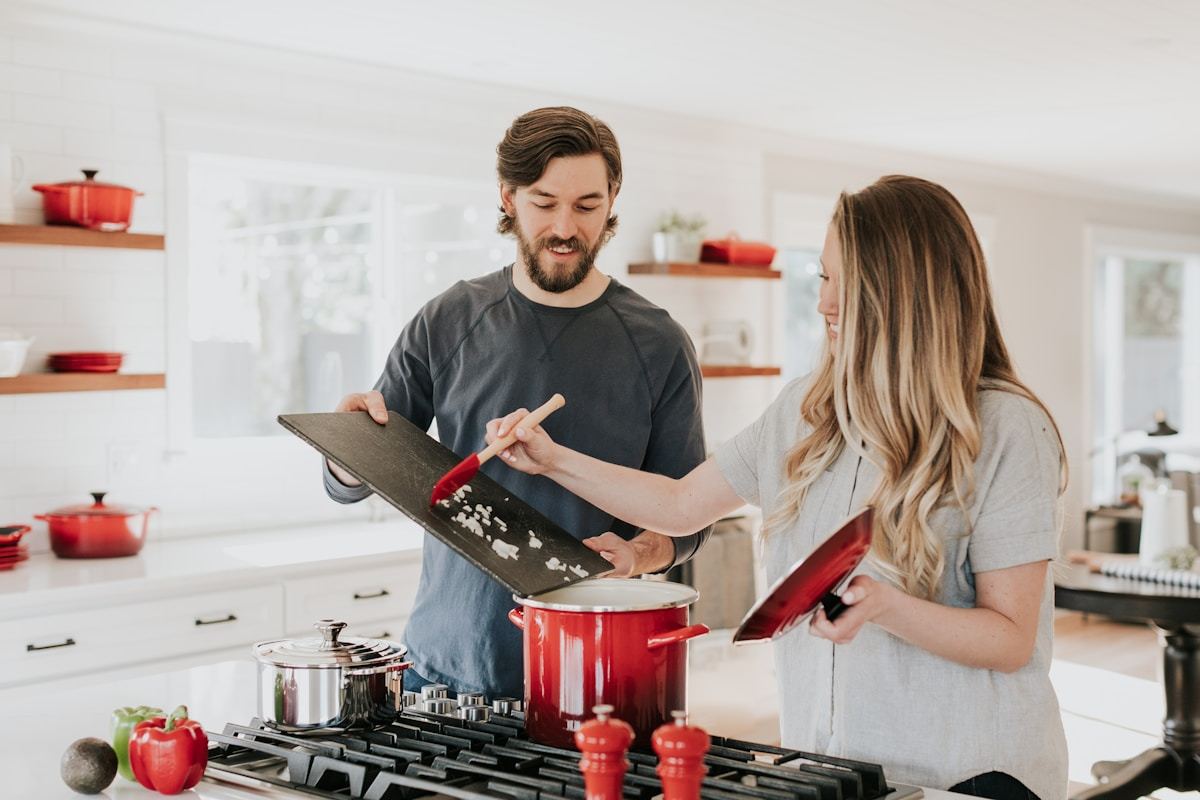 Kitchen Backsplash Ideas That Define Your Room (2026)
 Aging-in-Place Kitchen Island Ideas
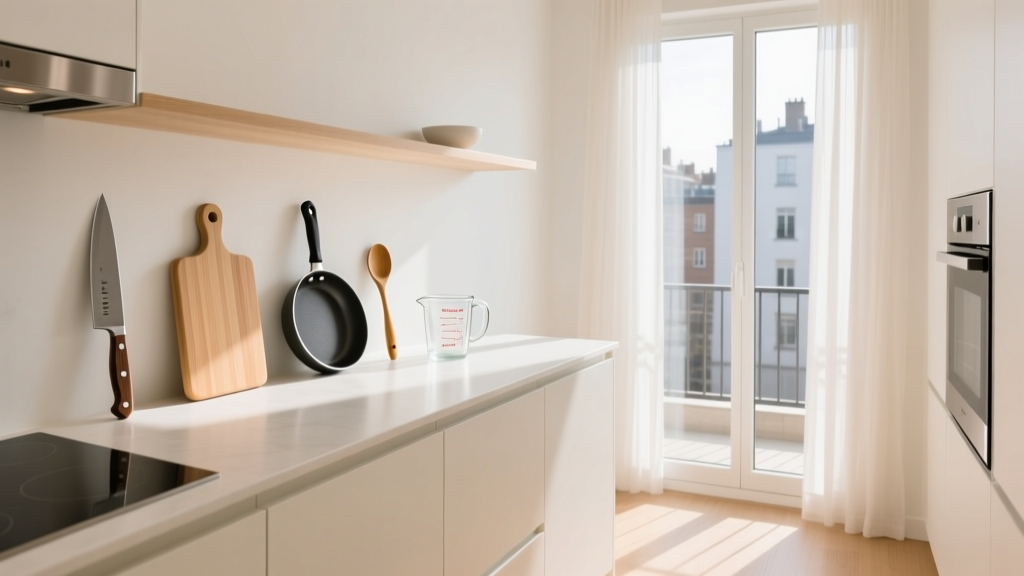 Minimalist Kitchen for One: Essential Tools & Layout (2026)
 Cheap vs Premium Bathroom: What You’re Really Paying For