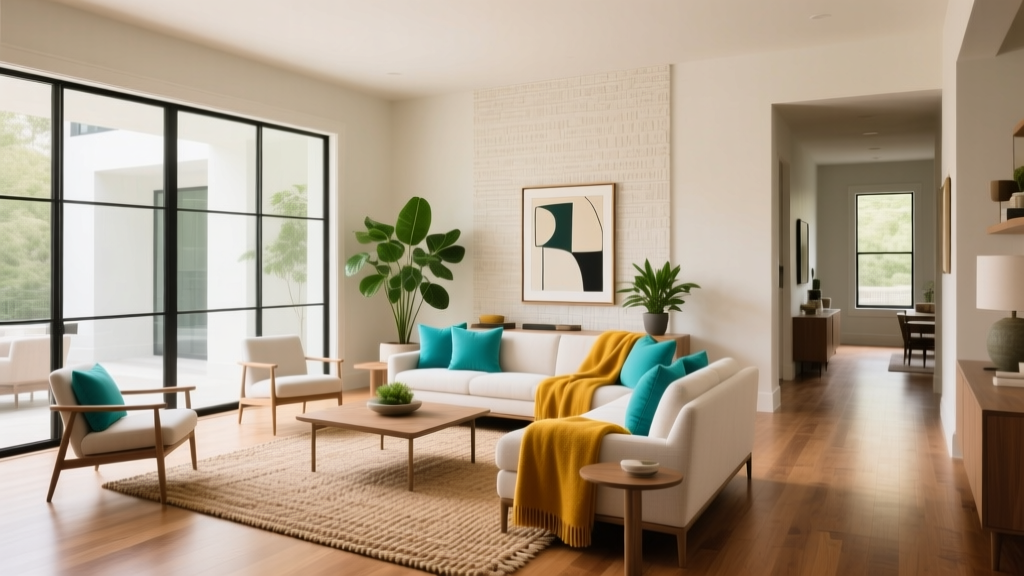
How to Layer Rugs in a Living Room
Why One Rug Often Isn't Enough
A single area rug anchors your seating group, but layering adds depth, defines sub-zones, and solves the too-small rug problem.
The Base Layer
Your bottom rug should be large enough for all front furniture legs to rest on it. Typically 8x10 or 9x12. Natural fiber rugs — jute, sisal, seagrass — make ideal base layers: neutral, durable, inexpensive at large sizes.
- Jute: Soft, warm tone, stains easily. Best for low-traffic rooms.
- Sisal: Tougher, stain-resistant, rougher texture.
- Seagrass: Naturally stain-resistant, limited colors.
The Top Layer
This is where personality lives. The key rule: the top rug must be at least 2 feet smaller on each side than the base rug for a visible framing border.
Texture Combinations
- Jute + vintage Persian: Classic pairing. Natural grounds ornate pattern.
- Flatweave + high-pile Moroccan: Height contrast creates luxury.
- Cowhide on wool: Organic shapes break geometric furniture arrangements.
Mistakes to Avoid
Same-size rugs: Looks like one wasn't big enough. Busy on busy: Keep one layer neutral. Slip hazards: Use non-slip pad between layers.
Lay out dimensions with painter's tape first. Live with the outlines for a day before buying.
More Articles
 Best Living Rooms for Safety: Designing a Secure, Accessible, and Resilient Home Hub
 TV Wall Units: Style Meets Storage
 Living Room Accent Wall: One Wall That Changes Everything
 How To Choose Bedding: A Practical, Science-Informed Guide for Better Sleep and Style
 Living Room Reading Nook Ideas That Work
 Studio Apartment Zones: One Room, Three Functions
 Cat-Friendly Living Room Shelves: Style + Function
 Cozy Living Room Decor: Warmth You Can Feel (2026)
Statement Sofas That Define Your Living Room
Cozy Living Room Decor: Warmth You Can Feel (2026)
Statement Sofas That Define Your Living Room
 Open Plan Living Room: Zoning Without Walls ? The Decor Mag