Small Space, Big Impact: The One-Room Studio Styling Guide
Studio Living Is a Design Challenge, Not a Compromise
There's a persistent myth that studio apartments are "starter homes"—temporary holding patterns until you can afford something bigger. But some of the most thoughtfully designed spaces I've ever seen are studios. When every square foot matters, you're forced to make intentional choices that larger homes let you avoid.
The result? Studios often end up more beautiful, more functional, and more personal than sprawling apartments filled with furniture bought to fill space rather than serve a purpose.
The Rule of Three Functions
Every successful studio I've designed or lived in organizes around exactly three primary functions:
Rest (sleeping area), Live (sitting/eating/entertaining), and Work (desk/productivity). Trying to fit a fourth function—dedicated dining, guest space, hobby room—almost always makes the space feel overcrowded.
Each function gets a "zone" defined by a rug, a furniture arrangement, or a change in ceiling treatment (even a pendant light at a different height creates a psychological zone boundary).
The Vertical Space Revolution
In a studio, floor space is precious but wall space is abundant. Exploit this:
- Floor-to-ceiling shelving: Not just for books. Use it for kitchen overflow, clothing display, and art. The vertical draw makes ceilings feel higher.
- Wall-mounted desk: Folds flat when not in use, saving 15-20 square feet of floor space
- High-mounted curtain rods: Hang curtains from ceiling to floor (even if windows are shorter). This creates the illusion of taller windows and higher ceilings.
- Overhead pot racks and kitchen shelving: Free up counter and cabinet space for prep work
The "Breathing Room" Principle
The biggest mistake in studio design isn't choosing the wrong furniture—it's not leaving enough empty space. A studio needs at least 30% of its floor area as clear walking paths and visual breathing room.
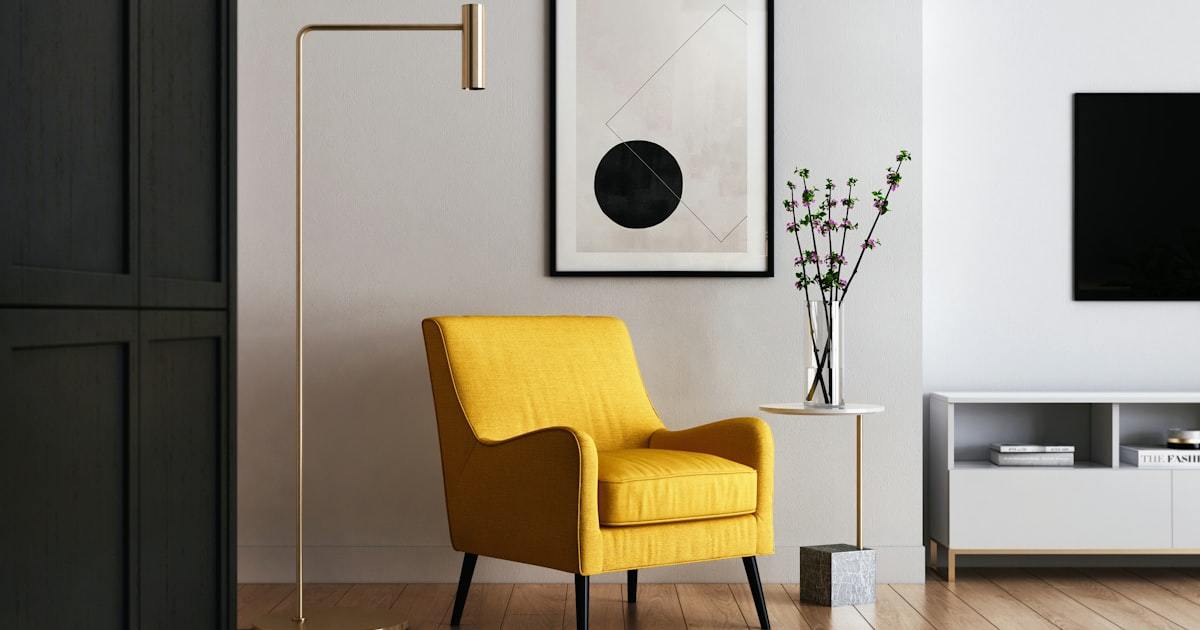
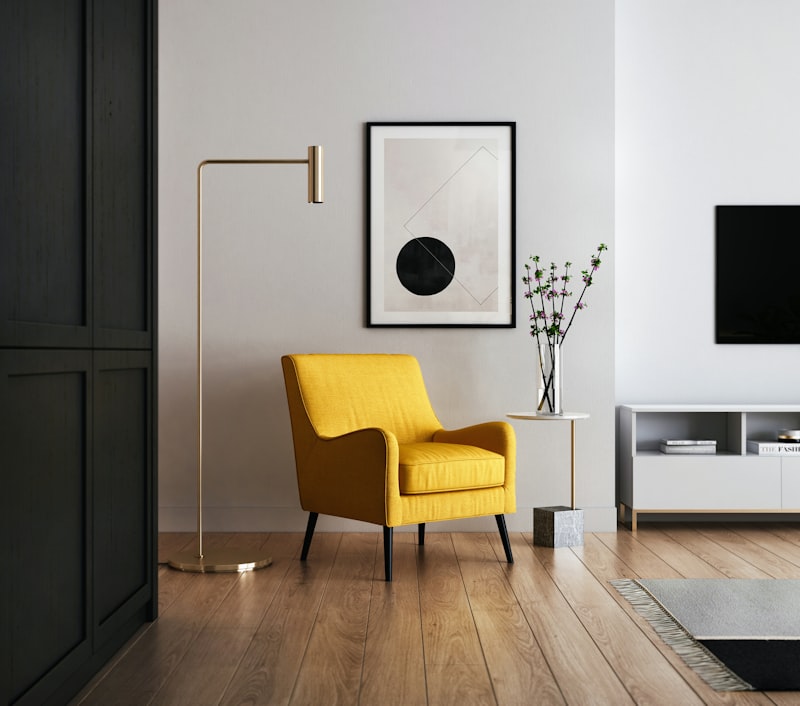
This means: fewer but better pieces. A loveseat instead of a full sofa. A bistro table instead of a dining table. A single statement chair instead of two matching ones. Each piece should earn its square footage through daily use.
Color Strategy for Small Spaces
Forget the "small rooms must be white" rule. What matters isn't the color—it's the consistency:
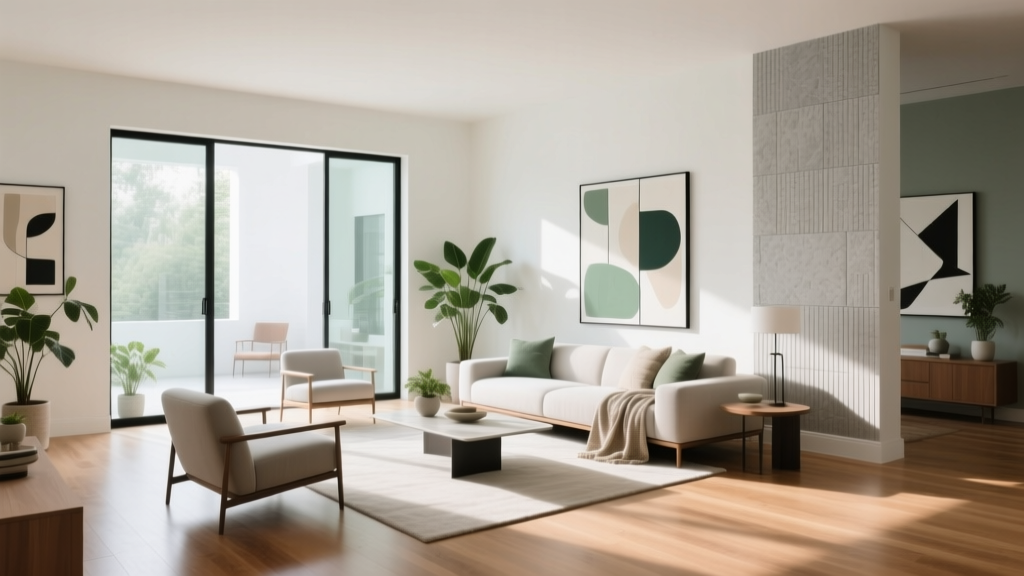
Monochromatic schemes (variations of one color family) make spaces feel larger because the eye doesn't stop at color transitions. A studio in shades of sage green—from walls to sofa to curtains—feels expansive rather than choppy.
If you want contrast, concentrate it in one accent zone. A deep navy reading nook in an otherwise cream studio creates drama without fragmentation.
A studio apartment doesn't need to pretend to be bigger. It needs to be more intentional. And intention is the foundation of all good design.
More Articles
 Pet Hair Resistant Fabrics: Best Upholstery for Dog & Cat Homes
 Japandi Style: Where East Meets Scandinavia
 Maximalist Decor Done Right: Bold Without the Chaos
 Pet-Friendly Fabrics: A Home Style Guide
 Art Deco Revival: Modern Takes on a Classic
 Japandi Living Room Style Guide
 Coastal Grandmother Style: Effortless Elegance at Home
 Pet-Safe Indoor Plants: A Style Guide for Homes With Cats and Dogs
 Pet-Friendly Scandinavian: Clean Lines That Survive Claws and Fur
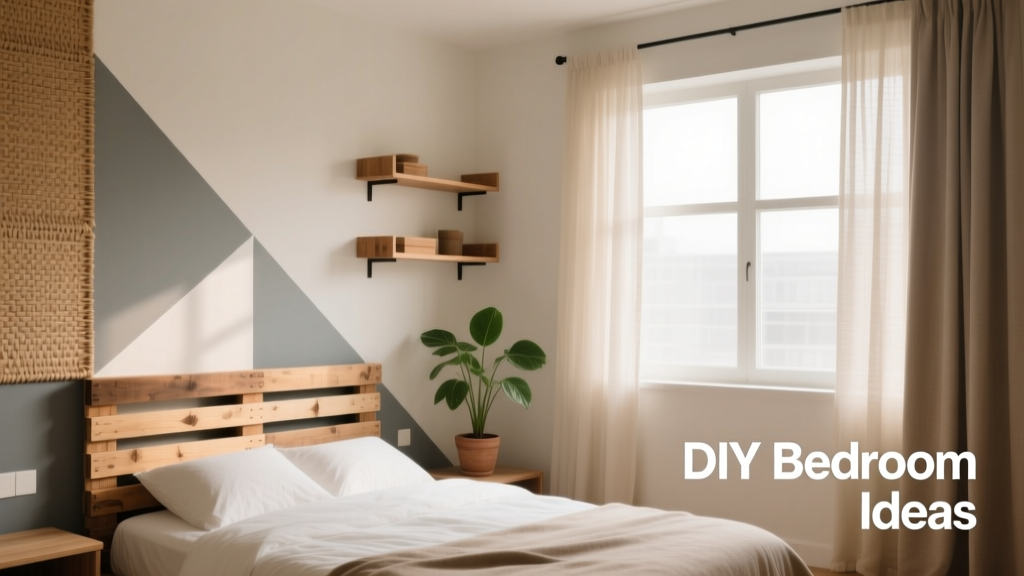 12 Practical DIY Bedroom Ideas That Save Money and Elevate Style