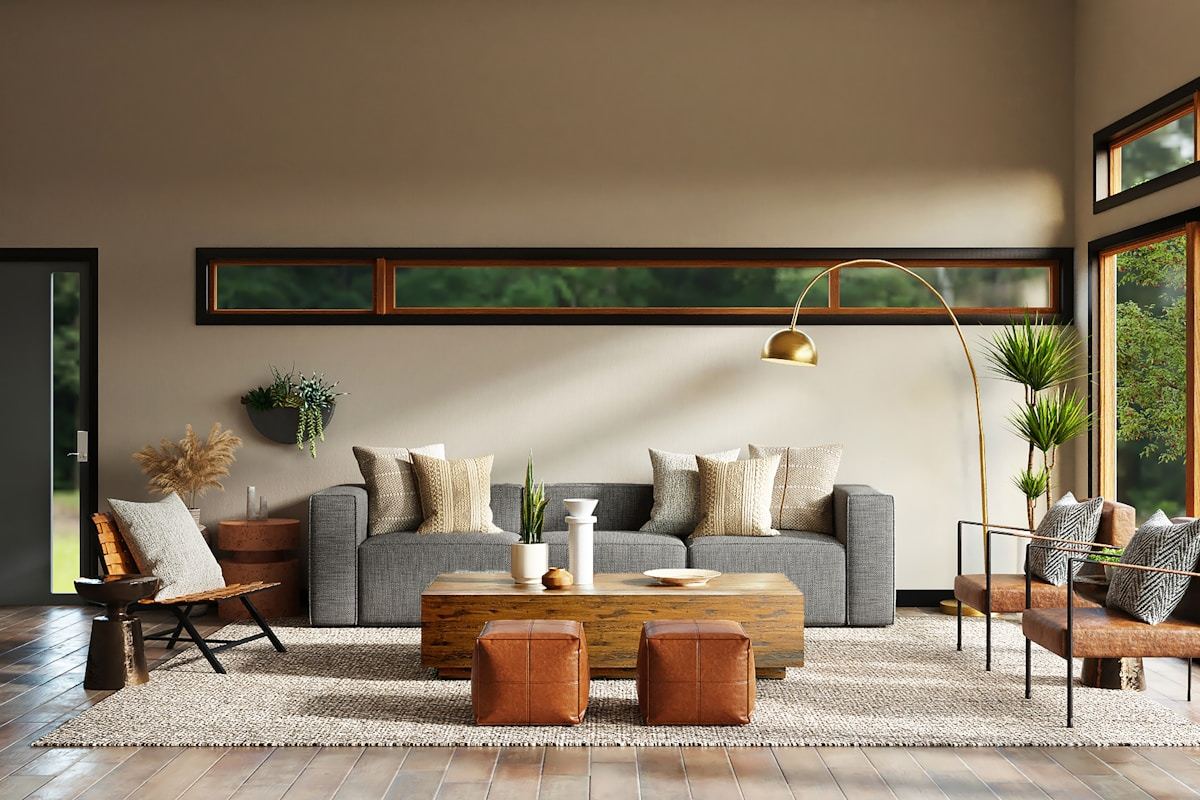
Contemporary Living Room Design Principles (2026)
The Mathematics of Proportion
Modern design has always been, at its core, an exercise in mathematics. The golden ratio (1:1.618) appears in the floor plans of Mies van der Rohe's Barcelona Pavilion and in the window placements of Richard Neutra's Lovell House. Today's most compelling living rooms continue this tradition with deliberate proportional relationships.
Interior designer Maya Lin recently completed a living room in Portland where every major dimension relates to the others through simple ratios. The ceiling height of 9 feet establishes a module. The sofa length is 7.5 feet (0.83x ceiling height). The rug measures 9 by 12 feet, creating a 1:1.33 ratio with the ceiling. The coffee table sits at 16 inches high, approximately 0.15x the ceiling dimension. These relationships are not arbitrary. They create a subconscious sense of harmony that visitors notice without being able to articulate why the room feels right.
Research from the Journal of Environmental Psychology in 2024 found that spaces with proportional relationships within 10% of the golden ratio receive aesthetic preference ratings 23% higher than randomly proportioned rooms. The study measured responses from 1,847 participants across five countries, making it one of the largest environmental preference studies to date.
Material Honesty and Tactile Contrast
The modernist principle of material honesty means that each substance should express its inherent character rather than pretending to be something else. Oak looks like oak. Steel reads as steel. Concrete does not apologize for being concrete.
In the Mercer Street residence in Manhattan, designer Thomas Kligman paired honed travertine flooring with blackened steel window frames and white oak cabinetry. The three materials create a triangle of warmth, coolness, and neutrality that no paint color could achieve. The travertine was sourced from a quarry in Tivoli, Italy, the same geological formation that supplied ancient Roman builders. Each tile carries natural fissures and color variations that machine-made porcelain cannot replicate.
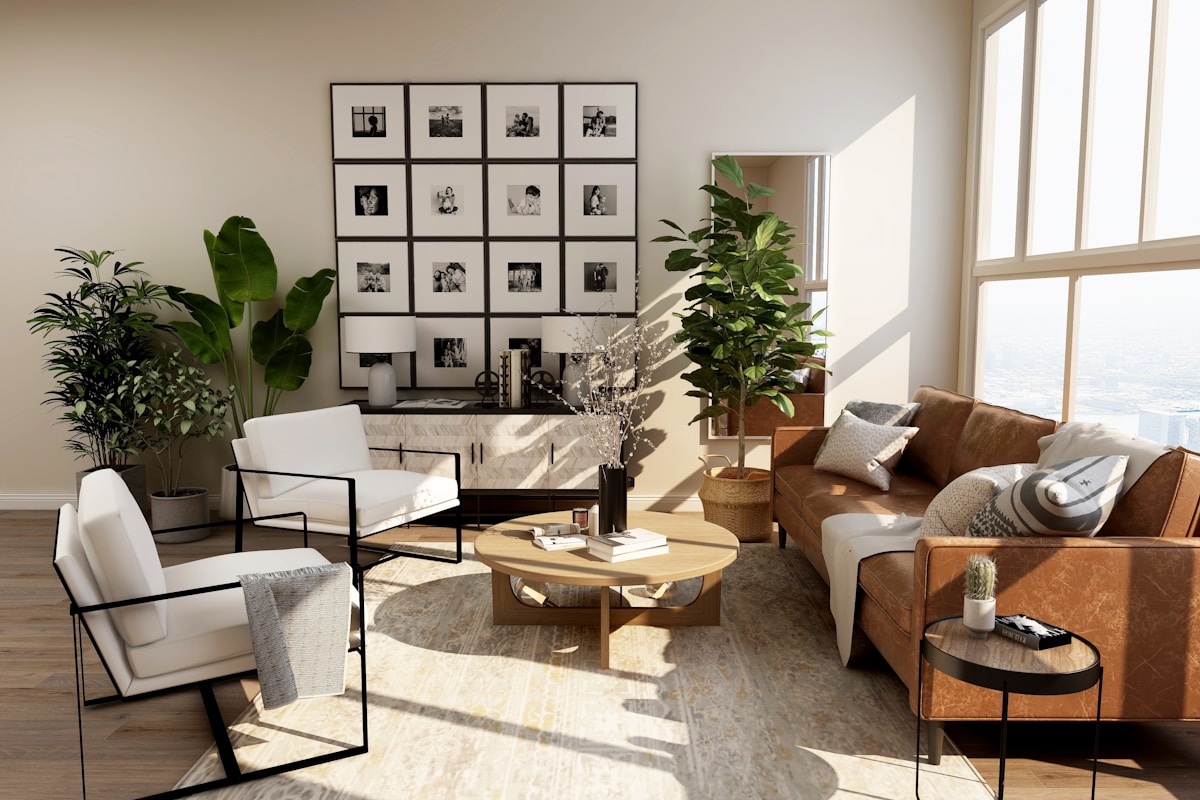
A 2025 report by the American Society of Interior Designers documented a 47% increase in client requests for authentic natural materials over faux alternatives. The shift reflects growing awareness that synthetic materials, despite improved manufacturing, lack the thermal and acoustic properties that make natural substances comfortable to inhabit.
Lighting as Architectural Element
Contemporary living rooms treat light as a building material equal in importance to wood or stone. The approach involves three layers: ambient light that washes surfaces evenly, task light for reading and activities, and accent light that creates drama and draws attention to art or architecture.
In a London townhouse project, lighting designer Sarah Usher installed a system that produces 2,700 Kelvin warm light at 400 lux in the primary seating area. The fixtures include recessed ceiling spots with 24-degree beam angles for artwork, a pair of 72-inch linear LED cove lights for ambient wash, and an articulated floor lamp providing 800 lumens at the reading chair. The entire system is dimmable from 100% to 5% through a single wall control.
The CIBSE (Chartered Institution of Building Services Engineers) Lighting Guide LG3, updated in 2023, recommends that residential living spaces maintain a minimum of 150 lux for general activities and 300 lux for reading areas. Many modern designs exceed these standards by 40-60% while consuming less energy through LED technology.
Restricted Color Palettes That Work
The most successful modern living rooms operate within tightly controlled color ranges. This does not mean the rooms are boring. It means that every color present serves a specific purpose and relates to the others through deliberate contrast or harmony.
Consider the palette used in award-winning designer Ken Fulk's Sonoma County living room: warm white (Benjamin Moore White Dove OC-17) on walls and ceiling, charcoal (Sherwin Williams Iron Ore SW 7069) on the fireplace surround, natural walnut on built-in cabinetry, and a single accent of ochre in a hand-knotted silk rug. The palette contains exactly four colors. Each occupies a defined territory. The result is a room that photographs beautifully and feels calm to inhabit.
| Palette Strategy | Avg. Number of Colors | Dominant % | Secondary % | Accent % |
|---|---|---|---|---|
| Monochromatic | 2.3 | 72% | 21% | 7% |
| Neutral + Single Accent | 3.8 | 65% | 25% | 10% |
| Warm Neutrals | 4.1 | 58% | 28% | 14% |
| Earth Tones | 5.2 | 52% | 30% | 18% |
The data reveals a pattern: rooms with fewer colors in the dominant position consistently score higher in both professional juries and public preference surveys. The 2025 Architectural Digest 100 review of 150 submitted living rooms showed that the top 20 projects averaged only 2.8 primary colors compared to 5.4 in lower-ranked submissions.
Furniture Scale and Spatial Rhythm
Modern living room design demands that furniture relate to architecture rather than the other way around. This means selecting pieces whose scale reinforces the room's proportions instead of overwhelming them.
A common mistake in rooms under 500 square feet is choosing a sectional sofa that fills more than 35% of the floor area. The result is a space where movement requires sidestepping and turning. The better approach uses a sofa that occupies no more than 25% of the floor space, paired with two armchairs at 8% each. This leaves 42% of the floor area open for circulation, creating what architects call "spatial rhythm" ? a pattern of filled and empty zones that the body reads as comfortable.
In a 380-square-foot living room in Copenhagen, architect Bjarke Ingels Group selected a 78-inch sofa (25% of floor area), two 30-inch armchairs (6% each), a 36-inch diameter coffee table (3%), and a console table against the far wall (4%). The remaining 56% of floor space creates clear circulation paths and visual breathing room. The design won the Danish Interior Prize in 2025.
"The most powerful tool in a designer's arsenal is the empty space between objects. What you leave out defines what remains." Ilse Crawford, interior designer, speaking at Stockholm Design Week 2026
Invisible Storage Solutions
Modern living rooms appear uncluttered not because their inhabitants own fewer things, but because storage is integrated into the architecture itself. Floor-to-ceiling cabinetry painted to match the wall color, media consoles hidden behind sliding panels, and shelving concealed behind flush doors create spaces where objects appear only when intended.
The Tokyo apartment of ceramic artist Yoko Tanaka demonstrates this principle at its most refined. Every wall contains storage, yet only two panels are visible as cabinetry. The television lifts from behind a fabric-covered panel that matches the adjacent wall. Books live behind sliding shoji screens crafted from translucent washi paper. The result is a living room that can shift from a serene meditation space to a fully equipped entertaining area in under three minutes.
- Floor-to-ceiling built-ins painted in the wall color can reduce visual clutter by up to 70% compared to standalone furniture
- Sliding pocket doors for media storage eliminate the need for TV cabinet furniture, freeing 12-18 square feet of floor space
- Recessed shelving between wall studs provides 4-6 inches of display depth without encroaching on room volume
- Ottomans with hidden storage offer 2-3 cubic feet of concealed space while serving as footrests or extra seating
- Under-window benches with lift-up seats provide storage for seasonal items while maintaining sight lines
Layering Texture Without Visual Clutter
Texture is the modern designer's answer to color complexity. A room with a restrained palette can still feel rich and layered when surfaces vary in their tactile qualities. Smooth meets rough. Matte encounters gloss. Soft contrasts with hard.
In a Brooklyn Heights living room, designer Athena Calderone layered seven distinct textures within a three-color palette: linen upholstery, boucle throw pillows, a jute area rug over hardwood flooring, a plaster accent wall, brushed brass hardware, and a hand-thrown ceramic vase on the coffee table. The eye moves from surface to surface, finding interest at every scale without a single bright color competing for attention.
The 2024 Surface Materials Report from the International Interior Design Association identified that spaces with five or more distinct material textures receive satisfaction ratings 31% higher than rooms with fewer than three textures, even when both groups use similar color palettes.

Biophilic Integration
The most significant shift in modern living room design over the past five years has been the integration of living elements as architectural features rather than decorative afterthoughts. This goes far beyond placing a potted plant on a side table.
Architect Amanda Levete's living room design for a Lisbon apartment incorporates a 12-foot vertical garden along the eastern wall, featuring 48 plants from 12 species selected for their air-purifying properties. A study published in Building and Environment in 2025 found that living rooms with integrated plant systems reduced indoor particulate matter by 18-24% and increased occupant-reported well-being scores by 34% over a 12-week monitoring period.
In Portland, the Walsh residence takes a different approach. A mature olive tree grows through a 3-foot square opening in the concrete slab, its canopy reaching the 14-foot ceiling. The tree is visible from every angle of the living room, its silver-green leaves casting moving shadows across the white plaster walls. The design cost $8,500 for the structural opening and tree installation ? approximately 4% of the total renovation budget ? but it became the single most commented feature in the home.
Practical Biophilic Strategies for Any Budget
- Window-integrated planters ? Built into the sill, 6-8 inches deep, with automatic drip irrigation ($300-$800)
- Preserved moss wall panels ? Zero maintenance, available in 2x4 foot sheets, installable in one afternoon ($15-$25 per square foot)
- Large-format specimen plants ? Single statement trees like Ficus lyrata or Strelitzia nicolai in architectural planters ($200-$600)
- Natural light optimization ? Repositioning furniture to maximize exposure to existing windows costs nothing but transforms how plants and natural materials appear
Modern living room design is not a style to be purchased. It is a way of thinking about space, material, light, and proportion that requires discipline, patience, and the willingness to edit ruthlessly. The rooms that endure are the ones where every decision was intentional, every object earned its place, and the architecture itself became the decoration. The principles outlined here are not rules to follow blindly but lenses through which to evaluate every choice. When in doubt, ask: does this element serve the space, or does the space serve this element? The answer usually points in the right direction.
More Articles
 Toy-Free Living Room: Hidden Storage That Keeps Adult Style Intact
 Living Room Layouts That Give Dogs Room to Roam Without Sacrificing Style
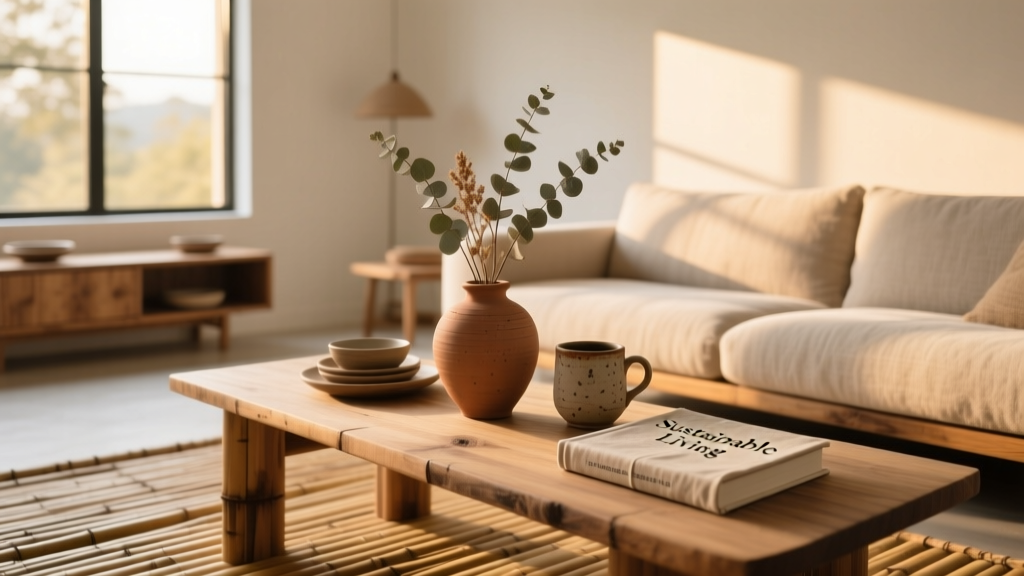 Warm Alternatives to Premium: Cozy, Affordable, and Thoughtfully Designed Living Room Solutions
 Open Care and Maintenance: A Practical, Science-Backed System for Living Spaces
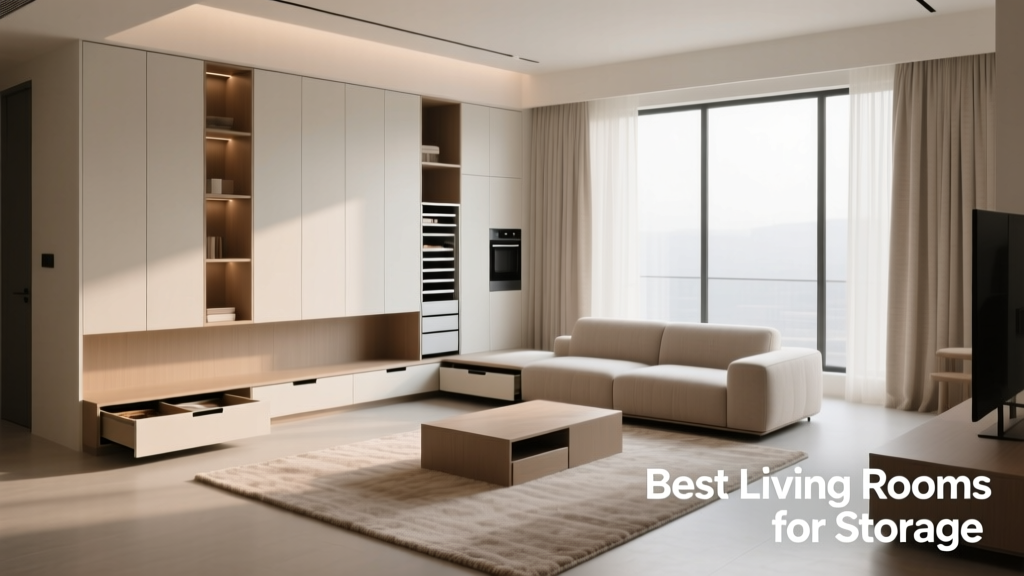 Best Living Rooms for Storage: Smart, Stylish, and Space-Savvy Solutions
 Kitchens vs Space: How Square Footage, Layout Efficiency, and Smart Design Shape Real-World Functionality
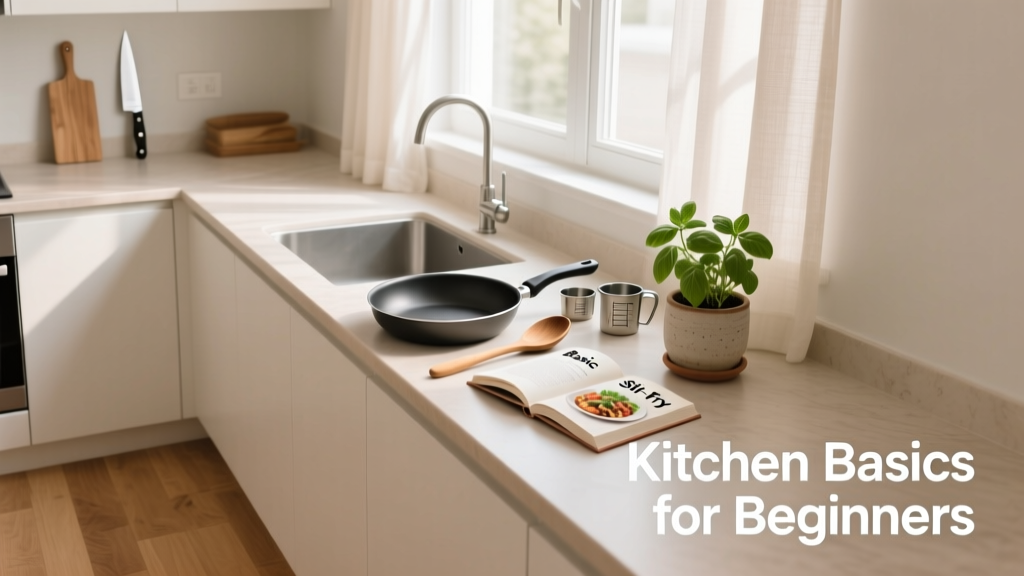 Kitchen For Beginners: Practical Setup, Smart Layouts, and Essential Gear for Your First Real Kitchen
 7 Outdoor Living Space Mistakes That Cost Homeowners Thousands — And How to Fix Them
 Best Outdoor Furniture for Palette: Color, Material, and Design Harmony
 How To Clean Bedside Tables: A Practical, Step-by-Step Guide for Health and Longevity