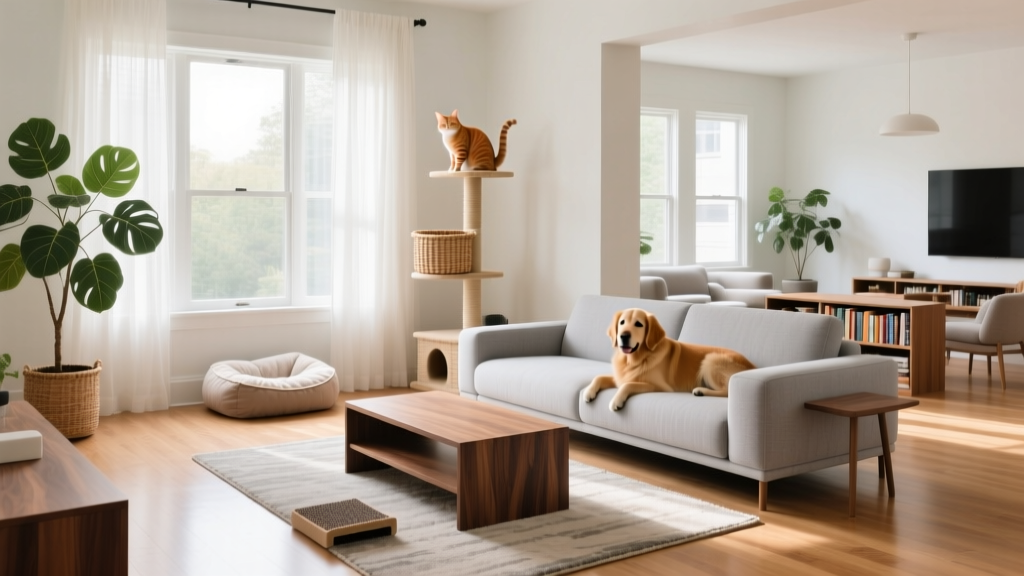
Pet-Friendly Living Room: Furniture Layouts That Work for Dogs, Cats, and Guests
Living With Pets Doesn't Mean Living in Chaos
The most stylish living rooms I've seen belong to people with multiple pets. The secret isn't keeping pets out of the room — it's designing the room around their needs so everything works together naturally.
A pet-friendly living room has three characteristics: furniture placed to handle traffic patterns, materials chosen for durability and easy cleaning, and designated pet spaces that feel intentional rather than afterthought.
Furniture Layout for Pet Traffic
Dogs and cats have their own traffic patterns through a room. Dogs tend to patrol the perimeter; cats prefer elevated pathways. Work with these instincts rather than against them:
- Leave a 24-inch pathway along at least one wall — this is your dog's natural patrol route. Don't block it with furniture
- Create vertical cat highways using bookshelves, floating shelves, or cat-specific wall furniture that connects to window perches
- Float furniture away from walls when possible — this creates defined zones and gives pets room to navigate without squeezing between pieces
The worst layout for pets is furniture pushed against every wall with a single open area in the center. This creates a bowling alley effect where dogs build speed and cats have nowhere to climb.
Fabric and Material Choices That Survive Pets
Upholstery takes the most abuse in pet households. Here's what actually works:
Microfiber and microsuede resist claw pulls and wipe clean easily. They're the most practical choice for homes with cats, as claws tend to slide off rather than catch in the weave.
Performance velvet (Crypton, Sunbrella) looks luxurious while repelling pet hair, moisture, and odors. The short pile doesn't trap hair the way longer weaves do.
Leather is surprisingly practical — pet hair doesn't cling, and spills wipe up instantly. The downside is claws, but modern distressed leather hides minor scratches beautifully.
For area rugs, choose flat-weave or low-pile options in synthetic materials (polypropylene, nylon). These can be hosed off outside and dry quickly. Avoid loop-pile rugs — cat claws catch in loops and pull threads.
The Intentional Pet Zone
Every pet-friendly living room needs a designated pet area that looks like it belongs. This isn't just a bed in the corner — it's a thoughtfully designed space:
For dogs: A built-in window bench with a washable cushion gives your dog their own "sofa" with a view. Add a built-in toy bin underneath for easy cleanup.
For cats: A cat tree that matches your decor (there are gorgeous modern options in walnut and white) placed near a window with a bird feeder outside. This becomes their entertainment center and keeps them off your actual furniture.
Managing Pet Hair and Odor
Design choices that minimize visible pet hair:
- Choose furniture colors close to your pet's coat color — a golden retriever owner should avoid navy, and a black cat owner should avoid cream
- Air purifiers with HEPA filters designed for the room's square footage
- Washable throw blankets on pet-favorite spots — easier to launder than upholstery
The goal is a living room where guests can't tell you have three pets until they see them curled up on their designated spots.
More Articles
 The Livingroomideas Spaces Checklist: A Practical, Room-by-Room Design Audit for Real Homes
 Beyond Paint Swatches: 7 Functional, Textural, and Spatial Setup Alternatives to Relying on Color Alone
 Living Room Layouts That Give Dogs Room to Roam Without Sacrificing Style
 Living Room Lighting: Designer Layered Illumination Tips
 One-Room Living: How to Zone a Studio Apartment Into Distinct Living Areas
 Colors Trends 2026: The Science, Psychology, and Real-World Applications Shaping Living Spaces
 Living Room Reading Nook Ideas That Work
 Studio Living Room Zones: Sleeping, Working, and Lounging in 300 Square Feet
 Best Outdoor Furniture for Palette: Color, Material, and Design Harmony
 Cozy Living Room Decor: Warmth You Can Feel (2026)