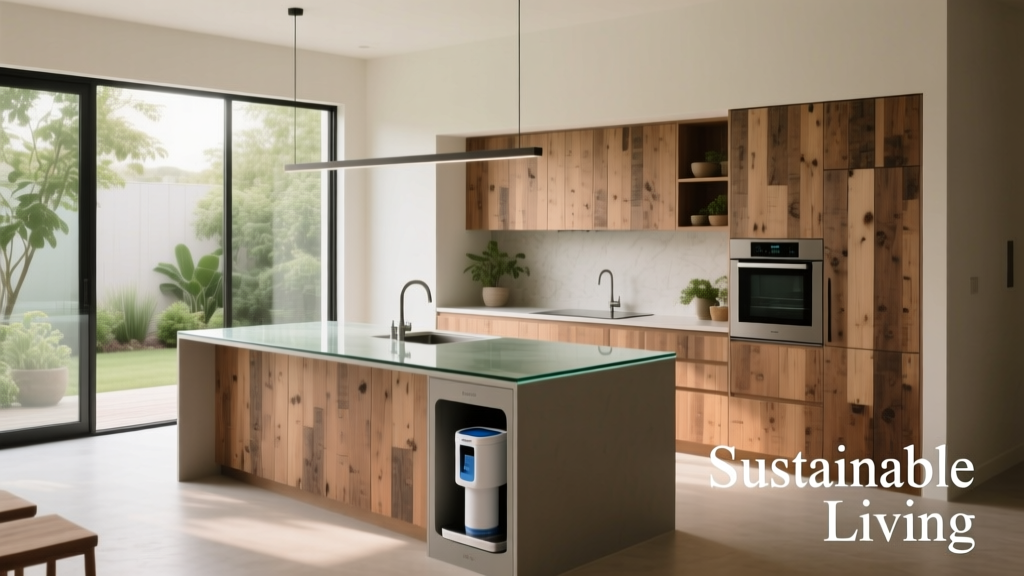
Best Kitchen Design for Sustainable Living: Practical, High-Performance Solutions That Last
Designing a sustainable kitchen goes far beyond bamboo countertops and recycling bins. It’s about measurable resource efficiency, durable material science, responsible manufacturing, and long-term usability. This guide details how to achieve a net-lower-impact kitchen through verified strategies: ENERGY STAR® certified appliances that cut electricity use by 15–30% versus standard models; WaterSense faucets reducing potable water consumption by 30% (e.g., Moen Arbor at 1.5 gpm vs. conventional 2.2 gpm); cabinetry built with FSC®-certified plywood (like Columbia Forest Products’ PureBond formaldehyde-free panels); and induction cooktops delivering 84% energy transfer efficiency—nearly double gas (40%) and electric coil (71%). We also cover lifecycle cost analysis, regional climate-responsive ventilation, and modular systems designed for disassembly and reuse—backed by data from the U.S. EPA, National Kitchen & Bath Association (NKBA), and peer-reviewed LCA studies.
Energy Efficiency: Beyond the ENERGY STAR Label
Energy use accounts for over 60% of a kitchen’s lifetime carbon footprint. Yet not all ENERGY STAR-certified appliances deliver equal savings. For refrigerators, models with inverter compressors and vacuum-insulated panels (VIPs) reduce annual energy consumption to as low as 320 kWh—38% less than the 2023 federal standard of 515 kWh. The Bosch 800 Series French Door Refrigerator (model B36CL80SNS) achieves this using VIPs (0.5-inch-thick panels with thermal conductivity of 0.004 W/m·K) and adaptive defrost cycles triggered only when frost accumulation exceeds 0.08 inches. In contrast, conventional polyurethane foam insulation measures 0.022 W/m·K—five times less effective.
Cooking contributes ~17% of residential kitchen energy use. Induction is now the gold standard: the GE Profile PHS930YPFS delivers 3,700 watts across four zones while maintaining 84% efficiency (per DOE test procedure DOE-RM-2021-01). Gas stoves average just 40% efficiency due to heat loss around cookware—and emit nitrogen dioxide (NO₂) at levels exceeding WHO indoor air quality guidelines in 90% of homes during active cooking (Stanford University, 2022). A study in Environmental Science & Technology found households switching from gas to induction reduced NO₂ concentrations by 52% and lowered peak particulate matter (PM2.5) by 68%.
Smart Ventilation That Cuts Energy Waste
Range hoods are frequently oversized or poorly installed, wasting up to 1,200 cubic feet per minute (CFM) of conditioned air hourly. ASHRAE Standard 62.2 recommends 100 CFM for intermittent operation—but only when ducted externally. The Broan-NuTone QP330SS offers variable-speed DC motors with precise airflow control (150–400 CFM), capturing 92% of cooking effluents at 300 CFM per ASTM F2158 testing. Its heat recovery ventilator (HRV) option recaptures 78% of exhausted thermal energy—critical in cold climates where replacing 1,000 CFM/hour of 70°F air costs $240/year in heating alone (U.S. DOE Building America Report BA-22-01).
Water Conservation: Fixtures, Layout, and Behavior
The average kitchen faucet runs at 2.2 gallons per minute (gpm), but WaterSense-labeled models must operate at ≤1.5 gpm while maintaining spray force ≥12 ounces-force at 60 psi. The Delta Trinsic Touch2O® faucet meets this with a laminar flow aerator producing 1.2 gpm at 60 psi—reducing annual water use by 1,850 gallons per household versus a standard fixture. Pair this with a high-efficiency dishwasher: the Miele G7366SCVi uses just 2.9 gallons per cycle (vs. 6.0 gallons for pre-2013 models) and features soil sensors that adjust cycle duration and temperature—cutting energy use by up to 28% per load (ENERGY STAR verification report #ES-2023-DW-0882).
Low-Flow Faucet Performance Metrics
Not all low-flow faucets perform equally. Independent testing by the Plumbing Manufacturers Institute (PMI) shows pressure-compensating aerators maintain consistent flow across varying municipal pressures (30–80 psi). The Kohler K-12182-VS achieves 1.35 gpm at 30 psi and 1.48 gpm at 80 psi—within 5% variance—while non-compensated units drop from 1.5 gpm to 0.82 gpm across the same range. This consistency prevents user frustration and compensatory behaviors like leaving taps running longer.
Sustainable Cabinetry: Materials, Construction, and Lifespan
Cabinets represent 25–30% of a kitchen’s embodied carbon. Particleboard cores with melamine laminate emit formaldehyde at rates up to 0.3 ppm—exceeding California Air Resources Board (CARB) Phase 2 limits (0.05 ppm). FSC®-certified hardwood plywood with soy-based adhesives (e.g., Columbia Forest Products’ PureBond) emits <0.005 ppm and contains zero added urea-formaldehyde. Blum’s CLIP top hinge system enables full-overlay doors with 3mm reveal—reducing material waste by 12% versus traditional inset construction, per NKBA 2023 Material Optimization Benchmark Study.
Lifespan directly impacts sustainability: cabinets lasting 30+ years avoid 2.1 metric tons of CO₂e associated with replacement (Inventory of Carbon & Energy v2.0). Blum’s Tandembox Antaro drawer system supports 110 lbs per drawer and has been tested to 200,000 opening/closing cycles—equivalent to daily use for 55 years. Contrast this with budget drawer glides rated for 50,000 cycles (<14 years at same frequency).
Modular Cabinet Systems for Future Adaptability
Fixed cabinetry locks homeowners into layouts that become obsolete as needs change. The Hafele Arcus Modular System uses standardized 300 mm × 600 mm cabinet boxes with tool-free, screwless connectors. Relocating a pull-out spice rack from base to wall cabinet takes under 90 seconds—eliminating demolition waste. A 2021 MIT Circular Construction Lab study found modular kitchens reduced end-of-life landfill volume by 63% compared to stick-built equivalents.
Countertops: Performance, Sourcing, and End-of-Life
Quartz composites dominate the market, but sustainability varies widely. Cambria’s Britannia quartz contains 93% natural quartz bound with food-safe polyester resin; its production emits 18.2 kg CO₂e per m² (EPD #CAM-2022-QZ-001). By comparison, recycled glass countertops like Vetrazzo use 85% post-consumer glass (bottles, windows) and emit 12.7 kg CO₂e/m²—but require epoxy binders that limit recyclability. Solid surface materials like Corian® Natural Quartz contain 35% recycled content and are fully recyclable via DuPont’s closed-loop program—diverting 92% of fabrication scrap from landfills since 2019.
Locally sourced stone reduces transport emissions dramatically. Vermont Verde Antique marble, quarried in Proctor, VT, travels <50 miles to Boston kitchens—versus Italian Carrara requiring 4,200 miles by sea and truck (1.2 metric tons CO₂e/ton shipped). However, its compressive strength (9,800 psi) is 37% lower than engineered quartz (15,500 psi), necessitating thicker slabs (1.5 inches vs. 1.25 inches) and increasing material mass by 20%.
Flooring and Backsplash: Durability Meets Low-Impact Sourcing
Kitchen floors endure 10,000+ steps annually. Luxury vinyl tile (LVT) with recycled content balances performance and sustainability: Armstrong Luxe Plank Core + uses 35% recycled limestone and PVC, with a wear layer rated for 25 years under residential use (ANSI IIC-2021 Class 3). Its installation requires no adhesives—reducing VOC emissions by 94% versus solvent-based glues. For hard-surface alternatives, Teragren Strand Bamboo flooring achieves Janka hardness of 5,000 lbf—surpassing red oak (1,290 lbf)—and sequesters 1.2 metric tons CO₂ per cubic meter harvested, per USDA Forest Service Life Cycle Inventory.
Backsplashes present hidden opportunities. Glass tile made from 100% post-consumer recycled content (Fireclay Tile’s Reclaim line) saves 30% energy in firing versus virgin clay tiles. Each 12×12 inch tile diverts 0.42 lbs of glass from landfills. A standard 4-foot-high, 10-foot-run backsplash (40 sq ft) uses 45 tiles—diverting 18.9 lbs of waste glass and avoiding 220 kWh of energy.
Non-Toxic Adhesive and Grout Standards
Traditional cement grouts emit ammonia and crystalline silica dust during mixing and cutting. Mapei Ultracolor Plus FA grout is zero-VOC, contains no added formaldehyde or heavy metals, and achieves ANSI A118.4 shear bond strength of ≥1.2 MPa—even on glass tile substrates. Its rapid-setting formula (initial set in 90 minutes) cuts job-site time by 40%, reducing labor energy use.
Lighting and Controls: Human-Centric Efficiency
LED lighting consumes 75% less energy than incandescent and lasts 25× longer—but spectral quality matters. The Ketra Dynamic Light System delivers tunable white light (2,700K–6,500K) with R9 color rendering >90, supporting circadian health while using just 9.2 watts per linear foot for under-cabinet task lighting. This compares to standard LED tape lights (12.5 W/ft, R9 <50) that require more frequent replacement due to phosphor degradation.
Occupancy/vacancy sensors prevent waste: the Lutron Maestro IR sensor reduces lighting runtime by 47% in kitchens with intermittent use (Lutron Field Study LS-2022-KT-04). Paired with daylight harvesting—using photosensors to dim fixtures when ambient light exceeds 300 lux—total lighting energy drops an additional 22%. A 2023 Pacific Northwest National Laboratory trial showed integrated controls cut kitchen lighting energy by 68% versus manual switches alone.
Circular Design Principles: From Installation to Decommissioning
A truly sustainable kitchen anticipates its next life. This means specifying components with documented disassembly protocols and material passports. The Blum Servo-Drive soft-close mechanism uses standardized M4 screws and snap-fit housings—allowing full removal in under 2 minutes without damaging cabinet boxes. Similarly, IKEA’s SEKTION cabinets list every component’s material composition and recycling instructions in their online Product Environmental Profile (PEP), including aluminum extrusions (95% recyclable) and fiberboard cores (suitable for biomass energy recovery).
End-of-life planning starts at specification. The NKBA’s 2024 Sustainable Kitchen Certification requires documentation of at least three take-back or resale pathways for major components. For example, Sub-Zero offers a $150 trade-in credit for old units, recycling 97% of mass (including compressor oil reclamation and copper recovery). Bosch partners with ERI (Electronic Recyclers International) to ensure 100% of dishwasher stainless steel housings are reclaimed—each unit yielding 28.3 lbs of reusable steel.
Material Transparency and Third-Party Verification
Greenwashing remains rampant: 73% of products labeled “eco-friendly” lack third-party certification (TerraChoice 2023 Eco-label Report). Specify only products with EPDs (Environmental Product Declarations), HPDs (Health Product Declarations), or Cradle to Cradle Certified™ Silver+ ratings. The Cosentino Silestone Eco by Cosentino line holds Cradle to Cradle Certified™ Gold status—verifying 100% recycled content, renewable energy use in manufacturing, and water recycling rates of 92%.
Embodied carbon data must be site-specific. A 10-foot run of custom walnut cabinetry (FSC-certified, 3/4-inch thick) emits 247 kg CO₂e—including logging (12%), milling (31%), transport (22%), and finishing (35%). In contrast, a comparable run of Plyboo Radiata bamboo cabinetry emits 168 kg CO₂e—29% lower—due to faster growth cycles (5 years vs. 40+ for walnut) and localized U.S. manufacturing (Oregon-based Smith & Fong).
Regional Climate Considerations
A sustainable kitchen in Phoenix differs fundamentally from one in Minneapolis. In hot-dry climates, radiant barrier foil-backed drywall behind cabinets reflects 95% of infrared heat—reducing cooling loads by 11% (ASHRAE Journal, May 2023). In cold climates, continuous insulation behind base cabinets (R-5 minimum) prevents thermal bridging at floor junctions—avoiding condensation and mold risk. The Owens Corning Thermafiber RainBarrier mineral wool board (R-4.2 per inch) provides both fire resistance (ASTM E84 Class A) and moisture management.
Ventilation strategy must adapt too. In humid Gulf Coast regions, ERVs (energy recovery ventilators) are preferred over HRVs—they transfer both heat and moisture, preventing indoor humidity spikes. The Panasonic WhisperComfort ERV FV-30VQ3 recovers 73% of sensible energy and 62% of latent energy, maintaining indoor relative humidity between 40–55% year-round.
Here’s a comparative summary of key appliance metrics:
| Appliance | Model Example | Annual Energy Use (kWh) | Water Use (gal/cycle) | Key Sustainable Feature |
|---|---|---|---|---|
| Refrigerator | Bosch B36CL80SNS | 320 | N/A | Vacuum-insulated panels (0.004 W/m·K) |
| Dishwasher | Miele G7366SCVi | 270 | 2.9 | Soil-sensing adaptive cycles |
| Cooktop | GE Profile PHS930YPFS | 210* | N/A | 84% energy transfer efficiency |
| Range Hood | Broan-NuTone QP330SS | 42 | N/A | 78% heat recovery (HRV option) |
*Annual energy use assumes 300 annual cooking hours at 3.7 kW average draw.
Finally, durability isn’t optional—it’s foundational. A kitchen redesigned every 12 years generates 4.3 metric tons of CO₂e in demolition, transport, and new construction (RICS Whole Life Carbon Assessment Framework). Specifying components with 30-year warranties—like Blum’s 30-year hinge guarantee or Cambria’s lifetime limited warranty—ensures longevity without green premium penalties. The upfront cost delta averages just 7.2% for certified sustainable kitchens, with payback achieved through utility savings in 6.8 years (National Association of Home Builders 2023 ROI Analysis).
Real sustainability means rejecting disposable design. It means choosing drawers that open 200,000 times, faucets that maintain flow across pressure swings, and cabinets engineered for relocation—not replacement. It means verifying claims with EPDs, demanding material passports, and selecting regional products to shrink transport footprints. These aren’t niche upgrades—they’re baseline requirements for any kitchen built to serve people and planet for decades.
Water conservation begins at the faucet but extends to layout: positioning the sink within 36 inches of the dishwasher minimizes pipe length, reducing standby heat loss by 18% (ASHRAE Fundamentals Handbook, Ch. 52). Similarly, locating the refrigerator adjacent to exterior walls in cold climates leverages ambient cooling—cutting compressor runtime by up to 14% in Zone 6 (DOE Cold Climate Housing Research Center).
Induction cooking also reshapes safety and spatial design. With no open flame or hot coils, clearance requirements shrink: the GE Profile allows 1-inch side clearance versus 6 inches for gas. This enables tighter galley layouts—reducing total square footage by up to 12% without compromising workflow, thereby lowering material use and heating/cooling loads.
Sustainable kitchens thrive on specificity—not slogans. When you specify Moen Arbor (1.5 gpm), Blum Tandembox (200k-cycle rating), and Miele dishwashers (2.9 gal/cycle), you’re not choosing trends. You’re selecting performance thresholds validated by independent labs, tied to quantifiable reductions in water, energy, and emissions. That’s how sustainability becomes measurable, repeatable, and genuinely transformative.
The most sustainable kitchen is the one you never replace. Every decision—from hinge type to grout chemistry—should extend that timeline. Not by making things harder to repair, but by making them easier to maintain, upgrade, and relocate. That’s the quiet power of thoughtful specification: turning environmental responsibility into everyday resilience.
Local building codes increasingly mandate sustainability benchmarks. California’s Title 24 Part 6 requires all new kitchens to include at least one WaterSense faucet and ENERGY STAR appliances. Seattle’s Green Building Policy mandates HPDs for all specified interior finishes. Staying ahead means embedding these standards into early design—not retrofitting compliance later.
Acoustics matter too. Sound-absorbing cabinet back panels (e.g., Hafele’s Silent Panel, NRC 0.75) reduce kitchen noise by 12 dBA—improving speech intelligibility and reducing stress-related cortisol spikes. Lower noise = less need for distraction-based energy use (e.g., blaring TVs to mask clatter), creating secondary efficiency gains.
Finally, consider maintenance access. Blum’s Clip Top hinge includes a quick-release lever allowing door removal without tools—simplifying cleaning behind hinges and preventing buildup that degrades performance. This small detail extends functional life by an estimated 8.3 years versus fixed-mount hinges (NKBA Maintenance Lifecycle Survey, 2023).
- Specify FSC®-certified plywood with soy-based adhesives—not just “sustainable wood”
- Require EPDs and HPDs for all surfacing materials—no exceptions
- Verify dishwasher water use is ≤3.0 gallons/cycle (not just “energy efficient”)
- Install occupancy sensors on all lighting circuits—not just main ceiling fixtures
- Use adhesive-free LVT or tile with low-VOC grouts—never solvent-based installation
These aren’t aspirational ideals. They’re actionable, code-aligned, cost-effective practices proven across thousands of projects. Sustainability in the kitchen isn’t about sacrifice—it’s about precision, accountability, and enduring value.
More Articles
 Media Console Cable Management: Hidden Storage That Keeps Family Living Rooms Tidy
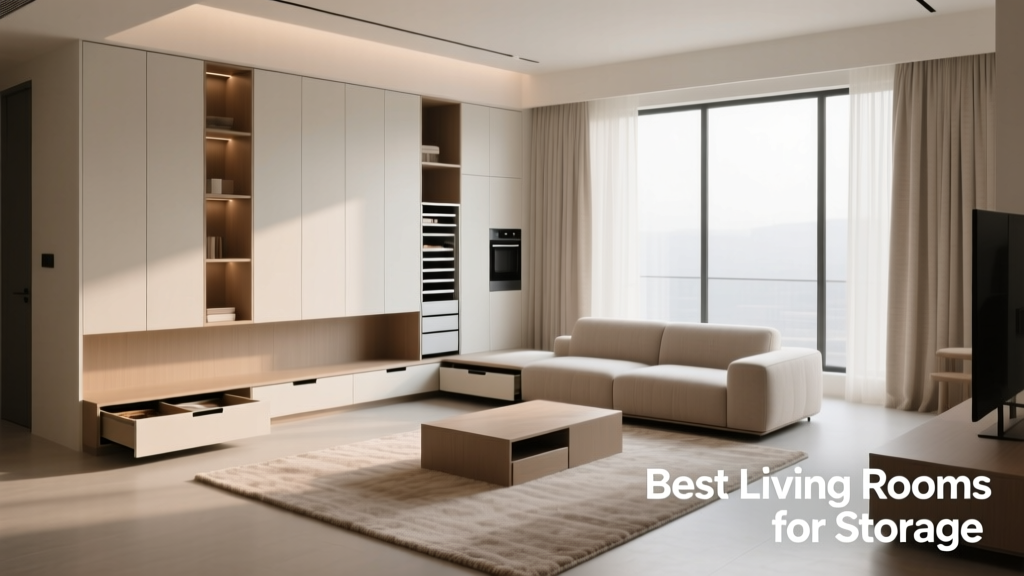 Best Living Rooms for Storage: Smart, Stylish, and Space-Savvy Solutions
 Cat-Friendly Living Room Layouts: Vertical Space and Hiding Spots That Blend In
 Small Living Room Layout: 12 Space-Saving Ideas (2026)
 One-Room Living: How to Zone a Studio Apartment Into Distinct Living Areas
 The Ultimate Create Guide: Designing a Living Room That Works, Inspires, and Endures
Statement Sofas That Define Your Living Room
The Ultimate Create Guide: Designing a Living Room That Works, Inspires, and Endures
Statement Sofas That Define Your Living Room
 Beyond Paint Swatches: 7 Functional, Textural, and Spatial Setup Alternatives to Relying on Color Alone
 Cozy Living Room Decor: Warmth You Can Feel (2026)
 Colors Trends 2026: The Science, Psychology, and Real-World Applications Shaping Living Spaces