Warm Minimalism Interior: Quiet Luxury (2026)
Warm Minimalism Interior: The Quiet Luxury Movement
 Elena Marchetti
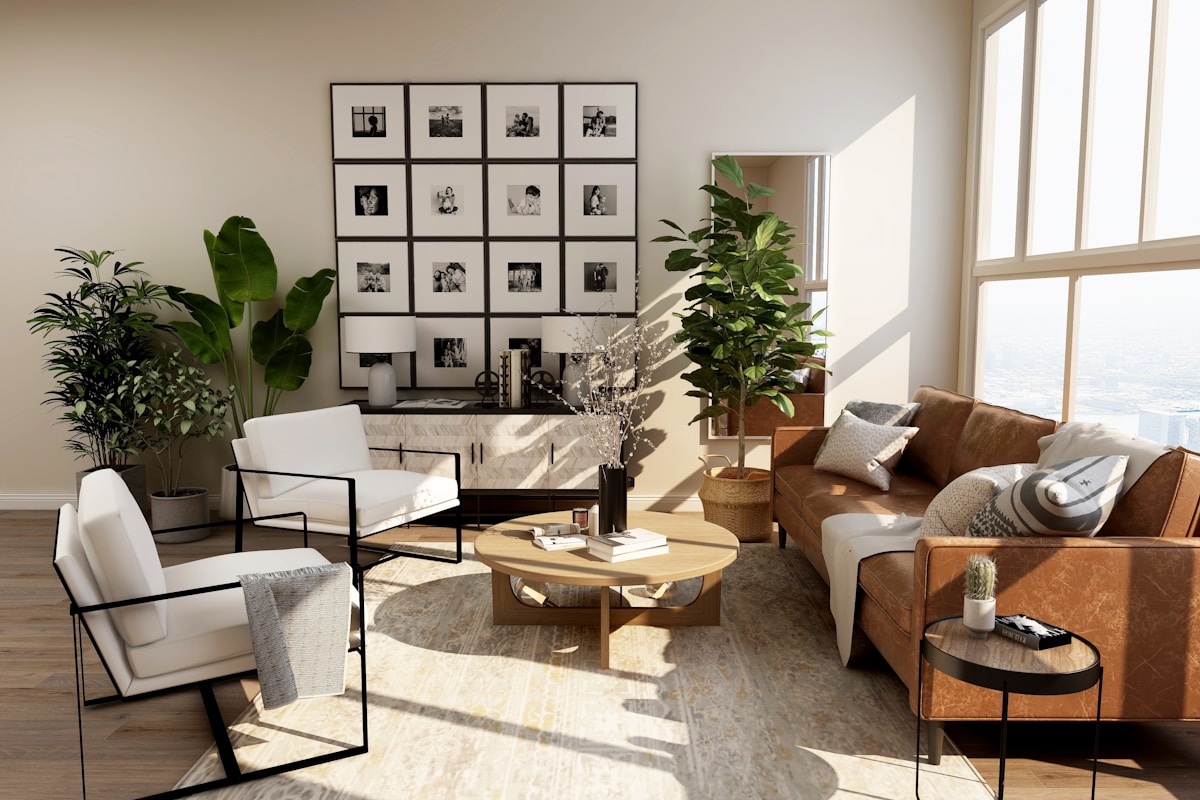
There is a version of minimalism that most people recognize from photographs: a white room with a single black chair, a bare concrete floor, and absolutely nothing else. It is striking. It is also, for most people, deeply unlivable. Warm minimalism emerged as a response to this problem -- an attempt to preserve the clarity and calm of minimalist design while injecting the warmth, texture, and humanity that makes spaces worth inhabiting.
The movement has gained significant momentum since 2023. Pinterest reported a 180% increase in searches for "warm minimalism" between 2023 and 2025, while the term "quiet luxury" -- warm minimalism's close aesthetic cousin -- saw a 310% increase over the same period. This is not a niche design experiment. It is a broad cultural shift in how people think about the relationship between their possessions and their wellbeing.
The Philosophy: Less, But Better
Warm minimalism is often summarized by a phrase attributed to Dieter Rams, the German industrial designer whose work shaped the aesthetic of brands like Braun and Apple: "less, but better." The phrase captures something essential about the movement. It is not about having as little as possible. It is about having exactly what you need and making sure that everything you have is excellent.
This philosophy represents a departure from two competing extremes. On one side is maximalism -- more color, more pattern, more objects, more everything. On the other is cold minimalism -- as few objects as possible, often prioritizing visual impact over comfort. Warm minimalism occupies the space between: a restrained number of objects, but each one chosen for both its beauty and its usefulness, each one contributing to a sense of calm rather than visual excitement.
The psychological foundation for this approach comes from research on environmental complexity and cognitive load. A 2024 study published in the Journal of Environmental Psychology found that people living in spaces with "moderate visual complexity" -- neither cluttered nor barren -- reported 28% lower stress levels than those in highly cluttered environments and 15% higher satisfaction than those in extremely sparse environments. Warm minimalism, with its emphasis on a limited but carefully chosen set of elements, lands squarely in this optimal zone.
"The goal is not to live with less for the sake of living with less. The goal is to remove everything that does not serve you so that everything that remains can serve you fully. That is the difference between deprivation and liberation."
-- Marie Kondo, The Life-Changing Magic of Tidying Up, referenced in design literature 2014
The Warm Minimalist Color Palette
Color is where warm minimalism most clearly diverges from its cold predecessor. Cold minimalism gravitated toward pure white, black, and steel gray -- colors that feel clean but also sterile. Warm minimalism retains the restraint of a limited palette but shifts every hue toward warmth:
- Walls -- Warm whites, creams, and off-whites with subtle undertones of beige, pink, or yellow. Benjamin Moore's "White Dove," Farrow & Ball's "Pointing," and Sherwin-Williams' "Alabaster" are frequently specified.
- Floors -- Light to medium wood tones in oak, ash, or walnut. Lighter woods create an airy, Scandinavian feel; darker woods add depth and gravitas. Stone in warm travertine or limestone is also common.
- Textiles -- Natural, undyed, or minimally dyed fabrics in cream, oat, taupe, and soft brown. Linen, cotton, wool, and boucle predominate. Synthetic fabrics with high sheen are avoided.
- Accents -- One or two slightly deeper tones for visual interest -- perhaps a warm terracotta, a muted olive, or a deep caramel. These appear in small doses: a single cushion, a ceramic vase, a piece of art.
The palette is deliberately narrow, but narrow does not mean flat. Within the cream-to-taupe range, there are dozens of subtle variations, and the skilled warm minimalist designer uses these variations to create depth without introducing competing hues. A room might contain cream walls, oat-colored linen curtains, a taupe wool rug, and a caramel leather chair -- four distinct colors that read as a single harmonious family.
The Three-Tone Rule
Limit your warm minimalist room to three main tones: a light tone for walls and ceilings (roughly 60% of visual weight), a medium tone for large surfaces like rugs and sofas (roughly 30%), and a dark tone for grounding elements like furniture legs or picture frames (roughly 10%). This ratio, sometimes called the 60-30-10 rule, creates a room that feels cohesive without being monotonous.
Materials That Carry the Design
When you reduce the number of objects in a room, each remaining object becomes more important. This is why material quality matters so much in warm minimalism. A single chair in an otherwise sparse room must earn its place through beautiful form and excellent materiality. A cheap-looking chair in a minimalist room looks cheap. The same chair in a maximalist room can hide among the visual noise.
The materials that define warm minimalism share certain characteristics: they are natural, they age gracefully, and they feel good to touch.
| Material | Primary Use | Key Quality | Price Range | Aging Characteristic |
|---|---|---|---|---|
| Solid oak | Furniture, flooring, shelving | Warm grain, durable | $$-$$$ | Develops rich patina over decades |
| Linens | Bedding, curtains, upholstery | Soft, breathable, textured | $$ | Gets softer with every wash |
| Wool | Rugs, throws, cushions | Warm, resilient, tactile | $$-$$$ | Resilient; maintains appearance for decades |
| Travertine | Countertops, side tables, accents | Organic pitting, warm tone | $$$ | Develops character; each mark tells a story |
| Brushed brass | Hardware, lighting, accessories | Warm metallic glow | $$-$$$ | Develops gentle patina; never looks cold |
| Limewash paint | Wall finish | Depth, subtle variation | $-$$ | Chalky surface softens over time |
Architect John Pawson, one of the pioneers of warm minimalism, has written extensively about the relationship between material honesty and emotional comfort. "People respond to materials they can understand," he wrote in his 2023 essay collection Minimum. "Wood is wood. Stone is stone. There is no artifice. This honesty is calming because it requires no interpretation. The brain does not need to decode what it is seeing."
Furniture Selection: Quality Over Quantity
Warm minimalist furniture follows the same principles as the broader movement: fewer pieces, better quality, natural materials, clean lines with enough warmth to avoid feeling clinical. The goal is to create a room that feels composed and intentional rather than empty.
The most successful warm minimalist rooms typically contain these furniture categories and nothing more:
- Primary seating -- One well-designed sofa or sectional in a natural fabric. No matching loveseats or accent chairs unless they serve a clear functional purpose. The sofa should have clean lines but soft cushions -- structured but comfortable.
- Surface -- One coffee table or side table in wood or stone. The surface should be large enough to be useful but small enough to avoid dominating the room. Organic shapes -- round or oval -- soften the minimal aesthetic more effectively than sharp rectangular forms.
- Storage -- Concealed storage that eliminates visual clutter. Built-in cabinets with flush doors, a simple sideboard, or shelving with a limited number of objects displayed. The storage itself should be visually quiet.
- One statement piece -- A single object that draws the eye: a sculptural floor lamp, a piece of artwork, an interesting chair. This prevents the room from feeling like a waiting room and gives the eye a place to rest.
The budget implications are significant. Fewer pieces means you can spend more per piece. A warm minimalist living room might contain a $4,000 sofa, a $1,200 coffee table, and an $800 floor lamp -- a total of $6,000 for three objects -- while a traditionally furnished room might contain $6,000 worth of furniture spread across eight or ten pieces of lower quality. The minimalist room will look more expensive, last longer, and feel better to live in.
The Art of Curating, Not Accumulating
Perhaps the most challenging aspect of warm minimalism is learning to curate rather than accumulate. Most people have been conditioned to fill every available surface with objects: photographs on every wall, knick-knacks on every shelf, decorative items on every table. Warm minimalism asks you to reverse this impulse and instead select a small number of objects that genuinely mean something to you or genuinely serve a purpose.
Professional organizer and design consultant Rachel Hoffmann recommends what she calls the "one in, one out" approach to warm minimalist living. Every new object you bring into your home should replace an existing object of the same type. A new ceramic bowl replaces the old one. A new piece of art replaces a previous piece. This rule prevents the slow accumulation of objects that eventually overwhelms the space.
The objects you do choose to display should meet at least one of two criteria: they are beautiful, or they are useful. Objects that are neither should be removed. Objects that are both -- a beautifully crafted wooden bowl that also holds your keys, a piece of art that also evokes a cherished memory -- are the ideal warm minimalist objects. They earn their place twice.
- Edit surfaces ruthlessly -- Every horizontal surface should have some visible empty space. If a surface is completely covered, something needs to go.
- Group related objects -- Three small objects grouped together read as a single composition. The same three objects scattered across the room read as clutter.
- Use negative space intentionally -- Empty wall space is not wasted wall space. It is visual breathing room. A single piece of art on a large wall can be more powerful than a gallery wall.
- Rotate seasonal objects -- You do not need to display every object you own at all times. Store seasonal or occasional items and rotate them in and out to keep the space feeling fresh without accumulating more things.
Lighting as the Invisible Architecture
Lighting is the invisible architecture of warm minimalism. In a room with few objects, the quality of light becomes one of the primary determinants of how the space feels. Harsh, direct lighting will expose every imperfection and make the room feel sterile. Soft, layered, warm-toned lighting will make the same room feel inviting and rich.
The warm minimalist lighting strategy has three components:
- Natural light -- Maximize it. Use sheer or light-filtering curtains rather than blackout drapes during the day. Keep windows clean. Position mirrors to reflect natural light into darker corners. Natural light is the most flattering light for any interior, and in a warm minimalist room, it activates the subtle color variations in limewash walls, natural wood grain, and textured textiles.
- Ambient artificial light -- Multiple low-level sources rather than one high-level source. Floor lamps in corners, table lamps on side tables, wall sconces beside art. All bulbs should be 2700K-3000K (warm white). The combined effect should be a room that glows softly rather than a room that is uniformly lit.
- Accent light -- Targeted illumination for specific objects or areas. A picture light over a piece of art. A small LED strip inside a shelving unit. A single pendant light over a reading chair. These lights draw the eye and create visual hierarchy.
Lighting designer Ingrid Halstrom, whose work on warm minimalist residential projects has won multiple AILD awards, emphasizes the importance of dimming: "Every light source in a warm minimalist home should be dimmable. Not just the main lights -- every lamp, every sconce, every strip. The ability to adjust the light level to match the time of day, the activity, and the mood is what separates a room that feels warm from a room that simply has warm-colored bulbs."
Room-by-Room Implementation Guide
Warm minimalism does not need to be applied uniformly throughout the home. Different rooms have different functional requirements and can tolerate different levels of visual complexity. The following guidelines provide a starting point for implementing warm minimalism in the most important rooms:
Living room: One sofa, one coffee table, one or two accent chairs maximum. Concealed storage for media equipment and miscellaneous items. One or two pieces of art on the walls. A wool or jute rug. Layered warm lighting. Natural textiles throughout.
Bedroom: A quality bed frame in wood or upholstered linen. Clean bedding in white or cream. One nightstand per side with a small lamp. A dresser or wardrobe for clothing storage (concealed). Minimal wall art -- perhaps one piece above the bed. The bedroom is the easiest room to warm-minimalize because the functional requirements are simple: sleep and dress.
Kitchen: Clear countertops of everything except one or two daily-use items. Open shelving with a limited number of beautiful dishes. Uniform storage containers in the pantry. Natural materials where possible -- wood cutting boards, stone mortar, ceramic bowls. The kitchen is the hardest room to maintain in a warm minimalist state because it generates clutter naturally. Daily maintenance is essential.
Bathroom: Remove all products from visible surfaces. Store everything in drawers or cabinets. Display one or two beautiful items: a ceramic soap dispenser, a small plant, a folded linen towel. The warm minimalist bathroom should feel like a spa -- clean, calm, and unhurried.
Warm minimalism is not a style to be achieved and then maintained unchanged. It is a practice -- an ongoing process of evaluating what you have, removing what no longer serves you, and being intentional about what you add. It asks more of you than maximalism does, because it requires you to make choices continuously rather than accumulating once and forgetting. But the reward -- a home that feels calm, clear, and genuinely yours -- is worth the effort.
More Articles
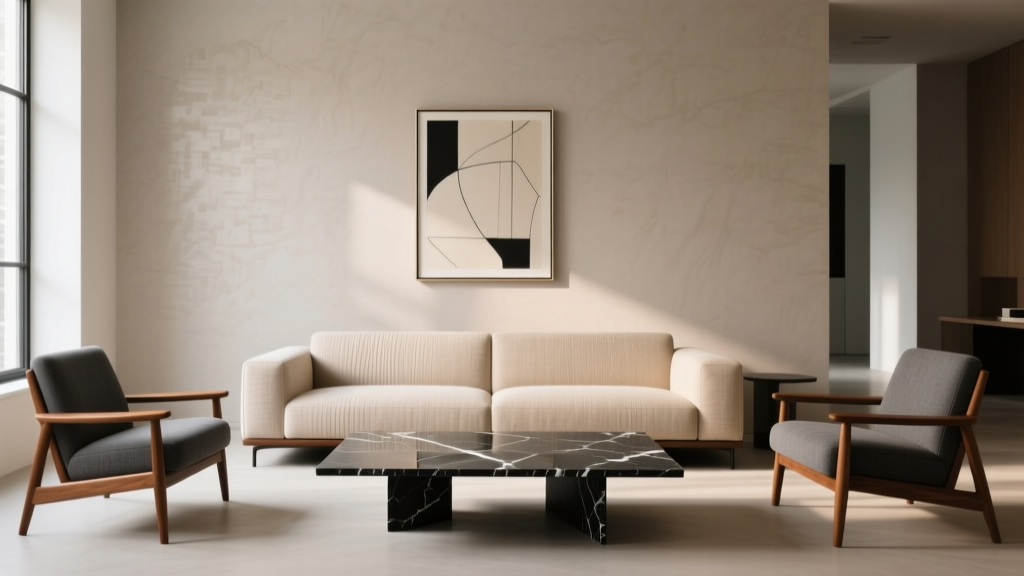 Seating for Living: Function, Form, and Human-Centered Design in Modern Living Spaces
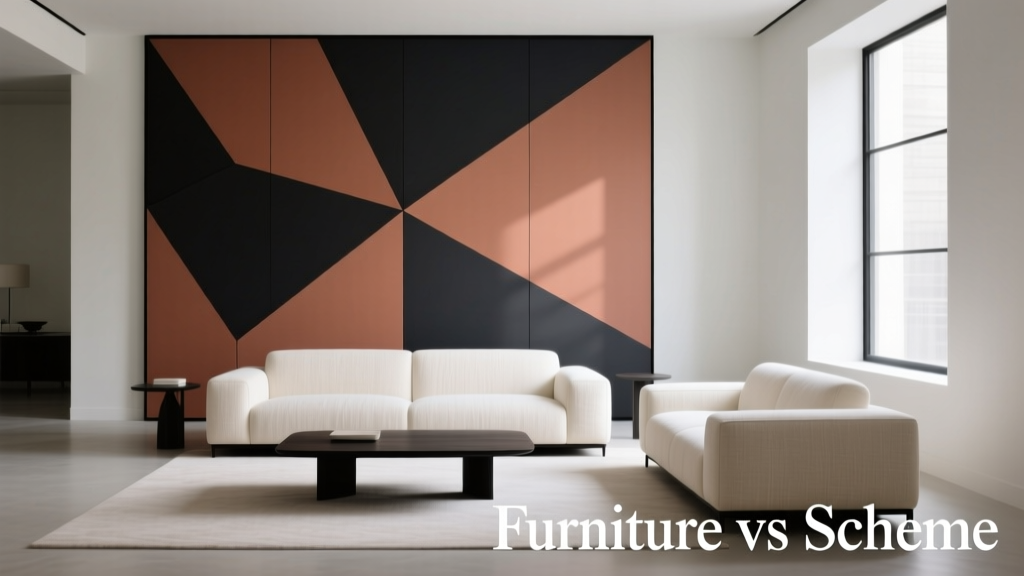 Furniture vs Scheme: Why Interior Design Success Depends on Strategic Alignment, Not Aesthetic Isolation
 Cheap vs Premium Modern: What You’re Really Paying For in Furniture, Appliances, and Home Goods
 Universal Design: Accessible Rooms Without Clinical Look
 Minimalist Decor Guide: Less Is More in 2026
 Japandi Living Room Style Guide
 Pet-Friendly Rug Guide: Materials That Survive Claws and Muddy Paws
 Thrift Furniture Flipping: Transform Pieces for Under $20
 Checklist on a Budget: Practical, Proven Strategies to Build High-Value Systems Without Overspending
 Color on a Budget: Smart, Sustainable, and Scientifically Sound Strategies for High-Impact Design Without the Premium Price Tag