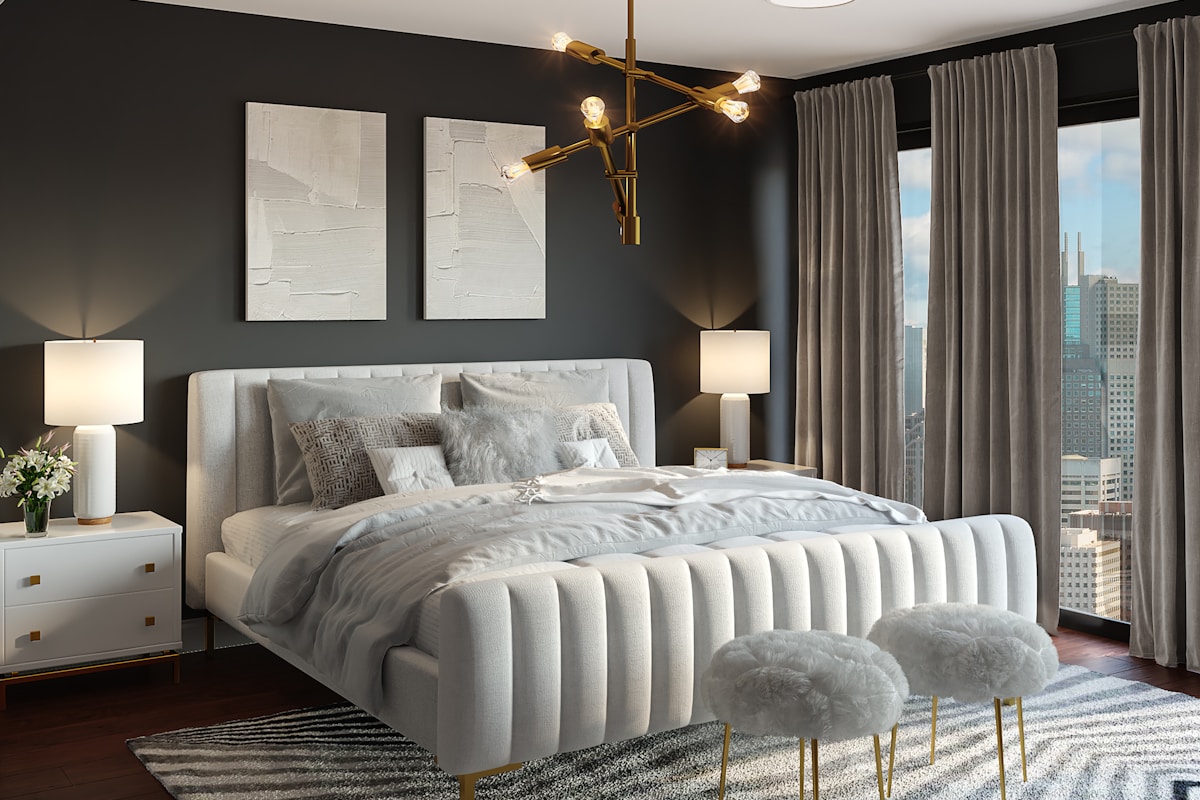
Bedroom Window Treatments: Light Control Meets Design | The Decor Mag
Bedroom Window Treatments: Light Control Meets Design
 James Thornton

Window treatments in a bedroom serve a dual purpose that no other room requires. They must manage light -- blocking it completely for sleep and filtering it gently for waking -- while also contributing to the room's overall aesthetic. In a living room, light control is nice. In a bedroom, it is essential for health. Sleep quality depends heavily on darkness, and the right window treatment makes the difference between waking at sunrise and sleeping through until your alarm.
The market for bedroom window treatments has never been larger or more confusing. Curtains, drapes, blinds, shades, shutters, and hybrid systems all compete for attention, each with different light-blocking capabilities, price points, and installation requirements. Choosing the right one requires understanding what you need from your treatment before considering what you like.
Why Bedroom Window Treatments Are Different
Bedroom windows face unique challenges. Morning light hits at different angles depending on your window's orientation. Streetlights and neighbors' security lights create nighttime glare that interferes with sleep. Temperature regulation matters more in a bedroom because comfort directly affects sleep quality. And privacy concerns are heightened -- this is the room where you dress, undress, and spend your most vulnerable hours.
Before selecting any treatment, assess your window's specific conditions:
- Direction: East-facing windows need morning light blocking; west-facing need afternoon heat management
- Proximity to neighbors: Ground-floor windows or windows facing closely spaced buildings require more privacy coverage
- Street lighting: Windows facing illuminated streets benefit from blackout capabilities
- Temperature extremes: South-facing windows in hot climates need heat-reflective treatments
Curtains and Drapes: The Classic Choice
Curtains and drapes remain the most popular bedroom window treatment for good reason. They offer the widest range of materials, colors, and opacity levels, and they add softness and texture that hard treatments cannot replicate. The distinction between the two comes down to weight and formality: curtains are lighter and more casual; drapes are heavier, lined, and more formal.
For bedrooms, fabric weight directly affects light-blocking capability. Sheer curtains filter light beautifully but provide virtually no blackout. Medium-weight cotton or linen curtains reduce light significantly but still allow a soft glow. Blackout curtains -- typically lined with a dense, opaque backing -- block 95 to 99% of incoming light and are the top choice for light-sensitive sleepers.
| Type | Light Blocking | Insulation | Price Range | Best For |
|---|---|---|---|---|
| Sheer panels | 10-20% | Minimal | $20-$60 per panel | Daytime privacy with natural light |
| Cotton/linen | 40-60% | Moderate | $40-$120 per panel | Balanced light and style |
| Blackout drapes | 95-99% | Excellent | $60-$200 per panel | Light-sensitive sleepers |
| Velvet drapes | 80-95% | Excellent | $80-$250 per panel | Luxury aesthetic with strong coverage |
Hanging height matters enormously. Mount the curtain rod 4 to 6 inches above the window frame and extend it 6 to 12 inches beyond the window on each side. This creates the illusion of a larger window and prevents light from leaking around the edges when the curtains are closed.
Blinds: Precision Light Control
Blinds offer a level of light precision that curtains cannot match. The adjustable slats allow you to dial in exactly how much light enters the room, from fully open to fully closed, with infinite positions in between. This makes blinds ideal for people who want to modulate light throughout the day rather than simply turning it on or off.
Horizontal blinds (venetian blinds) come in aluminum, wood, and faux wood. Aluminum is the most affordable and works well in humid environments. Real wood offers warmth and elegance but can warp in high humidity. Faux wood provides the look of real wood at a lower price point with better moisture resistance.
Vertical blinds are designed for wide or sliding windows. They stack to one side when open, preserving the full window view. In a bedroom, vertical blinds work well for sliding glass doors that lead to a balcony or patio.
Key considerations for bedroom blinds:
- Light gaps: Blinds cannot eliminate light gaps along the edges the way curtains can. If total darkness is your goal, pair blinds with a blackout curtain layer.
- Cord safety: Choose cordless or motorized options, especially in homes with children or pets. Many regions now require cordless blinds in new installations.
- Cleaning: Blinds collect dust on each slat. A microfiber duster or a damp cloth works, but the cleaning frequency is higher than with fabric treatments.
Shades: Softness and Simplicity
Window shades fill the space between curtains and blinds. They roll, fold, or stack to adjust light levels while maintaining a cleaner, more minimal appearance than curtains. For bedrooms with a modern or minimalist aesthetic, shades are often the preferred choice.
Roman shades fold into neat horizontal pleats when raised and lay flat when lowered. They offer the softness and fabric variety of curtains with the clean lines of shades. Cellular (honeycomb) shades feature a unique structure that traps air in cells, providing excellent insulation -- a significant benefit for bedrooms in extreme climates.
Roller shades are the simplest option. A single piece of fabric rolls up and down on a tube. Blackout roller shades are available in various opacity levels and offer the cleanest, most streamlined appearance. Solar roller shades filter UV rays while maintaining a view of the outdoors -- ideal for bedrooms with scenic views.
For bedrooms where sleep quality is the priority, I always recommend cellular shades with a blackout liner. They block light, insulate against temperature extremes, and look clean and modern. Clients consistently report better sleep after the switch.
-- Elena Marchetti, Window Treatment Specialist, Milan
Shutters: Permanent Elegance
Interior shutters are a permanent window treatment that adds architectural character and value to a bedroom. Installed within or over the window frame, shutters feature adjustable louvers that control light and ventilation. They are the most expensive option but also the most durable -- quality shutters last for decades.
Plantation shutters, with their wide louvers (typically 2.5 to 4.5 inches), are the most popular style. They allow maximum light when open and close tightly for privacy. The wide louvers also make cleaning easier than with narrow-slat blinds.
Shutters work best in bedrooms with these characteristics:
- Windows that fit standard shutter dimensions or can accommodate custom sizing
- Homeowners who plan to stay long-term and want to increase property value
- Rooms where a clean, architectural look complements the overall design
- Windows that benefit from both light control and improved insulation
Shutter Materials Matter
Composite shutters (MDF or PVC) cost less and resist moisture better than wood. Solid wood shutters offer the richest appearance but require more maintenance in humid climates. For most bedrooms, composite shutters provide the best balance of cost, durability, and appearance.
Layering Treatments for Maximum Flexibility
The most effective bedroom window treatment strategy often involves layering two types of treatments. A sheer curtain paired with blackout drapes gives you three modes: full light (both open), filtered light (sheer only), and total darkness (blackout closed). A cellular shade with a decorative curtain provides insulation and light control plus visual softness.
Layering also solves the common problem of wanting both style and function. Blinds or shades handle the technical requirements of light blocking and privacy. Curtains or drapes handle the aesthetic requirements of color, texture, and softness. Together, they deliver what neither can achieve alone.
When layering, follow these guidelines:
- Mount the inner treatment (blinds or shades) inside the window frame for a clean look
- Mount the outer treatment (curtains) on a rod above and beyond the frame
- Coordinate colors so the treatments complement rather than compete
- Keep the outer treatment simple if the inner treatment has a pattern, and vice versa
More Articles
 Master Bedroom Decor: Designing Your Retreat ? The Decor Mag
 Bedroom Color Ideas: Palettes That Promote Rest ? The Decor Mag
 Minimalist Bedroom Style: Calm Through Restraint | The Decor Mag
 Bedroom Closet Organization: From Chaos to Curated | The Decor Mag
 Bedroom Furniture Layout: The Optimal Arrangement | The Decor Mag
 Guest Bedroom Ideas: Hosting in Style | The Decor Mag
 Bedroom Reading Nook: Your Private Escape — The Decor Mag
 Cozy Bedroom Decor: Layers of Comfort | The Decor Mag
 Bedroom Accent Wall Ideas: The Headboard Wall That Wows | The Decor Mag
 Bedroom Plant Decor: Greenery for Better Sleep — The Decor Mag