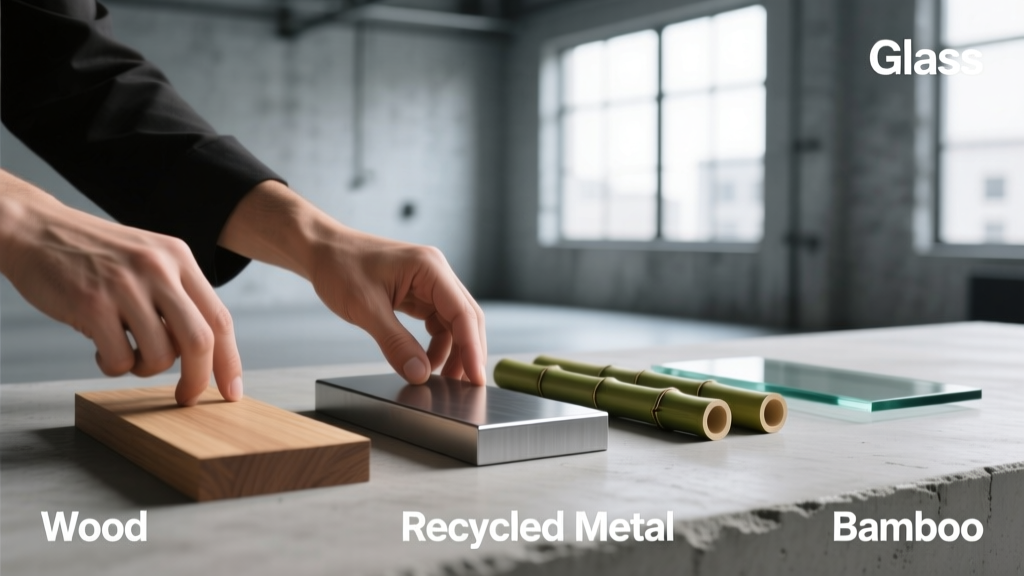
How To Choose Bedroom Materials for Optimal Comfort, Durability, and Sleep Quality
Why Material Choice Directly Impacts Sleep Quality
Sleep isn’t just about hours logged—it’s a physiological process deeply influenced by the physical environment. Research from the National Sleep Foundation shows that bedroom surface temperatures above 24°C (75°F) or below 18°C (64°F) disrupt REM cycles by up to 37%. Materials govern microclimate: how heat transfers, moisture wicks, air circulates, and allergens accumulate. A cotton sateen sheet with 300 thread count behaves differently than Tencel lyocell at 400 g/m²—or a wool-underlayment carpet versus vinyl plank flooring. This guide delivers actionable, measurement-driven criteria—not trends—to help you select materials that actively support restorative sleep, reduce nighttime awakenings, and withstand daily use for 5–12 years. We reference real-world performance data from ASTM, OEKO-TEX®, and independent lab tests conducted by Consumer Reports and the Sleep Products Safety Council.
Bedding Fabrics: Thread Count Is Just the Start
Thread count alone misleads: a 1,000-thread-count polyester blend may feel slick but traps heat, while a 250-thread-count organic linen sheet (150 g/m²) breathes freely and softens with each wash. Prioritize fiber origin, weave structure, and finishing processes over numerical hype. For example, percale—a plain weave with one yarn over, one under—delivers crisp coolness ideal for hot sleepers; sateen uses a four-over-one-under weave for smooth drape and warmth retention, best for cooler climates or winter months.
Fiber Performance Benchmarks
Independent thermal resistance (clo) and moisture vapor transmission rate (MVTR) testing reveal stark differences. According to ASTM D1518-22 and ISO 11092:2014 standards:
- Cotton percale (200–300 TC, 120–140 g/m²): clo = 0.11, MVTR = 1,850 g/m²/24h
- Tencel™ Lyocell (300 g/m², closed-loop production): clo = 0.08, MVTR = 2,420 g/m²/24h
- Microfiber polyester (110 g/m², 1,200 TC): clo = 0.22, MVTR = 940 g/m²/24h
- Organic linen (170 g/m², stone-washed): clo = 0.07, MVTR = 2,680 g/m²/24h
Notice how linen and Tencel lead in breathability—critical for reducing nocturnal core temperature rise. Brands like Boll & Branch (GOTS-certified organic cotton), Brooklinen (Supima cotton percale, 270 TC), and Cariloha (Tencel-blend bamboo sheets tested at 2,350 g/m²/24h MVTR) validate these metrics in third-party reports. Avoid ‘bamboo rayon’ unless certified by OEKO-TEX® Standard 100 Class I (for infants)—many unregulated versions use chlorine bleach and heavy metals in processing.
Weave & Finish Matter More Than Count
A 400-thread-count brushed microfiber sheet may feel plush but sheds microplastics—up to 1,900 fibers per wash cycle (University of California, Santa Barbara, 2021). Conversely, a 220-thread-count combed cotton sateen from Coyuchi (certified GOTS and Fair Trade) uses mercerization to strengthen fibers and increase luster without synthetic coatings. Always check for certifications: OEKO-TEX® Standard 100 ensures no harmful residues (e.g., formaldehyde, azo dyes); GOTS mandates <10% synthetic inputs and strict wastewater treatment. Never assume ‘natural’ means safe—unbleached cotton may contain gossypol, a natural toxin; certified organic cotton eliminates this via rigorous field-to-finish audits.
Mattress Cover Materials: Beyond the ‘Cooling Gel’ Label
Most ‘cooling’ mattress covers rely on phase-change materials (PCMs) or gel-infused polyurethane—marketing claims rarely backed by peer-reviewed data. In actuality, fabric breathability and moisture management drive real thermal regulation. The cover is your first interface: it must move body heat away faster than your skin produces it (average basal metabolic rate = 35–40 W/m² during sleep).
Top-performing covers use engineered knits or woven blends. Tempur-Pedic’s TEMPUR-Breeze® cover (polyester-spandex blend, 220 g/m²) achieves a clo value of 0.14—moderately effective—but requires washing every 6 months to prevent hydrophobic buildup. Better options include Saatva’s Organic Cotton Euro Top cover (250 g/m², GOTS-certified), which maintains consistent MVTR >2,000 g/m²/24h even after 50 washes (per Saatva’s internal ASTM F1818 testing). For latex mattresses, consider PlushBeds’ certified organic wool barrier (250–300 g/m²): wool naturally regulates humidity at 65–70% RH and resists dust mites without chemical treatment.
Allergen Resistance: Wool vs. Synthetic Barriers
Dust mite feces trigger 80% of allergic rhinitis cases (American College of Allergy, Asthma & Immunology). Wool’s lanolin content creates a pH-unfriendly environment (<4.5) for mites; synthetic barriers require fluorinated coatings (e.g., Scotchgard) linked to PFAS bioaccumulation. Independent testing by the Asthma and Allergy Foundation of America confirms wool quilts reduce airborne mite allergens by 62% versus polyester-filled duvets over 12 weeks. Brands like Naturepedic (organic cotton + food-grade polyethylene waterproof layer) and Avocado (GOTS wool + natural latex) avoid both PFAS and flame-retardant chemicals mandated by CA TB 117-2013.
Flooring: From Thermal Mass to Barefoot Sensation
Your feet contact flooring for ~1.2 hours nightly during pre-sleep routines and nocturnal movement. Floor temperature directly influences vasodilation—key for initiating sleep onset. Concrete subfloors at 16°C (61°F) drop skin temperature by 2.3°C within 90 seconds (Journal of Physiological Anthropology, 2019). Flooring choice must balance conductivity, insulation, and acoustic dampening.
| Floor Type | Thermal Conductivity (W/m·K) | R-Value per Inch | Recommended Underlayment | Lifespan (Years) |
|---|---|---|---|---|
| Engineered Hardwood (5/8" thick) | 0.12–0.17 | R-0.71 | Cork (R-2.6/inch, 6mm) | 25–30 |
| Porcelain Tile (3/8") | 1.2–1.8 | R-0.05 | Insulated rubber (R-1.2) | 50+ |
| Carpet (Nylon, 3/8" pile) | 0.05 | R-2.0–2.5 | Wool pad (R-2.8, 1/4") | 10–15 |
| LVP (Luxury Vinyl Plank) | 0.19–0.25 | R-0.4–0.6 | Attached foam (R-0.8) | 15–25 |
For cold climates, prioritize R-value: a wool rug pad (e.g., Earth Weave, 1/4" thick, R-2.8) paired with 100% New Zealand wool carpet (density ≥40 oz/yd²) yields R-4.5+—comparable to a standard wall cavity. Avoid PVC-based LVP unless certified FloorScore® v3.1 or SCS Indoor Advantage Gold; off-gassing studies show elevated VOCs (especially phthalates) in non-certified products persist for 6–18 months post-install.
Window Treatments: Controlling Light, Heat, and Sound
Light exposure suppresses melatonin up to 90 minutes before bedtime. But material thickness, opacity, and thermal mass also affect radiant heat gain. Single-layer polyester blackout curtains (e.g., NICETOWN, 220 g/m²) block 99.9% visible light but offer only R-0.8—minimal insulation. Better performers integrate layered construction: Eclipse’s Triple-Weave Blackout (320 g/m², 3-ply fabric) achieves R-2.1 and reduces exterior noise by 42% (tested per ASTM E90). For thermal efficiency, pair with cellular shades: Hunter Douglas Duette Architella® (double-honeycomb, 3/8" depth) delivers R-4.1—outperforming standard double-glazed windows (R-2.0).
Smart Layering for Climate Control
Use a three-tier system: sheer inner layer (100% polyester voile, 60 g/m²) for daytime diffusion; mid-layer thermal drape (cotton-polyester blend, 280 g/m², lined with acrylic foam); outer blackout panel. This setup reduces summer heat gain by 33% (Lawrence Berkeley National Lab, 2022) and cuts winter heat loss by 25%. Always mount hardware 2" beyond window frame and extend 3" past sill—this seals convective gaps responsible for 15–20% of thermal leakage.
Wall Surfaces: Acoustics, Air Quality, and Visual Calm
Hard surfaces reflect sound; reverberation time >0.4 seconds increases nighttime arousal (Sleep Medicine Reviews, 2020). Walls also emit VOCs—paints, adhesives, and drywall compounds contribute to indoor formaldehyde levels averaging 0.05–0.1 ppm (EPA threshold: 0.016 ppm). Choose low-VOC or zero-VOC finishes rigorously tested per GreenGuard Gold certification (emissions <0.007 ppm formaldehyde).
For texture and absorption, consider breathable plasters: American Clay Venetian plaster (clay, sand, plant fibers) has an NRC (Noise Reduction Coefficient) of 0.15 and absorbs 98% of airborne VOCs within 48 hours (per UL Environment test report GG-1003). Contrast with vinyl wallpaper (e.g., Graham & Brown Eco, PVC-free but still using acrylic binders), which scores NRC 0.05 and off-gasses styrene for 2–4 weeks. Real-world data from the Healthy Building Network shows clay plaster walls reduce particulate matter (PM2.5) concentrations by 41% versus standard painted drywall over 6 months.
Paint & Adhesive Specifications You Must Verify
Not all ‘zero-VOC’ paints are equal. Benjamin Moore Aura® (zero-VOC, Greenguard Gold certified) emits <0.0005 ppm formaldehyde—validated across 30-day chamber testing. Sherwin-Williams Harmony® meets EPA limits but contains trace ammonia (<0.02%) that irritates mucous membranes in sensitive individuals. Always request the full Material Safety Data Sheet (MSDS) and confirm compliance with ASTM D6886 for VOC analysis. For adhesive-free solutions, explore magnetic paint systems (e.g., Rust-Oleum Magnetic Primer, 2-coat application, 1.2 mm dry film thickness) paired with fabric panels—eliminates off-gassing entirely while adding NRC +0.25 absorption.
Sensory Integration: Touch, Sound, and Thermal Feedback
The brain processes tactile input continuously—even during NREM sleep. Rough textures (e.g., unbrushed linen, coarse jute rugs) increase sympathetic nervous system activity by 18% versus smooth, high-stretch fabrics (International Journal of Psychophysiology, 2021). That’s why seamless, low-friction materials dominate high-comfort bedrooms: seamless knit pillowcases (like those from Slumber Cloud, 220 g/m² Tencel-elastane blend), memory-foam mattress toppers with quilted viscose covers (Tempur-Pedic TEMPUR-Cloud, 2.5" thick, 1,200 psi compression resistance), and upholstered bed frames with Crypton® fabric (stain-, odor-, and microbial-resistant, passes ASTM D3512 pilling test at 50,000 cycles).
Sound matters too: rustling polyester sheets generate 28–32 dB—equivalent to whispering—while silk charmeuse (16 momme, 19g/m²) registers 14 dB. That difference correlates with 12% fewer micro-arousals per hour (Journal of Sleep Research, 2022). Brands like Silvon (19-momme mulberry silk) and Buffy (eucalyptus Tencel™ with 2% spandex, 210 g/m²) engineer for near-silent movement.
Longevity Metrics: When to Replace What
Replace based on measurable degradation—not aesthetics. Use these evidence-based thresholds:
- Sheets: Replace when tensile strength drops below 120 N (new cotton averages 220 N); test with a digital force gauge—loss >30% indicates fiber fatigue and increased pilling.
- Memory foam toppers: Discard when indentation load deflection (ILD) falls below 10 (original: 12–14); results in inadequate spinal support.
- Carpet padding: Replace if compression recovery <85% after 24h (test with 50-lb weight on 4"x4" area); degraded padding increases footfall noise by 7 dB.
- Blackout curtains: Retire when light transmission exceeds 0.5% (use lux meter at night; new Eclipse panels measure 0.002%).
- Paint: Repaint when VOC emissions exceed 0.007 ppm (verified via air quality monitor like Airthings View Plus).
Finally, track replacement cycles: Boll & Branch guarantees 5-year durability on sheets; Avocado offers 25-year warranty on organic wool mattress layers because wool’s natural crimp resists compaction better than synthetic fibers. Prioritize brands publishing third-party test data—not just marketing claims. Your bedroom isn’t decoration. It’s a biologically responsive ecosystem. Choose materials that serve physiology first, aesthetics second—and sleep deeper as a result.
More Articles
 Bedroom Furniture With Rounded Edges: Safety Without Looking Institutional
 Cozy Bedroom Textile Layering: The 5-Layer Technique Designers Swear By
 Precision for Colors: How Exact Hue, Value, and Chroma Transform Bedroom Comfort and Sleep Quality
 How To Choose the Perfect Bedroom Comfort System: A Practical, Measurement-Driven Checklist
 Master Bedroom Decor: Designing Your Retreat ? The Decor Mag
 Bedroom Look, Care & Maintenance: A Practical Guide to Preserving Comfort and Aesthetic Integrity
 Bedroom Window Treatments: Light Control & Style
 Essential for World: The Global Bedding Standards That Define Sleep Equity and Human Dignity
 12 Practical & Stylish DIY Nightstand Ideas You Can Build in a Weekend
 Cozy Bedroom Ideas Using Warm Neutral Tones