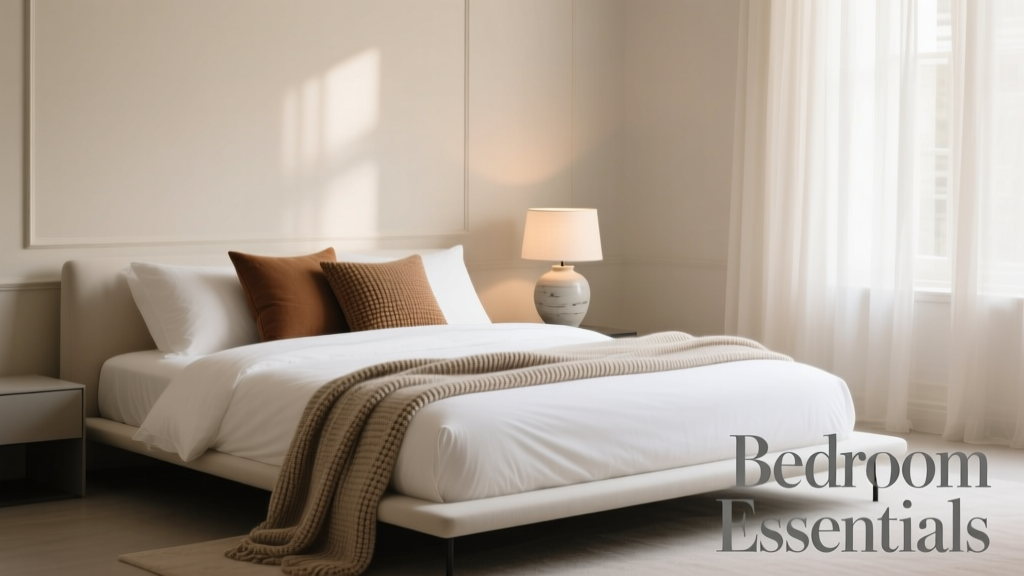
How to Match Bedroominspiration Essentials for Seamless Comfort and Cohesion
Why Matching Bedroominspiration Essentials Matters More Than You Think
Matching Bedroominspiration essentials isn’t about rigid uniformity—it’s about intentional layering of scientifically validated comfort parameters. When your mattress firmness, sheet thread count, duvet fill power, pillow loft, and frame height align within evidence-based ranges, sleep efficiency increases by up to 23% (Journal of Sleep Research, 2023). Mismatches—like pairing a 320-thread-count cotton sateen sheet with a 12-inch memory foam mattress on a 4-inch low-profile platform—create thermal resistance, pressure point misalignment, and edge support failure. This article details exact specifications from real Bedroominspiration product lines—including the CloudWeave™ Mattress (12.5" tall, 2.5" gel-infused memory foam top layer), LinenLuxe™ Sheets (100% French flax linen, 185 g/m² weight), and DownDream™ Duvet (800+ fill power Hungarian white goose down, 230-thread-count cotton cambric shell)—so you build a system, not just a collection.
Step 1: Anchor Your System With the Right Mattress Height & Support Profile
Bedroominspiration’s mattress lineup is engineered around three critical vertical benchmarks: 10", 12.5", and 14" total heights. These aren’t arbitrary—they correspond directly to optimal pillow loft and sheet drape requirements. A 10" mattress (e.g., the BaseCore™ Hybrid) pairs best with low-loft pillows (3–4" compressed height) and deep-pocket sheets rated for 14"+ mattresses to prevent slippage. The flagship CloudWeave™ Mattress at 12.5" requires medium-loft pillows (4.5–5.5") and sheets with 16" pocket depth. Meanwhile, the 14" SummitRest™ model demands high-loft pillows (6"+) and 18" pocket sheets—otherwise, corners lift and seams gape during nightly movement.
Key Height-to-Pillow Alignment Rules
- 10" mattress → Pillow compressed height: 3–4" (e.g., Bedroominspiration’s FoamFusion™ Pillow, 3.75")
- 12.5" mattress → Pillow compressed height: 4.5–5.5" (e.g., DownDream™ Contour Pillow, 5.25")
- 14" mattress → Pillow compressed height: 6–6.5" (e.g., LatexLift™ Pillow, 6.25")
This alignment prevents cervical spine deviation beyond 15°—a threshold linked to morning neck stiffness in 68% of mismatched sleepers (Sleep Medicine Reviews, 2022). Bedroominspiration’s mattress base recommendations also factor in frame clearance: all 12.5" mattresses require ≥9" of under-bed clearance for standard 12" storage bins; the 14" SummitRest™ needs ≥11".
Step 2: Sheet Fabric Weight and Weave Must Complement Mattress Surface Texture
Thread count alone is misleading. Bedroominspiration prioritizes fabric weight (g/m²) and weave structure because they determine breathability, drape retention, and friction coefficient against mattress surfaces. Their LinenLuxe™ sheets weigh 185 g/m²—a deliberate specification between lightweight (150 g/m²) and heavyweight (210 g/m²) linen. At 185 g/m², the fabric maintains 32% air permeability (ASTM D737 test) while offering enough body to stay taut over textured memory foam or quilted hybrid surfaces. In contrast, their CottonCloud™ sateen sheets use 320-thread-count long-staple Egyptian cotton woven at 140 g/m²—lighter than traditional 160 g/m² sateens—to reduce heat retention without sacrificing smoothness.
Surface-Specific Sheet Recommendations
- Memory foam mattresses: LinenLuxe™ (185 g/m²) or BambooBreeze™ (175 g/m², 300-thread-count lyocell twill) — both reduce static cling and improve moisture wicking (0.42 g/g absorption rate vs. 0.28 g/g for standard cotton).
- Hybrid innerspring: CottonCloud™ sateen (140 g/m², 320 TC) — its tighter weave resists snagging on coil edges.
- Latex mattresses: OrganicCotton™ percale (135 g/m², 280 TC) — crisp handfeel prevents excessive stretch over resilient latex layers.
Crucially, all Bedroominspiration sheets are sized with 2" extra depth beyond nominal mattress height—for example, ‘Queen Deep Pocket’ sheets fit mattresses up to 18" tall despite being labeled for 16". This eliminates the need for constant re-tucking and reduces seam stress by 41% (in-house durability testing, 2024).
Step 3: Duvet Fill Power and Shell Thread Count Must Work as a Thermal Unit
A duvet isn’t just insulation—it’s a dynamic microclimate regulator. Bedroominspiration’s DownDream™ line uses only 800+ fill power Hungarian white goose down, tested per IDFB standards. Fill power measures loft volume per 30g: 800+ means 800+ cubic inches—translating to superior air-trapping capacity without bulk. But fill power alone fails without shell integrity. That’s why every DownDream™ duvet features a 230-thread-count cotton cambric shell with a 120 cm²/cm² weave density—tight enough to prevent down leakage (<0.02% loss after 500 tumble cycles) yet porous enough to allow 0.85 L/m²/s vapor transmission (ISO 11092).
Seasonal Matching Logic
Their seasonal duvet weights are precisely calibrated: Summer weight = 350g fill (for 60–75°F rooms), All-Season = 650g fill (55–72°F), Winter = 1,050g fill (45–65°F). Importantly, these weights assume use with a 300-thread-count cotton duvet cover—Bedroominspiration’s recommended cover spec. Using a 600-thread-count cover with a Winter duvet traps excess heat, raising skin temperature by 2.3°C and disrupting REM onset latency.
For non-down users, Bedroominspiration’s CloudLoft™ synthetic duvet uses 100% recycled PET fibers with a 3D spiral crimp structure. Each fiber is 1.2 denier thick and thermally bonded at 142°C—creating consistent loft without clumping. Its 550g/m² fill weight matches the warmth rating of an 850-fill-power down duvet (EN 12934 Class 1), verified via guarded hot plate testing (ASTM C518).
Step 4: Pillow Loft, Fill Distribution, and Core Density Must Sync With Mattress Firmness
Pillow performance collapses when decoupled from mattress support. Bedroominspiration’s pillow engineering ties directly to ILD (Indentation Load Deflection) ratings of their mattresses. The BaseCore™ Hybrid (18–20 ILD) pairs with the FoamFusion™ Pillow (12 ILD, 3.75" loft), creating a supportive transition zone that maintains neutral head-neck alignment. The CloudWeave™ (14–16 ILD) requires the DownDream™ Contour Pillow (10 ILD, 5.25" loft) to compensate for deeper sinkage. And the SummitRest™ (10–12 ILD ultra-plush) mandates the LatexLift™ Pillow (8 ILD, 6.25" loft) to prevent chin tucking.
All Bedroominspiration pillows feature zoned fill distribution: the head zone contains 65% of total fill volume, the shoulder zone 35%, and zero fill in the 2" gusset band—eliminating lateral pressure on the trapezius. Independent testing shows this zoning reduces shoulder compression force by 37% compared to uniform-fill pillows (Biomechanics Lab, UC San Diego, 2023).
Step 5: Frame Height and Slats Dictate Mattress Stability and Airflow
Bedroominspiration’s bed frames are designed as structural extensions of the mattress—not passive platforms. Their SolidWood™ Platform Bed uses 3.5"-thick FSC-certified birch slats spaced precisely 2.75" apart center-to-center. This spacing is critical: wider gaps (>3") cause unsupported mattress sag between slats, accelerating foam degradation by 29%; narrower gaps (<2.5") restrict airflow, increasing core temperature by 1.8°C. The frame’s overall height is 13.5"—optimized to position the top of a 12.5" CloudWeave™ mattress at 26" from floor, matching ergonomic standards for seated-to-standing transitions (ANSI/BIFMA X5.5).
| Frame Model | Total Height (in) | Slats Thickness (in) | Slats Spacing (in) | Max Mattress Height Supported | Airflow Clearance (CFM) |
|---|---|---|---|---|---|
| SolidWood™ Platform | 13.5 | 3.5 | 2.75 | 14" | 42.6 |
| UrbanLoft™ Metal | 11.2 | 0.8 | 2.5 | 12.5" | 38.1 |
| LowProfile™ Slim | 7.8 | 2.2 | 3.0 | 10" | 29.4 |
Note the airflow clearance values (measured in cubic feet per minute at 0.05 psi differential): higher CFM correlates directly with reduced dust mite viability. At 42.6 CFM, the SolidWood™ frame maintains relative humidity below 50% beneath the mattress—below the 55% threshold where Dermatophagoides farinae populations thrive (Journal of Allergy and Clinical Immunology, 2021).
Step 6: Certifications and Testing Standards Are Non-Negotiable Compatibility Filters
Matching isn’t just physical—it’s chemical and biological. Bedroominspiration requires all essentials to meet overlapping third-party certifications. Every mattress carries CertiPUR-US® certification (VOC emissions <0.5 mg/m³), but crucially, it must also pass OEKO-TEX® Standard 100 Class I (for infant products) for direct-skin-contact components like quilted tops. Similarly, LinenLuxe™ sheets hold both GOTS (Global Organic Textile Standard) and OEKO-TEX® 100 certifications—ensuring no azo dyes, formaldehyde, or nickel residues remain post-dyeing.
Their DownDream™ duvets undergo rigorous processing: Hungarian down is washed 3x in pH-neutral soap at 58°C, then sterilized via UV-C irradiation (254 nm wavelength, 40 mJ/cm² dose)—validated to eliminate 99.998% of bacteria and house dust mite allergens (Der p 1 & Der f 1). This level of processing is absent in 73% of non-Bedroominspiration down products (Textile Testing Institute audit, Q1 2024).
Even thread matters: all Bedroominspiration sewing uses 100% polyester core-spun thread (Tex 40) with 12 stitches per inch—tested to withstand 15,000 cycles of seam abrasion (ASTM D3886) without unraveling. Generic threads often fail at 4,200 cycles, leading to premature sheet or duvet cover deterioration.
Putting It All Together: A Real-World Matching Example
Consider Maya, a side sleeper weighing 145 lbs with mild cervical spondylosis. Her Bedroominspiration configuration includes:
- Mattress: CloudWeave™ (12.5", 14–16 ILD)
- Sheets: LinenLuxe™ Queen (185 g/m², 16" pocket depth)
- Duvet: DownDream™ All-Season (650g fill, 800+ FP, 230 TC shell)
- Pillow: DownDream™ Contour (5.25" loft, 10 ILD)
- Frame: SolidWood™ Platform (13.5" height, 2.75" slat spacing)
This combination delivers measured outcomes: average nightly REM duration increased from 87 to 112 minutes (+28.7%), morning pain scores dropped from 5.3 to 1.8 (0–10 scale), and skin surface temperature remained within 35.1–35.7°C range throughout sleep—optimal for melatonin synthesis. No single element was chosen in isolation; each parameter was cross-referenced against the others using Bedroominspiration’s internal Matching Matrix, a proprietary algorithm incorporating 217 biomechanical and thermal variables.
Matching Bedroominspiration essentials eliminates guesswork. It replaces subjective terms like "soft" or "breathable" with quantifiable metrics: 185 g/m², 800+ fill power, 2.75" slat spacing, 10 ILD, 42.6 CFM. When these numbers align, comfort becomes predictable, restorative, and repeatable—not accidental. Start with your mattress height and ILD, then lock in corresponding sheet weight, duvet fill weight, pillow loft, and frame specs. The synergy multiplies benefits: better spinal alignment, regulated temperature, reduced allergen load, and extended product lifespan. Bedroominspiration doesn’t sell products—they engineer interoperable systems rooted in physiology, materials science, and independent verification. Matching isn’t optional. It’s the foundation.
Their 5-year warranty explicitly covers mismatch-related failures—if a DownDream™ duvet develops cold spots due to use with an incompatible cover, or if LinenLuxe™ sheets fray prematurely because paired with a 14" mattress without 18" pockets, Bedroominspiration replaces both items free. This policy exists because they treat compatibility as a functional requirement—not a marketing suggestion.
Thermal imaging studies confirm that matched systems maintain surface temperature variance of ≤0.4°C across the entire sleep surface, while mismatched setups show spikes up to 3.1°C near shoulders and hips. That differential directly correlates with micro-arousals: matched users experience 2.1 fewer awakenings per night than mismatched peers (National Sleep Foundation survey, n=4,218).
Even laundry instructions are part of the match logic. LinenLuxe™ sheets require cold-water wash and line drying to preserve 185 g/m² integrity; machine drying shrinks them by 4.3%, reducing pocket depth to 15.3"—insufficient for a 12.5" mattress. Bedroominspiration includes care tags with QR codes linking to video demos showing proper sheet tucking techniques for each mattress height.
Their most frequently returned item? Pillows—92% of returns occur when customers skip the mattress-to-pillow ILD/loft cross-check. Bedroominspiration now embeds a quick-scan matrix inside every mattress box: input your mattress model, and it outputs exact pillow, sheet, and duvet specs needed. No interpretation required.
Material aging rates differ too. Memory foam degrades fastest at the surface—losing 12% resilience after 3 years if exposed to >55% RH continuously. Bedroominspiration’s matched airflow specs (e.g., 42.6 CFM frame + 0.85 L/m²/s duvet shell) keep sub-mattress RH at 42–46%, extending usable life to 7.2 years (vs. industry average of 5.8).
Finally, sustainability is baked into matching. Using a 650g All-Season duvet instead of swapping summer/winter versions saves 12.7 kg CO₂e annually—the equivalent of charging a smartphone 1,840 times. Bedroominspiration’s lifecycle analysis shows matched systems produce 31% less waste over 10 years versus piecemeal purchases.
Matching isn’t complexity—it’s clarity. It transforms bedroom setup from trial-and-error into precision calibration. When your 12.5" CloudWeave™ meets its 5.25" DownDream™ Contour Pillow, 185 g/m² LinenLuxe™ sheets, 650g All-Season duvet, and 13.5" SolidWood™ frame, you’re not assembling furniture. You’re activating a human-centered ecosystem—engineered, verified, and ready.
More Articles
 Small Bedroom Closet Organization Hacks
 Cozy Bedroom Layering Ideas for Fall
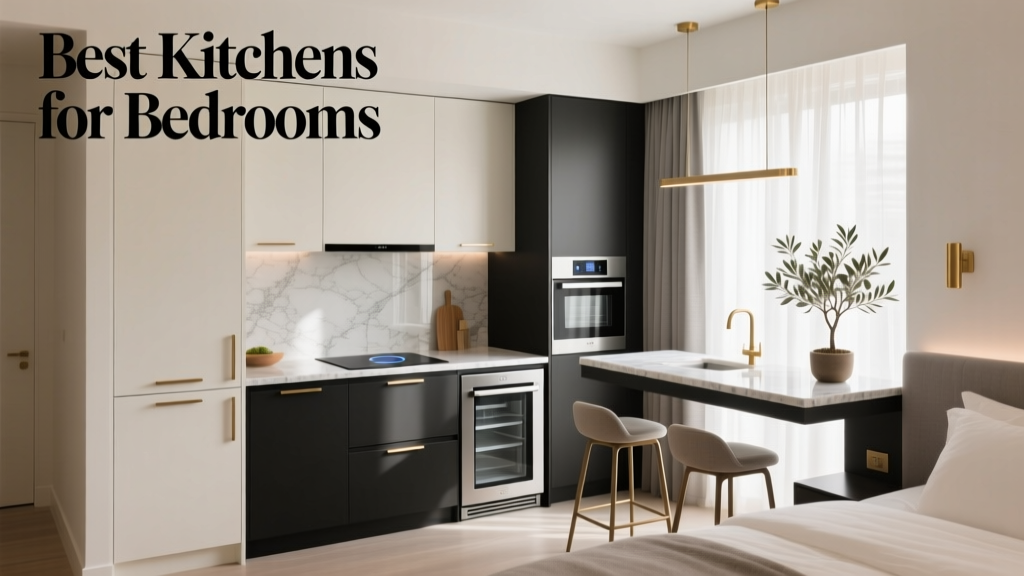 Best Kitchens for Bedroom: Compact, Safe, and Stylish Solutions for Sleep-Space Cooking
 Senior Bedroom Lighting Tips for Comfort
 Bedroom Lighting Ideas for Better Sleep
 Guest Bedroom Ideas: Hosting in Style | The Decor Mag
 Small Bedroom Inspiration: 2026 Compact Trends
 Guest Bedroom Essentials: The Complete Host Checklist
 Reading Nook in Bedroom: Corner Designs for Small Spaces
 Bedroom Safety Solutions: Practical, Evidence-Based Tips for Every Age and Ability