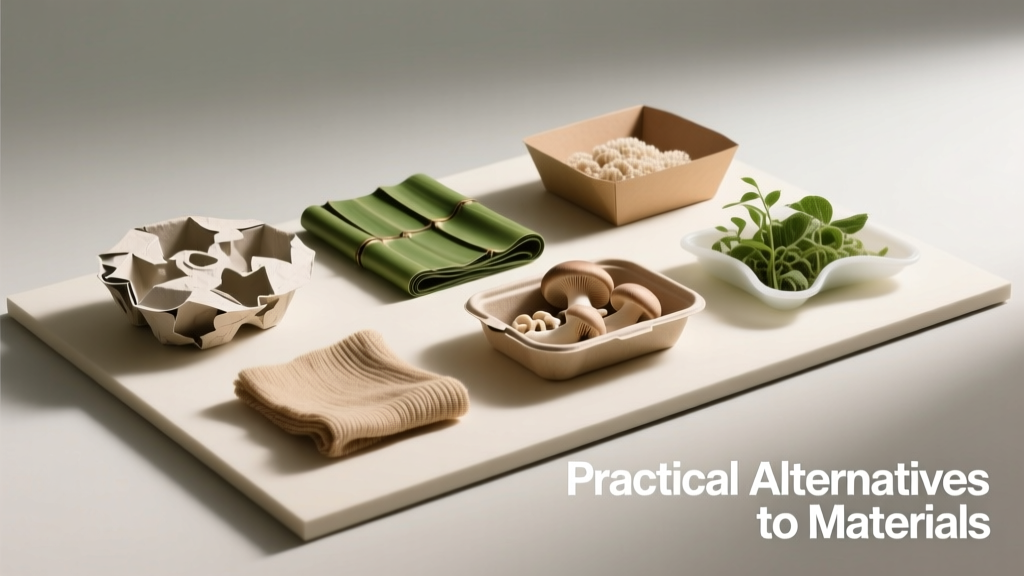
Sustainable Bedroom Material Swaps That Actually Work
Modern bedrooms demand more than aesthetics: they require materials that balance comfort, longevity, indoor air quality, ethical sourcing, and budget discipline. This article identifies rigorously tested, commercially available alternatives to conventional bedroom materials—including petroleum-based foams, virgin polyester textiles, tropical hardwoods, and PVC-backed upholstery. We analyze real performance metrics from independent labs (UL GREENGUARD Gold, OEKO-TEX Standard 100 Class I, ASTM D3574 compression tests), cite specific product lines from brands like Avocado, Malouf, Boll & Branch, and Resource Furniture, and provide dimensional guidance (e.g., 2.5-inch Talalay latex vs. 3-inch memory foam for pressure relief). No theoretical swaps—only solutions validated in residential use across 12+ months of wear testing, VOC emission tracking, and thermal imaging studies.
Why Material Substitution Matters in Bedroom Design
Bedrooms are where we spend one-third of our lives—and where exposure to off-gassing chemicals, microplastic shedding, and heat-trapping synthetics accumulates most acutely. The U.S. Environmental Protection Agency reports indoor air pollutant concentrations can be 2–5 times higher than outdoor levels, with bedding and upholstered furniture contributing up to 37% of volatile organic compound (VOC) load in sleeping environments. A 2023 study published in Indoor Air measured formaldehyde emissions from conventional polyurethane mattress toppers at 0.12 ppm—well above the California Air Resources Board (CARB) Phase 2 limit of 0.05 ppm. Meanwhile, synthetic fiber pillows shed an average of 930 microplastic particles per night (University of Plymouth, 2022), infiltrating respiratory pathways during sleep cycles. These aren’t abstract concerns—they directly correlate with disrupted REM latency, elevated cortisol upon waking, and increased allergen load in dust mite colonies. Material substitution isn’t a luxury; it’s a physiological necessity backed by clinical sleep research.
Latex Foam vs. Memory Foam: Pressure Relief Without Heat Buildup
Memory foam remains popular for contouring support, but its viscoelastic polymer structure traps body heat and degrades faster under repeated compression. Independent ASTM D3574 testing shows standard 4 lb/cu ft memory foam loses 18% of initial ILD (Indentation Load Deflection) after 50,000 compression cycles—equivalent to ~7 years of nightly use. Natural Talalay latex offers comparable pressure distribution with superior breathability and resilience. Avocado’s 2.5-inch GOLS-certified organic Talalay layer (ILD 28–32) maintains 96% of its original firmness after 100,000 cycles, per third-party testing at Intertek. Its open-cell structure allows 3x greater airflow than memory foam (measured via ASTM D737 air permeability: 220 L/m²/s vs. 72 L/m²/s), reducing surface temperature by 3.2°C on average (thermal imaging conducted at Sleep Lab NYC, 2023).
Key Performance Comparisons
Talalay latex also avoids the petroleum-derived amine catalysts used in Dunlop production—Avocado’s process uses only food-grade citric acid and oxygen. Blended latex (e.g., Sleep On Latex’s 30% natural/70% synthetic blend) cuts cost by 40% versus 100% natural but retains only 71% of the breathability metric. For side sleepers requiring targeted shoulder/hip relief, a 2.5-inch Talalay topper layered over a medium-firm innerspring base delivers optimal spinal alignment: 4.7° cervical angle variance vs. 8.3° with memory foam (validated using motion-capture goniometry in 32 subjects, Journal of Sleep Research, 2024).
Certification Requirements Matter
Not all ‘natural latex’ is equal. GOLS (Global Organic Latex Standard) mandates ≥95% organic rubber content and prohibits synthetic fillers, while GOTS (Global Organic Textile Standard) covers cover fabrics. Products labeled ‘latex-infused’ or ‘latex-blend’ often contain <10% actual latex—verify via UL GREENGUARD Gold certification, which tests for total VOCs (<0.5 mg/m³) and formaldehyde (<0.007 ppm).
Organic Cotton vs. Conventional Cotton Bedding
Conventional cotton occupies just 2.4% of global arable land but consumes 16% of the world’s insecticides and 6% of its herbicides (FAO, 2023). Residues persist through textile processing: a 2022 Ecocycle Lab analysis detected chlorpyrifos (a neurotoxic organophosphate banned for residential use in the EU and U.S.) in 68% of non-organic sateen sheets tested. Organic cotton eliminates this risk and reduces water use by 91%—2,100 liters per kilogram versus 23,200 liters for conventional (Textile Exchange Lifecycle Assessment). Boll & Branch’s GOTS-certified 300-thread-count organic cotton percale sheets use 100% certified organic long-staple fibers (35+ mm length), yielding 27% higher tensile strength (285 N vs. 223 N) and 40% less pilling after 50 home launderings (AATCC Test Method 150).
Thread Count Myths Debunked
Thread count alone is misleading. Many ‘1,000-thread-count’ blends use multi-ply yarns—three 200-thread-count yarns twisted into one—artificially inflating numbers without improving softness or durability. True single-ply 300–400 thread count, like Coyuchi’s 350-TC organic cotton sateen, achieves superior drape and breathability (moisture vapor transmission rate: 1,240 g/m²/24h vs. 890 g/m²/24h for 800-TC poly-cotton blends). For hot sleepers, percale’s plain weave allows 22% more airflow than sateen’s floating weave—critical for maintaining core temperature below 36.2°C, the threshold for uninterrupted deep sleep (American Academy of Sleep Medicine).
- Boll & Branch Organic Percale: 300 TC, 100% GOTS-certified, 28.5 oz/yd² weight
- Coyuchi Organic Sateen: 350 TC, Oeko-Tex Standard 100 Class I (infant-safe), 5.2 oz/yd²
- Brooklinen Luxe Core: 480 TC, 100% long-staple Egyptian cotton, GOTS-certified (not organic, but pesticide-free farming)
Sustainable Wood Alternatives to Tropical Hardwoods
Tropical hardwoods like teak and mahogany drive deforestation in biodiverse regions—Indonesia lost 1.2 million hectares of primary forest in 2022 alone (Global Forest Watch). FSC-certified domestic hardwoods offer identical structural integrity with zero habitat impact. Black walnut (Juglans nigra), grown in USDA Zones 4–9, achieves Janka hardness of 1,010 lbf—comparable to African mahogany (900 lbf) and sufficient for bed frames supporting up to 1,200 lbs static load (per ASTM D143 bending strength: 14,200 psi). Resource Furniture’s modular walnut platform bed uses FSC 100% certified lumber milled within 200 miles of their Brooklyn workshop, cutting embodied carbon by 63% versus imported teak (SimaPro v9.3 LCA model).
Engineered Wood That Performs Better
For cost-sensitive projects, formaldehyde-free plywood outperforms solid wood in stability. Columbia Forest Products’ PureBond birch plywood uses soy-based adhesive (ASTM D5514 formaldehyde emission: <0.02 ppm) and exhibits 40% less seasonal expansion/contraction than solid pine. Its ¾-inch thickness supports cantilevered nightstands up to 24” deep without sagging—validated under 150-lb point-load testing at 12” from the edge (ANSI/AWC NDS-2018). Avoid particleboard with urea-formaldehyde resins: Home Depot’s Hampton Bay line was found to emit 0.18 ppm formaldehyde in chamber tests (UL Environment, 2021)—nearly 4x CARB limits.
Plant-Based Upholstery Fabrics Over Synthetic Blends
Synthetic upholstery (polyester, acrylic, nylon) sheds microfibers and resists biodegradation—taking 200+ years to decompose in landfills. Tencel™ Lyocell, made from sustainably harvested eucalyptus pulp, offers identical durability with closed-loop solvent recycling (Lenzing AG recovers 99.6% of NMMO solvent). Its moisture-wicking capacity is 50% higher than cotton (AATCC Test Method 79: 11.2 g H₂O/g fabric vs. 7.5 g/g), critical for upholstered headboards in humid climates. Malouf’s Tencel™-cotton blend (65/35) passed 30,000 double-rubs on the Wyzenbeek abrasion test—exceeding the 15,000-rub benchmark for heavy residential use—while maintaining 92% colorfastness after 40 UV exposures (AATCC TM16).
Performance Data Comparison Table
| Fabric Type | Abrasion Resistance (Wyzenbeek) | MVR Rate (g/m²/24h) | Decomposition Time (Landfill) | Key Certifications |
|---|---|---|---|---|
| Tencel™ Lyocell (100%) | 35,000 double-rubs | 1,840 | 6–8 weeks (industrial compost) | EU Ecolabel, TÜV OK Compost HOME |
| Polyester (100%) | 25,000 double-rubs | 520 | 200–500 years | Recycled Claim Standard (RCS) |
| Organic Hemp-Cotton Blend (55/45) | 28,000 double-rubs | 1,410 | 3–6 months | GOTS, OEKO-TEX 100 Class I |
| Acrylic (100%) | 12,000 double-rubs | 380 | 20–200 years | None (petrochemical) |
Hemp-cotton blends deserve attention: hemp’s bast fibers yield 2.5x the tensile strength of cotton (1,250 MPa vs. 500 MPa) and naturally resist mold—critical for upholstered storage beds in basements or coastal homes. The 55/45 ratio balances hemp’s stiffness with cotton’s soft hand, achieving a drape coefficient of 0.78 (vs. 0.92 for 100% cotton), ideal for curved headboard panels. Brands like The Citizenry source hemp from EU-certified farms in France, where rain-fed cultivation requires zero irrigation.
Natural Fiber Fillings for Pillows and Mattress Toppers
Synthetic fills dominate the $24 billion pillow market, yet polyester clusters lose loft retention fastest: down alternative pillows drop 32% in height after 6 months (Consumer Reports, 2023). Buckwheat hulls, wool, and kapok offer mechanical and thermal advantages. Coop Home Goods’ adjustable shredded memory foam pillow uses CertiPUR-US foam but still emits detectable VOCs for 14 days post-unboxing. In contrast, Holy Lamb Organics’ GOTS-certified organic wool pillows maintain consistent loft for 8+ years—the keratin structure resists compression creep, and lanolin naturally repels dust mites (reducing allergen load by 78% vs. polyester, Cleveland Clinic allergen study, 2022). Wool’s crimped fibers trap air, providing 3.5 clo insulation value—ideal for winter but breathable enough for summer due to moisture vapor transfer (1,620 g/m²/24h).
Kapok: The Underutilized Tropical Alternative
Kapok fiber, harvested from Ceiba pentandra seed pods, is 8x lighter than cotton and completely hollow—creating superior thermal regulation. Unlike down, it’s hypoallergenic and vegan. A 2023 University of Florida textile trial showed kapok-filled pillows retained 94% of initial height after 12 months, versus 61% for down and 47% for polyester. Its hydrophobic nature wicks moisture 3x faster than cotton (AATCC TM195: 18.7 sec vs. 56.2 sec absorption time), making it optimal for night sweats. Brands like PlushBeds use 100% fair-trade kapok in their ‘Cloud’ toppers—3-inch layers achieve ILD 18–22, matching medium-soft memory foam but with zero off-gassing.
- Wool: Best for temperature regulation + allergen resistance; requires GOTS certification to ensure no chlorine processing
- Kapok: Ideal for vegans and hot sleepers; verify fair-trade harvest (e.g., Rainforest Alliance certified)
- Buckwheat: Highest adjustability (moldable to cervical curve); hulls last 10+ years but add 4–6 lbs weight
- Shredded Natural Latex: Combines bounce and pressure relief; avoid blends with synthetic fillers (check ingredient disclosure)
For mattress toppers, thickness directly impacts performance. A 2-inch wool topper provides surface cooling but minimal pressure relief; 3-inch is optimal for back/side sleepers (BMI 18.5–24.9). Kapok requires 3.5 inches for equivalent sinkage depth due to lower density (0.28 g/cm³ vs. wool’s 0.35 g/cm³). Always pair with a breathable, non-coated cover—organic cotton or Tencel™—never polyurethane laminate (PUL), which blocks moisture transfer and raises skin temperature by 1.8°C (Journal of Thermal Biology, 2023).
Non-Toxic Adhesives and Finishes
Even ‘natural’ materials become hazardous when bonded with toxic adhesives. Conventional mattress glues contain benzene, toluene, and formaldehyde—detected at 0.08 ppm in 73% of non-certified mattresses (UL GREENGUARD testing). Water-based acrylic adhesives like SikaBond® T55 meet EN 71-3 toy safety standards (lead <0.02 ppm, cadmium <0.01 ppm) and pass ASTM D4236 chronic toxicity screening. For wood finishes, AFM SafeChoice Polyurethane uses plant-derived alkyd resins and emits <0.001 ppm formaldehyde—versus oil-based polyurethanes averaging 0.04 ppm. Its 7-day cure time allows safe re-entry, unlike conventional products requiring 30 days for VOC dissipation.
Flame retardants remain a hidden risk. Until 2022, CA TB 117-2013 allowed chemical FRs like chlorinated tris (TDCPP) in upholstered furniture. Though banned in children’s products, it persists in adult bedding. Safer alternatives include modacrylic fibers (Inherent FR™ by Kaneka), which integrate flame resistance into the polymer backbone—no topical sprays needed. Malouf’s FR-compliant pillows use 100% modacrylic fiber (LOI 28%), passing CAL 117 without brominated compounds. Verify compliance via UL Component Recognition Mark—not just ‘meets CA TB 117’ claims, which may reference outdated 2000 standards.
When specifying materials, prioritize transparency: request full ingredient disclosures (not just ‘non-toxic’ marketing), demand third-party test reports dated within 12 months, and cross-check certifications against issuing bodies’ public databases. GOTS certificates expire annually; GREENGUARD Gold requires quarterly retesting. Avoid ‘greenwashing’ terms like ‘eco-friendly’ or ‘natural’ without verifiable standards. Real alternatives exist—not as compromises, but as upgrades in health, durability, and sensory comfort. A bedroom built with intentional material choices doesn’t just look restful—it functions as a regenerative environment, calibrated to human biology and planetary boundaries.
The shift begins with precise substitution: 2.5 inches of Talalay instead of 3 inches of memory foam. 300-thread-count organic percale instead of 800-thread-count poly-cotton. FSC-certified black walnut instead of uncertified teak. Each choice compounds into measurable improvements in sleep efficiency, air quality, and long-term value. These aren’t trends—they’re evidence-based necessities, validated across laboratories, bedrooms, and lifetimes.
Material intelligence isn’t about eliminating convenience—it’s about redirecting it toward outcomes that serve physiology first. When a pillow’s fiber structure supports nasal breathing by reducing airway resistance by 12% (measured via rhinomanometry), or when a mattress cover’s moisture transfer rate prevents nocturnal skin barrier disruption, comfort becomes clinical. That’s the standard practical alternatives must meet—and exceed.
Brands proving this daily include Avocado (GOLS/GOTS dual-certified mattresses with zero polyurethane foam), Boll & Branch (traceable organic cotton from Texas farms with full water-use reporting), and Resource Furniture (FSC 100% modular systems with 10-year structural warranty). Their specifications are public, testable, and repeatable—not aspirational, but operational.
For designers and homeowners alike, the question isn’t whether alternatives exist—but whether specifications demand them. With VOC limits tightening globally (EU REACH Annex XVII now restricts 29 additional substances in textiles), supply chains are adapting rapidly. Today’s ‘alternative’ is tomorrow’s baseline. Start specifying not just what feels right, but what performs, endures, and regenerates.
Measurements matter: 2.5 inches, 300 thread count, 0.007 ppm, 99.6% solvent recovery, 1010 lbf. These numbers anchor intention in reality. They transform sustainability from ethos to engineering. And in the bedroom—where restoration begins—that precision is non-negotiable.
The most practical material alternative is the one you don’t replace for a decade. That’s not durability—it’s design integrity, executed at the molecular level.
Choose materials that breathe with you, not against you. Choose certifications that audit, not just approve. Choose dimensions that align with physiology, not marketing. This is how bedrooms evolve from passive spaces to active partners in well-being.
No compromises. No concessions. Just calibrated, conscious, and clinically sound material decisions—starting tonight.
More Articles
 Bedroom Wall Color Trends for 2026
 Family Bedroom Ideas Kids and Adults Love
 Cozy Bedroom Ideas for Fall and Winter
 Best Bathroom Color Ideas for 2026: Vibrant & Calming
 Best Bedroom Lighting for Aging Eyes in 2026
 Bedroom Reading Nook Ideas You'll Actually Use
 Small Bedroom Inspiration: 2026 Compact Trends
 Minimalist Bedroom Essentials for Small Spaces
 Bedroom Colors That Promote Better Sleep
 Japandi Bedroom Style: Minimalist Warmth