Kitchen Lighting Layers: Task, Ambient & Accent
Why One Overhead Light Isn't Enough
A single ceiling fixture casts shadows on your work surface, creates glare on screens, and leaves corners dark. Good kitchen lighting requires three distinct layers that work together: task (for cooking), ambient (for general comfort), and accent (for atmosphere).
Layer 1: Task Lighting — See What You're Cutting
Task lighting illuminates specific work surfaces: countertops, sink, stove, and cutting areas.
Under-Cabinet Lights
- LED tape lights under upper cabinets are the standard — 300–500 lumens per linear foot
- Choose 3000K (warm white) to match overhead lighting and render food colors accurately
- Install toward the front edge of the cabinet (not against the backsplash) to light the full counter depth
Over-Sink Lighting
- A dedicated pendant or recessed light above the sink prevents shadow when washing dishes
- Position 30–36 inches above the sink rim for optimal coverage without glare
Layer 2: Ambient Lighting — General Comfort
Ambient lighting fills the room with comfortable, even illumination. This is what you use when you're not actively cooking.
Recessed Can Lights
- Space 4–6 feet apart in a grid pattern across the ceiling
- Use 6-inch cans with wide-flood trims for even coverage
- Install on a separate dimmer from task lights
Pendant Lights Over Islands
- Two to three pendants over an island provide both ambient and task light
- Hang 30–36 inches above the countertop (measure from counter surface, not ceiling)
- Choose fixtures with diffusers — exposed bulbs create harsh shadows and glare
Layer 3: Accent Lighting — Atmosphere and Display
Accent lighting highlights architectural features, open shelving, or glass-front cabinets.
- LED puck lights inside glass cabinets showcase dishware
- Toe-kick lighting (LED strips under base cabinets) creates a floating effect at night
- Picture lights above artwork or a gallery wall adjacent to the kitchen
Lumen Requirements by Zone
- Countertops (task): 50 lumens per square foot minimum
- General kitchen (ambient): 30 lumens per square foot
- Dining area: 20 lumens per square foot (dimmer for meals)
A standard 10x12 kitchen needs roughly 3,600 lumens ambient + 2,400 lumens task = 6,000 lumens total.
Color Temperature Consistency
Mismatched color temperatures create visual chaos. Choose one temperature and use it throughout:
- 3000K (warm white): Best for residential kitchens. Renders food colors well.
- 3500K (neutral white): Slightly cooler. Works in modern kitchens with cool finishes.
- 4000K (cool white): Avoid in residential kitchens — makes food look unappetizing.
Dimmers and Smart Controls
Every lighting layer should be on its own switch or dimmer. Morning cooking needs full brightness; evening entertaining needs low ambient with accent lights only.
- Install Lutron Caseta or similar smart dimmers for scene control
- Program scenes: "Cooking" (all layers 100%), "Dining" (ambient 30%, accent 100%), "Night" (toe-kick only)
Lighting is the most impactful design element in a kitchen — and the most affordable to upgrade. A $500 lighting refresh transforms a space more than a $5,000 cabinet replacement.
More Articles
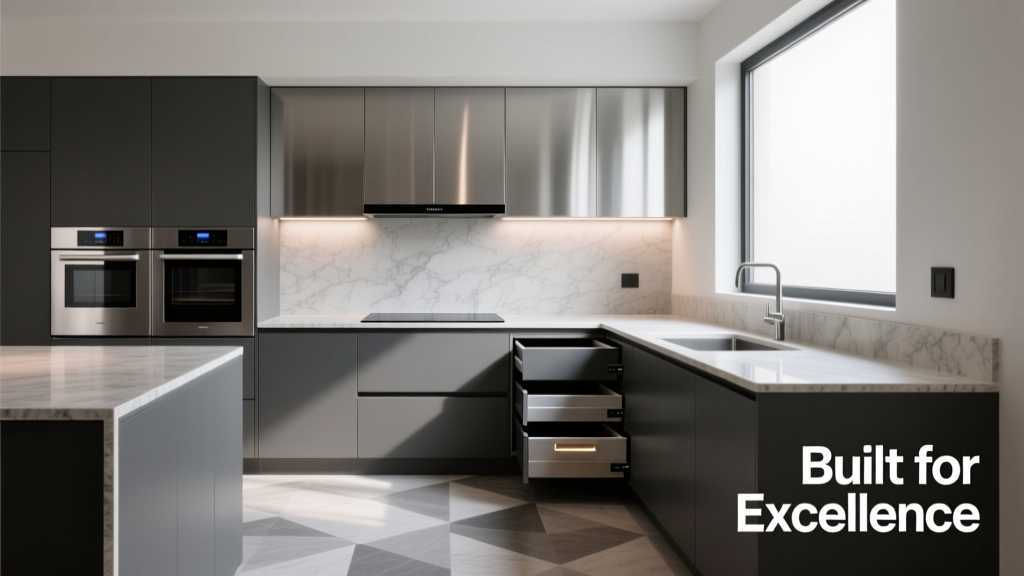 Built Kitchens 2026: Precision, Performance & Integration
Kitchen Appliance Garage: Hide Clutter Smart
 Stylish Kitchen Updates Under $2,500 in 2026
 Kitchen Backsplash Ideas on a Budget
 Open Kitchen Shelving: Pros, Cons & Tips
 Kitchen Color Palettes That Define 2026
 Kid-Proof Kitchen Island Design for Family Chaos in 2026
 Open Shelving Kitchen Design: Style & Function (2026)
 Open Shelving in Modern Kitchens: Style Meets Function
 Kitchen Island Design: Heart of Your Working Kitchen