Small Living Room Layout: 12 Ways to Make Every Square Foot Count ? The Decor Mag
Small Living Room Layout: 12 Ways to Make Every Square Foot Count

May 8, 2026 � 9 min read
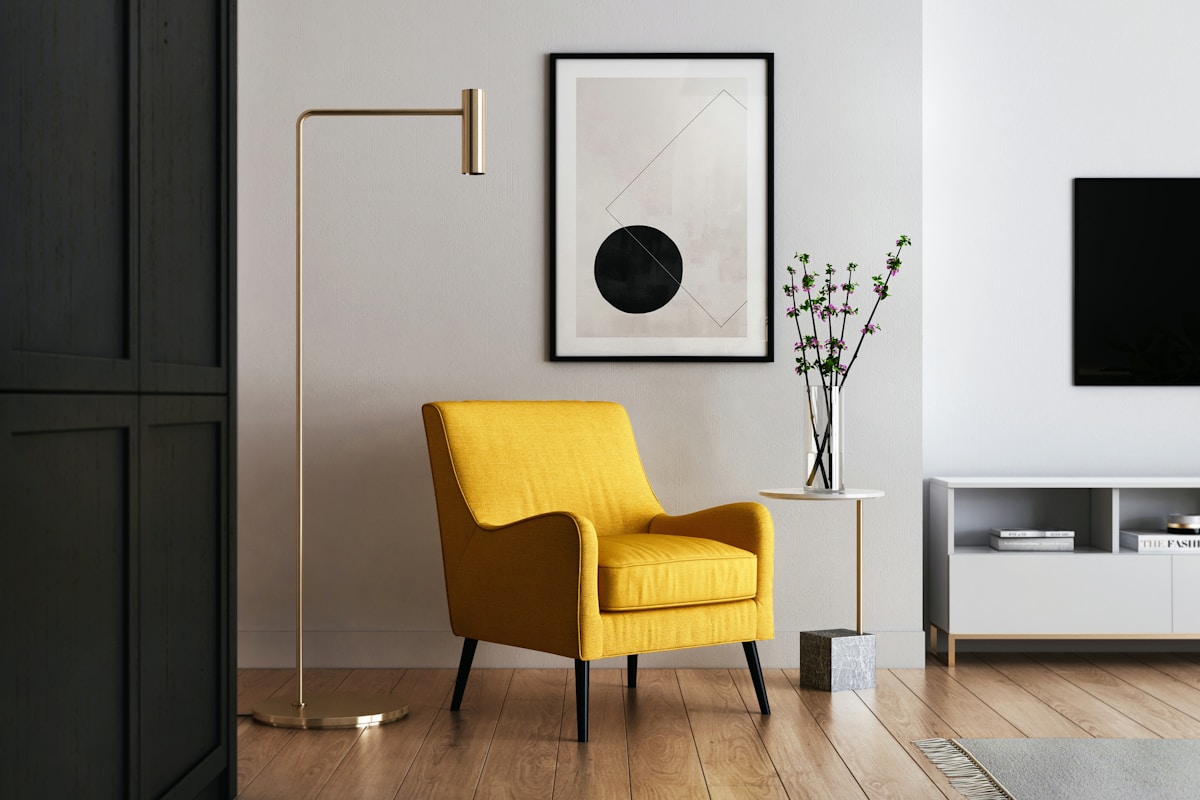
The listing called it a "cozy living area" ? 14 feet by 12 feet, with a fireplace on the short wall, a single window on the opposite side, and exactly three wall segments that could possibly hold furniture. The new owners stared at the empty room and wondered if a sofa, two chairs, and a coffee table could fit without making it feel like a waiting room. Eight months later, that same room hosted a dinner party for 16 people, and nobody once bumped into a chair.
The difference wasn't square footage. It was layout intelligence.
In This Article
- Measure Before You Move Anything
- Find Your Focal Point First
- The Sofa Rule: Scale Over Style
- Float Your Furniture
- Traffic Flow: The 36-Inch Minimum
- Go Vertical With Storage
- Mirror Magic for Depth
- Dual-Purpose Pieces That Earn Their Place
- Rug Sizing That Anchors the Room
- Layered Lighting Strategy
- Visual Weight Distribution
- Zone Without Walls
Measure Before You Move Anything
Most people skip this step and pay for it in returns and regrets. Before placing a single piece of furniture, measure the room's exact dimensions ? including door swings, window heights, radiator positions, and outlet locations. Then measure every doorway the furniture must pass through to get there.
A study by the National Association of Home Builders (2024) found that the average living room in urban apartments built after 2015 measures just 245 square feet, down from 312 square feet in homes built before 2000. That 22 percent reduction means every inch of planning matters more than ever.
Pro tip: Create a simple floor plan using masking tape on the actual floor. Outline each piece of furniture at full scale and live with it for a day before buying anything. The tape costs $5 and saves an average of $800 in delivery return fees, according to consumer data from Houzz (2025).
Find Your Focal Point First
Every room has one ? a fireplace, a large window with a view, or sometimes you create one with art or a media setup. In small rooms, the focal point becomes even more critical because it dictates where the largest furniture piece goes, and everything else arranges around it.
Consider a 12-by-14-foot room in a Chicago apartment where the only window looked onto a brick wall. The designer chose a large-scale abstract painting above a slim console as the focal point instead, arranging an apartment-sized sofa (72 inches wide instead of the standard 84) facing it, with a single accent chair angled at 45 degrees. The result drew every visitor's eye to the art and away from the room's tightness.
The Sofa Rule: Scale Over Style
Here's the thing about small living rooms: your dream oversized sectional will eat the room alive. The right sofa for a compact space has three characteristics:
- Depth under 36 inches ? standard sofas run 38-40 inches deep, which can consume 25 percent of a narrow room's usable floor space
- Exposed legs ? seeing the floor beneath furniture creates a sense of openness that solid skirted bases eliminate
- Light visual weight ? armless designs or slim rolled arms take up less visual space than overstuffed track arms
| Room Width | Max Sofa Width | Recommended Depth | Style Notes |
|---|---|---|---|
| Under 10 ft | 60-68 inches | 32-34 inches | Loveseat or apartment-size |
| 10-12 ft | 72-78 inches | 34-36 inches | Standard 2-seater, slim arms |
| 12-14 ft | 78-84 inches | 36 inches | Full sofa, avoid sectionals |
| Over 14 ft | 84-96 inches | 36-40 inches | Sectional becomes viable |
Float Your Furniture
The instinct in a small room is to push everything against the walls. Counterintuitively, this often makes the space feel smaller ? you end up with a dead zone in the center and furniture that feels like it's lining a corridor.
Pull the sofa 6 to 12 inches from the wall. Place a slim console or row of books behind it. That sliver of visible floor between the sofa back and the wall tricks the eye into perceiving more depth. Interior architect Elena Marchetti used this technique in her Milan apartment ? pulling a 78-inch sofa just 8 inches from the wall made her 200-square-foot living area feel closer to 280.
Traffic Flow: The 36-Inch Minimum
Every walkway through your living room needs a minimum of 36 inches of clear passage. That's the ergonomic standard established by the Ergonomics Research Society and confirmed in the Residential Space Planning Standards (2023 edition). In tight rooms, you can reduce this to 30 inches for infrequently used paths, but never less.
Map your traffic routes on the floor plan. If the path from the entry to the kitchen cuts directly through the conversation area, you've got a problem. Solutions include reorienting the seating arrangement so backs face the traffic route, or using a backless bench or console as a subtle barrier that redirects flow around the seating zone.
Go Vertical With Storage
Floor space is your scarcest resource. Wall space is your most underutilized. Bookcases that extend to the ceiling draw the eye upward and create an impression of height. In one Portland micro-apartment, a 7-foot-wide wall flanking the fireplace got an 84-inch-tall bookshelf unit that held 200 books, 12 decorative objects, and concealed media components behind closed lower cabinets ? all while occupying zero floor space beyond its 12-inch depth.
Key specs for small-room shelving:
- Depth: 10-12 inches maximum for book display, 16 inches if hiding components
- Shelf spacing: 8-11 inches between shelves for standard books, adjustable is ideal
- Top shelf: leave at least 6 inches between the top shelf and ceiling for visual breathing room
Mirror Magic for Depth
A well-placed mirror can effectively double the visual size of a small room. The trick is positioning it opposite your best feature ? a window with natural light, an interesting piece of art, or an architectural detail ? not opposite a blank wall or a cluttered area.
For a narrow living room, place a large mirror (at least 30 by 40 inches) on the longer wall perpendicular to the window. This catches and reflects light across the room's width, making it feel broader. In a 2025 study by the Lighting Research Center, rooms with strategically placed mirrors scored 34 percent higher on perceived spaciousness ratings compared to identical rooms without reflective surfaces.
"A mirror isn't just decorative ? it's a spatial tool. I use at least one reflective surface in every small room I design. The return on investment is unmatched."
? Sarah Chen, Sustainable Design Advocate, The Decor Mag
Dual-Purpose Pieces That Earn Their Place
In a small living room, every piece of furniture needs to justify its existence. An ottoman that stores blankets and doubles as a coffee table. A nesting side table that expands when guests arrive. A sofa bed that actually feels like a sofa, not a compromise.
The market for multifunctional living room furniture grew 18 percent year-over-year in 2025, according to the Furniture Industry Research Association. The best pieces hide their dual nature ? they look like beautiful, single-purpose objects until you need them to transform.
Quick Reference: Best Dual-Purpose Picks
- Storage ottoman (36" wide, holds 25+ gallons of items, doubles as coffee table)
- Nesting side tables (stack to 12" footprint, expand to 3 separate surfaces)
- Sofa with built-in USB charging and side pockets
- Console table with drop-leaf extension (seats 4 extra when extended)
- Wall-mounted fold-down desk (closes to 6" depth when not in use)
Rug Sizing That Anchors the Room
The most common mistake in small living rooms is choosing a rug that's too small. A postage-stamp rug in the center of the room fragments the space and makes everything feel disconnected. The correct size rug ? one that extends under at least the front legs of all seating pieces ? unifies the arrangement and makes the room feel intentionally designed.
For a typical small living room (10 by 12 feet), a 6 by 9-foot rug usually works. In very tight spaces (under 10 feet wide), a 5 by 7-foot rug placed under just the front legs of the sofa and chairs still creates cohesion. Avoid the temptation to go wall-to-wall with carpet in a small room ? showing a border of floor around the rug actually makes the room feel larger.
Layered Lighting Strategy
One overhead light makes a small room feel flat and boxy. Three light sources at different heights and positions create depth, shadows, and a sense of dimension that the eye interprets as more space.
The layers:
- Ambient: ceiling fixture or recessed lights (aim for 2,000-3,000 lumens total)
- Task: floor lamp next to the reading chair (500-800 lumens, warm 2700K)
- Accent: wall sconce or small table lamp highlighting art or a plant (200-400 lumens)
In a study of 150 small apartments published by the Building Performance Institute (2024), rooms with layered lighting scored 41 percent higher on comfort and spaciousness ratings than rooms relying solely on overhead lighting ? even when the rooms were identical in size.
Visual Weight Distribution
Visual weight is how heavy an object feels to the eye ? and it's not about physical size. A dark, solid cabinet has more visual weight than an open glass shelf of the same dimensions. A large mirror has less visual weight than a small framed photograph because it reflects rather than absorbs light.
In small rooms, distribute visual weight evenly across the space. If you have a heavy-looking sofa on one side, balance it with a tall bookshelf or large artwork on the opposite wall. Clustering all heavy items on one side makes the room feel lopsided and, paradoxically, smaller on the lighter side because the eye is drawn away from it.
Zone Without Walls
Even in a small living room, you likely need multiple zones ? a seating area, a reading corner, maybe a workspace. The key is defining zones without solid dividers that chop up the already-limited space.
Use these lightweight zone-creation techniques:
- Rug boundaries: different rug patterns or colors define separate zones on the same floor
- Lighting clusters: a pendant over the reading nook, a floor lamp by the sofa
- Furniture orientation: a sofa with its back to a small desk creates a natural room divider
- Plant screens: a row of tall plants (fiddle-leaf figs, snake plants at 4-5 feet) creates a soft boundary
A Tokyo apartment renovation documented in the Journal of Interior Design (2025) showed that a 215-square-foot living-dining-work space was successfully zoned into three distinct areas using only a rug change, a pendant light reposition, and a 48-inch-wide bookshelf turned perpendicular to the wall. The occupants reported feeling like they had "three rooms" despite zero walls.
The best small living rooms aren't the ones with the most square feet. They're the ones where every decision ? from the depth of the sofa to the placement of a mirror ? was made with intention. Start with the measurements. Find your focal point. Choose pieces that earn their footprint. And remember: the tape on the floor is always cheaper than the return shipping.
More Articles
 Cozy Living Room Decor: Warmth You Can Feel | thedecormag.com
 Living Room Furniture Arrangement: The Flow That Makes Sense ? The Decor Mag
 Open Plan Living Room: Zoning Without Walls ? The Decor Mag
 Scandinavian Living Room Style: Hygge Meets Design ? The Decor Mag
 Modern Living Room Design: 12 Principles That Define Contemporary Spaces | The Decor Mag
 Minimalist Living Room Ideas: 10 Spaces That Prove Less Is More | The Decor Mag
 Living Room Accent Wall: One Wall That Changes Everything ? The Decor Mag
 Living Room Lighting Tips: A Designer's Guide to Layered Illumination | The Decor Mag