Bedroom Rug Placement: Size, Position, and Purpose | The Decor Mag
Bedroom Rug Placement: Size, Position, and Purpose
 Marcus Webb

A bedroom rug does more than add a decorative touch. It defines the sleeping zone, softens the acoustic environment, provides warmth under bare feet, and ties the room's furniture arrangement together. Yet rug placement is one of the most commonly mishandled elements in bedroom design. The wrong size or position can make a perfectly good room feel cramped, off-balance, or unfinished.
Getting it right starts with understanding the relationship between your bed, your room dimensions, and the rug itself. The goal is proportion: a rug that feels like it belongs in the space rather than floating awkwardly within it.
Why Rug Placement Matters More Than You Think
Rugs influence how you experience a room in three measurable ways. First, they affect perceived room size. A rug that is too small makes the room feel fragmented and underscaled. A rug that extends close to the walls makes the room feel larger and more unified. Second, they change the acoustic profile. Hard floors reflect sound; rugs absorb it. In a bedroom, this absorption contributes directly to the quiet atmosphere that promotes sleep. Third, they create a tactile boundary between the sleeping zone and the rest of the room.
Consider these placement factors before making a purchase:
- Room dimensions and the distance between walls and the bed
- Whether you want nightstands on or off the rug
- Foot traffic patterns -- where you walk when entering and exiting
- Existing floor type -- hard surfaces need more rug coverage than carpeted floors
The Three Standard Placement Strategies
Interior designers typically use one of three approaches when placing a rug in a bedroom. Each creates a different visual effect and works best with specific room layouts.
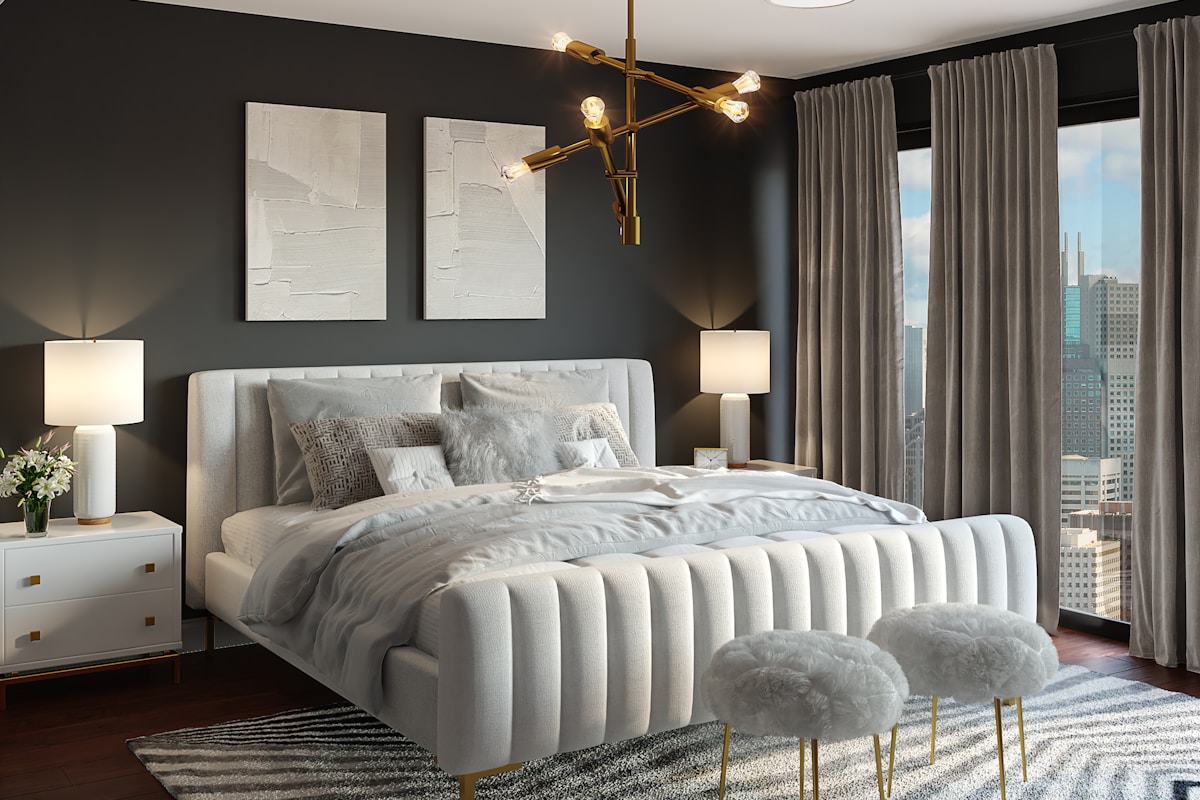
Strategy 1: Full coverage. The rug extends beneath the entire bed and nightstands, reaching within 12 to 18 inches of the walls on all sides. This approach works best in larger bedrooms and creates a unified, anchored feel. The bed, nightstands, and rug read as a single composition.
Strategy 2: Two-thirds coverage. The rug sits under the lower two-thirds of the bed, extending past the foot of the bed by at least 18 inches. Nightstands may sit partially on the rug or entirely off it. This is the most versatile approach and works in rooms of almost any size.
Strategy 3: Runner placement. One or two runners flank the sides of the bed, positioned where your feet land when getting in and out. This approach suits small bedrooms where a full-width rug would overwhelm the space. It provides targeted comfort where you need it most without consuming excessive floor area.
| Room Size | Recommended Strategy | Rug Size | Visual Effect |
|---|---|---|---|
| Small (under 120 sq ft) | Runners or partial coverage | 2x6 or 3x5 | Targeted comfort, open floor feel |
| Medium (120-200 sq ft) | Two-thirds coverage | 6x9 or 8x10 | Balanced, defined sleeping zone |
| Large (200+ sq ft) | Full coverage | 9x12 or larger | Luxurious, fully anchored |
Sizing Your Rug: Getting the Proportions Right
The most common rug sizing mistake is choosing a rug that is too small. A twin bed on a 4x6 rug looks like the rug is floating in isolation rather than anchoring the bed. As a general rule, the rug should extend at least 18 to 24 inches beyond the sides and foot of the bed.
Here is a practical sizing guide:
- Twin bed: Minimum 5x8 rug for partial coverage; 6x9 for more generous coverage
- Full bed: 6x9 rug for partial coverage; 8x10 for fuller coverage
- Queen bed: 8x10 rug is the sweet spot; 9x12 for rooms that can accommodate it
- King bed: 9x12 minimum; 10x14 for large master bedrooms
When in doubt, go one size larger than you think you need. A slightly oversized rug always looks more intentional than one that is clearly too small. If your ideal size exceeds your budget, consider a flatweave or cotton rug in the larger size rather than a plush rug in a smaller size.
I measure the room, tape out the rug dimensions on the floor with painter's tape, and live with the outline for a day before ordering anything. It is the single best way to avoid a costly sizing mistake.
-- Priya Sharma, Interior Stylist, Mumbai
Material Selection for Bedroom Conditions
Bedroom rugs face different demands than living room or dining room rugs. They do not need to withstand heavy foot traffic or frequent spills. Instead, they need to feel pleasant under bare feet, complement the bedding, and contribute to the room's overall comfort level.
Top material choices for bedroom rugs:
- Wool: Soft, durable, naturally stain-resistant, and excellent at temperature regulation. Wool rugs feel luxurious underfoot and last for decades.
- Cotton flatweave: Lightweight, washable, and affordable. Ideal for casual bedrooms and warm climates. Flatweaves lie low and work well under bed frames.
- Jute or sisal: Natural fiber options that add texture and warmth. Best layered with a softer rug on top or used in bedrooms with a natural, coastal aesthetic.
- Silk or viscose blends: Provide a lustrous, elegant look but require careful maintenance. Best in low-traffic master bedrooms where they will be admired more than walked upon.
Pile Height Matters
High-pile rugs feel wonderful but can make bed frames wobble and doors stick. For bedrooms, a low to medium pile (under 0.5 inches) offers comfort without the practical drawbacks. If you love the plush feel, place the high-pile rug only in the area where you stand, not under the bed frame itself.
Common Mistakes and How to Avoid Them
Even experienced decorators make rug placement errors. Here are the most frequent ones and how to fix them:
The postage stamp: A small rug centered under a large bed, with too much bare floor visible on all sides. Solution: Size up. The rug should feel generous, not tentative.
The floating island: A rug placed in the middle of the room with no furniture touching it. Solution: Always anchor the rug to at least the front legs of the bed. This connects the rug to the room's furniture arrangement.
The wall-to-wall trap: A rug that extends so close to the walls that it looks like an attempt at wall-to-wall carpeting. Solution: Leave at least 6 to 12 inches of visible floor between the rug edge and the nearest wall.
The wrong shape: A round rug in a rectangular room (or vice versa) without a specific design reason. Solution: Match the rug shape to the room shape unless you are intentionally creating contrast for a specific aesthetic effect.
Layering Rugs for Added Dimension
Rug layering -- placing a smaller decorative rug on top of a larger neutral base -- adds depth, pattern, and textural interest that a single rug cannot achieve. This technique works particularly well in bedrooms, where the layering adds coziness without overwhelming the space.
The formula is straightforward: start with a large, neutral base rug in a natural fiber like jute or sisal. Then layer a smaller, patterned or colored rug on top, offsetting it slightly toward the foot of the bed. The base rug should extend at least 12 inches beyond the top rug on all visible sides.
Layering works best when:
- The base rug is flat and low-profile so the top rug sits evenly
- The top rug is no more than half the size of the base rug
- The colors complement rather than clash -- use a color from the top rug as a guide for the base
- A rug pad between the two layers prevents slipping and adds extra cushioning
More Articles
 Bedroom Color Ideas: Palettes That Promote Rest | thedecormag.com
 Bedroom Window Treatments: Light Control Meets Design | The Decor Mag
 Bedroom Lighting Ideas: Beyond the Bedside Lamp ? The Decor Mag
 Bedroom Furniture Layout: The Optimal Arrangement | The Decor Mag
 Bedroom Reading Nook: Your Private Escape — The Decor Mag
 Bedroom Color Ideas: Palettes That Promote Rest ? The Decor Mag
 Bedroom Storage Solutions: Hide the Clutter, Keep the Style | The Decor Mag
 Guest Bedroom Ideas: Hosting in Style | The Decor Mag
 Bedroom Closet Organization: From Chaos to Curated | The Decor Mag
 Master Bedroom Decor: Designing Your Retreat ? The Decor Mag