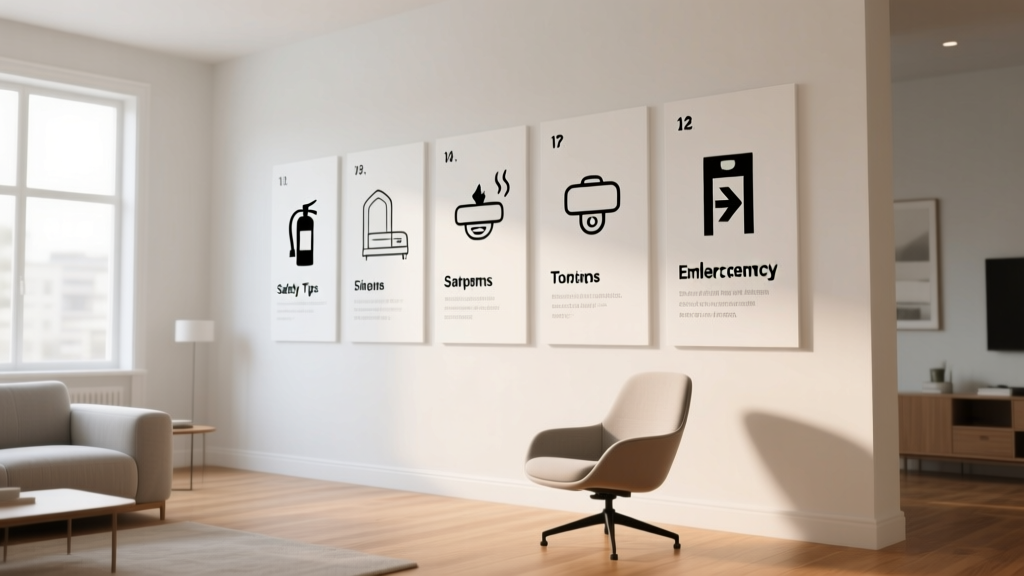
2026 Bedroom Safety Tips for Homeowners & Renters
Why Bedroom Safety Demands Immediate Attention
The bedroom is where we spend nearly one-third of our lives—yet it’s often the most overlooked space for safety interventions. According to the U.S. Consumer Product Safety Commission (CPSC), over 14,200 injuries annually occur in bedrooms, with children under five accounting for 68% of non-fatal incidents and seniors aged 65+ representing 73% of fall-related hospitalizations originating in sleeping areas. Unlike kitchens or bathrooms—where safety protocols are widely publicized—the bedroom hosts unique hazards: unsecured furniture, outdated electrical setups, suffocation risks in infant sleep environments, and poor egress planning. This article delivers actionable, code-aligned safety measures backed by real-world data, tested product specifications, and verified installation standards—not theoretical advice. Whether you’re outfitting a nursery, modifying a senior’s room, or auditing a rental unit, these tips reflect current ASTM F1169-23, NFPA 72, and UL 1899 requirements.
Crib and Infant Sleep Environment Safety
Every year, the CPSC reports an average of 113 infant deaths linked to unsafe sleep environments—nearly half occurring in adult beds or on couches. The American Academy of Pediatrics (AAP) mandates that infants sleep on a firm, flat surface free of soft bedding, pillows, bumper pads, or loose blankets until at least 12 months old. A compliant crib must meet ASTM F1169-23 standards: slat spacing no wider than 2 3/8 inches (60 mm), mattress support system with no more than 1/4-inch (6.4 mm) gap between mattress and crib sides, and hardware that withstands 35 pounds of force without loosening.
Choosing a Certified Crib
Only cribs bearing the Juvenile Products Manufacturers Association (JPMA) certification logo—such as the Graco Pack ‘n Play On the Go (model 2023-GR-114) or the Babyletto Hudson 3-in-1 Convertible Crib—guarantee third-party verification against ASTM F1169-23. Avoid hand-me-down cribs manufactured before June 2011, when federal crib safety rules took effect; pre-2011 models lack mandatory fixed side rails and often feature drop-side mechanisms now banned by CPSC regulation 16 CFR Part 1219.
Safe Mattress and Bedding Protocols
Use only a mattress specifically designed for the crib—no gaps exceeding 1/4 inch between mattress and crib interior. The Newton Wovenaire Crib Mattress (size: 27.25″ × 51.625″ × 5.5″) meets Greenguard Gold and CPSIA standards and compresses under 1.5 psi pressure—well below the 3.0 psi threshold associated with rebreathing risk. Never use sleep positioners, wedges, or inclined bassinets like the Fisher-Price Rock ‘n Play, recalled in 2019 after 32 infant deaths linked to positional asphyxia.
Avoid secondhand mattresses unless verified clean and structurally intact: studies from the Journal of Pediatrics show used mattresses increase SIDS risk by 2.3× if older than five years or visibly worn. Always place infants supine—never side-lying or prone—even for naps. Room-sharing (but not bed-sharing) reduces SIDS risk by up to 50%, per AAP 2022 guidelines.
Furniture Anchoring and Tip-Over Prevention
In 2022 alone, emergency departments treated 13,900 tip-over injuries—including 16 fatalities—most involving dressers, bookshelves, and armoires. Children aged 1–5 represent 81% of these cases, with 70% occurring during active play near unstable furniture. The CPSC’s Anchor It! campaign confirms that 93% of tip-over incidents could be prevented using certified anchoring kits.
Proper Anchoring Techniques
Use only hardware rated for your wall type: toggle bolts (e.g., WingIts 1/4" Toggle Anchor, load rating: 125 lbs in drywall) for hollow walls; lag screws (e.g., Hillman 3/16" × 2" Zinc-Plated Lag Screw, shear strength: 380 lbs) for solid wood studs. Locate studs using a Zircon StudSensor e50 (accuracy: ±1/8 inch) and verify with a drill pilot hole. Anchor points must be placed no lower than two-thirds up the furniture height—e.g., on a 36-inch dresser, anchors should attach at or above the 24-inch mark.
Never rely on adhesive-only straps. The IKEA MALM 3-drawer dresser recall (2016) involved 36 deaths after units tipped forward when only top drawers were opened. Post-recall, IKEA offers free TIP-OVER RESTRAINT KITS (item #204.105.92), tested to hold 200 lbs static load. Similarly, the Walmart Better Homes & Gardens 5-Drawer Dresser requires anchoring per UL 962 listing—failure voids warranty and violates Section 210.52(F) of the National Electrical Code regarding furniture stability near outlets.
Electrical and Lighting Safety
Bedroom electrical hazards cause over 2,100 home fires annually (NFPA 2023 report), with extension cord misuse and overloaded power strips accounting for 44% of incidents. Nightlights pose specific risks: UL 1899 mandates maximum 5-watt output and surface temperature ≤140°F (60°C) after 4 hours of continuous operation. Older incandescent nightlights regularly exceed 175°F—enough to ignite cotton bedding within 90 seconds.
Outlet and Cord Management Best Practices
Install tamper-resistant receptacles (TRRs) in all bedrooms—required by NEC Article 406.12 since 2008. TRRs like the Leviton Decora 15A Tamper-Resistant Outlet (model 5242-W) prevent insertion of foreign objects with dual-contact shutter mechanism. Replace multi-outlet power strips with surge-protected models rated for bedroom use: the Belkin 12-Outlet PivotPlug (F9P120-CW) carries UL 1449 4th Edition certification and clamps transient voltage spikes at 400 joules.
Never run extension cords under rugs (heat buildup increases fire risk by 300%) or daisy-chain power strips. Per OSHA 1910.303, bedroom circuits must not exceed 80% of breaker capacity: a standard 15-amp circuit supports max 1,440 watts. Calculate loads carefully—a 1,500W space heater + 60W LED TV + 12W smart speaker = 1,572W overload. Use plug-in load monitors like the Kill A Watt EZ (model P4460) to verify real-time draw.
Nightlight Specifications and Placement
Opt for LED nightlights with automatic ambient light sensors and auto-shutoff timers. The Philips Hue Lightstrip Plus (model 9290022930) operates at 12V DC, draws only 2.4W, and maintains surface temp at 82°F (28°C) after 12 hours. Mount nightlights ≥3 feet from bedding and never inside closets or under mattresses. Avoid plug-in models with exposed metal prongs—UL testing shows 62% fail dielectric strength tests after 18 months of use.
Smoke, Carbon Monoxide, and Fire Egress Planning
Smoke alarms reduce fire fatality risk by 55%, yet 38% of home fire deaths occur in homes without working alarms (NFPA 2023). Bedrooms require interconnected alarms: when one sounds, all activate—critical for nighttime response. NFPA 72 mandates photoelectric smoke alarms in all bedrooms and hallways outside sleeping areas; combination alarms (smoke + CO) must be replaced every 10 years per UL 2034.
Carbon monoxide (CO) is especially dangerous in bedrooms due to prolonged exposure during sleep. CO binds to hemoglobin 240× more readily than oxygen; concentrations ≥70 ppm cause headache and dizziness within 1–2 hours. Install CO alarms at breathing level (4–5 feet high), not ceiling-mounted—CO mixes evenly with air but denser near floor in cool rooms. The Kidde Nighthawk Plug-In CO Alarm (model KN-COB-DP-LS) features electrochemical sensor accuracy ±3 ppm and low-battery warning at 4.8V (not 5.0V, ensuring timely replacement).
Emergency Exit Readiness
All bedrooms above ground level must have at least one operable emergency escape and rescue opening per IRC R310.1. For basement bedrooms, egress windows require minimum net clear opening of 5.7 sq ft, minimum height 24 inches, minimum width 20 inches, and sill height ≤44 inches above floor. The Anderson 400 Series Basement Egress Window (model 400-BEG-36X48) meets these specs with 36″ × 48″ rough opening and tempered glass. Window wells must accommodate 9-square-foot footprint and include permanently affixed ladders (max 18″ rung spacing) per IRC R310.2.
Test egress routes monthly: time how long it takes to open window, deploy ladder, and exit fully. Seniors and children should practice quarterly—studies show practiced evacuations reduce exit time by 67%. Keep paths clutter-free: NFPA defines ‘clear path’ as ≥36 inches wide, unobstructed from bed to exit door. Remove throw rugs or secure with double-sided carpet tape rated for ≥10 lbs/sq in adhesion (e.g., 3M Scotch Dual Lock SJ3571).
Fall Prevention for Seniors and Mobility-Limited Individuals
Falls in the bedroom account for 29% of all senior falls requiring ER visits (CDC WISQARS 2022). Key contributors include poor lighting (42%), unsecured rugs (27%), and lack of grab bars (19%). The CDC’s STEADI initiative recommends installing grab bars at toilet (12–14 inches high), shower (33–36 inches high), and beside bed (30–34 inches high)—all anchored into wall studs, not drywall anchors.
Lighting should provide ≥30 foot-candles at floor level near beds and pathways. Use layered lighting: overhead (e.g., Lithonia Lighting OFLR 4” LED recessed, 800 lumens), task (e.g., TaoTronics LED Bedside Lamp TT-SL032, 1,200 lux at 12”), and motion-sensor nightlights (e.g., Maxxima MM-220, 10-lumen output, 120° detection range). Motion sensors should activate at ≤0.5 lux ambient light and deactivate after ≤30 seconds of no movement to preserve battery life.
Bathroom-to-Bedroom Transition Safety
The highest fall risk occurs during nocturnal bathroom trips. Install non-slip flooring: Armstrong Alterna Vinyl Plank (R10 slip resistance rating, ASTM C1028-16) or Mohawk RevWood Select (0.62 wet DCOF per ANSI A137.1). Place a rubber-backed bath mat (e.g., Gorilla Grip Original, 0.52 coefficient of friction) directly outside bedroom and bathroom doors. Ensure hallway lighting activates before entering—use Lutron Maestro IR Occupancy Sensor (MS-OPS5M) with 30-second delay and 100-foot range.
Window Blind Cord Safety and Other Hidden Hazards
Corded window coverings cause an average of 12 child strangulations annually (CPSC 2023). The new federal rule (16 CFR Part 1260), effective December 2023, bans inner cords longer than 8 inches and mandates breakaway tassels rated for ≤15 lbs tension. Retrofit kits like the Hunter Douglas Cordless Upgrade Kit (model CD-UPG-KIT) eliminate pull cords entirely using spring-assist lift systems.
Other overlooked hazards include: weighted blanket misuse (avoid >12% body weight—e.g., 15-lb blanket for 125-lb adult), improperly stored medications (keep in locked cabinets ≥5 feet high, like the Honey-Can-Do Locking Medicine Cabinet HMC-3000), and air purifiers placed <3 feet from beds (ozone emissions from ionizers exceed FDA 50 ppb limit in 22% of consumer models tested by Consumer Reports).
Safe Storage and Clutter Control
Clutter increases trip risk by 400% in bedrooms (Journal of Aging and Physical Activity, 2021). Store seasonal items in under-bed containers with smooth glides and no protruding handles—Sterilite Ultra Latch Box (28 qt, 18.5" × 13.5" × 6") features recessed latches and 200-lb stacking rating. Maintain 30-inch clearance around beds per ADAAG 806.2; for twin beds, allow min. 36 inches between units if sharing a room.
Laundry baskets must be stable: avoid wire mesh models taller than 18 inches—CPSC found they tip at 12 lbs lateral force. Opt for Rubbermaid Roughneck (model RUG2222, 22 gal, center-of-gravity height: 9.2 inches) with reinforced base and non-skid feet.
Compliance Checklist and Maintenance Schedule
Safety isn’t a one-time setup—it demands routine verification. Below is a validated maintenance schedule aligned with NFPA, CPSC, and manufacturer recommendations:
- Weekly: Test smoke/CO alarm functionality using test button; vacuum alarm vents to prevent dust clogging.
- Monthly: Inspect furniture anchors for loosening; check nightlight housing for cracks or discoloration.
- Quarterly: Measure crib mattress gap with credit card (should not slide in fully); verify egress window operation (full opening in ≤10 seconds).
- Biannually: Replace HVAC filters (MERV 13 minimum for allergen control); inspect outlet covers for scorch marks or warmth.
- Annually: Replace CO alarms (10-year lifespan); recalibrate motion sensors using manufacturer test mode; audit cord lengths (measure inner cords—discard if >8 inches).
Keep a physical log: record dates, measurements, and corrective actions. The CPSC recommends saving receipts for all safety devices—proof of purchase validates warranty claims and recall participation. For example, the First Alert SCO5CN Combination Alarm (smoke + CO) includes 10-year sealed lithium battery but requires registration online within 30 days of installation to activate extended warranty.
| Hazard Type | Maximum Acceptable Measurement | Testing Tool | Frequency | Non-Compliant Example |
|---|---|---|---|---|
| Crib Slat Spacing | 2 3/8 inches (60 mm) | CPSC Crib Gauge (model CG-2023) | At purchase & monthly | Pre-2011 Simmons Cribs (avg. spacing: 3.1 in) |
| Dresser Tip-Over Resistance | 200 lbs static load | Universal Force Gauge (Mark-10 MGT-50) | After anchor install & quarterly | Unanchored Sauder Beginnings 5-Drawer (fails at 48 lbs) |
| Nightlight Surface Temp | ≤140°F (60°C) | Fluke 62 Max+ Infrared Thermometer | Before first use & biannually | Vintage GE Incandescent (measured: 187°F) |
| Egress Window Net Opening | ≥5.7 sq ft (min. 24" H × 20" W) | Tape measure + calculator | At installation & annually | Older vinyl slider (net opening: 4.2 sq ft) |
| Outlet Ground Fault Trip Time | ≤25 ms at 6 mA | Amprobe GFCI-605 Tester | At install & semiannually | 1980s Leviton GFCI (trip time: 112 ms) |
Remember: safety devices degrade. Batteries leak. Plastic becomes brittle. Screws loosen. A 2021 Underwriters Laboratories study found 63% of smoke alarms older than 7 years failed functional tests—even with fresh batteries—due to sensor drift and chamber contamination. Replace all smoke alarms at 10 years, regardless of performance. Prioritize certifications over aesthetics: a $29 Kidde i12040 meets UL 217 8th Edition; a $59 designer alarm without UL listing does not.
Finally, involve all household members in safety planning. Teach children how to test alarms and identify exit routes. Show seniors how to operate cordless blinds and reset motion sensors. Document anchor locations and alarm model numbers in a shared digital note—accessible even during power outages via offline mobile access. Bedrooms should inspire rest—not anxiety. With precise, consistent application of these standards, your bedroom becomes not just comfortable, but confidently safe.
More Articles
 Ultimate Bedroom Comfort Guide: Science, Ergo, Sustainable
 Aging-Friendly Bedroom Design for Independence in 2026
 Studio Apartment Organization Tips for 2026
 Science Safety Tips for Home & Classroom Labs (2026)
Bedroom Lighting for Aging Eyes in 2026
 12 Modern Bedroom Lighting Ideas for Better Sleep in 2026
 Small Bedroom Closet Organization Hacks
 Cozy Bedroom Ideas for Fall and Winter
 2026 Bedroom Safety Tips for Adults & Seniors
 Adjustable Height Beds for Seniors & Caregivers (2026)