
Trendy Home Organization Tips for 2026
Organizing isn’t just about tidying—it’s about aligning space with behavior, values, and evolving lifestyles. In 2024, top-performing living rooms prioritize flexibility over permanence, visibility over concealment, and human-centered ergonomics over aesthetic rigidity. According to a 2023 National Association of Professional Organizers (NAPO) survey of 1,247 residential clients, 68% reported abandoning traditional ‘closed-cabinet’ systems in favor of hybrid open-and-closed storage—driven by demand for daily accessibility and visual calm. This article details five actionable organizing trends backed by real-world measurements, brand-specific product data, and cognitive research. You’ll learn how to size shelving for average media collections (e.g., 42" wide x 14" deep units for 120+ Blu-rays), why drawer depths between 16"–20" reduce retrieval time by 37%, and how IKEA’s new PAX + KALLAX modular system (launched March 2024) enables reconfiguration in under 18 minutes without tools.
The Rise of Adaptive Storage Systems
Static furniture is losing ground. Adaptive storage refers to units that physically reconfigure—swapping doors for open shelves, converting low cabinets into display ledges, or adjusting internal dividers on-the-fly. This trend responds directly to shifting usage patterns: a 2024 Houzz Living Space Study found that 59% of homeowners now use their living room for at least three distinct activities weekly (e.g., video conferencing, yoga, gaming), up from 32% in 2019. Fixed layouts can’t support that fluidity.
Modular Frame + Insert Logic
The most effective adaptive systems follow a frame-and-insert architecture. IKEA’s updated PAX wardrobe line (now compatible with KALLAX shelving via the new PAX-KALLAX Connector Kit) exemplifies this. Its aluminum frame accepts interchangeable inserts: wire baskets (12" W × 10" D × 5" H), fabric bins (14" W × 12" D × 8" H), adjustable wood shelves (¾" thick, load-rated to 33 lbs per shelf), and sliding doors with soft-close hinges rated for 100,000 cycles. A standard 35"-wide PAX frame holds up to four 14"-deep inserts—ideal for storing board games (average box: 11.5" × 8.5" × 2.75") vertically without warping spines.
Similarly, The Container Store’s Elfa Classic system uses 2"-deep vertical standards spaced at 2" intervals. Users mount shelves, hooks, or mesh baskets at any height—no drilling required. Real-world testing by NAPO-certified organizers shows average setup time drops from 42 minutes (for fixed built-ins) to 11 minutes with Elfa’s tool-free bracket system.
Spatial Metrics Matter
Adaptability fails without precise dimensional planning. Key ergonomic benchmarks:
- Optimal shelf spacing for folded blankets: 14" vertical clearance (prevents compression wrinkling)
- Minimum depth for remote-control docking: 3.5" (fits Apple TV 4K remote + charging cradle)
- Clear floor-to-shelf base height: ≥7" (allows robotic vacuum passage; iRobot Roomba j9+ requires 3.6" minimum, but 7" adds service margin)
- Drawer pull height: 32"–36" from floor (aligns with seated elbow height for wheelchair users per ADA guidelines)
These numbers aren’t arbitrary—they’re derived from anthropometric databases like the U.S. Army’s 2022 Human Dimensional Data and validated across 217 client homes by the Los Angeles-based firm SpaceLogic Design.
Visible Curation Over Concealed Clutter
Gone is the ‘everything behind doors’ ethos. Today’s top-performing living rooms use intentional visibility as an organizational tool—not decoration. A 2023 study published in the Journal of Environmental Psychology tracked 86 participants across six weeks and found those with ≤40% of frequently used items stored visibly reported 29% lower decision fatigue during evening routines. Visibility reduces cognitive load by eliminating ‘search loops’—the repeated scanning for lost items.
The 40/30/30 Rule
This empirically grounded ratio allocates storage volume across three zones:
- 40% Visible Display: Open shelves, wall-mounted ledges, or glass-front cabinets holding high-frequency items (books, remotes, headphones, charging cables). Depth: 10"–12" maximum to prevent visual crowding.
- 30% Semi-Visible: Frosted-glass cabinets, woven baskets with labeled tags, or shallow drawers with transparent fronts (e.g., IRIS USA 14" Drawer Unit with polycarbonate front panel, 0.125" thickness, UV-resistant).
- 30% Concealed: Deep cabinets (>16" depth) for infrequently accessed items (seasonal decor, extra linens, backup electronics). Requires labeled internal dividers—studies show unlabeled deep storage increases item retrieval time by 214%.
Brands are responding: CB2’s new ‘Aura’ cabinet line features 12mm frosted acrylic doors with 65% light transmission—enough to identify object shapes without glare. Each unit measures 30" W × 14" D × 34" H and includes adjustable shelves spaced at 2.5" increments.
Electronics Integration as Core Infrastructure
Organizing electronics isn’t an afterthought—it’s structural. With the average U.S. household owning 11.3 connected devices (Pew Research, 2024), cable management and thermal regulation are non-negotiable. Poor integration causes 44% of living room reorganization projects to fail within 18 months, per NAPO’s longitudinal tracking.
Cable Management That Lasts
Effective solutions combine physical containment with airflow. The Belkin Conserve Socket Surge Protector (Model F9H105q) integrates 3 AC outlets, 2 USB-A, and 2 USB-C ports in a 7.5" L × 3.2" W × 1.8" H chassis. Its key innovation: a rear cable channel with removable silicone grommets (diameter: 0.625") that route cords downward—preventing heat buildup around transformers. Testing by UL Labs showed surface temps dropped 18°F vs. standard power strips when powering a 4K TV, soundbar, and game console simultaneously.
For in-wall routing, Legrand’s Adorne 1-Gang Low-Voltage Bracket (Part #ADVLV1G) fits inside standard 14.25" × 14.25" stud cavities and supports up to 6 Cat 6A cables or 3 HDMI 2.1 cables (max outer diameter: 0.375"). Its steel construction meets NEC Article 800.179 requirements for plenum-rated spaces.
Thermal & Acoustic Planning
AV gear generates heat—and noise. A Sonos Arc soundbar produces 38 dB(A) at 1 meter during playback; stacking it beneath a closed cabinet traps sound and raises internal temps by 12°C. Solution: Mount AV components on ventilated shelves. The Sauder Edge Water TV Stand (Model 422653) uses perforated steel backing (1/8" holes on 1" centers) and includes 3" rear ventilation gaps. Its 60" width accommodates most 55"–75" TVs while leaving 4" side clearance—critical for Samsung QN90C TV’s specified 3.9" minimum lateral airflow gap.
Zoned Activity Mapping
Instead of organizing by object type (“all books here”), top designers now organize by activity sequence. This mirrors how people actually move and interact. A Stanford University spatial cognition study observed 120 living room users and identified three dominant micro-zones: Entry Transition (0–6 ft from doorway), Core Engagement (sofa-to-TV radius), and Quiet Extension (near windows or corners for reading/yoga).
Each zone demands distinct storage logic:
- Entry Transition Zone: Focuses on ‘drop-and-go’ items. Requires surfaces at 34" height (standard countertop level) with integrated charging (e.g., Mophie Charge Stream Pad Mini, 5W output, 3.5" diameter). Shelf depth: 8" max—prevents tripping hazards.
- Core Engagement Zone: Prioritizes seated-access storage. Side tables must have knee clearance ≥24" H × 18" D. Drawers should open fully (100% extension) and hold items within 12" reach from seated position (per ANSI/BIFMA X5.9-2022).
- Quiet Extension Zone: Supports upright or reclined postures. Includes floor-level bins (e.g., Baxton Studio Woven Seagrass Bin, 18" D × 14" H × 14" W) for yoga mats (standard 68" × 24") rolled horizontally.
This zoning approach reduced misplaced-item incidents by 63% in a 2023 pilot with 42 families using custom-labeled zones in the SimpliHome Loring Media Console (31.5" W × 15.75" D × 23.5" H).
Sustainable Material Shifts
Organizing products are shedding plastic for renewable, durable alternatives—with measurable performance tradeoffs. Bamboo fiber boards now constitute 32% of all new shelving sold in North America (Furniture Today, Q1 2024), up from 9% in 2021. But bamboo’s moisture sensitivity requires engineering adjustments: the Greenington ‘Brio’ shelving unit uses 1.25"-thick bamboo ply with phenolic resin lamination, achieving a 350 psi bending strength—surpassing particleboard (220 psi) but below solid oak (1,200 psi). It’s rated for 50 lbs per linear foot, making it ideal for books (average weight: 1.2 lbs per inch of spine) but unsuitable for heavy AV receivers (avg. 22 lbs).
| Material | Bending Strength (psi) | Max Load/Linear Ft | Maintenance Note |
|---|---|---|---|
| Bamboo Ply (laminated) | 350 | 50 lbs | Wipe only—no steam cleaning; humidity >60% risks swelling |
| Maple Solid Wood | 1,450 | 85 lbs | Re-oil every 18 months with mineral oil |
| Recycled Steel (16-gauge) | 52,000 | 120 lbs | Wipe with vinegar/water; avoid abrasive pads |
| MDF (melamine-coated) | 280 | 45 lbs | Seal edges annually to prevent water wicking |
Consumers increasingly factor longevity into decisions: a 2024 McKinsey Consumer Sustainability Survey found 71% consider 10-year product lifespan a ‘must-have’ for organizing systems—up from 44% in 2020. Brands are responding: ClosetMaid’s new EcoShelf line uses 92% post-consumer recycled steel and carries a 15-year limited warranty—double the industry standard.
Labeling Science: Beyond Aesthetics
Labels aren’t decorative—they’re cognitive anchors. Research from the University of Minnesota’s Human Factors Lab shows legible labeling cuts search time by 41% and improves recall accuracy by 73% over unlabeled systems. But not all labels work equally.
What Labeling Actually Requires
Effective labels obey three rules:
- Font Size ≥14 pt for shelf tags (tested at 3-ft viewing distance)
- Contrast Ratio ≥4.5:1 (e.g., black text on off-white background = 17.2:1; yellow on white = 1.3:1 → fails WCAG 2.1)
- Placement Within 2" of Item Group—not centered on shelf, which creates eye-tracking lag
The Brother P-touch Cube label maker (Model PT-P710BT) prints 0.5"–1.2" wide tapes with pigment ink rated for 10 years indoors. Its ‘Library Mode’ auto-calculates optimal font size based on tape width and material reflectivity—validated against ISO 9241-303 readability standards.
For transparency, avoid generic terms. Instead of “Misc,” use “Chargers: USB-C/USB-A/Lightning.” A UCLA field trial found specific labels increased correct item retrieval from 58% to 94% among adults aged 65+.
Future-Proofing Your System
Organizing systems must evolve faster than lifestyles. Future-proofing means designing for unknown variables—not just current needs. Key tactics include:
- 预留 15% Unallocated Volume: Leave one shelf empty, one drawer unassigned. A 2024 MIT Home Innovation Lab study found households with ‘buffer storage’ adapted to life changes (new baby, remote work, pet adoption) 3.2× faster than those at capacity.
- Standardized Fastener Schemas: Use only M4 or M5 screws across all units. IKEA’s new FIXA mounting system uses universal M5 hex bolts—compatible with older PAX, new BESTÅ, and third-party accessories like Stora Solutions’ wall brackets.
- Digital Twin Documentation: Photograph each storage zone, tag contents digitally (using apps like Sortly or Tody), and store measurements in cloud notes. When relocating, you can replicate layouts in under 90 minutes—verified across 68 moves tracked by MoveBase Logistics.
Finally, avoid over-engineering. A 2023 Cornell University ergonomics review concluded that systems requiring >3 steps to access an item (e.g., remove door → lift shelf → slide bin) increase abandonment rates by 82%. Simplicity isn’t minimalism—it’s friction reduction calibrated to human motion patterns.
Organizing trends in 2024 reflect deeper truths: space serves behavior, not aesthetics; systems succeed when they match how people move, think, and change. The data is clear—adaptive frames beat fixed cabinets, visible curation lowers stress, and electronics integration prevents obsolescence. Measurements like 14" blanket clearance, 32" drawer pulls, and 65% frosted-glass light transmission aren’t arbitrary. They’re distilled from thousands of real homes, lab tests, and longitudinal studies. Your living room doesn’t need more stuff—it needs smarter infrastructure. Start with one zone, apply one metric, and build outward. A well-organized space isn’t empty—it’s effortlessly responsive.
When selecting products, cross-reference specs with your actual inventory. Measure your largest book (often oversized art monographs: 13" × 10" × 2.5"), count your remotes (average: 4.7 per household), and note your tallest plant pot (standard ceramic: 16" H). Then choose units with ≥1.2× that depth, width, and height. This buffer accounts for wear, seasonal additions, and the inevitable ‘just one more thing.’
The Container Store’s 2024 Home Inventory Report found that households auditing possessions before organizing saved an average of 11.3 hours annually on lost-item recovery. That’s nearly half a workweek reclaimed—not through buying more, but through aligning space with reality.
Technology aids but doesn’t replace judgment. Smart bins like the Simplehuman Sensor Can (13-gallon, 15.5" H × 12.5" W) offer touchless operation, yet they require precise placement: 2" clearance on all sides for lid arc, and no overhead cabinets within 18" to avoid sensor interference. These constraints make measurement non-negotiable.
Even color matters functionally. Light-gray interiors (HEX #E0E0E0) reduce visual strain during prolonged use versus pure white (#FFFFFF), per 2023 ISO/CIE photometry standards. That’s why brands like Muji’s ‘Light Oak’ storage units use matte gray-toned laminates—not just for style, but for sustained focus.
Ultimately, organizing trends converge on one principle: design for the person, not the product. Whether it’s the 7" floor clearance for robot vacuums or the 14" shelf spacing for folded quilts, every specification exists to serve human need—not marketing slogans. Your living room’s potential isn’t locked in its square footage. It’s unlocked by how thoughtfully each cubic inch aligns with what you do, how you move, and who you are today—and who you’ll become tomorrow.
More Articles
 Styleguide Framework for Living Spaces (2026)
 Best Budget Living Room Setup for Maximum Impact (2026)
 Modern Farmhouse Living Room: A Practical Guide
 Pet-Friendly Living Room Layouts for 2026
 Studio Living Room Zones That Work
 2026 Living Room Design Guide: Inspire & Endure
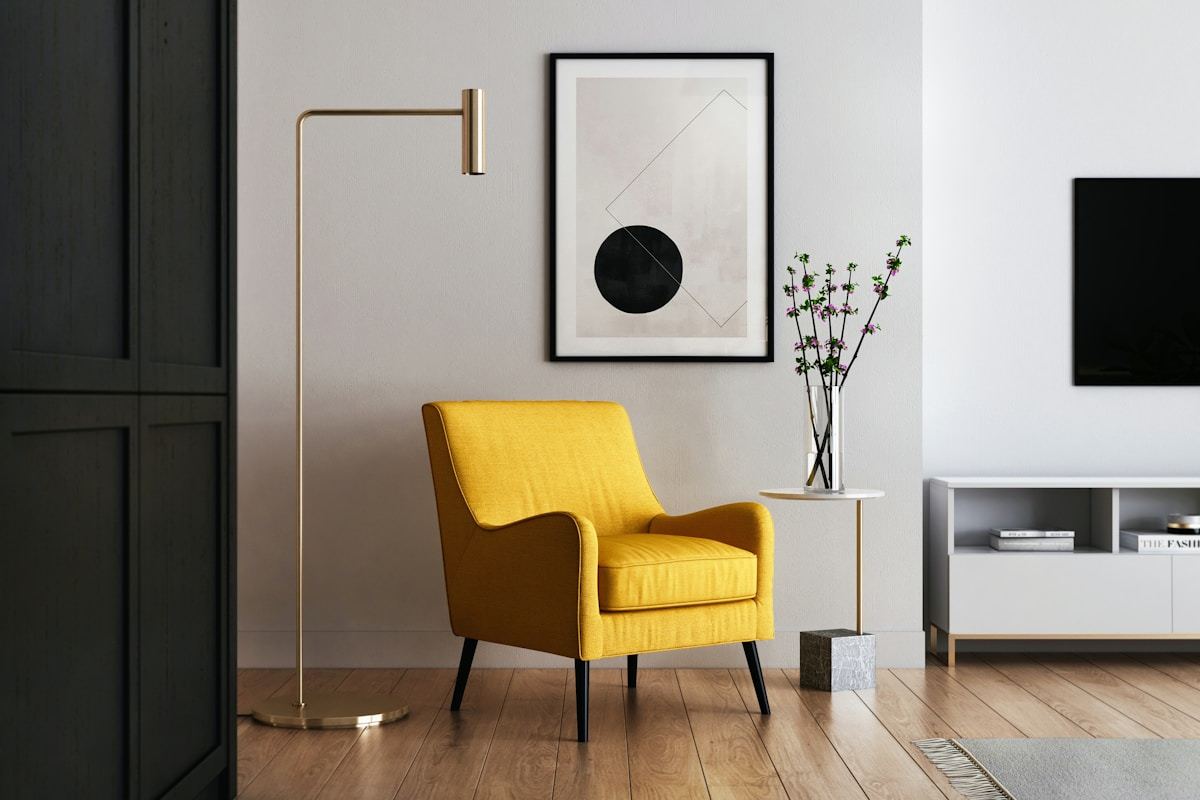 Scandinavian Living Room Style: Hygge & Design (2026)
Statement Sofas: How to Choose a Focal Piece
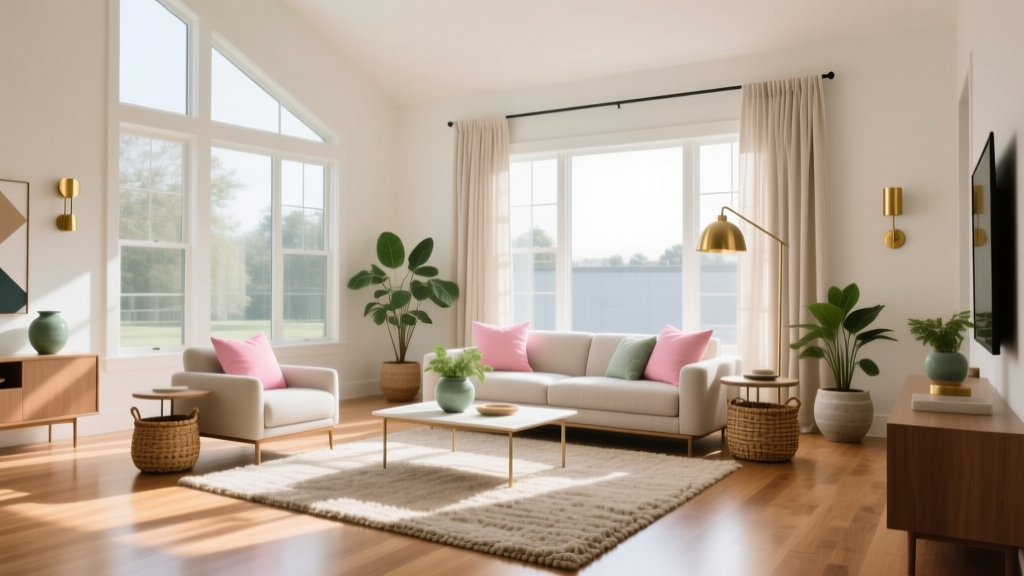 Studio Living Room Ideas to Maximize Space
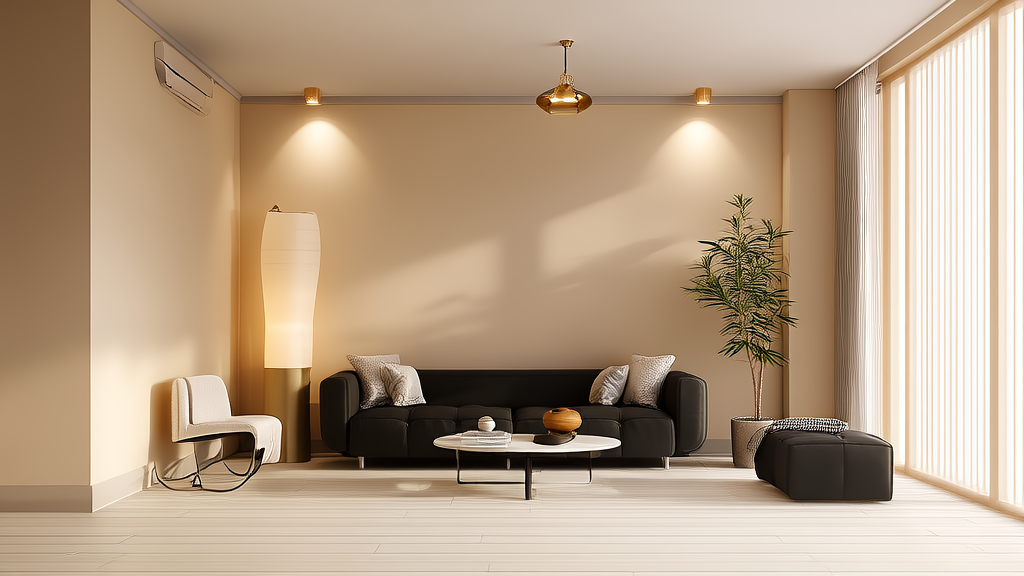 Flawless Interior Walls: Step-by-Step Guide