## The Beauty of Eco-Conscious Design: Rethinking Your Living Space
For years, the interior design industry operated under a quiet assumption: luxury and sustainability couldn't coexist. That era is over. Today's most stunning living rooms prove that every design choice — from your sofa fabric to your coffee table finish — can honor both your aesthetic vision and the planet. As someone who has spent over a decade researching sustainable materials and helping homeowners make eco-friendly design decisions, I can tell you with confidence: sustainable doesn't mean sacrificial. It means smarter, richer, and more intentional.
## Eco-Friendly Furniture: Where Comfort Meets Conscience
The foundation of any living room is its furniture, and this is where sustainable choices make the most impactful difference. When shopping for sofas, sectionals, and armchairs, look beyond surface-level "green" marketing and examine construction details.
FSC-certified hardwood frames from sustainably managed forests provide structural integrity without contributing to deforestation. For cushions, natural latex from rubber trees offers superior longevity compared to petroleum-based foam, which off-gasses volatile organic compounds for years after installation. Wool batting, harvested humanely from sheep, serves as an excellent natural cushioning layer that regulates temperature and resists dust mites.
When it comes to upholstery, organic cotton grown without synthetic pesticides feels luxuriously soft while supporting soil health. Hemp fabric has emerged as a design favorite — it's incredibly durable, naturally antimicrobial, and requires minimal water to cultivate. For those drawn to rich textures, recycled PET upholstery made from post-consumer plastic bottles produces fabrics indistinguishable from high-end synthetics.
## Sustainable Textiles: The Layer That Tells a Story
Textiles — throws, cushions, curtains, and rugs — are where personality enters a room. Organic linen curtains filter light beautifully while requiring a fraction of the water and chemicals used in conventional production. Their relaxed drape creates an effortlessly elegant window treatment that deepens in character with each wash. For throws and decorative cushions, consider peace silk (ahimsa silk), harvested without harming the silkworm. The resulting fabric has the same luminous quality as traditional silk but aligns with ethical production values.
When layering rugs, opt for natural jute or seagrass as your base layer. These fast-growing plants regenerate quickly, require no irrigation, and add beautiful organic texture underfoot. Top with a smaller area rug in organic wool dyed with plant-based pigments, which produce vivid, earthy tones that shift subtly with changing light throughout the day.
## Reclaimed Wood: Character That Can't Be Manufactured
Few materials bring the warmth and history of reclaimed wood to a living space. Every beam, plank, and salvaged board carries decades of patina, nail holes, and grain patterns that no factory could replicate.
Reclaimed wood coffee tables, media consoles, and shelving units serve as conversation starters while preventing quality timber from entering landfills. Sources include deconstructed barns, retired factory buildings, decommissioned ships, and old-growth forest timbers rescued from urban development. The beauty lies in uniqueness — no two pieces are alike, and imperfections become the design feature rather than flaws to be hidden.
When commissioning custom reclaimed wood furniture, ask your craftsman about the wood's provenance. The best suppliers can trace materials back to their original structures, sometimes providing documentation telling the story of where your coffee table spent its first hundred years. This narrative dimension adds emotional value that mass-produced furniture cannot match.
## Natural Fibers: Returning to Time-Tested Materials
The synthetic materials that flooded living rooms in the mid-twentieth century are being replaced by renewed appreciation for natural fibers that age gracefully, breathe naturally, and decompose without leaving toxic residues.
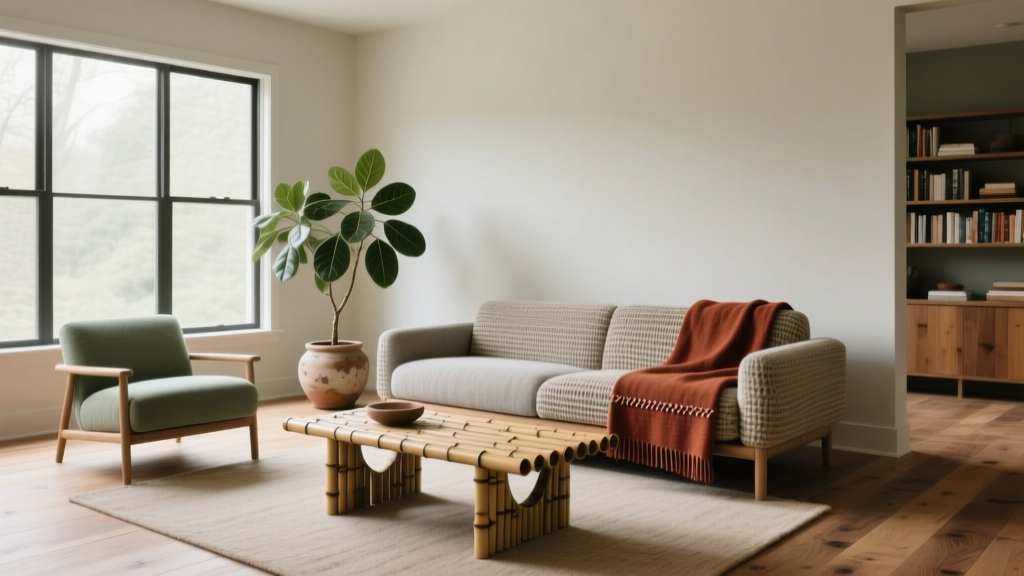
Rattan and bamboo offer versatile options for accent chairs, side tables, and decorative screens. Bamboo is technically a grass that can grow up to three feet per day in ideal conditions, making it among the most renewable furniture materials available. When treated with natural oils rather than chemical sealants, these materials resist humidity and wear beautifully.
Natural cork deserves more attention in living room design. Beyond flooring, cork appears in decorative wall panels, sculptural bulletin boards, and sustainable alternatives to traditional wood veneers. Cork harvesting doesn't damage the tree — the bark regenerates, allowing repeated harvests over centuries from the same cork oak. Cotton canvas, when unbleached and untreated, makes excellent slipcovers for extending the life of existing furniture.
## Low-Impact Decor: Thoughtful Finishing Touches
Indoor plants serve dual purposes as living decor and natural air purifiers. Snake plants, peace lilies, and spider plants remove formaldehyde and other indoor pollutants while adding sculptural greenery. Pot them in terracotta, ceramic, or recycled composite containers rather than plastic nursery pots.
For wall art, consider giclée prints on recycled cotton rag paper framed in reclaimed wood for museum-quality reproduction without virgin resource extraction. Emerging artists increasingly work with sustainable materials — mushroom leather art panels, pressed botanical compositions, and textile art woven from recycled fibers all bring contemporary aesthetics with environmental responsibility.
Lighting choices significantly impact a room's sustainability profile. LED fixtures are standard for energy efficiency, but housing materials matter too. Look for fixtures made from recycled metals, natural materials like rattan or paper, or upcycled components. The warm, diffused light from a hand-crafted rattan pendant creates atmosphere no mass-produced fixture can match.
## Smart Sourcing: Where to Find Sustainable Pieces
Local artisan workshops and craft cooperatives offer direct access to makers who use traditional, low-impact techniques. Visiting these spaces lets you examine construction quality, discuss material sourcing personally, and commission custom pieces tailored to your space.
Vintage and antique dealers represent an often-overlooked sustainable resource. A well-crafted mid-century modern chair or Victorian side table has already survived decades — placing it in your living room extends its useful life while adding irreplaceable character.
Online marketplaces dedicated to sustainable design have emerged as powerful curation platforms, vetting sellers for material transparency, ethical labor practices, and environmental certifications. While prices may exceed mass-market alternatives, the cost-per-use calculation favors pieces built to last decades rather than seasons.
## The Living Room as a Statement of Values
A living room is where families gather, conversations happen, and life unfolds at its most intimate. Making this space sustainable isn't about perfection — it's about intention. Every material choice, from FSC-certified wood to organic cotton slipcovers to a handmade terracotta vase, represents alignment between your design values and environmental values.
The evidence is now undeniable: sustainable living rooms can be as beautiful, luxurious, and personally expressive as any traditional design approach. They simply require more thought, more research, and more care in selection. For those willing to invest that attention, the result is a space that doesn't just look good — it feels good, in every sense of the word.
Your living room is a living document of who you are and what you care about. Let it tell a story you're proud of.
 Best Bedrooms for Lighting: Design Strategies, Fixture Selection, and Real-World Layouts
Cozy Living Room Color Palettes for Fall
Best Bedrooms for Lighting: Design Strategies, Fixture Selection, and Real-World Layouts
Cozy Living Room Color Palettes for Fall
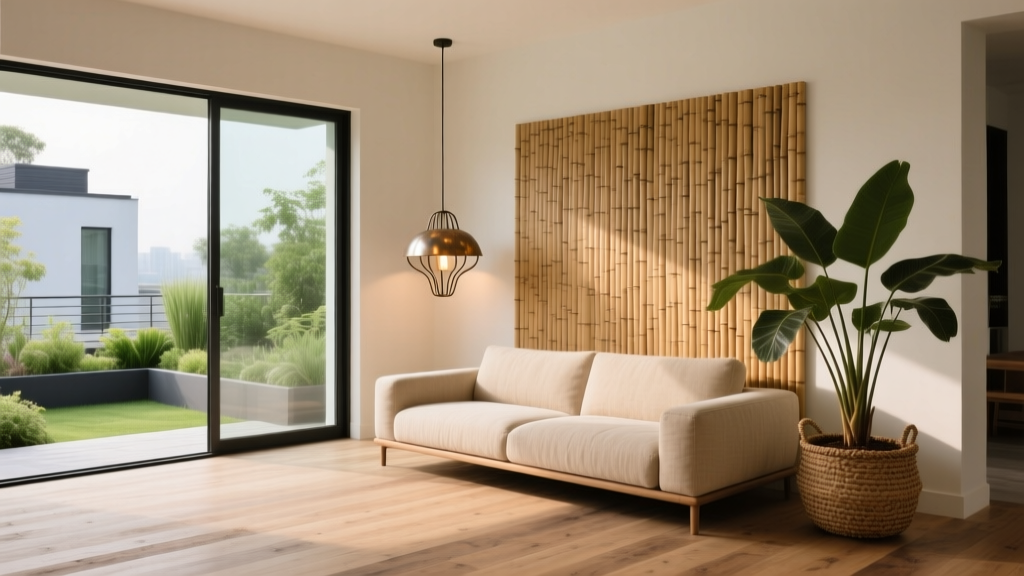 Eco-Friendly Living Room Design: Stylish & Sustainable
 Living Room Rug Placement: A Sizing Guide
 Conversation Pit Living Room Ideas
 Best Organization Blue: The Science, Psychology, and Practical Power of Blue in Home Storage Systems
 How to Start Styleguides: A Practical, Step-by-Step Framework for Living Spaces
 Smart Lighting for Seniors: Safety Meets Style
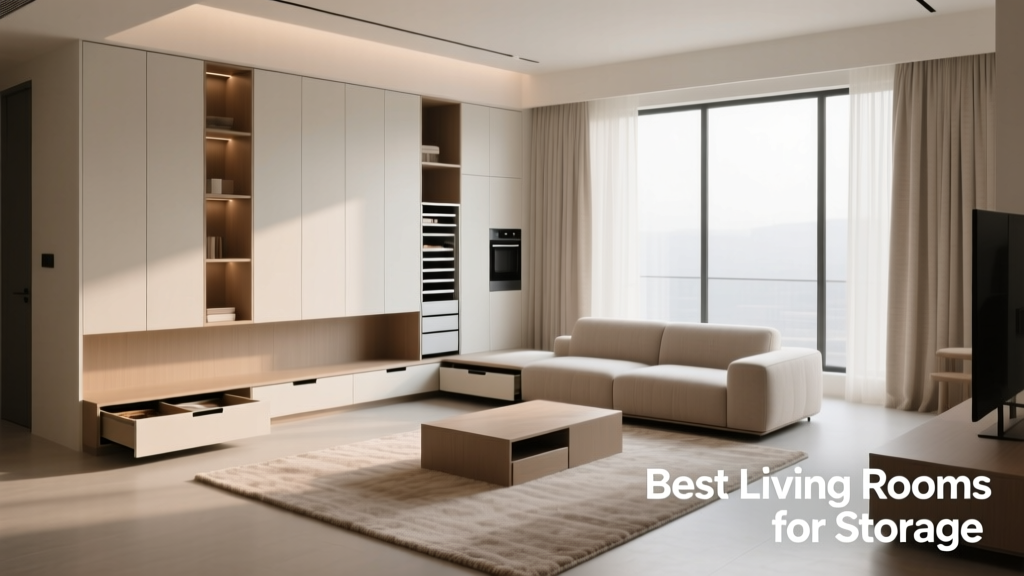 Best Living Rooms for Storage: Smart, Stylish, and Space-Savvy Solutions
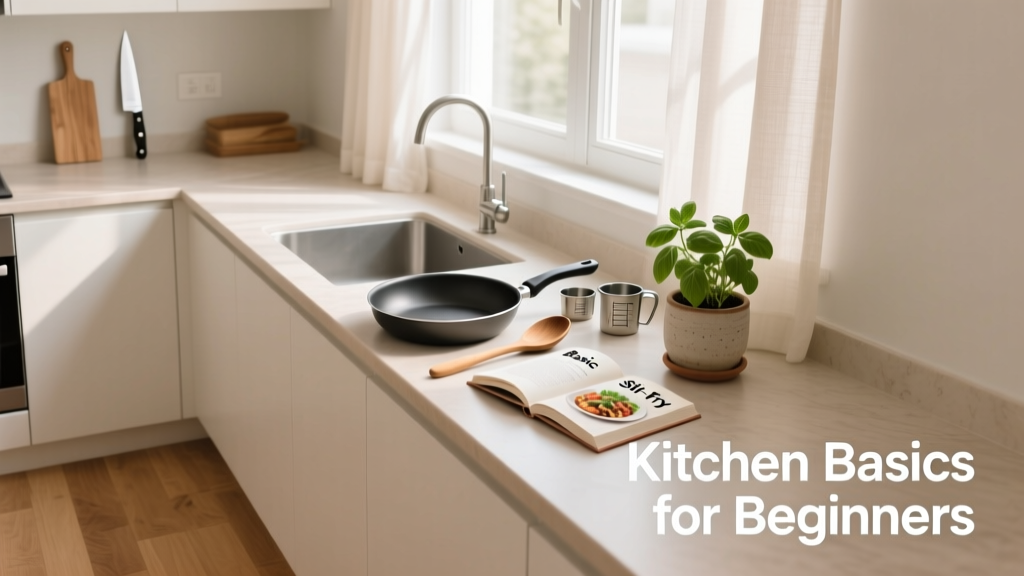 Kitchen For Beginners: Practical Setup, Smart Layouts, and Essential Gear for Your First Real Kitchen