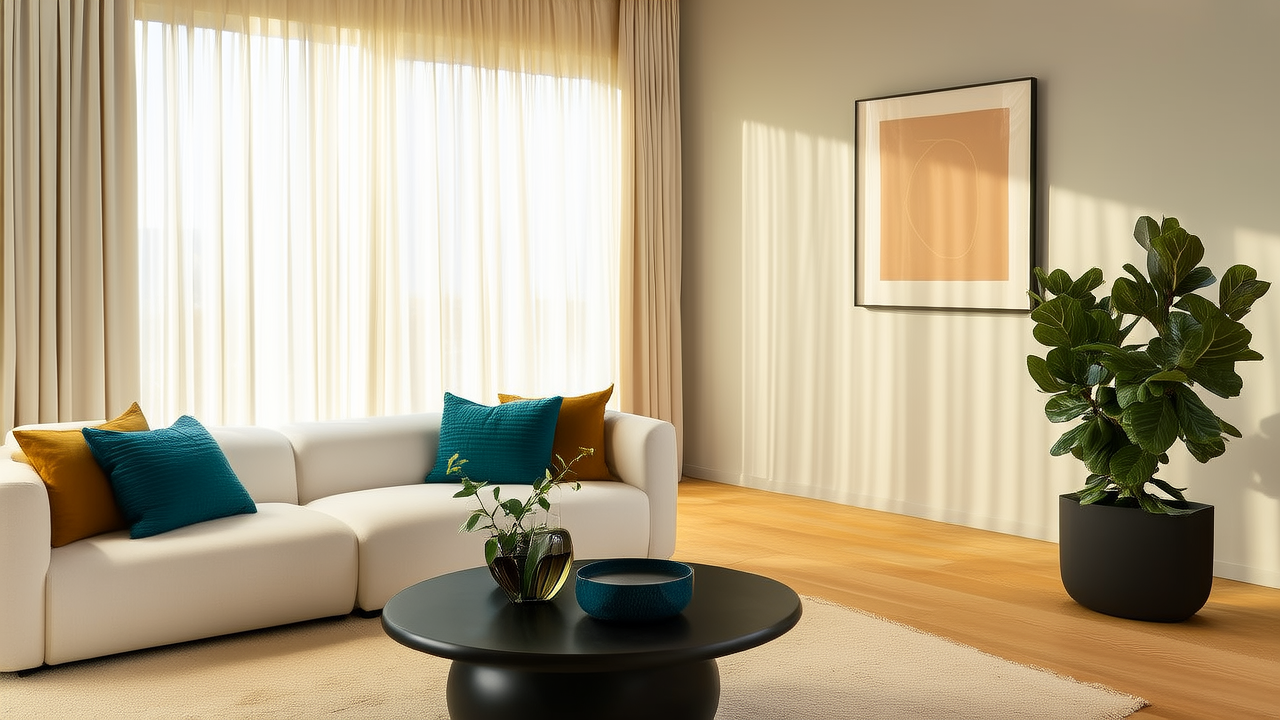
Transitional Style Explained: Best of Both Worlds
Transitional Is the Most Livable Style
If pure traditional feels stuffy and pure modern feels cold, transitional design is the middle path. It takes the comfort and familiarity of traditional design (warm wood tones, soft upholstery, classic proportions) and strips away the ornament (no carved moldings, no heavy drapery, no tasseled pillows). The result is rooms that feel both current and timeless.
The Core Principle: 70/30 Split
A successful transitional room leans about 70% in one direction and 30% in the other:
- 70% traditional base: A rolled-arm sofa, hardwood floors, a Persian-inspired rug
- 30% modern elements: A geometric coffee table, abstract art, clean-lined lighting
Or flip it: 70% modern (platform bed, sleek cabinets, polished concrete) with 30% traditional (an antique mirror, a vintage textile, a classic oil painting). The tension between the two creates visual interest.
Furniture: Classic Shapes, Clean Lines
Transitional furniture uses recognizable traditional silhouettes — wingback chairs, camelback sofas, trestle tables — but executes them with minimal ornamentation. No nail-head trim, no carved legs, no ornate hardware. The shape says "classic," the execution says "now."
Color Strategy
Neutral backgrounds (warm gray, taupe, cream) with one or two rich accent colors (navy, emerald, burgundy). Traditional style uses more pattern; transitional pulls back to mostly solids with one or two patterned textiles.
Lighting Bridges the Gap
A traditional chandelier shape (candelabra-style) in a modern finish (matte black or brushed brass) is quintessentially transitional. Drum shades, sconces with clean backplates, and simple pendant lights all work. Avoid anything too ornate (crystal chandeliers) or too industrial (exposed conduit).
Common Mistakes
Matching sets — transitional thrives on mixing. A matched bedroom set feels traditional; a mix of wood tones and styles feels transitional. Too many eras — limit yourself to two aesthetic sources. Adding mid-century, art deco, and farmhouse elements simultaneously creates confusion, not transition. Ignoring proportion — traditional rooms have specific proportions (symmetrical layouts, matching pairs). Keep some of that structure even when modernizing.
Transitional design is for people who want their home to feel current without chasing trends. It's the style equivalent of a well-tailored blazer: classic enough to wear for years, modern enough to never feel dated.
More Articles
 Pet-Friendly Scandinavian Design for 2026
 Minimalist Repair Guide for Designers & Developers (2026)
 Mid Century Modern Furniture: Timeless Icons (2026)
 Minimalist Style Guide for Studio Apartments
 Scandinavian vs. Japandi: Which Minimalist Style Is Right?
 Japandi Style: Nordic Meets Japanese Design
 Scandinavian Living Room: Key Essentials
 Style Choice Framework for Brand Consistency in 2026
 Mid-Century Modern Decor Essentials for 2026
 Mid-Century Modern Style: Core Elements Guide