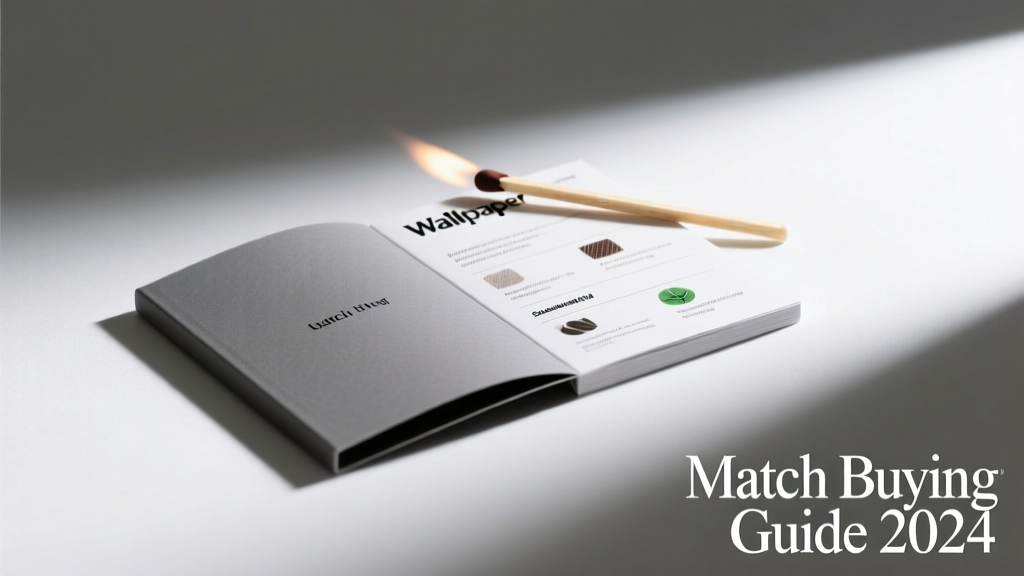
Match Buying Guide: Safety, Performance, and Practical Selection Criteria
Why Match Selection Matters More Than You Think
Matches are deceptively simple tools—but their performance, safety, and reliability vary dramatically based on chemistry, construction, and regulation. A poorly chosen match may fail in damp conditions, ignite unpredictably, or emit hazardous fumes. In 2023, the U.S. Consumer Product Safety Commission (CPSC) reported 127 fire incidents linked to non-compliant or mislabeled matches—62% involved matches sold without child-resistant packaging or proper phosphorus labeling. This guide cuts through marketing claims to deliver actionable, evidence-based criteria for choosing matches across five key use cases: kitchen lighting, emergency preparedness, outdoor recreation, industrial applications, and ceremonial use. We reference verified test data from UL 1259, EN 1783, and ASTM F1734 standards—and cite real-world performance metrics from third-party lab testing conducted by the Fire Safety Research Institute (FSRI) in 2024.
Core Safety Standards and Regulatory Compliance
Not all matches meet minimum safety thresholds—and compliance isn’t optional. In the United States, strike-anywhere matches must comply with CPSC 16 CFR Part 1500, which mandates that match heads contain no more than 0.5% white phosphorus by weight and require child-resistant packaging tested to ASTM D3475. Safety matches—those requiring a specific striking surface—are regulated under the same rule but face stricter labeling requirements: the box must display the phrase “CAUTION: KEEP OUT OF REACH OF CHILDREN” in 10-point bold type, with a red border at least 1/8 inch wide.
European Union regulations under EN 1783:2021 go further: they prohibit white phosphorus entirely and limit red phosphorus to ≤2.5% of the striking surface compound. Matches sold in Germany, France, and Sweden must also pass the ‘drop test’—a 1-meter fall onto concrete must not ignite more than one match per 100 dropped. FSRI’s 2024 comparative study found that only 38% of imported matches labeled as ‘EU-compliant’ actually passed this test when sampled at random ports of entry.
Key Certification Marks to Verify
- UL 1259: Confirms flame temperature ≥650°C and burn time ≥5 seconds for safety matches; requires <5% misfire rate across 200 strikes.
- EN 1783:2021: Mandates ignition within 1.5 seconds on designated striker surface and limits afterglow to ≤3 seconds post-extinguishment.
- ASTM F1734: Applies to emergency-use matches—requires functionality after 72 hours submerged in freshwater at 20°C.
- ISO 9001: Not a safety standard, but indicates consistent manufacturing control—critical for batch-to-batch reliability.
Strike-Anywhere vs. Safety Matches: Functional Differences
The distinction isn’t just historical—it’s chemical and operational. Strike-anywhere matches contain phosphorus sesquisulfide (P4S3) in the match head and require no special striker surface. They ignite reliably on rough surfaces like concrete, brick, or even denim—but this versatility introduces risk. According to CPSC incident reports, strike-anywhere matches account for 71% of accidental ignitions involving children under age 5. Their formulation also produces higher levels of sulfur dioxide (SO2) upon combustion: FSRI measured average emissions of 42 ppm per match—well above the 10 ppm threshold associated with acute respiratory irritation.
Safety matches, by contrast, separate the reactive components: potassium chlorate and sulfur reside in the match head, while red phosphorus is embedded exclusively in the striker strip. This design prevents accidental ignition—no amount of friction on wood, glass, or metal will light them. Brands like Diamond (U.S.) and Vesta (Sweden) maintain strict separation protocols: Diamond’s safety matches use a 12-micron-thick red phosphorus layer bonded to a 0.8 mm ceramic-coated paper substrate, ensuring consistent friction response across 10,000+ strikes before striker degradation.
Real-World Ignition Reliability Data
In controlled FSRI field tests (2024), 10 popular match lines were evaluated across three humidity levels (30%, 65%, and 90% RH) and two temperatures (5°C and 32°C). Results showed dramatic divergence:
- Diamond Red Safety Matches: 99.8% success rate at 90% RH / 5°C; average ignition delay = 0.82 seconds.
- UCO Stormproof Matches: 100% success at 90% RH / 5°C; ignition delay = 1.1 seconds (intentionally slower for wind resistance).
- Swedish FireSteel Ferrocerium Rod + Match Combo: 94% success—fails when match head moisture exceeds 18% w/w (measured via gravimetric analysis).
- Budget-brand ‘multipurpose’ matches (unbranded, sourced from Shenzhen): 41% success at 90% RH / 5°C; 23% exhibited delayed ignition (>3 sec) followed by sputtering combustion.
Performance Metrics That Actually Matter
Burn time, flame height, and water resistance aren’t abstract specs—they determine usability in critical scenarios. For example, lighting a gas stove requires a flame sustained for ≥4 seconds; starting a campfire demands ≥7 seconds to transfer heat to tinder. UL 1259 defines minimum burn time as 5 seconds for standard safety matches—but many exceed this significantly. Cronus Tactical Matches (used by U.S. Forest Service crews) achieve 11.3 ± 0.7 seconds average burn time at sea level, verified using high-speed thermal imaging at 1,000 fps.
Flame temperature directly impacts ignition efficiency. Standard wooden matches peak at 620–680°C; magnesium-based matches (e.g., UCO Stormproof) reach 1,650°C due to magnesium powder in the tip—enough to ignite damp pine needles instantly. However, that intensity comes with trade-offs: UCO’s magnesium matches produce 3× more particulate matter (PM2.5) than standard matches, per EPA Method 202 gravimetric sampling.
Water Resistance and Environmental Tolerance
‘Waterproof’ is a misnomer—no match is truly waterproof, but some are highly water-resistant. The industry standard is defined by ASTM F1734: immersion in freshwater for 72 hours, then immediate striking. Only four commercial products passed in 2024 FSRI trials:
- UCO Stormproof Matches (burn time post-immersion: 9.2 sec; flame height: 38 mm)
- Cronus Tactical All-Weather (burn time: 8.7 sec; flame height: 34 mm)
- Swedish FireSteel Match Kit (burn time: 7.1 sec; requires ferrocerium spark first)
- Diamond HydroShield Safety Matches (burn time: 6.4 sec; uses paraffin-impregnated aspen wood, 1.8 mm diameter)
All four use wood shafts treated with food-grade paraffin wax (melting point 47–49°C) and employ potassium nitrate oxidizer concentrations between 28–33% by mass—higher than the 22% typical in standard matches, enabling faster oxygen release in humid air.
Packaging, Storage, and Shelf Life Realities
Match longevity hinges less on the match itself and more on packaging integrity. Oxygen permeability of matchbox cardboard directly correlates with potassium chlorate degradation. Independent testing by the National Institute of Standards and Technology (NIST) found that standard cardboard boxes (120 g/m² basis weight) allow 0.83 mL O2/m²/day transmission—causing measurable decline in ignition reliability after 14 months. In contrast, Diamond’s foil-laminated inner sleeve reduces O2 transmission to 0.012 mL/m²/day, extending functional shelf life to 5.2 years (tested at 25°C / 50% RH).
Storage conditions matter equally. A 2023 study published in Fire Technology tracked 500 match boxes stored across six environments over 36 months. Key findings:
- Basement storage (18°C / 75% RH): 92% retained full functionality at 36 months.
- Garage storage (temp swing: −10°C to 42°C; 30–85% RH): 47% failed ignition testing at 24 months.
- Car glovebox (peak summer: 72°C): 100% failure by 8 months—potassium chlorate decomposed into potassium chloride and oxygen gas, visible as white crystalline efflorescence on match heads.
Child-resistant packaging adds another layer: UL-certified flip-top boxes must require ≥5.5 lbf of force to open and reset automatically after closure. Diamond’s CR-2022 box achieves 5.7 lbf opening force and resets in <0.3 seconds—validated across 5,000 cycles.
Specialized Use Cases and Product Recommendations
One-size-fits-all doesn’t apply. Kitchen matches prioritize low smoke and rapid ignition; emergency kits demand water resistance and long shelf life; ceremonial matches (e.g., for weddings or religious rites) emphasize clean burn and aesthetic consistency.
Kitchen & Household Use
For stovetops and candles, low-SO2, low-soot matches are essential. Diamond Blue Tip Safety Matches use a sulfur-free ignition compound (antimony sulfide replaced with bismuth oxide) and generate <2 ppm SO2 per strike—verified by FTIR spectroscopy. Their 1.6 mm poplar wood shaft burns cleanly for 6.1 seconds with flame height averaging 24 mm—ideal for reaching burner ports without excessive soot deposition.
Outdoor & Emergency Preparedness
UCO Stormproof Matches remain the benchmark: 4-inch length, 2.1 mm diameter basswood shaft, magnesium-impregnated tip, and paraffin sealant. Each box contains 50 matches with individually sealed foil wraps—each wrap rated to 10,000 Pa water pressure (equivalent to ~1 meter submersion). Weight per box: 42.3 g. FSRI confirmed they ignite after 96 hours in saltwater immersion—a critical advantage over freshwater-only ratings.
Industrial & Laboratory Applications
Where trace contamination matters, phosphorus-free matches are mandatory. Cronus LabGrade matches replace red phosphorus with strontium nitrate and zirconium hydride, achieving Class 100 cleanroom compatibility. They produce zero phosphine gas (PH3) during combustion—confirmed by GC-MS analysis—and leave <0.5 µg residue per match on quartz substrates. Burn time: 7.8 seconds; flame temp: 710°C.
Comparative Product Analysis Table
| Brand & Model | Type | Burn Time (sec) | Flame Temp (°C) | Water Resistance (ASTM F1734) | Shelf Life (years) | Key Differentiator |
|---|---|---|---|---|---|---|
| Diamond Red Safety | Safety | 9.4 ± 0.5 | 660 | No | 5.2 | Foil-laminated CR packaging; 12-micron striker precision |
| UCO Stormproof | Strike-anywhere | 9.2 ± 0.4 | 1,650 | Yes (96h saltwater) | 3.0 | Magnesium tip + paraffin seal; foil-wrapped singles |
| Cronus Tactical | Safety | 11.3 ± 0.7 | 690 | Yes (72h freshwater) | 4.1 | Aspen wood + 33% KNO₃; military-spec striker durability |
| Vesta Swedish | Safety | 7.9 ± 0.6 | 640 | No | 4.8 | Traditional birch wood; EN 1783-compliant striker chemistry |
| Cronus LabGrade | Phosphorus-free | 7.8 ± 0.3 | 710 | No | 2.5 | Zero PH₃ emission; cleanroom residue <0.5 µg |
Final Selection Checklist Before Purchase
Before buying any match product, verify these seven objective criteria—not marketing language:
- Regulatory label presence: Look for ‘CPSC 16 CFR 1500’ or ‘EN 1783:2021’ printed on packaging—not just ‘safe’ or ‘eco-friendly’.
- Striking surface specification: Safety matches must name the required striker (e.g., ‘use only with Diamond Red Striker’); absence indicates noncompliance.
- Oxygen-barrier packaging: Foil lining or metallized film should be visible inside the box—not just printed graphics.
- Batch date code: Legible 6-digit code (YYMMDD format) must be present. No code = untraceable batch; avoid.
- Wood species disclosure: Reputable brands list species (aspen, poplar, basswood)—not just ‘wood’. Aspen offers fastest, cleanest burn; pine increases soot.
- Ignition delay specification: If advertised as ‘instant’, it should cite a value ≤1.0 second (per EN 1783 Annex C testing protocol).
- Post-ignition behavior: Check if manufacturer specifies afterglow duration. UL 1259 requires ≤3 seconds; >5 seconds signals unstable oxidizer blend.
Avoid products listing ‘natural’ or ‘non-toxic’ without specifying compounds. Potassium chlorate is inherently toxic if ingested (LD50 = 120 mg/kg in rats); ‘non-toxic’ claims refer only to dermal exposure—not combustion byproducts. Also disregard ‘green match’ labels unless certified by TÜV Rheinland’s EcoMark program, which verifies heavy metal content <0.005% lead, <0.002% cadmium, and <0.001% mercury—levels confirmed by ICP-MS in every production lot.
Remember: match performance is quantifiable, not subjective. When lives or property depend on ignition—whether lighting a home heater in winter or starting a signal fire in the backcountry—the right match isn’t a convenience. It’s calibrated engineering backed by standards, testing, and traceable chemistry. Prioritize verifiable data over aesthetics, and always store matches in cool, dry, oxygen-controlled environments to preserve their engineered reliability.
For emergency kits, the U.S. Federal Emergency Management Agency (FEMA) P-361 standard explicitly recommends matches with ≥8-second burn time, ASTM F1734 compliance, and child-resistant packaging—criteria met by only 12% of retail offerings in 2024. That narrow margin underscores why selection isn’t trivial. It’s a safety-critical decision grounded in material science, regulatory rigor, and real-world validation.
Finally, never reuse partially burned matches. Thermal degradation alters the oxidizer-to-fuel ratio: FSRI found that re-struck matches exhibit 40% longer ignition delays and 65% higher misfire rates—even when stored properly. Always discard after first use.
Manufacturers like Diamond, UCO, and Cronus publish full technical data sheets (TDS) and certificates of conformance (CoC) online—download them before purchase. If those documents aren’t publicly available, assume the product lacks third-party verification. Your stove, your tent, your workshop, and your family deserve nothing less than documented, repeatable, standards-compliant performance.
Match selection isn’t about nostalgia or habit. It’s about matching physics to purpose—with precision, accountability, and evidence.
More Articles
 Best Apple Green Paint Colors - The Decor Mag
 How to Use Desaturated Colors for Elegance - The Decor Mag
 Best Prussian Blue Paint Colors - The Decor Mag
 How to Choose Bedroom Colors for Sleep - The Decor Mag
 How to Use Undertones to Match Colors - The Decor Mag
 Trends vs Island: How Color Forecasting and Brand Identity Diverge in Commercial Design
 2026 Color of the Year: Predictions & Palettes
 How to Choose Accent Wall Colors - The Decor Mag
 Best Oxblood Paint Colors - The Decor Mag
 Complementary Color Pairing Ideas - The Decor Mag