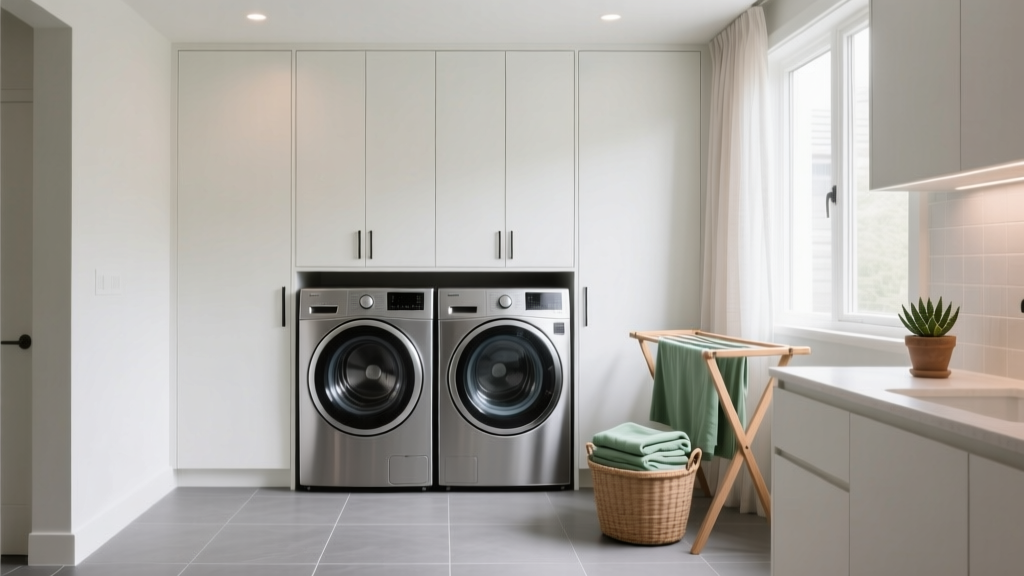
How to Choose Colors for a Laundry Room - The Decor Mag
The laundry room is one of the most hardworking spaces in a home—and one of the most overlooked when it comes to interior color design. Yet it’s the room where you start and finish countless routines: sorting, treating stains, folding, ironing, and storing. The right paint colors can make those tasks feel lighter, cleaner, and more organized, while the wrong color scheme can make even a well-designed laundry room feel dingy or chaotic.
Color choice here isn’t just about aesthetics. Laundry rooms face unique conditions—humidity, artificial lighting, utility sinks, visible appliances, and storage needs—that affect how paint colors look and perform. When you match color psychology with practical design principles (light reflection, undertones, and contrast), your laundry room can become a bright, efficient space that feels as intentional as a kitchen or bath.
This guide breaks down how to choose a laundry room color scheme, how to coordinate walls with cabinets and appliances, and which paint colors consistently work in real homes—plus the most common color mistakes and how to avoid them.
Start with the Room’s Reality: Light, Size, and Fixed Finishes
1) Identify the light source and its “color”
Light is the biggest variable in how paint colors read. A soft warm white can become yellow under warm bulbs, while a cool gray can turn blue in north-facing rooms.
- North-facing or low-light laundry rooms: Choose warmer whites, creamy off-whites, or warm greige to prevent a cold, shadowy look.
- South-facing rooms: You can use cooler whites, crisp grays, and soft blues without the space feeling icy.
- Mostly artificial light: Decide if you’ll use 2700K–3000K (warm) or 3500K–4000K (neutral/cool). Match paint undertones to the bulb temperature for the cleanest result.
2) Work with what you can’t easily change
Many laundry rooms have fixed elements that should guide your color palette:
- White, stainless, or black appliances
- Countertop color (laminate, quartz, butcher block)
- Flooring undertone (gray LVP, warm oak, tan tile)
- Utility sink material (white, beige, stainless)
Design principle: build your color scheme around the dominant undertone already in the room—warm (yellow/red) or cool (blue/green). When undertones fight, the room can look “off” even if every color is attractive on its own.
3) Decide the mood: calm, energizing, or spa-clean
Color psychology matters in functional spaces. Laundry rooms benefit from colors that signal cleanliness and order, but you can tailor the vibe:
- Calm + tidy: soft blue-greens, gentle grays, muted sage
- Energizing + upbeat: sunny yellows, warm whites, cheerful coral accents
- Fresh + spa-like: crisp whites, pale aqua, clean light grays
Choose a Base Color Strategy (3 Proven Approaches)
Approach A: Bright white + contrast (classic clean laundry look)
A bright, reflective white makes a laundry room feel bigger, cleaner, and more efficient—especially with open shelves, white tile, or visible appliances.
Go-to whites (popular, reliable choices):
- Benjamin Moore Chantilly Lace (OC-65): crisp, modern, minimal undertone
- Sherwin-Williams Pure White (SW 7005): balanced white that plays well with most cabinetry
- Farrow & Ball All White (No. 2005): bright, gallery-like white (best in strong natural light)
How to make white feel designed, not sterile:
- Use a contrasting cabinet color (navy, charcoal, forest green) or a warm wood counter
- Add texture: woven baskets, ribbed glass, beadboard, zellige-style backsplash
- Anchor with matte black or brushed brass hardware for definition
Approach B: Soft greige or light neutral (for warmth and forgiveness)
If your laundry room gets muddy light, or you want a softer look than bright white, greige and warm neutrals are the easiest path to a cohesive color scheme. They hide scuffs and lint better, too.
Excellent neutral paint colors for laundry rooms:
- Benjamin Moore Classic Gray (OC-23): light, warm, barely-there greige
- Sherwin-Williams Agreeable Gray (SW 7029): a versatile greige that works with many floors
- Benjamin Moore Edgecomb Gray (HC-173): warm and welcoming (great with beige tile or oak)
Best pairings:
- Greige walls + white cabinets + brass hardware for a cozy-clean feel
- Greige walls + black appliances + white trim for crisp contrast
Approach C: Color-washed walls (a laundry room that feels like a retreat)
Because laundry rooms are often smaller, they’re an ideal place to commit to a real color—especially muted tones. A soft blue-green or dusty blue can feel fresh, hide everyday wear, and make the room feel intentionally styled.
Timeless laundry-room-friendly colors:
- Sherwin-Williams Sea Salt (SW 6204): airy blue-green that reads spa-like in many homes
- Benjamin Moore Palladian Blue (HC-144): breezy, coastal-leaning blue-green
- Benjamin Moore Healing Aloe (1562): gentle green with a clean, calming effect
- Sherwin-Williams Misty (SW 6232): soft gray-blue that feels crisp with white trim
Design principle: When using a mid-tone color, keep at least one major element light (trim, cabinets, countertop) to maintain brightness.
Create a Cohesive Laundry Room Color Scheme (Use the 60-30-10 Rule)
The 60-30-10 rule keeps your interior color design intentional:
- 60%: main wall color
- 30%: cabinets, shelving, or a secondary wall
- 10%: accents (hardware, baskets, art, runner, hooks)
Example color schemes you can copy:
- Clean Classic: SW Pure White walls + SW Iron Ore (SW 7069) accents + light oak shelves
- Soft Spa: BM Healing Aloe walls + white cabinets + brushed nickel
- Modern Moody: BM Chantilly Lace walls + BM Hale Navy (HC-154) cabinets + brass pulls
- Warm Minimal: BM Classic Gray walls + matte black hardware + white quartz-look counter
Real Room Scenarios: Picking Colors That Actually Work
Scenario 1: A windowless laundry closet off the kitchen
Goal: make it feel bright and clean, avoid dingy undertones.
Recommended palette:
- Walls: Sherwin-Williams Alabaster (SW 7008) for warmth without heavy yellow
- Trim/Shelves: SW Pure White for a crisp edge
- Accent: matte black rod/hooks or a small patterned wallpaper panel on the back wall
Why it works: Warm white offsets the lack of daylight and makes storage look tidy.
Scenario 2: Small laundry room with gray LVP flooring and stainless appliances
Goal: prevent the room from feeling cold.
Recommended palette:
- Walls: Benjamin Moore Classic Gray (OC-23) or Sherwin-Williams Accessible Beige (SW 7036)
- Cabinets: soft white (SW Pure White) or light greige
- Accent: warm wood counter or woven baskets to add warmth
Why it works: A warmer neutral balances cool flooring and stainless finishes for a more welcoming feel.
Scenario 3: Dedicated laundry room with lots of natural light and white machines
Goal: add personality without losing the “fresh” vibe.
Recommended palette:
- Walls: Benjamin Moore Palladian Blue (HC-144)
- Trim: BM Chantilly Lace
- Cabinets (optional): BM Hale Navy for a tailored, high-contrast look
Why it works: Blue-green tones read clean and calm, and daylight keeps them airy.
Scenario 4: Mudroom + laundry combo that gets heavy traffic
Goal: hide scuffs, keep it cohesive with entry function.
Recommended palette:
- Walls: Sherwin-Williams Agreeable Gray (SW 7029)
- Built-ins/lockers: SW Evergreen Fog (SW 9130) for an earthy, modern tone
- Trim: SW Pure White
Why it works: Greige and muted green are forgiving, grounded, and stylish for a utility-heavy space.
Paint Finish and Durability: What to Use in a Laundry Room
Laundry rooms deal with moisture, bumps, and frequent wiping. The best paint color won’t look good if the finish can’t handle real life.
- Walls: satin or eggshell for cleanability
- Trim and doors: semi-gloss for durability and crisp contrast
- Cabinets: a cabinet-grade enamel (ask for Sherwin-Williams Emerald Urethane Trim Enamel or Benjamin Moore Advance)
Practical tip: If you’re painting a darker cabinet color (navy, charcoal, green), choose a durable enamel and allow extra cure time before heavy use.
Smart Ways to Add Color Without Repainting Everything
If you want a color upgrade with less commitment, use color as a controlled accent.
- Paint the door: A muted navy or deep green adds style fast (try BM Hale Navy or SW Evergreen Fog).
- Back wall or nook: Paint behind open shelves to frame baskets and supplies.
- Peel-and-stick wallpaper: Great for adding pattern; keep the wall color simple and supportive.
- Color-coded storage: Matching bins and labeled containers create visual calm (a design trick that doubles as organization).
Common Laundry Room Color Mistakes to Avoid
- Choosing a “clean white” that turns yellow or gray: Always test samples under your actual lighting (day and night). Whites are highly reactive to bulbs and surrounding finishes.
- Ignoring undertones: A cool gray next to warm beige tile can look purple or dirty. Match undertones across floor, counter, and paint colors.
- Going too dark in a tiny, windowless room: Charcoal walls can feel stylish, but without light and contrast it can become cave-like. If you want moody, use dark cabinets with lighter walls.
- Using flat paint in a high-splash zone: Flat finishes scuff and stain more easily—especially near utility sinks.
- Forgetting the transition: Laundry rooms often connect to kitchens, mudrooms, or hallways. A clashing color scheme can make the home feel disjointed.
Quick Color Recommendations (By Style)
Modern Clean
- Walls: BM Chantilly Lace
- Accents: SW Iron Ore
- Details: black hardware, white tile, minimal decor
Warm Farmhouse
- Walls: SW Alabaster
- Cabinets: SW Accessible Beige (or white uppers)
- Details: warm wood shelves, woven textures, vintage-inspired hooks
Coastal Fresh
- Walls: BM Palladian Blue
- Trim: BM White Dove (OC-17)
- Details: natural fiber runner, light oak, brushed nickel
Moody but Bright
- Walls: SW Pure White
- Cabinets: BM Hale Navy or SW Naval (SW 6244)
- Details: brass pulls, white quartz-look counter, crisp lighting
FAQ: Laundry Room Paint Colors and Color Schemes
What’s the best paint color for a small laundry room?
Light-reflective whites and soft neutrals are the most reliable: Sherwin-Williams Pure White, Benjamin Moore Chantilly Lace, or Benjamin Moore Classic Gray. If you want color, try a pale blue-green like Sherwin-Williams Sea Salt to keep the space airy.
Should a laundry room be white?
White is popular because it signals cleanliness and makes small spaces feel bigger, but it’s not required. Greige, soft sage, and muted blue-gray paint colors can look just as fresh while adding personality and hiding wear.
How do I match laundry room wall color with cabinets?
Choose either low contrast (light walls + light cabinets) for an expansive look, or intentional contrast (white walls + navy/green cabinets) for a designed feel. Keep undertones consistent—warm with warm, cool with cool—and sample both colors together.
What colors work best with stainless steel washer and dryer?
Stainless pairs beautifully with cooler whites and blue-grays, but it can feel chilly in low light. Balance it with warmer neutrals (Agreeable Gray, Classic Gray) or add warmth through wood shelving and brass accents.
Is dark paint a bad idea in a laundry room?
Not automatically. Dark colors work best when there’s strong lighting and enough contrast (light counters/trim). A practical approach is dark cabinets with light walls, or a dark painted door as an accent.
What paint sheen is best for laundry room walls?
Eggshell or satin is ideal for most laundry room walls because it wipes clean better than flat paint. Use semi-gloss on trim and doors for durability, especially near sinks and high-touch areas.
Next Steps: A Simple Plan to Choose the Right Laundry Room Colors
- Take inventory of fixed finishes: flooring, countertop, appliances, and tile.
- Decide your mood: crisp-clean, warm-neutral, or calming color-wash.
- Test 2–3 paint colors on large swatches and view them morning, afternoon, and night.
- Pick a cohesive color scheme using the 60-30-10 rule, then repeat metals/woods for unity.
- Select the right finish (satin/eggshell on walls; semi-gloss on trim; enamel on cabinets) for a laundry room that stays looking fresh.
Your laundry room can be more than a utility zone—it can be a bright, motivating space that supports your routines and elevates your home’s overall design. For more paint color ideas, color schemes, and room-by-room guidance, explore the color guides on thedecormag.com.
More Articles
 Best Avocado Green Paint Colors - The Decor Mag
 How to Choose Colors for an Attic Room - The Decor Mag
 How to Create a Vibrant Color Palette - The Decor Mag
 How to Choose Colors Based on Room Lighting - The Decor Mag
 Best Pistachio Paint Colors - The Decor Mag
 Best Chartreuse Paint Colors - The Decor Mag
 How to Use Color to Change Room Perception - The Decor Mag
 How to Use Color to Create Rhythm - The Decor Mag
 How to Choose Colors for East-Facing Rooms - The Decor Mag
 Warm vs Cool Color Temperatures Explained - The Decor Mag