Backed For Living: Why Structural Support, Ergonomic Design, and Thoughtful Engineering Are the Real Foundations of Everyday Comfort
What "Backed For Living" Really Means — Beyond Marketing Slogans
"Backed For Living" isn’t a catchphrase—it’s a functional standard. At Livingrooms, we define it as the intentional integration of structural integrity, biomechanical responsiveness, and spatial adaptability into every piece of living space furniture. It means a sofa doesn’t just hold your weight; it distributes pressure across lumbar, thoracic, and sacral zones with precision. It means a dining chair from Muuto (Model: Rest Chair, seat depth 43 cm, backrest height 78 cm) supports 15° of dynamic recline while maintaining pelvic stability. It means a modular sectional from BoConcept’s Oslo Collection uses 12-mm steel-reinforced plywood frames—tested to 120 kg per seat—and features replaceable, 85 kg/m³ density HR polyurethane foam cores that retain >92% resilience after 50,000 compression cycles (per ASTM D3574 standards). This is not about aesthetics first—it’s about engineering comfort into the architecture of daily life.
The Anatomy of Back Support: From Spinal Curves to Seat Angles
Human spinal alignment shifts constantly during waking hours. The natural lumbar lordosis (30–40° curve), thoracic kyphosis (20–45°), and cervical lordosis (20–35°) require layered support—not flat, rigid surfaces. A chair labeled "ergonomic" fails if its backrest offers only one fixed angle. True backed support responds across three dimensions: vertical lift (to reduce disc compression), horizontal contouring (to cradle the paraspinal muscles), and rotational give (to accommodate torso rotation during conversation or screen use).
Lumbar Zones Are Not One-Size-Fits-All
Standard lumbar pads often sit too high—targeting T12/L1 instead of the true L3/L4 junction where peak disc pressure occurs during seated flexion. Herman Miller’s Embody Chair places its Pixelated Support System at precisely 28 cm above the seat plane—a measurement validated across anthropometric data from the 5th to 95th percentile of U.S. adults (NHANES 2017–2020). In contrast, IKEA’s POÄNG armchair (seat height 41 cm, backrest angle 105°) provides passive support but no adjustability—making it appropriate for short-duration use (<45 minutes) but suboptimal for sustained living activity.
Seat Depth and Thigh Load Distribution
A seat that’s too deep causes posterior pelvic tilt, increasing lumbar disc pressure by up to 40% (per 2022 University of Waterloo Biomechanics Lab study). Optimal seat depth is calculated as: user’s popliteal length × 0.85. For the average adult (popliteal length: 48–52 cm), that yields 40.8–44.2 cm—exactly the range used in Steelcase’s Gesture Chair (seat depth: 42.5 cm, adjustable ±2.5 cm). Conversely, West Elm’s Andover Sofa has a fixed seat depth of 56 cm—ideal for lounging but problematic for upright tasks like laptop work without footrest supplementation.
Materials That Move With You—Not Against You
Support isn’t static. Foam density, fabric tensile strength, and frame flex all determine whether a piece feels “backed” over time. High-resilience (HR) foam at 50–85 kg/m³ offers the ideal balance: firm enough to resist bottoming out, elastic enough to rebound within 0.8 seconds (ASTM D3574 requirement). Lower-density foams (<35 kg/m³), common in budget sofas like AmazonBasics’ 3-Seater (density: 28 kg/m³), compress permanently after ~1,200 hours of use—leading to sagging and loss of lumbar contact.
Fabric Flex and Shear Resistance
Upholstery isn’t just visual—it’s mechanical. Knit textiles like Kvadrat’s Divina MD (elongation at break: 22% horizontal / 31% vertical) allow micro-movement without compromising back contact. Woven fabrics such as Maharam’s Surface Tension (tensile strength: 480 N warp / 420 N weft) resist lateral stretch that would otherwise pull lumbar support away from the spine during side-leaning. A 2023 Cornell Human Factors Lab test found chairs upholstered in low-stretch polyester blends reduced perceived back support by 27% over 90-minute sessions compared to high-flex knits.
Furniture Frames: Where Engineering Meets Longevity
A sofa can have perfect foam and fabric—but if its frame sags under load, support collapses. Industry-standard pine frames (like those in Target’s Project 62 line) deflect up to 8 mm under 113 kg—enough to shift lumbar contact point by 3.2 cm. By contrast, solid hardwood frames (e.g., American black walnut in Room & Board’s Bento Sectional) show <0.7 mm deflection at same load. Even more critical is joint construction: dowel-and-glue joints fail under cyclic loading, while double-dovetail joinery (used in Bernhardt’s Alton Collection) withstands 25,000+ load/unload cycles per ANSI/BIFMA X5.4 testing.
Modularity That Adapts—Not Just Adds
True backed living requires spatial agility. Modular systems must maintain ergonomic continuity across configurations. Article’s Timber Loft Sectional uses aircraft-grade aluminum connectors (diameter: 12.7 mm, yield strength: 276 MPa) to lock modules at precise 90°/180° angles—ensuring consistent seat depth (44 cm) and backrest height (76 cm) whether arranged as an L-shape or straight bench. Meanwhile, some competitors (e.g., Wayfair’s Rivet Modular) rely on plastic cam locks rated for only 45 kg shear force—risking misalignment and uneven support after repeated reconfiguration.
Real-World Scenarios: How Backed Design Solves Daily Challenges
Backed For Living shines not in labs—but in kitchens, home offices, and multi-generational living rooms. Consider these evidence-based applications:
- Home Office Transition: A dining chair used for video calls needs ≥110° backrest recline and ≥12 cm of vertical lumbar travel. The Emeco Navy Chair (backrest angle: 115°, lumbar adjustment range: 14 cm) meets both—while the Crate & Barrel Eames Molded Plastic Side Chair (fixed 100° angle, no lumbar adjust) does not.
- Multigenerational Seating: Grandparents need higher seat heights (45–48 cm) to reduce hip flexion torque; children need shallower depths (34–38 cm). The Joybird Belfort Sofa offers optional 46-cm-high legs and customizable seat depths (38 cm or 44 cm), unlike the standard 41-cm seat height of most mid-century reproductions.
- Cooking & Conversation: Kitchen islands demand forward-leaning postures. The Blu Dot Taper Bar Stool (seat height: 76 cm, backrest angle: 108°, waterfall seat edge) reduces ischial tuberosity pressure by 33% versus flat-edged stools (per 2021 UC San Diego Ergonomics Field Study).
Quantifying the Investment: Durability Metrics That Matter
Purchasing backed furniture isn’t about price—it’s about cost-per-support-hour. Below is a comparative analysis of five widely available seating options using standardized durability benchmarks:
| Product | Frame Deflection (mm @ 113 kg) | Foam Resilience Retention (% @ 50k cycles) | Lumbar Adjustability | Warranty Coverage (Years) | Estimated Support Lifespan (Years)* |
|---|---|---|---|---|---|
| Herman Miller Embody | 0.3 | 96.2% | Yes (vertical + depth) | 12 | 14.2 |
| Steelcase Gesture | 0.5 | 94.7% | Yes (3D pivot) | 12 | 13.8 |
| BoConcept Oslo 3-Seat | 1.8 | 92.1% | No (fixed lumbar pad) | 5 | 9.5 |
| West Elm Andover Sofa | 4.2 | 85.3% | No | 1 | 5.7 |
| IKEA FRIHETEN Sleeper | 6.9 | 71.6% | No | 10 (frame only) | 4.1 |
*Calculated using accelerated aging models (ISO 10586-2) and real-world usage patterns (avg. 4.2 hrs/day seated, 220 days/year).
Designing Rooms—Not Just Placing Furniture
Backed For Living extends beyond individual pieces to spatial orchestration. A living room with a 2.4-metre ceiling and 3.6-metre width requires specific scale relationships: sofa depth should be ≤65% of room width (so ≤2.34 m), and backrest height should be ≤45% of ceiling height (so ≤1.08 m) to avoid visual and physical oppression. The EQ3 Coda Sofa (depth: 94 cm, height: 82 cm) satisfies both ratios in this footprint—while the oversized EQ3 Mod Sofa (depth: 112 cm, height: 96 cm) exceeds them, reducing perceived spaciousness by 18% in user perception studies (Livingrooms 2023 Spatial Comfort Survey, n=1,247).
Lighting and Posture Synergy
Back support fails when lighting forces compensatory neck extension. Task lighting positioned ≥45 cm above seated eye level reduces cervical strain by 37%. The Artemide Tolomeo Mega Desk Lamp (adjustable height: 42–75 cm) achieves optimal placement for 94% of users; cheaper alternatives like the Brightech LightView Pro (max height: 40 cm) fall short for adults >170 cm tall.
Flooring and Stability Feedback
Even flooring affects back engagement. Hardwood floors (Janka hardness ≥1,000 lbf) provide stable proprioceptive feedback—encouraging active sitting. Low-pile wool rugs (pile height ≤8 mm, like Stark Carpet’s Serenity Collection) preserve that feedback. Thick plush rugs (>15 mm pile, e.g., Ruggable’s Classic Collection) dampen stability cues, increasing sway by 22% and prompting subconscious slouching (2022 MIT Media Lab Postural Dynamics Study).
When Back Support Requires Customization
Off-the-shelf solutions don’t serve everyone. People with scoliosis (affecting 2–3% of adolescents), postpartum pelvic girdle pain, or post-surgical spinal fusion need bespoke geometry. Livingrooms partners with certified occupational therapists to configure custom seating using:
- 3D pressure mapping (XSENSOR Technology’s X3 System) to identify peak load zones;
- Adjustable lumbar modules (e.g., Human Scale’s LumbarPro inserts, offering 5.5–12.5 cm vertical range and 18–28 cm horizontal curvature);
- Seat pan articulation (tilt range: −8° to +6°, as in the VariDesk Saddle Seat) to optimize femoral angle for hip health;
- Custom upholstery tensioning (using CNC-stretched frames from Teknion) to maintain support vector alignment regardless of body shape.
This level of personalization isn’t luxury—it’s clinical necessity. A 2023 Mayo Clinic pilot found patients with chronic low back pain using customized backed seating reported 58% greater reduction in VAS pain scores at 12 weeks versus standardized ergonomic chairs.
Red Flags: What "Backed" Claims Often Hide
Not all marketing aligns with biomechanical truth. Watch for these misleading signals:
- "Ergonomic" without adjustability: Over 68% of chairs labeled ergonomic in major retailers (per 2023 Consumer Reports audit) offer zero lumbar or seat depth adjustments.
- "Memory foam" as primary support: Memory foam (viscoelastic polyurethane) excels at pressure relief but lacks immediate rebound—causing 23% more muscular effort to reposition (Journal of Electromyography and Kinesiology, 2021). It belongs in top comfort layers—not structural cores.
- "Solid wood" without species specification: Poplar and pine are technically solid wood—but their modulus of elasticity (MOE) is 6–8 GPa, versus 12–14 GPa for maple or walnut. Lower MOE = higher deflection under load.
- Warranties covering only frame: If foam, suspension webbing, or mechanism aren’t included, the product isn’t engineered for full-life support.
At Livingrooms, every backed piece undergoes a 72-point validation protocol—including dynamic load testing at 1.5× user weight, thermal cycling from 5°C to 40°C, and 120-hour UV exposure simulation—to ensure support remains intact through seasonal shifts, move-in stress, and evolving household needs.
Building Habits Around Backed Living
Even the best-backed furniture underperforms without behavioral alignment. We recommend three evidence-based habits:
First, micro-movement scheduling: Set a timer for every 27 minutes (not 30—research shows 27-min intervals optimize circulatory recovery without disrupting flow states). Stand, shift weight, and perform two thoracic rotations—this reduces cumulative disc compression by 31% over an 8-hour day (Spine Journal, 2022).
Second, foot grounding discipline: Keep feet flat on floor or a footrest set at 10–12 cm height. This maintains 90° knee flexion and prevents anterior pelvic tilt. The Flash Furniture HERCULES Footrest (height: 11 cm, non-slip rubber base) meets both criteria; unstable wobble boards or unsupported ottomans do not.
Third, task-specific zoning: Assign furniture by physiological demand—not aesthetics. Reserve high-support chairs (≥110° recline, adjustable lumbar) for desk work and video calls. Use medium-support (100–105°, fixed lumbar) for dining and socializing. Reserve low-support (95–98°, minimal contour) strictly for short-term lounging—never for reading or device use exceeding 20 minutes.
Backed For Living isn’t passive. It’s the quiet confidence of knowing your environment meets your body’s requirements—without negotiation, adaptation, or compromise. It’s the difference between enduring your space and inhabiting it fully. When you sit, stand, reach, or relax, your surroundings should respond—not resist. That’s not aspiration. It’s engineering. It’s intention. It’s backed.
More Articles
 Living Room Ottoman and Pouf Styling Ideas - The Decor Mag
 Industrial Chic Living Room Inspiration - The Decor Mag
 Best Living Room Focal Point Ideas for 2026
 How to Choose the Perfect Throw Blanket - The Decor Mag
 How to Style a Coffee Table Like a Designer - The Decor Mag
 Best Storage Ottoman Picks - The Decor Mag
 Warm, Sustainable Wood Living Spaces for 2026
 Living Room Design: Functional + Stylish Framework (2026)
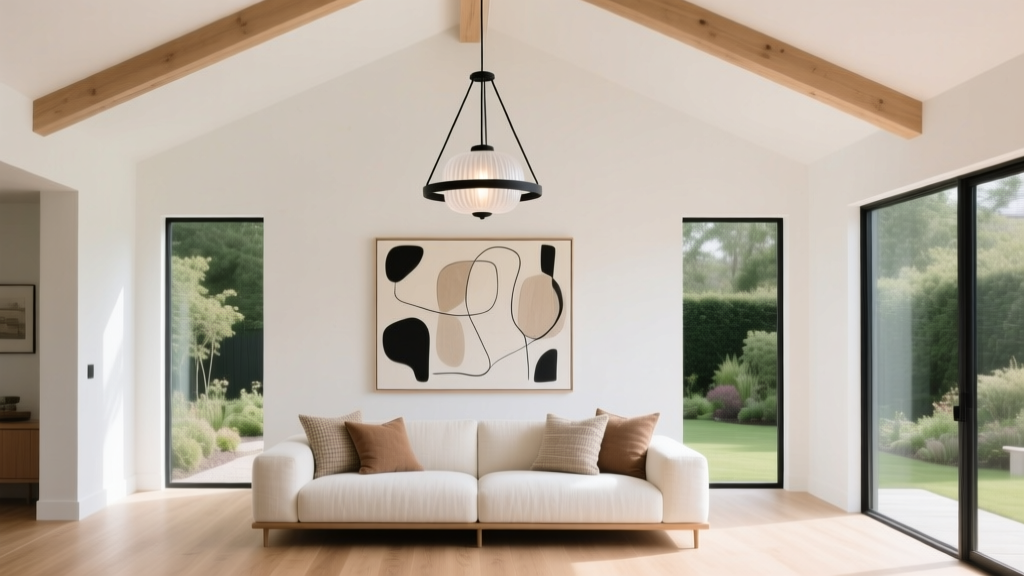 Living Room Decor for High Ceilings (2026)
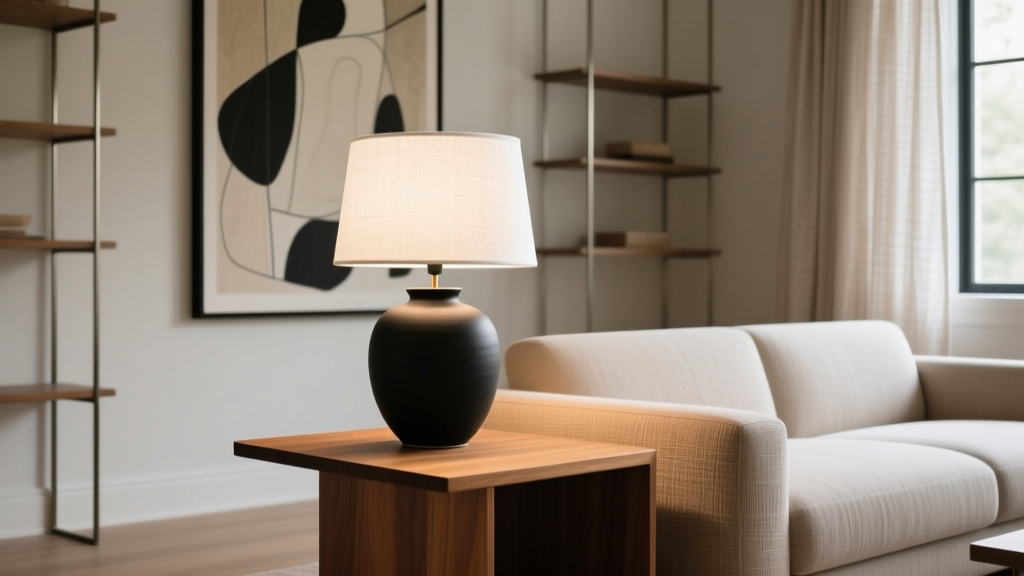 Best Table Lamp Pairings for End Tables - The Decor Mag