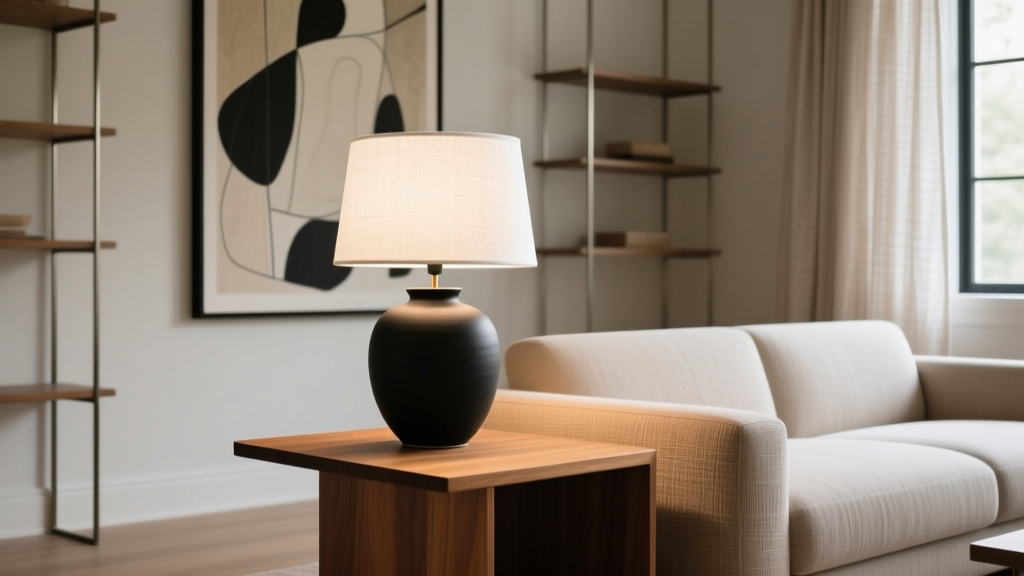
Best Table Lamp Pairings for End Tables - The Decor Mag
A great end table lamp does more than brighten a corner—it shapes the mood of your living room, makes reading possible without overhead glare, and quietly “finishes” a seating area so it feels intentional. When the lamp and end table are mismatched in scale, style, or function, the room can feel slightly off, even if everything else is beautiful. The good news: getting the pairing right is easier than most people think once you know a few designer rules and measurements.
This guide walks you through the best table lamp pairings for end tables, from classic combinations to current living room design trends like warm metals, artisanal ceramic bases, and soft, diffused lighting. You’ll learn practical sizing formulas, material and shade recommendations, budget-friendly product ideas, and real-world scenarios (small apartments, open-concept living rooms, homes with kids and pets) so you can choose a lamp that looks polished and works for everyday life.
Start with the Two Rules That Make Pairings Look “Right”
Rule #1: Get the height relationship correct
For most living room layouts, the sweet spot is when the bottom of the lampshade sits around eye level when you’re seated. That reduces glare and creates a cozy pool of light near the sofa or accent chair.
- Target height: Bottom of shade at 34–36 inches from the floor for an average sofa.
- Common overall lamp height: 24–30 inches (including shade) when placed on a typical end table.
- Quick formula: End table height + lamp height ≈ 58–64 inches total.
Example: If your end table is 22 inches tall, look for a lamp that’s roughly 26–30 inches tall. If your end table is 26 inches tall (common next to higher-arm sofas), a 24–28 inch lamp often works best.
Rule #2: Keep shade width in proportion to the table
A shade that’s too wide can visually “spill” off a petite end table; too narrow can look stingy and underpowered.
- Best practice: Lampshade width should be about 1/2 to 2/3 the width of the end table.
- Minimum clearance: Leave 2–3 inches of tabletop visible on each side of the shade when possible.
Example: A 20-inch-wide end table pairs beautifully with a shade around 12–14 inches wide.
Measure Your Living Room Setup (A 5-Minute Checklist)
Before you shop, take these quick measurements—this is the difference between “returns” and “nailed it” in one try.
- End table height: Measure from floor to tabletop (most are 20–26 inches).
- Sofa arm height: A lamp looks cohesive when the tabletop is within 0–3 inches of the sofa arm height.
- Seated eye level: Sit on your sofa and measure from floor to your eye line (often 36–42 inches).
- Tabletop “real estate”: Note what must fit besides the lamp (coaster, book, remote tray, candle).
- Outlet location: If the outlet is far, plan for a cord cover or choose a rechargeable lamp.
Best Table Lamp + End Table Pairings (By Style)
1) Modern Pairing: Sculptural ceramic lamp + simple wood or stone table
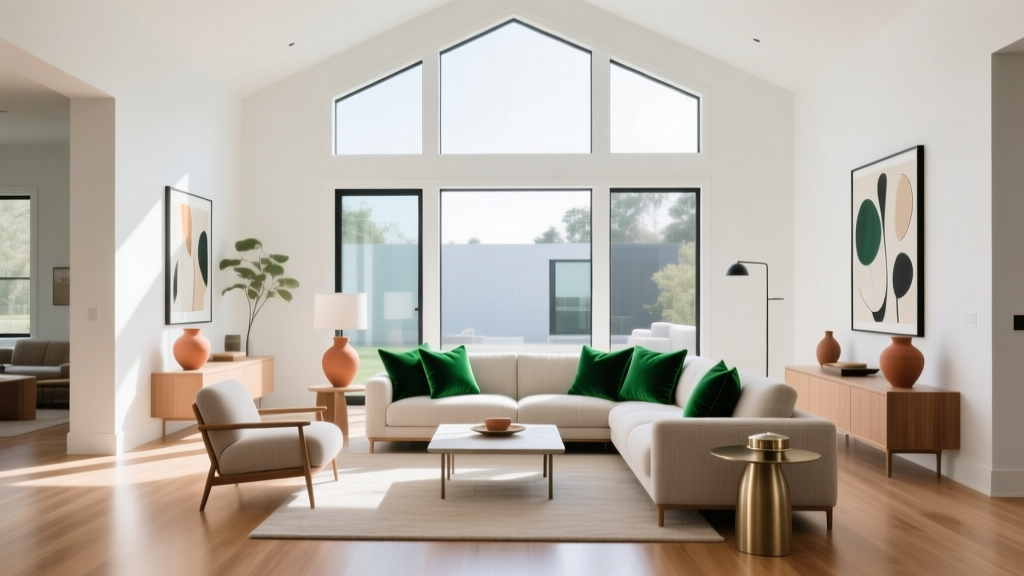
This pairing is everywhere right now in living room decor: a curvy, tactile lamp base (often matte ceramic) paired with a clean-lined end table in oak, walnut, or stone. It’s contemporary but still warm—great for renters and homeowners who want a stylish, updated look without committing to ultra-trendy pieces.
- Best for: Modern, contemporary, Scandinavian, Japandi living rooms
- Materials that work: Matte ceramic, linen shade, light-to-medium wood end table, travertine or marble top
- Recommended shade: Off-white linen drum shade (soft diffusion)
- Budget range: Lamp $80–$250; end table $120–$400
Real-world scenario: You have a neutral sofa and want the room to feel more designed without adding more color. Choose a white or sand ceramic lamp with a tall linen drum shade, then pair it with a simple oak end table. Add one black accent (a small tray or frame) to keep the look crisp.
2) Timeless Pairing: Brass lamp + classic round or rectangular wood end table
Warm metals are a lasting favorite, and brass is especially forgiving—it complements most upholstery tones, from ivory to charcoal to navy. A brass lamp instantly makes a living room feel more layered and elevated.
- Best for: Traditional, transitional, classic, modern-traditional spaces
- Materials that work: Aged brass, walnut or cherry table, white or oatmeal shade
- Recommended proportions: Slightly narrower shade if the base is substantial (keeps it refined)
- Budget range: Lamp $100–$300; end table $150–$600
Pro tip: If your living room has mixed metals (say, black curtain rods and brass hardware), choose a brass lamp with a subtle black detail (finial, base ring, or cord) to bridge both finishes.
3) Cozy Pairing: Textured lamp base + upholstered or rounded end table
Soft edges are a major design trend because they make rooms feel relaxed and inviting. Pair a lamp with a textured base—ribbed ceramic, rattan-wrapped, or speckled stone—with an upholstered cube or a rounded end table to create an extra-cozy reading corner.
- Best for: Cozy contemporary, organic modern, boho-inspired living rooms
- Materials that work: Rattan, cane, boucle, linen, clay, terra-cotta, textured glass
- Recommended shade: Tapered or soft bell shape for warmth
- Budget range: Lamp $60–$220; end table $90–$350
Real-world scenario: In a small apartment living room, replace a sharp-cornered end table with a round drum table or upholstered cube. Then add a textured lamp to bring depth without adding clutter.
4) Statement Pairing: Oversized lamp + sturdy, wide end table
If you want your lighting to double as decor, go bigger. A larger lamp creates drama and makes a living room feel more high-end—just make sure the end table can visually “hold” it.
- Best for: Large sofas, open-concept living rooms, high ceilings
- Table size guideline: End table width 22–28 inches works well with a fuller shade
- Lamp height guideline: 28–34 inches tall (especially if table is lower)
- Budget range: Lamp $180–$500; end table $200–$800
Designer move: Choose a neutral shade but a bold base (glossy black, deep green, or sculptural plaster). It reads as intentional, not busy.
5) Small-Space Pairing: Slim lamp or rechargeable lamp + petite end table
When square footage is tight, the best end table lamp pairing is often about restraint. Look for a narrow lamp footprint, a smaller shade, and a base that leaves room for essentials.
- Best for: Apartments, narrow end tables, floating shelves used as side tables
- Footprint tip: Aim for a lamp base diameter under 6–7 inches
- Shade tip: 8–11 inches wide keeps things proportional
- Smart option: Rechargeable table lamps (great when outlets are scarce)
- Budget range: Lamp $40–$180; end table $70–$250
Real-world scenario: Your sofa is close to a walkway and a wide shade would get bumped. Choose a slender metal lamp with a narrow drum shade and a stable, weighted base.
Pick the Right Lampshade: The Detail That Changes Everything
Shades do the heavy lifting for light quality. If your living room lighting feels harsh, the bulb might not be the real problem—the shade might be.
- Linen or cotton (white/oatmeal): Soft, flattering ambient light; best for cozy living rooms.
- Paper or rice-paper styles: Trend-forward and diffused; great for Japandi-inspired spaces (handle with care).
- Opaque shades: Direct light up and down; ideal when you want less glare and more mood.
- Hardback drum shades: Clean and modern; keeps its shape and looks polished.
Shade shape cheat sheet:
- Drum: Modern, versatile, works with most bases.
- Tapered: Traditional and transitional; visually lighter.
- Empire/bell: Classic warmth; great with vintage-inspired lamps.
Bulbs, Brightness, and Color Temperature (For a Living Room Glow)
For end table lamps, you generally want warm, comfortable light that supports conversation and relaxation.
- Brightness: 800–1600 lumens per lamp is a practical range (roughly 60–100W equivalent).
- Color temperature: 2700K for warm and cozy; 3000K for a slightly cleaner look.
- Best upgrade: Use a dimmable LED bulb and a dimmer-compatible lamp or smart plug.
- For reading: Consider 1100–1600 lumens with an opaque shade or a slightly taller lamp that directs light down.
How to Style the End Table Around the Lamp
The most beautiful lamp pairing can still feel cluttered if the tabletop isn’t edited. Aim for a functional “landing zone” that still looks designed.
A simple styling formula (works every time):
- Anchor: The lamp (back corner of the table, closer to the sofa).
- Function: A small tray for remotes/coasters (about 6–10 inches wide).
- Personality: One accent (a small vase, candle, or a stack of 1–2 books).
- Keep it breathable: Try to leave 30–40% of the tabletop visible.
- Match finishes loosely: If your lamp is brass, add a small brass detail (tray, frame) so it feels connected.
- Hide cords: Use a cord cover or run the cord behind the table leg; it instantly elevates the look.
Product Recommendation Ideas (By Look + Budget)
Rather than chasing a single “perfect” lamp, shop by a design direction and a realistic budget. These are dependable categories to look for when browsing online or in-store.
Under $100 (budget-friendly, renter-approved)
- Matte ceramic mini lamp with a white drum shade (great on petite end tables).
- Slim black metal lamp with a narrow shade for small spaces.
- Rechargeable touch lamp (especially useful where outlets are limited).
$100–$250 (best value for living room impact)
- Textured ceramic lamp (ribbed, reactive glaze, or sculptural shape) with linen shade.
- Aged brass lamp with a tapered shade for a timeless living room look.
- Clear glass lamp (airier visually, great for smaller rooms that need “lightness”).
$250–$600+ (statement and heirloom feel)
- Large-scale ceramic or plaster lamp with a premium linen shade.
- Designer-style stone base lamp (travertine/marble look) for organic modern rooms.
- Artisan lamp base with handcrafted details for a collected, high-end vibe.
Common Mistakes to Avoid
- Choosing a lamp that’s too short: If you see the bulb from the sofa, it will feel glaring and unfinished.
- Over-sizing the shade on a tiny end table: It can look top-heavy and steal all the tabletop function.
- Ignoring the base diameter: A beautiful lamp can still fail if it hogs the entire surface.
- Using “daylight” bulbs (5000K+): They often feel cold and clinical in living rooms.
- Forgetting about cords: Visible cords can undermine even the best living room decor.
- Matching everything exactly: A lamp and end table don’t need to be the same style—contrast (modern lamp + vintage table) can look more designer.
FAQ: Table Lamps and End Tables
What height should a table lamp be for an end table?
Most living rooms do well with a lamp that’s 24–30 inches tall on an end table that’s 20–26 inches tall. Aim for the bottom of the shade around 34–36 inches from the floor when you’re seated.
Should end tables have matching lamps?
Matching lamps create a classic, symmetrical look and work especially well in traditional or transitional living rooms. If your style is more modern or eclectic, try “coordinated” instead: similar shade shapes and heights, but different base materials.
What’s the best lampshade shape for a living room?
A drum shade is the most versatile for living room design—it looks clean, spreads light evenly, and suits many base styles. Choose a tapered shade if your room leans traditional.
How bright should end table lamps be for a living room?
Plan for 800–1600 lumens per lamp depending on how much you rely on them. If they’re your main ambient lighting, lean brighter and add dimming for evenings.
What if my end table is very small?
Look for a lamp with a base diameter under 6–7 inches and a shade around 8–11 inches wide. A rechargeable table lamp is also a smart choice if cords would clutter the area.
How do I pair a lamp with a glass or acrylic end table?
Use a lamp with visual “weight,” like ceramic, metal, or stone, to balance the airy table. A linen shade keeps it soft and prevents the combo from feeling too sleek.
Your Next Steps: Create a Living Room Lighting Plan That Works
If you want your living room to feel more inviting tonight, start with one end table: measure your table height, choose a lamp tall enough to hide the bulb line from the sofa, and pick a shade material that diffuses light warmly (linen is a reliable win). Then add a dimmable LED bulb and a small tray to keep the tabletop functional.
Once one side feels right, repeat the formula for the other end table—or intentionally mix a second lamp for a more collected, designer look. Either way, you’ll end up with better living room lighting, a more polished layout, and that cozy glow that makes people want to stay awhile.
Want more living room design and decor ideas? Explore more inspiring guides and styling tips on thedecormag.com.
More Articles
 Living Room That Feels Collected: Decor Tips
 Texture in Minimalist Living Rooms (2026)
 Elegant Traditional Living Room Ideas - The Decor Mag
 Living Room Cozy Fall Decorating Ideas - The Decor Mag
 Best End Table Pairings for Sofas - The Decor Mag
 Smart Space Allocation for Real Homes in 2026
 Coastal Living Room Decor Inspiration - The Decor Mag
 Cat Trees for Living Rooms: Stylish & Seamless (2026)
 Bathroom Reading Nook Ideas for 2026
 Living Room Statement Piece Furniture Guide - The Decor Mag