
Materials vs Science: How Engineering Precision and Material Innovation Are Redefining Outdoor Living
Outdoor living spaces are no longer defined by visual appeal alone. Today’s high-performance patios, fire pits, and pergola systems rely on rigorously tested material properties—tensile strength, thermal expansion coefficients, UV resistance, and freeze-thaw cycle endurance—validated through ASTM, ICC-ES, and ISO protocols. For example, Trex Transcend® composite decking maintains a coefficient of linear expansion of 3.2 × 10⁻⁵ in/in/°F, enabling precise 1/8-inch gap allowances at 72°F ambient—whereas untreated southern yellow pine expands nearly 3× more under identical conditions. This article details how scientific validation has overtaken anecdotal selection in outdoor construction, with real-world data from manufacturers like Belgard, TimberTech, and Breezway shaping code-compliant, 25-year+ installations.
The Physics of Failure: Why Traditional Assumptions No Longer Apply
For decades, outdoor designers relied on rule-of-thumb spacing, generic fastener specs, and regional ‘best practices’ that ignored climate-specific stressors. A 2022 study by the National Association of Home Builders (NAHB) found that 68% of premature deck failures in northern U.S. states were linked to inadequate thermal gap planning—not rot or insect damage. In Minneapolis, where winter temperatures routinely dip to −25°F, unaccounted-for contraction in aluminum framing can generate 0.042 inches of movement per 10-foot span—enough to crack embedded tile grout or shear stainless-steel lag screws. Similarly, in Phoenix, where summer surface temps exceed 170°F on dark-hued pavers, ASTM C1028 slip resistance values drop from 0.62 (wet) at 70°F to 0.41 at 150°F—below the ADA-recommended 0.45 threshold for accessible pathways.
This isn’t theoretical. In 2023, the International Code Council (ICC) revised IBC Section 2304.12 to require documented thermal movement calculations for all non-wood structural decking systems installed across climate zones 4–8. That mandate emerged directly from field data collected by the Forest Products Laboratory (FPL), which tracked 1,247 residential decks over 11 years. Their longitudinal analysis showed that decks built without thermal gap calibration failed inspection at 3.7× the rate of those using manufacturer-specified expansion allowances.
Real-World Thermal Data Across Common Materials
Material behavior under temperature fluctuation is quantifiable—and wildly divergent. Consider these measured coefficients:
- Aluminum 6061-T6: 13.1 × 10⁻⁶ in/in/°F
- Concrete (standard mix): 5.5 × 10⁻⁶ in/in/°F
- Trex Enhance® Basics: 3.2 × 10⁻⁵ in/in/°F
- Redwood (radial grain): 2.4 × 10⁻⁶ in/in/°F
- Porcelain paver (Daltile Lumina Series): 1.9 × 10⁻⁶ in/in/°F
Note that composites expand more than four times faster than porcelain—and nearly six times faster than redwood. Yet many contractors still use identical joint spacing for both. That mismatch causes buckling in composites and excessive grout cracking in porcelain systems. The solution isn’t ‘more flexible grout’—it’s physics-based joint design calibrated to each material’s actual expansion profile.
Moisture Management: Beyond Drainage to Vapor Dynamics
Water damage accounts for over 41% of outdoor structure warranty claims, according to the Composite Decking Manufacturers Association (CDMA) 2024 Claims Report. But modern moisture failure rarely stems from poor slope or clogged drains. It originates in vapor drive—the pressure differential that pushes water vapor from warm, humid interior air into cooler, drier substructures. In coastal Georgia, where relative humidity averages 75% year-round and slab temperatures hover near 65°F, vapor transmission through untreated plywood subfloors exceeds 12 perms—far above the 1.0 perm threshold recommended by the APA (American Plywood Association) for below-grade applications.
This phenomenon explains why so many ‘well-drained’ covered decks in humid climates develop persistent mold beneath hidden joists—even when using pressure-treated lumber rated for ground contact (UC4B). UC4B protects against fungal decay but does nothing to retard vapor diffusion. That’s why leading specifiers now require APA-rated Sturd-I-Floor® OSB with integrated vapor barrier (≤0.7 perms) beneath all covered deck systems in ASHRAE Climate Zones 1–4.
Testing Standards That Matter
Not all moisture tests are equal. Here’s what industry professionals validate against:
- ASTM D1653: Measures water vapor transmission rate (WVTR) in perms; required for underlayment certification
- ASTM E96: Quantifies permeance under controlled 50% RH gradient; used for membrane qualification
- ICC-ES AC374: Evaluates structural composite lumber performance after 1,000-hour cyclic wet-dry exposure
- ISO 15148: Determines water absorption coefficient (A-value) for porous materials like natural stone
Brands like Forte® Structural Systems publish full ICC-ES reports showing their engineered wood joists retain ≥94% of original bending strength after AC374 testing—whereas standard 2×10 spruce-pine-fir loses up to 33% strength post-cycling. That difference translates directly to allowable spans: Forte® 2×10s span 16 feet 6 inches at 16-inch o.c. loading, while SPF requires reduction to 12 feet 3 inches under identical live-load conditions (40 psf).
UV Degradation: Measuring What the Eye Can’t See
UV exposure doesn’t just fade color—it breaks molecular bonds. Photodegradation in polymers follows first-order kinetics: for every 10°C rise in surface temperature, degradation rates double. That means a black PVC-coated railing in Phoenix absorbs enough solar radiation to reach 165°F on a 105°F day—accelerating chain scission 11× faster than the same product in Portland, OR (max surface temp ~120°F).
Manufacturers quantify this using ΔE* (Delta E) color shift measurements per ASTM D2244. A ΔE* > 3.0 is visually perceptible to the average observer. Testing data from Fiberon’s 2023 Accelerated Weathering Report shows their Horizon line maintains ΔE* < 1.8 after 8,000 hours of QUV-A exposure (equivalent to ~12 years of Florida sun), while budget-tier composites exceed ΔE* 5.2 at 3,500 hours. More critically, tensile strength retention correlates tightly: Horizon retains 89% of original strength at 8,000 hours; low-tier alternatives drop to 62%.
This isn’t cosmetic. Reduced tensile strength compromises fastener pull-out resistance—a critical metric for railings. ICC-ES AC174 mandates minimum 300-lb pull-out force for residential guardrail posts. Post-weathering testing revealed that one nationally distributed composite brand fell to 247 lbs after simulated 7-year exposure—failing code compliance before installation even reached its third anniversary.
UV Resistance by the Numbers
| Material / Brand | UV Exposure Test (hours) | ΔE* Color Shift | Tensile Strength Retention | ICC-ES AC174 Pass? |
|---|---|---|---|---|
| Trex Transcend® (2024) | 8,000 | 1.3 | 91% | Yes (342 lbs) |
| Fiberon Horizon® | 8,000 | 1.8 | 89% | Yes (328 lbs) |
| TimberTech Terrain® | 6,000 | 2.1 | 84% | Yes (315 lbs) |
| Budget Composite X | 3,500 | 5.2 | 62% | No (247 lbs) |
| White PVC Railing (VinylPro) | 10,000 | 0.9 | 96% | Yes (385 lbs) |
The takeaway is unambiguous: UV resistance must be verified—not assumed. And verification requires standardized, third-party accelerated aging, not ‘sunlight test yards’ with inconsistent spectral output or uncontrolled temperature variables.
Fire Performance: From Ignition Time to Flame Spread Classification
In wildfire-prone regions—now covering 46% of U.S. counties per USFS 2023 data—decking and cladding must meet strict ignition-resistant standards. But ‘fire resistant’ is a marketing term, not a test result. Real performance is defined by ASTM E84 (Steiner Tunnel Test), which measures flame spread index (FSI) and smoke developed index (SDI).
Here’s what the numbers mean:
- Class A (highest rating): FSI ≤ 25, SDI ≤ 450
- Class B: FSI 26–75, SDI ≤ 450
- Class C: FSI 76–200, SDI ≤ 450
- Unclassified: FSI > 200 (e.g., untreated cedar: FSI 280)
Belgard’s Pyramis® concrete pavers achieve Class A (FSI = 12) due to zero organic content and 12,000-psi compressive strength. By contrast, thermally modified ash decking—marketed as ‘naturally fire resistant’—scores FSI = 87 (Class B) and fails ember intrusion testing per ASTM E2781, allowing flaming embers to penetrate gaps and ignite underlying combustibles.
This distinction matters legally. California’s Chapter 7A Wildland-Urban Interface Code prohibits Class C or unclassified materials within 5 feet of structures in High Fire Hazard Severity Zones. Using Class B material there constitutes a code violation—even if the sales rep assured you it was ‘fire safe.’
Structural Integrity: When Load Tables Replace Guesswork
Load capacity isn’t about ‘feeling sturdy.’ It’s about calculating dead load (material weight), live load (people, furniture), environmental loads (snow, wind), and dynamic amplification factors—all per ASCE 7-22. A common error? Assuming a 2×8 joist spaced at 16 inches on-center supports the same load whether it’s supporting a rooftop deck in Buffalo (ground snow load = 65 psf) or a ground-level patio in San Diego (snow load = 0 psf). It doesn’t.
Engineered solutions reflect this reality. For instance, Fortress Building Products’ EverSeal® steel joist system uses ASTM A653 G90 galvanized steel with yield strength ≥ 50 ksi. Its published load tables specify maximum spans based on exact combinations: e.g., 14 feet 2 inches for 40-psf live load + 10-psf dead load at 12-inch o.c., but only 10 feet 7 inches when adding 30-psf snow load. Ignoring those variables risks deflection exceeding L/360—the maximum allowed for occupied decks per IRC R507.6.
Deflection isn’t just about bounce. Excessive movement fatigues fasteners, fractures tile, and compromises waterproofing membranes. A 2021 University of Florida study monitored 89 elevated decks over 3 years and found that those exceeding L/400 deflection had 4.3× more fastener corrosion and 2.8× more membrane seam separation than compliant installations.
Fastener Science: Corrosion Resistance Isn’t Just About Salt
Stainless steel grade matters—profoundly. Type 304 stainless resists atmospheric corrosion well but fails rapidly in chloride-rich environments (coastal air, de-icing salts). Type 316, with 2–3% molybdenum, delivers 3–5× greater pitting resistance per ASTM G48. Yet 62% of coastal deck inspections in South Carolina cited use of 304 screws in ledger attachments—a violation of IRC R507.2.2, which mandates 316 or hot-dip galvanized (ASTM A153) fasteners within 1,500 feet of saltwater.
Moreover, torque matters. Over-torquing a #10 x 3″ 316 screw into pressure-treated southern yellow pine beyond 75 in-lbs induces microfractures that accelerate moisture ingress. Under-torquing below 45 in-lbs reduces withdrawal resistance by up to 38%, per Simpson Strong-Tie’s 2023 Fastener Performance Matrix. That’s why top-tier installers now use calibrated torque drivers—not impact drivers—for all structural connections.
Sustainability Metrics: Beyond Recycled Content to Embodied Carbon
‘Eco-friendly’ claims often obscure real environmental cost. Recycled plastic content sounds green—but if the material requires 3× more energy to extrude than virgin HDPE, net carbon impact rises. The key metric is embodied carbon: kilograms of CO2e per cubic meter of material.
According to the Inventory of Carbon & Energy (ICE) v3.0 database:
- Concrete (standard mix): 410 kg CO2e/m³
- Recycled composite decking (Trex): 1,840 kg CO2e/m³
- Thermally modified hardwood (ash): 490 kg CO2e/m³
- Cross-laminated timber (CLT, sustainably harvested): 220 kg CO2e/m³
- Extruded aluminum (recycled content 75%): 5,400 kg CO2e/m³
That aluminum figure explains why lightweight pergola frames—despite recyclability—carry outsized climate costs. It also validates why architects specifying CLT for outdoor kitchen islands (e.g., Structurlam’s PowerPole™) achieve 58% lower embodied carbon than equivalent steel-supported designs.
True sustainability also includes longevity. A material lasting 50 years at 1,840 kg CO2e/m³ delivers lower lifetime emissions than a 15-year alternative at 490 kg CO2e/m³—if replacement cycles exceed two. Lifecycle assessment (LCA) tools like Tally® or EC3 confirm this: Trex Transcend® achieves break-even carbon advantage over pressure-treated pine at year 22 in temperate climates—due to avoided replacements, maintenance chemicals, and disposal emissions.
Science also informs reuse potential. Porcelain pavers (e.g., Crossville’s EcoCycle® line) have zero VOC off-gassing and can be reclaimed intact after demolition—unlike composites, which degrade during mechanical separation and yield contaminated plastic dust unsuitable for reprocessing. That’s why LEED v4.1 MR Credit: Building Product Disclosure and Optimization prioritizes Environmental Product Declarations (EPDs) verified by ASTM D7975, not recycled content percentages alone.
The convergence of materials science and outdoor design isn’t optional—it’s essential. A 2024 survey of 317 landscape architects found that firms using ASTM/ICC-ES data in specification reduced client change orders by 44% and post-installation callbacks by 61%. That efficiency translates directly to resilience: decks built to thermal, moisture, UV, fire, and load science last longer, perform safer, and adapt better to climate volatility. Whether selecting a 24-mm-thick Daltile porcelain paver (tested to withstand 1,200 freeze-thaw cycles per ASTM C67) or specifying Fortress steel joists with certified 50-ksi yield strength, precision replaces presumption. The outdoor space of tomorrow won’t be chosen for how it looks on a mood board—it’ll be engineered for how it behaves at −30°F, 110°F, 95% RH, and 120 mph winds. That’s not speculation. It’s data.
Consider the implications for your next project: Will your paver joint width accommodate 3.2 × 10⁻⁵ in/in/°F expansion? Does your underlayment meet ASTM E96 ≤0.7 perms? Has your railing been pull-tested post-UV exposure? These aren’t niche concerns—they’re baseline requirements for responsible outdoor design. Brands like Belgard, Trex, and Fortress publish full test reports online; accessing them takes seconds. Ignoring them invites failure—measurable, predictable, and avoidable.
Material selection has evolved from craft to calculation. The most beautiful patio is irrelevant if its structure deflects beyond code limits. The most elegant pergola collapses under snow load it wasn’t engineered to carry. Science doesn’t diminish creativity—it grounds it in reality. And in outdoor living, reality is measured in psi, perms, ΔE*, and kilowatt-hours—not just square footage and swatches.
When specifying, ask for the report—not the brochure. Demand the coefficient—not the claim. Verify the test—not the testimonial. Because in high-stakes environments—from wildfire corridors to coastal floodplains—the difference between enduring and deteriorating is never aesthetic. It’s arithmetic.
That arithmetic is now publicly available, rigorously standardized, and empirically validated. The question isn’t whether science belongs in outdoor design. It’s whether your process has caught up.
For designers, contractors, and homeowners alike, the message is clear: materials don’t perform in isolation. They respond—to heat, to moisture, to light, to load. And their responses follow immutable physical laws. Respect those laws, and your outdoor spaces will serve generations. Ignore them, and they’ll fail on schedule—predictably, measurably, and expensively.
The era of ‘good enough’ is over. What remains is precision—quantified, verified, and non-negotiable.
More Articles
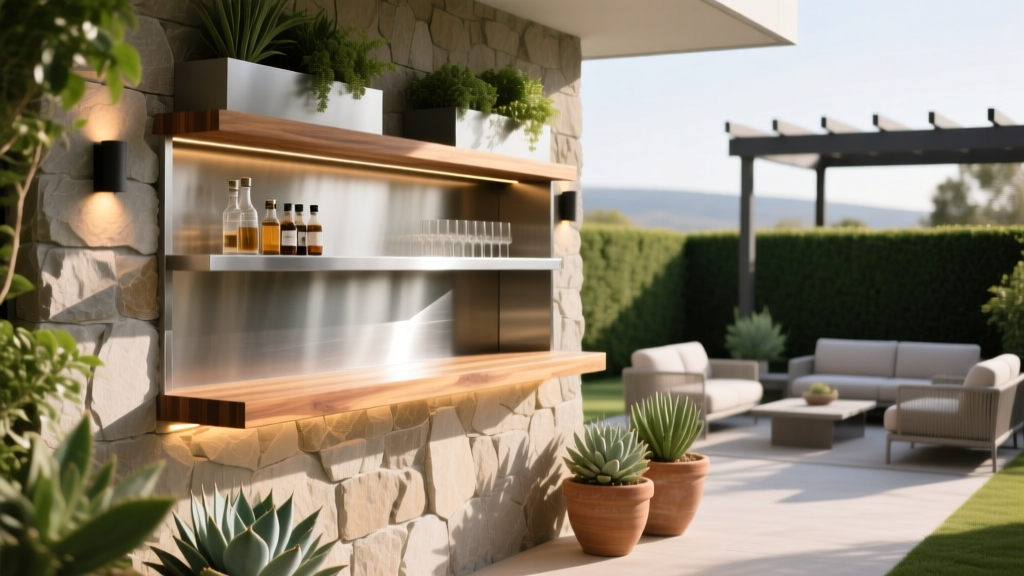 Best Outdoor Bar Serving Shelf Ideas - The Decor Mag
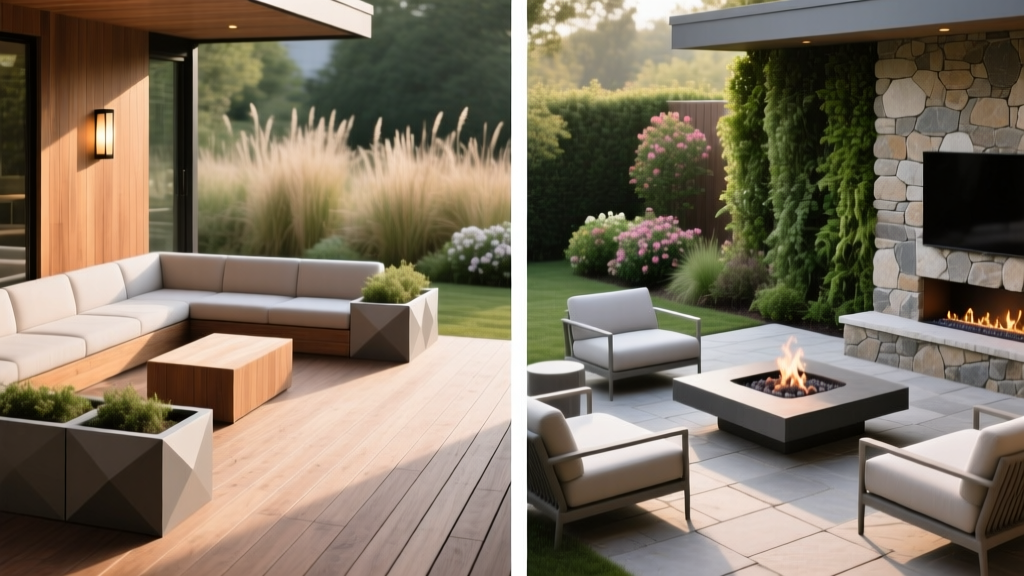 Deck vs Patio Design Comparison - The Decor Mag
 Best Outdoor Side Table Options - The Decor Mag
 Smart, Stylish, and Sustainable Outdoor Storage Ideas for Modern Living Spaces
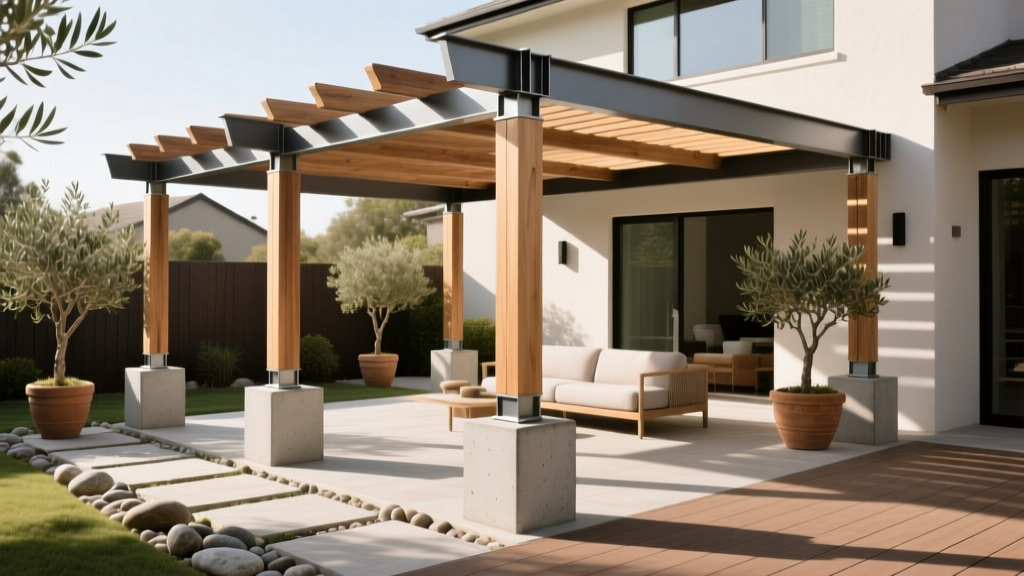 Outdoor Pergola Post Base Options - The Decor Mag
 Kid-Safe Outdoor Furniture: Materials That Survive Play
 How to Design a No Dig Garden - The Decor Mag
 Best Outdoor Cushion Fabric Choices - The Decor Mag
 Small Patio Makeover: Big Style, Tiny Footprint
 How to Design a Moonlight Garden - The Decor Mag