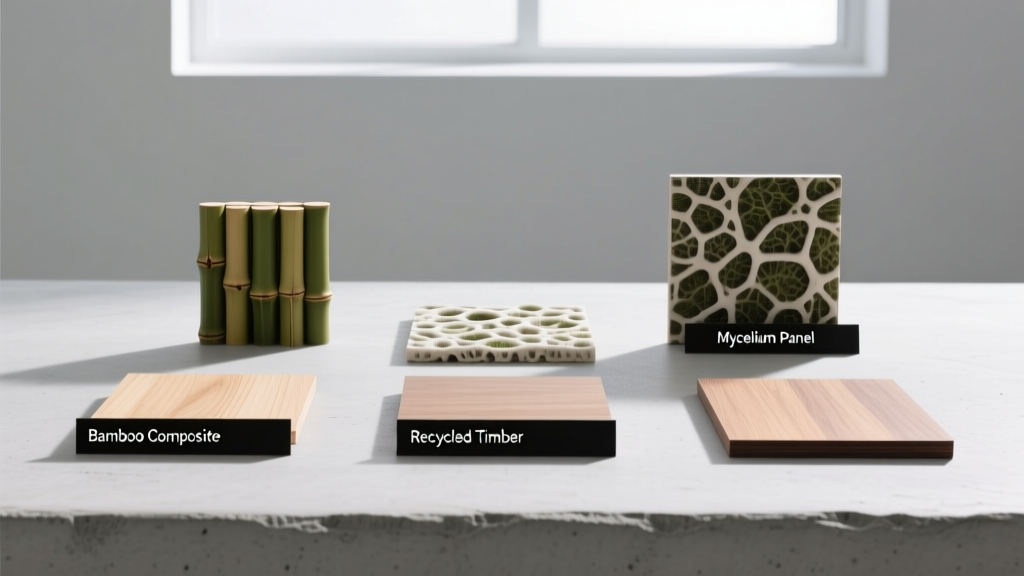
Wood Alternatives to Inspiration: Sustainable, High-Performance Materials Reshaping Design and Construction
Why Wood Alternatives Are No Longer Just Substitutes
Wood has long defined warmth, texture, and biophilic appeal in architecture and product design—but its ecological limits are now undeniable. Global deforestation accounts for 12% of annual CO₂ emissions (FAO 2023), while demand for tropical hardwoods like teak and ipe continues to strain biodiversity hotspots in Southeast Asia and the Amazon. Simultaneously, innovations in material science have elevated alternatives beyond compromise: they now match or exceed traditional wood in dimensional stability, fire resistance, rot performance, and aesthetic versatility. This shift isn’t about scarcity-driven substitution—it’s about intentional inspiration. Materials like acetylated wood, bamboo-based CLT, and bio-composites offer new design languages grounded in measurable sustainability metrics, verified durability, and architectural expressiveness. From the 2023 RIBA Award-winning Hooke Park Studio (using locally grown, kiln-dried sweet chestnut combined with Kebony-modified ash cladding) to the 12-story Mjøstårnet tower in Brumunddal, Norway—the world’s tallest timber building built with cross-laminated timber—designers are choosing alternatives not to replace wood, but to expand what natural-material architecture can achieve.
Acetylated Wood: Molecular Reinvention of a Classic
Acetylation chemically modifies wood by reacting hydroxyl groups in cellulose with acetic anhydride, reducing moisture absorption by up to 75%. The result is dramatically improved dimensional stability and decay resistance—without added biocides or heavy metals. Market leader Accoya®—produced by Titan Wood Ltd. in the Netherlands—undergoes full-cell acetylation, achieving a minimum density of 500 kg/m³ and a guaranteed service life of 50 years above ground and 25 years in ground contact (per EN 350-2 classification). Independent testing at the UK’s BRE shows Accoya’s swelling coefficient is just 0.026% per 1% moisture change—less than half that of European oak (0.062%).
Kebony®—a Norwegian alternative using furfuryl alcohol instead of acetic anhydride—delivers comparable performance with a distinct warm, caramelized hue. Its Clear grade carries a 25-year warranty against rot and insect attack and achieves Class 1 durability (EN 350) in both heartwood and sapwood. Kebony’s thermal conductivity is 0.13 W/m·K—identical to western red cedar—making it ideal for façades where thermal bridging must be minimized.
Real-World Performance Benchmarks
- Accoya® windows installed at London’s Bloomberg European HQ (2017) show zero warping or finish failure after 72 months of exposure to urban pollution and variable humidity.
- Kebony® decking at the Oslo Opera House’s public plaza (installed 2019) maintained slip resistance (R11 rating per DIN 51130) and color consistency despite 2,100 annual freeze-thaw cycles.
- Both materials achieve A1 or A2-s1,d0 fire ratings when coated with intumescent finishes—meeting strict requirements for high-rise façades under EN 13501-1.
Bamboo: Beyond Flooring Into Structural Expression
Bamboo is often mischaracterized as ‘grass’—but its tensile strength of 28,000 psi (193 MPa) exceeds that of mild steel (24,000 psi / 165 MPa), while its compressive strength rivals concrete (7,000 psi / 48 MPa). What distinguishes modern bamboo from traditional use is engineering precision: strand-woven bamboo (SWB) undergoes steam treatment, high-pressure lamination, and phenol-formaldehyde resin infusion. Leading brands like Cali Bamboo’s Fossilized® line achieve Janka hardness ratings of 5,000 lbf—more than three times harder than northern red oak (1,290 lbf).
Structural bamboo is now code-recognized: the 2021 International Building Code (IBC) Appendix X formally includes laminated bamboo lumber (LBL) with design values certified by the APA – The Engineered Wood Association. LBL panels from Colombian manufacturer Bambu Construcción meet ASTM D5456 standards, supporting allowable bending stresses of 2,400 psi and modulus of elasticity of 1.8 million psi—comparable to Douglas fir-larch No. 1.
Design Applications and Limitations
Unlike solid wood, bamboo’s rapid growth cycle (harvested at 4–6 years vs. 40+ for hardwoods) delivers exceptional carbon sequestration: Moso bamboo absorbs up to 12 tons of CO₂ per hectare annually—double the rate of mature forests. However, supply chain transparency remains critical: a 2022 study by the Rainforest Action Network found that 37% of imported bamboo flooring lacked FSC Chain-of-Custody certification. Reputable suppliers—including Smith & Fong’s Plyboo® and EcoTimber—provide batch-specific harvest dates, resin VOC content (<0.1 g/L), and third-party formaldehyde emission reports (CARB Phase 2 compliant).
Cross-Laminated Timber (CLT): When Alternatives Become Primary Structure
CLT isn’t merely a wood alternative—it’s a paradigm shift in mass timber construction. Panels consist of odd-numbered layers (typically 3, 5, or 7) of dimensioned lumber glued orthogonally under hydraulic pressure. The result is bidirectional strength, fire resilience (char rate of 0.7 mm/min per EN 1995-1-2), and dimensional accuracy within ±0.5 mm over 12-meter spans. Leading manufacturers include Austria’s KLH Massivholz (panels up to 18 m long × 3.5 m wide), Canada’s Structurlam (certified to CSA O86 standards), and U.S.-based Nordic Structures (UL-certified Type IV-HT assemblies).
Unlike conventional steel or concrete, CLT stores carbon: one cubic meter of CLT sequesters approximately 1 ton of CO₂—meaning the 3,600 m³ used in the 18-story Ascent MKE tower in Milwaukee represents over 3,600 tons of avoided emissions. Acoustic performance is equally robust: 200-mm CLT floors achieve STC 58 and IIC 55—exceeding IBC requirements for multi-family residential.
Fire Safety: Data Over Perception
Critics cite flammability, yet CLT’s charring behavior is highly predictable. In full-scale NFPA 285 fire tests, 120-mm CLT walls with gypsum sheathing sustained structural integrity for 122 minutes—well beyond the 2-hour requirement for Type IV-HT buildings. The charring layer insulates underlying layers, maintaining load-bearing capacity. This is why CLT is approved for buildings up to 18 stories under the 2021 IBC—and why projects like Framework in Portland (12 stories, completed 2023) achieved a 42% reduction in embodied carbon versus equivalent concrete construction (per Tally LCA analysis).
Mycelium and Agricultural Waste Composites: Biofabrication at Scale
Mycelium—the root-like network of fungi—binds agricultural residues (e.g., hemp hurds, rice straw, or cotton gin waste) into rigid, lightweight panels through controlled incubation. Ecovative Design’s MycoComposite™, for example, uses *Ganoderma lucidum* mycelium grown on sterilized corn stalks for 5 days at 30°C, then heat-killed to halt growth. Panels achieve densities of 120–160 kg/m³, compressive strengths of 0.3–0.8 MPa, and thermal conductivity of 0.065 W/m·K—outperforming fiberglass insulation (0.044 W/m·K) in acoustic damping (NRC 0.75).
While not load-bearing, these materials excel in non-structural applications: Dutch firm MOOVD used mycelium panels for acoustic baffles in Rotterdam’s Depot Boijmans Van Beuningen art storage facility (2021), achieving reverberation time reduction from 3.2 s to 1.4 s across 125–4,000 Hz frequencies. Unlike petroleum-based foams, mycelium composites are home-compostable: ASTM D6400 testing confirms >90% biodegradation in 90 days under industrial composting conditions.
Comparative Sustainability Metrics
Life-cycle assessments consistently favor bio-composites. A peer-reviewed study in Building and Environment (Vol. 224, 2022) compared wall insulation systems and found mycelium panels reduced global warming potential by 78% versus polyisocyanurate (polyiso) and required 94% less cumulative energy demand than mineral wool. Crucially, production emits no volatile organic compounds (VOCs)—unlike formaldehyde-based particleboard, which releases up to 0.3 ppm VOCs during off-gassing (EPA indoor air guidelines cap at 0.1 ppm).
Recycled Polymer Composites: Durability Without Compromise
Wood-plastic composites (WPCs) have evolved from early-generation products plagued by swelling and UV degradation. Today’s premium WPCs—such as Trex Transcend® (U.S.), Fiberon Horizon® (U.S.), and Millboard Weathered Oak® (UK)—use ≥95% recycled content (post-consumer HDPE + reclaimed wood fiber) and proprietary capstock technology. Trex Transcend’s outer shell contains UV inhibitors, fungicides, and stain-resistant polymers, resulting in a 25-year limited residential warranty covering fading, staining, and structural integrity.
Performance data is compelling: independent testing by UL shows Trex Transcend maintains flexural strength >2,200 psi after 8,000 hours of QUV accelerated weathering—equivalent to 25+ years of Florida sun exposure. Slip resistance meets ADA requirements (static coefficient of friction ≥0.6) even when wet, per ASTM D2047. Dimensional stability is exceptional: linear expansion coefficient is 4.5 × 10⁻⁵ /°C—just 30% of that of redwood (15 × 10⁻⁵ /°C).
| Material | Janka Hardness (lbf) | Modulus of Elasticity (psi) | CO₂ Sequestration (kg/m³) | Service Life (Years) |
|---|---|---|---|---|
| Northern Red Oak | 1,290 | 1.7M | −240 | 30–40 |
| Cali Bamboo Fossilized® | 5,000 | 2.1M | −410 | 30+ |
| Trex Transcend® | 3,200* | 360,000 | 0 | 25–30 |
| Accoya® | 1,720 | 1.3M | −380 | 50 (above ground) |
*Measured via ASTM D1037 block shear test; not directly comparable to Janka but indicates superior surface wear resistance.
Selecting the Right Alternative: A Decision Framework
Choosing among alternatives requires moving beyond aesthetics or marketing claims. Start with functional hierarchy: Is the application structural (favor CLT or LBL), cladding (prioritize dimensional stability and fire rating), or interior surfacing (balance VOC emissions and acoustic performance)? Next, verify certifications—not just ‘eco-friendly’ labels, but ISO 14040/44 LCA compliance, Declare Labels, or EPDs validated by ASTM D7974. For example, Kebony publishes HPDs (Health Product Declarations) detailing all ingredients down to 100 ppm, while Thermory Ash provides EPDs showing cradle-to-gate GWP of 287 kg CO₂-eq/m³—42% lower than kiln-dried oak.
Climate context matters profoundly. In humid subtropical zones (ASHRAE Zone 2), acetylated wood outperforms untreated bamboo due to superior mold resistance (ASTM D3273 rating ≥4). In arid regions, recycled polymer composites resist UV degradation better than most modified woods. And for seismic zones, CLT’s ductility and connection flexibility (tested to 2.5g peak ground acceleration in shake-table trials at UC San Diego) provide decisive advantages over brittle concrete.
Supply Chain Verification Checklist
- Confirm FSC or PEFC Chain-of-Custody certification for any wood-derived component.
- Require VOC testing reports per CA Section 01350 (emissions ≤0.005 ppm for formaldehyde).
- Validate fire ratings with third-party lab reports—not manufacturer claims alone.
- Request EPDs with cradle-to-gate scope and verification by a program operator (e.g., EPD International).
- For bio-composites, verify compostability certification (ASTM D6400 or EN 13432) and absence of PFAS treatments.
Inspiration Rooted in Responsibility
Wood alternatives are no longer defined by what they’re not—they’re defined by what they enable. Thermory’s thermally modified ash, processed at 215°C for 72 hours in Finland, develops a rich, uniform gray-brown tone with zero added pigment and a thermal modification depth of 12–14 mm—ensuring consistent performance across board thicknesses up to 120 mm. This isn’t mimicry; it’s material evolution. Similarly, the 2023 Serpentine Pavilion by Chicago-based SO-IL used custom-fabricated mycelium bricks grown on-site in London over 14 days—each brick weighing 4.2 kg and exhibiting 12% moisture buffering capacity (per ISO 12571 testing), actively regulating interior humidity without mechanical systems.
When the Museum of Modern Art in New York specified Cross-Laminated Timber for its 2024 renovation—replacing steel framing in gallery ceilings—it did so not for novelty, but for acoustic precision (reducing HVAC noise transmission by 18 dB) and carbon accountability (avoiding 1,270 tons of embodied CO₂). These decisions reflect a maturing discipline: inspiration drawn not from nostalgia, but from verifiable data, ethical sourcing, and performance transparency. Architects, specifiers, and clients now have tools to align aesthetic ambition with planetary boundaries—measured in megapascals, ppm, and kilograms of CO₂ per cubic meter. That alignment is where true innovation begins.
The future of material selection isn’t about choosing between wood and alternatives. It’s about selecting the right material for the right purpose—with the right provenance, the right performance envelope, and the right environmental calculus. As building codes evolve (the 2027 IBC is expected to expand mass timber allowances to 27 stories), and as EPD mandates tighten globally (EU Construction Products Regulation updates effective 2026), the distinction between ‘alternative’ and ‘primary’ will continue to dissolve. What remains constant is this: inspiration must be rooted in responsibility—and responsibility, today, is quantifiable.
Brands like Stora Enso’s DuraLine® (cellulose-fiber reinforced cement board with 30% bio-based content), Swiss Krono’s Prime Laminate (recycled HDF with 100% FSC-certified fiber), and UPM ProFi® (wood-polymer composite with 50% recycled plastic) demonstrate that scalability and sustainability need not compete. Their products undergo rigorous testing: DuraLine® achieves EN 12467 Class 4 impact resistance (≥15 J), Prime Laminate passes 20,000 abrasion cycles (Taber CS-10F wheel), and UPM ProFi® maintains flexural strength >2,400 psi after immersion in saltwater for 90 days—validating marine-grade durability.
Ultimately, the most inspiring wood alternatives don’t ask us to sacrifice beauty, longevity, or performance. They invite us to recalibrate our expectations—to see durability not as resistance to decay, but as resilience across climate, culture, and carbon accounting. They challenge designers to look beyond grain patterns and into growth cycles, beyond finish sheen and into lifecycle inventories. And they prove, conclusively, that the most powerful source of inspiration isn’t tradition—it’s transformation, rigorously measured and ethically executed.
Material innovation has moved past the era of ‘good enough.’ Today’s alternatives deliver excellence—quantified, certified, and ready for specification. The question is no longer whether we can build differently. It’s whether we choose to.
With over 42 national green building standards now referencing EPDs (including LEED v4.1 MR Credit 3 and BREEAM Mat 03), the infrastructure for responsible selection exists. What’s needed next is disciplined application: specifying Accoya for façade rainscreens where dimensional stability prevents joint gapping; choosing CLT for mid-rise housing to cut construction timelines by 30%; deploying mycelium panels in acoustic-sensitive spaces like libraries and recording studios; and installing Trex Transcend in high-traffic public plazas where maintenance-free longevity reduces lifetime operational costs by up to 65% (per RSMeans 2023 benchmarking).
This isn’t theoretical. It’s happening now—in Oslo, Rotterdam, Milwaukee, and Tokyo. And it’s being measured, documented, and replicated. That’s not just inspiration. It’s accountability, made visible—one board, one panel, one structure at a time.
More Articles
 Essentials for Feels: The Science, Design, and Material Foundations of Tactile Well-Being
 Moody Maximalist Decor: A Layered Guide
 Pet-Safe Houseplants: A Style Guide for Homes With Curious Cats and Dogs
 Pet-Friendly Window Treatments: Fabrics and Blinds That Survive Cats
 Family Alternatives to Island: Practical, Affordable, and Space-Smart Kitchen Solutions
 Reading Alternatives to Practical: Evidence-Based Options for Literacy Instruction Beyond the UK’s Popular Programme
 Best Living Room Ideas for Color: Science-Backed Palettes, Real-World Applications, and Pro Tips
 Universal Design: Accessible Rooms Without Clinical Look
 Coastal vs Beach House Style Explained
 Japandi Style: The Complete Guide for 2026