
Bedroom Lighting Ideas for Better Sleep
Your Bedroom Lights Are Probably Hurting Your Sleep
Light is the primary signal your brain uses to regulate melatonin production. The wrong lighting in the hours before bed suppresses this sleep hormone, making it harder to fall asleep and reducing sleep quality. Most bedrooms are over-lit, incorrectly colored, and poorly layered for sleep hygiene.
Color Temperature Matters More Than Brightness
The color temperature of your bulbs (measured in Kelvin) determines whether light signals "daytime" or "evening" to your brain:
- 5000K-6500K (cool white/daylight): Simulates midday sun. Great for a home office, terrible for a bedroom at night. These bulbs suppress melatonin by up to 50% compared to warm light.
- 2700K-3000K (warm white): Mimics sunset and incandescent warmth. This is the ideal range for bedroom ambient lighting.
- 2000K-2200K (amber/candlelight): The gold standard for bedside reading lights and pre-sleep lighting. Virtually zero melatonin suppression.
The Three-Layer Bedroom Lighting Plan
Layer 1: Ambient (overhead)
A flush-mount or pendant with warm dimmable LED bulbs (2700K). Install a dimmer switch—this single $20 upgrade lets you gradually lower light levels as bedtime approaches. Aim for 50-75% brightness after sunset.
Layer 2: Task (bedside)
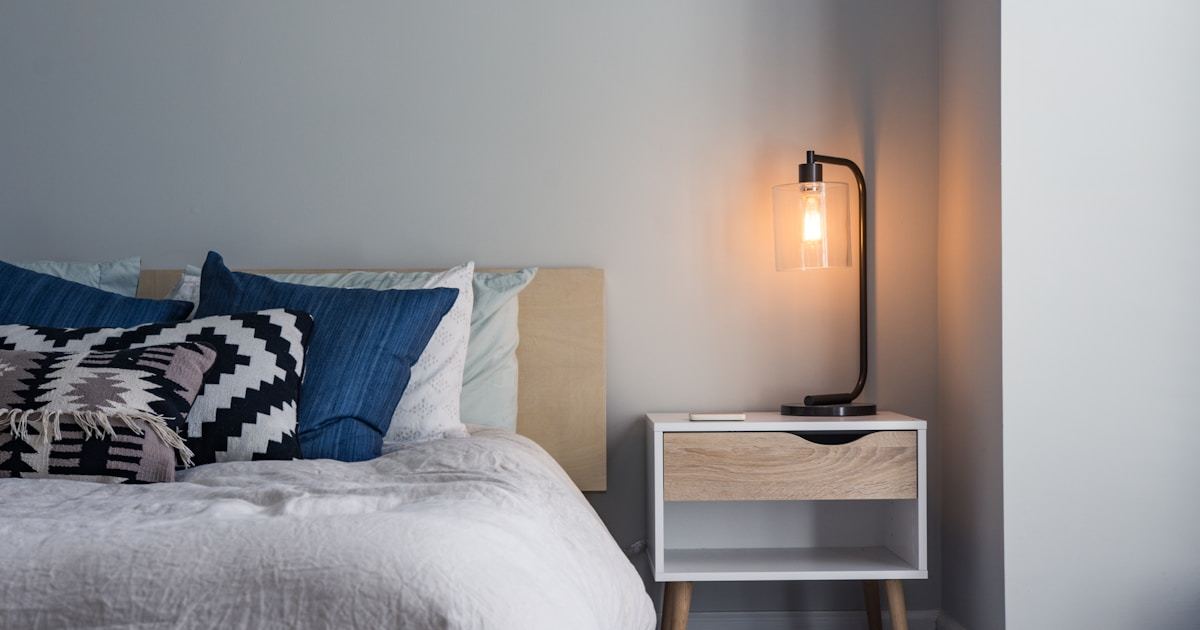
Wall-mounted swing-arm sconces or adjustable table lamps with amber bulbs (2200K). These should illuminate a book without casting light across the entire room. Choose fixtures with opaque shades that direct light downward.
Layer 3: Night (navigation)
A motion-activated LED nightlight under the bed frame or in the hallway (red or amber, under 5 lumens). Red-spectrum light has the least impact on melatonin. Avoid white or blue nightlights.
Smart Lighting for Sleep Routines
Smart bulbs (Philips Hue, LIFX) can automate your wind-down sequence: program them to gradually shift from 2700K to 2200K and dim from 80% to 30% over the hour before your target bedtime. This mimics a natural sunset and cues your body for sleep without any conscious effort.
What to Eliminate
Remove or cover these light sources in the bedroom:
- TV standby lights (use a smart plug to cut power completely)
- Charging indicator LEDs on devices
- Street light infiltration (invest in true blackout curtains, not just room-darkening)
A truly dark bedroom—where you can't see your hand in front of your face—supports deeper, more restorative sleep. Light pollution in the bedroom is one of the most underappreciated sleep disruptors.
More Articles
 Bedroom Plants for Better Sleep | The Decor Mag
 Design for Choose: Empowering Personalized Bedroom Comfort Through Intentional, Modular, and Human-Centered Design
 How To Choose the Perfect Bedroom Comfort System: A Practical, Measurement-Driven Checklist
 Summer Bedding Swaps: Five Textile Changes for Cooler Sleep Nights
 Designing Alternatives to the Traditional Bedroom: Smart, Adaptive, and Human-Centered Sleep Spaces
 Essential for World: The Global Bedding Standards That Define Sleep Equity and Human Dignity
 12 Practical & Stylish DIY Nightstand Ideas You Can Build in a Weekend
 Best Outdoor Wall Lights: Performance, Safety, and Style for Every Exterior Space
 Bedroom Inspiration FAQ Answered: Real Solutions for Comfort, Style, and Function
 Senior Bedroom Lighting: Layered Comfort for Better Sleep