# Cooling Bedroom Makeover: Colors, Textiles, and Airflow for Better Summer Sleep
Nothing ruins summer quite like lying awake in a hot bedroom, kicking off sheets, and watching the clock tick toward morning. Your body's core temperature needs to drop 2-3°F to initiate and maintain deep sleep, and a hot bedroom directly blocks that process. The good news? Strategic design choices — not just air conditioning — can make your bedroom significantly cooler and your sleep significantly better.
## The Temperature-Sleep Connection
Sleep research from the National Sleep Foundation confirms that the optimal bedroom temperature for sleep is 60-67°F (15-19°C). When your room exceeds 75°F (24°C), sleep quality deteriorates measurably:
- **REM sleep decreases**: Your brain skips restorative sleep stages
- **Wake events increase**: You micro-wake throughout the night without remembering
- **Sleep onset delays**: It takes longer to fall asleep
- **Core temperature stays elevated**: Your body can't complete its natural cooling cycle
Even if you can't achieve 65°F with your cooling system, every degree you drop makes a measurable difference in sleep quality.
## Color Choices That Visually Cool a Room
### The Cool Palette
Colors affect perceived temperature. Studies in environmental psychology show that people in blue-toned rooms report feeling 2-3°F cooler than those in identical rooms with warm-toned walls. The most effective cooling colors:
**Soft Blues**
- Benjamin Moore "Smoke" (2116-60): A gray-blue that works in any lighting
- Sherwin-Williams "Sleepy Blue" (6225): Gentle, restful, universally flattering
- Farrow & Ball "Parma Gray" (27): A complex blue-gray with depth
**Cool Greens**
- Benjamin Moore "October Mist" (1495): A sage that feels fresh and organic
- Sherwin-Williams "Sea Salt" (6204): A blue-green that shifts with the light
- Farrow & Ball "Treron" (299): A sophisticated green-gray
**Whites and Neutrals**
- Benjamin Moore "White Dove" (OC-17): A warm-but-cool white that never feels sterile
- Sherwin-Williams "Alabaster" (7008): Soft and luminous
- Pure white ceiling: Reflects light and creates a sense of height and air
### Colors to Avoid in Summer Bedrooms
- **Red and orange tones**: Visually warm, raise perceived temperature
- **Dark browns and blacks**: Absorb light and heat
- **Deep purples**: Can feel heavy and enclosed
- **Warm yellows**: Energizing rather than calming
## Textile Choices: What Touches Your Skin Matters Most
### Bedding Materials Ranked for Cooling
| Material | Breathability | Moisture Wicking | Feel | Cost |
|----------|-------------|-----------------|------|------|
| Linen | Excellent | Excellent | Crisp, relaxed | $$$$ |
| Percale cotton | Very Good | Good | Crisp, cool | $$$ |
| Bamboo viscose | Very Good | Excellent | Silky, cool | $$$ |
| Tencel/Lyocell | Excellent | Excellent | Silky, drapey | $$$ |
| Sateen cotton | Fair | Fair | Smooth, warmer | $$ |
| Flannel | Poor | Poor | Warm, fuzzy | $$ |
| Polyester/microfiber | Poor | Poor | Traps heat | $ |
**Top recommendation**: Linen or percale cotton sheets in a light color. Linen gets softer with every wash and naturally thermoregulates — cool in summer, warm in winter.
### Pillow Strategy
Your head generates significant heat. Summer pillow choices:
- **Buckwheat hull pillows**: Air circulates between hulls, staying cool all night
- **Gel-infused memory foam**: Draws heat away from your head
- **Shredded latex**: Naturally breathable and responsive
- **Cotton or bamboo covers**: Avoid polyester pillowcases that trap heat
**Pro tip**: Keep a second pillow in the freezer (in a sealed bag) for extremely hot nights. Rotate as needed.
### Blankets and Layers
Summer bedding should be layered for adjustability:
1. **Bottom layer**: Fitted sheet + flat sheet (linen or percale)
2. **Middle layer**: Light cotton blanket or coverlet (kick off if too warm)
3. **Top layer**: Nothing, or a sheer linen throw at the foot of the bed
Avoid duvets and comforters entirely during summer months. Store them in vacuum bags to save closet space.
## Airflow Engineering: Moving Air Is Cooling Air
### The Cross-Ventilation Strategy
The most effective natural cooling method is cross-ventilation — creating a path for air to flow through your bedroom:
1. **Open windows on opposite sides** of the room (or the room and hallway)
2. **Place a box fan in one window** facing outward (exhausting hot air)
3. **Open a window or door on the cool side** of the house (drawing in cool air)
4. **Run during evening and early morning** when outdoor temps are below indoor
### Fan Placement That Actually Works
- **Ceiling fan**: Set to counter-clockwise (pushing air down) in summer. This creates a wind-chill effect that makes the room feel 4-6°F cooler without actually lowering the temperature.
- **Floor fan**: Point toward the bed at waist height, oscillating. The moving air across your body accelerates evaporative cooling.
- **Tower fan**: Place in a doorway to push cool air from an air-conditioned hallway into the bedroom.
- **Window fan**: One intake (cool side) + one exhaust (warm side) creates active ventilation.
### AC Optimization for Bedrooms
If you have central or window AC:
- **Set thermostat to 68-72°F** at bedtime (not 60°F — the system will cycle more efficiently)
- **Use a programmable thermostat** to pre-cool the room 30 minutes before bed
- **Close bedroom vents** during the day (cool unused rooms wastes energy)
- **Open vents** 1 hour before bedtime
- **Clean or replace filters** monthly during summer (dirty filters reduce airflow by 15%)
## Window Treatments That Block Heat
### The Solar Heat Gain Problem
Windows account for 25-30% of residential heating and cooling energy use. In summer, solar radiation through windows can raise bedroom temperature by 5-10°F.
### Solutions (Most to Least Effective)
1. **Exterior shading**: Awnings, shutters, or shade sails block heat before it enters
2. **Window film**: Reflective or tinted film reduces solar gain by 40-60%
3. **Blackout curtains**: Thermal-lined curtains block light and heat (close during the day, open at night)
4. **Cellular shades**: Honeycomb structure traps air, providing insulation
5. **Bamboo blinds**: Filter light while allowing some airflow
**Daily routine**: Close all window treatments by 10 AM. Open after sunset. This single habit can reduce bedroom temperature by 3-5°F.
## Furniture and Layout Adjustments
### Move the Bed
If your bed is against an exterior wall (especially west or south-facing), it absorbs heat throughout the day. Move it to an interior wall if possible. Even a few feet away from the exterior wall makes a difference.
### Reduce Heat-Generating Electronics
Every electronic device generates heat:
- **Remove TVs** from the bedroom (they generate significant heat even in standby)
- **Move charging stations** to another room
- **Switch to LED bulbs** in bedside lamps (incandescent bulbs generate 90% heat)
- **Use a battery-powered alarm clock** instead of a phone (phones generate heat while charging)
### Choose Cooling Furniture Materials
- **Metal bed frames** feel cooler than upholstered or wood frames
- **Cane or rattan headboards** allow air circulation
- **Avoid memory foam mattresses** if possible (they retain heat); latex or innerspring sleep cooler
- **If you have memory foam**: Add a cooling gel topper or a bed cooling system (like ChiliPad)
## Quick Fixes for Tonight
If you're reading this on a hot night and need immediate relief:
1. **Freeze your sheets**: Put your fitted sheet in a plastic bag and freeze for 15 minutes before bed
2. **Ice pack method**: Place a frozen water bottle at your feet (feet are key temperature regulators)
3. **Wet wrist technique**: Run cold water over your wrists for 30 seconds (major blood vessels close to the surface)
4. **Floor sleeping**: Hot air rises — the floor is always the coolest spot in the room
5. **Egyptian method**: Dampen a sheet or large towel in cool water, wring out, and use as a blanket
## The Complete Summer Sleep Environment
| Element | Optimal Setting |
|---------|----------------|
| Room temperature | 60-67°F (15-19°C) |
| Humidity | 30-50% |
| Light level | Complete darkness (blackout) |
| Noise | White noise or silence |
| Air movement | Gentle breeze from fan |
| Bedding | Linen or percale, layered |
| Colors | Cool blues, greens, whites |
| Electronics | Minimal, unplugged |
## Sleep Is a Design Problem
Better summer sleep isn't just about willpower and cold showers. It's about designing a room that actively supports your body's natural cooling process. Every choice — from paint color to pillow material to fan placement — either helps or hinders your sleep.
Start tonight with the quick fixes. This weekend, swap your bedding and adjust your window treatments. Over the summer, work through the color and furniture changes. By August, your bedroom will be a cool sanctuary that makes every night feel like the best sleep of your life.
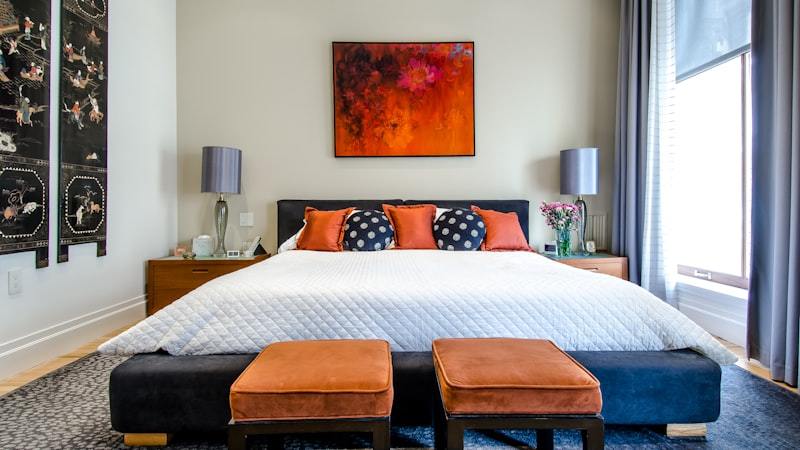
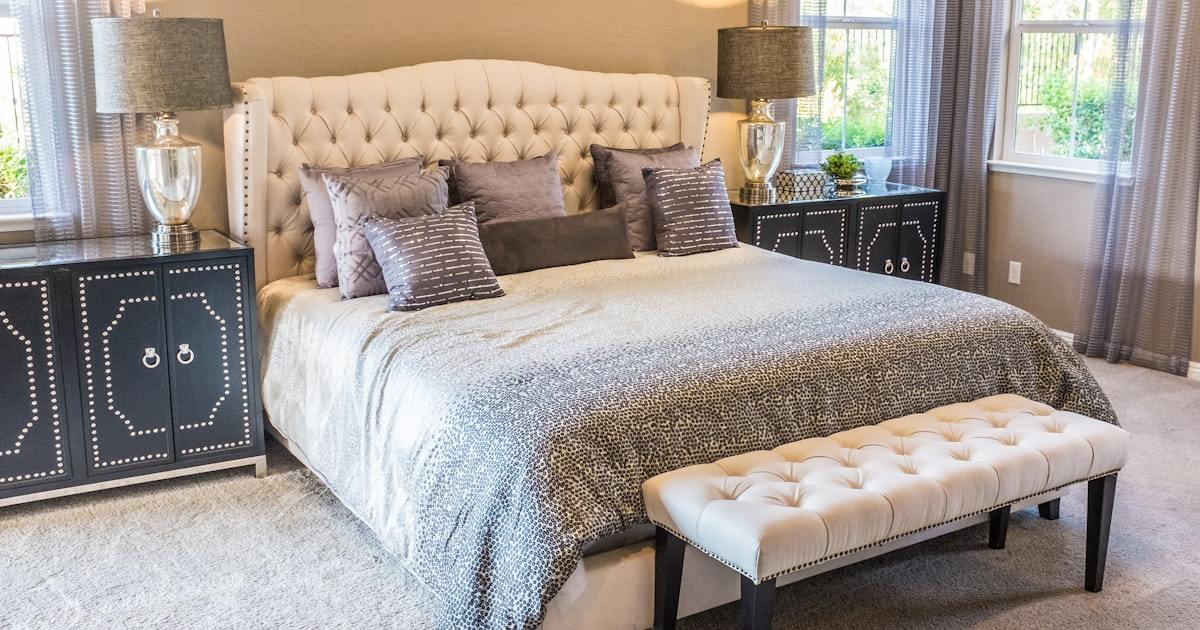 Ageless Bedroom Design: Comfort and Accessibility at Every Stage
 Practical and Trend Compared: What Actually Improves Bedroom Comfort — And What’s Just Flashy Noise
 Cozy Common Mistakes: Why Your Bedroom Feels Uncomfortable (and How to Fix It)
 Pet-Friendly Bedroom: Where Should Your Pet Sleep?
 Rooms for Beginners: Practical, Comfort-First Bedroom Setup Guide
 Cozy Bedroom Decor: Layers of Comfort | The Decor Mag
 Best Outdoor Wall Lights: Performance, Safety, and Style for Every Exterior Space
 Small Bedroom Closet Storage Solutions
 Best Kitchens for Bedroom: Compact, Safe, and Stylish Solutions for Sleep-Space Cooking
 Bedroom Colors for South-Facing Rooms