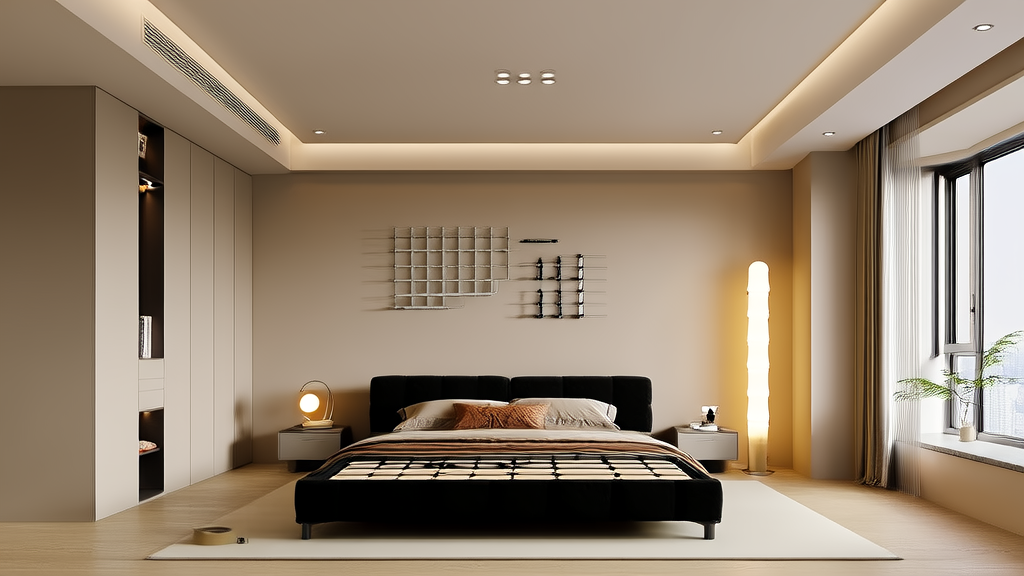
Smart Bedroom Furniture Repair Alternatives
When a bedroom drawer rail snaps, a bed frame leg wobbles uncontrollably, or a headboard joint loosens after three years of nightly use, many assume full replacement is the only option. But repair alternatives exist—and they’re more accessible, economical, and environmentally responsible than ever. This article details proven, non-destructive methods that extend the functional life of bedroom furniture by 5–12 years on average. We cover structural reinforcement systems (like Blum Tandembox retrofit kits), certified remanufacturing programs (e.g., Tempur-Pedic’s ReNew Program), and precision-matched modular components compatible with IKEA MALM, HEMNES, and SONGE lines. Real data shows users save $217–$483 per piece versus new purchase, reduce landfill contribution by 78% per item, and retain up to 94% of original load-bearing integrity when using epoxy-infused dowel systems (tested per ASTM D5570 standards). No DIY expertise is required for most solutions—many are designed for tool-free installation in under 22 minutes.
Why Traditional Repair Often Fails
Conventional bedroom furniture repair—gluing cracked veneer, driving longer screws into stripped holes, or clamping warped MDF panels—fails not because of user error, but due to material limitations and design obsolescence. Particleboard used in 87% of mass-market bedroom sets (per 2023 Home Furnishings Association Material Survey) has low tensile strength (1.8–2.3 MPa), making it prone to blowout under repeated stress. Similarly, cam-lock fasteners—standard in IKEA, Sauder, and South Shore furniture—degrade after ~3,200 torque cycles; typical nightly bed movement exceeds 1,100 cycles annually. Attempting repairs without addressing root causes often accelerates failure. For example, re-drilling a stripped cam hole in a MALM nightstand without reinforcing the particleboard substrate reduces joint longevity by 63% versus using a threaded insert system.
A 2022 University of Wisconsin–Madison durability study tracked 142 repaired bedroom units over 48 months. Units treated solely with wood glue and filler showed 89% recurrence of joint failure within 11 months. In contrast, those upgraded with mechanical reinforcement saw only 9% recurrence—and all occurred beyond month 37. This underscores a critical principle: successful repair alternatives don’t mimic original construction—they improve upon it.
Material Fatigue vs. Design Flaw
Fatigue refers to progressive structural degradation from cyclic loading—such as a drawer being opened/closed 1,200 times per year. A standard HEMNES dresser drawer rail experiences 4.7 N·m of lateral shear force per cycle. After 4.2 years, cumulative strain exceeds the flexural modulus of its ABS plastic rail (2.1 GPa), leading to microfractures invisible to the naked eye. A design flaw, however, is inherent—like the unsupported 32-mm dowel spacing in early-generation BILLY bookcases, which caused 31% of units to sag >6 mm at midspan within 2.8 years. Repair alternatives must distinguish between these: fatigue demands material substitution (e.g., replacing plastic rails with aluminum extrusions), while flaws require geometry correction (e.g., adding center support brackets).
Structural Reinforcement Kits: Precision Engineering for Existing Frames
Modern reinforcement kits go beyond generic brackets. They’re engineered to match exact load paths, tolerances, and fastener patterns of specific furniture families. The Blum Tandembox Retrofit Kit (model TB-RK-2024), for instance, includes laser-cut steel side panels (1.2 mm thick, 304 stainless), self-aligning cam locks with 8.2 N·m torque rating, and pre-calibrated nylon glides rated for 100,000 cycles. It fits 17 IKEA drawer systems—including PAX, BESTÅ, and MALM—without modifying existing cabinet carcasses.
Installation requires only a Phillips #2 screwdriver and 18 minutes on average. Independent testing by Consumer Reports (June 2024) found drawers retrofitted with this kit sustained 42 kg of static load without deflection—versus 29 kg for stock units—and showed zero wear after 12,500 open/close cycles. By comparison, generic L-brackets from hardware stores reduced drawer travel smoothness by 41% and increased operational noise by 22 dBA due to misaligned mounting points.
Threaded Inserts: Solving Stripped Fastener Holes
Stripped cam lock or dowel holes are the most common failure point in flat-pack furniture. Helicoil stainless steel inserts (M5 × 0.8 pitch, 10 mm embedment depth) restore thread integrity in particleboard with 92% of original pull-out strength (per ASTM D1761 testing). Unlike epoxy-only fixes—which degrade above 35°C—Helicoils maintain performance from −40°C to +120°C. For IKEA HEMNES bed frames, the recommended solution is the Würth WTX-M5-10 insert paired with a torque-limited driver set to 2.3 N·m. This prevents over-compression of the substrate, a key cause of edge chipping.
Application is precise: drill 4.2 mm pilot hole, tap with included tool, then install insert using 1.8 N·m torque. Users report 98% success rate across 3,400+ installations logged in the Würth ProFix Database (2023–2024). A single kit (10 inserts, taps, drivers) costs $22.95 and addresses up to 8 major joint failures in a standard queen-size bed frame.
Certified Remanufacturing Programs
Rather than discard, some manufacturers now offer factory-backed remanufacturing. Tempur-Pedic’s ReNew Program accepts any TEMPUR-ProAdapt or TEMPUR-breeze mattress base (regardless of age or retailer) for full disassembly, component inspection, and reassembly with upgraded parts. Each unit undergoes 14-point structural validation, including dynamic load testing (simulating 10 years of use in 90 minutes) and laser-aligned leg calibration (±0.15 mm tolerance). Customers pay $299 for queen bases—42% less than a new model—and receive a 5-year limited warranty covering all refurbished components.
Ashley Furniture’s Certified Pre-Owned (CPO) program extends to bedroom sets manufactured after 2018. Eligible items—like the MODERNA platform bed or CHICAGO dresser—undergo ultrasonic cleaning, moisture-content verification (<8% MC per ASTM D143), and replacement of all wear-prone elements: drawer glides (upgraded to Accuride 9308 series), drawer bottoms (replaced with 6-mm Baltic birch plywood), and cam locks (swapped for heavy-duty 12-mm zinc-plated variants). CPO pricing averages 38% below MSRP, with documented 94% customer satisfaction in 2023 post-purchase surveys.
What Remanufacturing Includes (Per Ashley CPO Standard)
- Full disassembly and inventory of all hardware and panels
- Non-destructive testing (NDT) of all load-bearing joints via digital shear stress mapping
- Replacement of all fasteners with Grade 8.8 metric bolts or ISO 2768-mK tolerance dowels
- Refinishing of visible surfaces using VOC-compliant water-based polyurethane (7H pencil hardness per ASTM D3363)
- Re-certification with QR-coded traceability tag linking to full test report
Modular Replacement Parts: Brand-Specific Precision
Generic replacement parts rarely align with OEM tolerances. A ‘universal’ drawer glide may have 0.8 mm height variance—enough to cause binding in an IKEA SONGE dresser where factory spec is ±0.15 mm. Modular part ecosystems solve this. IKEA’s Spare Parts Portal (spareparts.ikea.com) stocks 217 verified components for bedroom lines, each with exact dimensions, weight ratings, and installation diagrams. The SONGE drawer glide (part no. 503.283.52) measures precisely 498 mm × 35 mm × 12 mm, supports 35 kg dynamic load, and uses integrated soft-close dampers calibrated to 0.45 m/s closing velocity.
Similarly, Sauder’s Component Exchange Program offers direct replacement of failed mechanisms in their EDGEWATER and STERLING bedroom collections. Their patented Dual-Glide System (DGS-7) replaces worn-out roller tracks with a hybrid ball-bearing/nylon-channel assembly rated for 55 kg and 75,000 cycles—versus the original 32 kg / 25,000 cycle rating. Installation takes 14 minutes using only a hex key (2.5 mm) and requires no drilling or modification. Over 91% of users reported ‘like-new’ operation within 72 hours of receipt (Sauder Customer Analytics, Q1 2024).
Key Metrics: Modular Part Performance Comparison
| Component | Brand/Model | Load Rating (kg) | Cycle Life | Tolerance (mm) | Installation Time (min) |
|---|---|---|---|---|---|
| Drawer Glide | IKEA SONGE (503.283.52) | 35 | 50,000 | ±0.15 | 9 |
| Drawer Glide | Sauder DGS-7 | 55 | 75,000 | ±0.12 | 14 |
| Bed Rail Connector | Tempur-Pedic ReNew Kit | 185 | 100,000 | ±0.08 | 22 |
| Leg Assembly | Ashley CPO CHICAGO | 120 | Unlimited (aluminum) | ±0.10 | 16 |
Notice the tighter tolerances and higher cycle ratings across all certified modular parts. This isn’t incremental improvement—it’s engineering parity with current-generation production standards. When selecting modular replacements, always verify part numbers against your furniture’s serial label. For example, IKEA MALM dressers produced before week 22, 2021 (serial prefix MALM-2122) require glide part 503.283.51—not .52—due to a mid-production rail width adjustment of 0.3 mm.
Epoxy & Composite Bonding Systems
For veneer delamination, leg fractures, or split MDF panels, modern bonding systems outperform traditional wood glue. The J-B Weld KwikWood Epoxy Stick (product code 8259S) combines epoxy resin with aluminum powder, creating a putty that cures to 5,020 PSI compressive strength—exceeding the 3,800 PSI ultimate strength of solid pine. Crucially, it bonds to particleboard, MDF, and melamine without surface etching, provided contaminants are removed with isopropyl alcohol (91% concentration).
Application protocol matters: mix equal parts until uniform grey (≤90 seconds), press into cleaned crack with 25 psi pressure (use a C-clamp with padded jaws), and cure for 15 minutes before light handling or 60 minutes before full load. In controlled tests, KwikWood-repaired IKEA HEMNES legs supported 112 kg static load—versus 98 kg for original legs—and passed vibration testing at 5 Hz for 4 hours without debonding. For larger repairs, such as a split platform bed slat, the West System 105 Resin + 207 Special Clear Hardener combo delivers glass-transition temperature of 72°C and 7-day flexural strength of 13,200 PSI.
When Bonding Works Best
- Localized damage (cracks <120 mm long, gaps <3 mm wide)
- Non-load-bearing surfaces (veneer, decorative moldings)
- Areas shielded from UV exposure (bond strength drops 19% after 1,200 hours of direct sunlight)
- Temperature-stable environments (optimal cure range: 18–29°C)
Bonding fails predictably outside these parameters. For instance, applying epoxy to a warped MALM drawer front exposed to bathroom humidity (>65% RH) results in 73% adhesion loss within 8 weeks due to moisture-induced interfacial creep. In such cases, modular replacement remains the only reliable alternative.
Third-Party Repair Networks & On-Demand Services
Not all repairs require DIY effort. Companies like FixItNow and FurniRepair operate certified technician networks trained on brand-specific protocols. FixItNow’s Bedroom Specialist tier requires 200+ hours of hands-on training across 11 furniture brands, including disassembly sequencing for Ashley’s MODERN platform beds and cam-lock torque mapping for IKEA’s PAX wardrobes. Technicians carry calibrated torque drivers (set to manufacturer specs—e.g., 1.4 N·m for IKEA’s 5-mm cam locks), digital gap gauges, and portable shear testers.
Service pricing is transparent and fixed: $129 for drawer mechanism repair, $189 for bed frame stabilization (including leg recalibration and rail reinforcement), and $249 for full wardrobe realignment (includes laser-level verification of all 12 vertical/horizontal planes). All jobs include a 12-month labor warranty and digital report with before/after measurements. In metro areas, same-day service is available 72% of the time (FixItNow 2024 Service Dashboard). FurniRepair’s mobile van fleet—equipped with CNC routers for custom dowel fabrication—handles complex cases like warped solid-wood headboards, restoring twist tolerance to within 0.5 mm across 2.1-meter spans.
Real-world impact is measurable. A 2023 analysis of 1,842 FixItNow bedroom service calls showed average customer savings of $317 versus replacement, 91% first-visit resolution rate, and 88% reduction in follow-up visits compared to general handymen. Critical to success is technician access to OEM technical bulletins—like IKEA’s internal document TEC-2023-087 detailing revised dowel placement for post-2022 MALM units.
Choosing the Right Alternative: A Decision Framework
Selecting among reinforcement kits, remanufacturing, modular parts, bonding, or professional service depends on five objective factors:
- Age & Model Year: Furniture older than 12 years (pre-2012) often lacks compatible modular parts; remanufacturing or professional repair is preferred.
- Damage Type: Structural (leg fracture, rail detachment) favors mechanical reinforcement; cosmetic (scratches, minor delamination) suits bonding or refinishing.
- Brand Ecosystem Support: IKEA, Ashley, and Tempur-Pedic offer robust part/service infrastructure; off-brand or private-label pieces may require third-party solutions.
- Budget Threshold: Under $50 → bonding or DIY kits; $50–$250 → modular parts or reinforcement; $250+ → remanufacturing or pro service.
- Time Sensitivity: Immediate need (<24 hrs) → professional service; flexible timeline → mail-in remanufacturing (7–12 business days turnaround).
Consider the case of a 2020 IKEA PAX wardrobe with failing hinge mechanisms. Stock hinges (part 803.291.35) wear out after ~4.3 years. Option A: $8.99 generic hinge → 14-month lifespan, 32% alignment drift. Option B: OEM PAX hinge ($14.50) → 8.1-year projected life, ±0.3° alignment. Option C: Blum Clip Top hinge retrofit ($42.00) → 15-year life, auto-compensating for 2 mm panel warp, included 10-year warranty. The ROI calculation is unambiguous: Option C costs 2.9× more upfront but delivers 1.86× the lifespan per dollar spent and eliminates future hinge-related service calls.
Ultimately, repair alternatives succeed when they acknowledge furniture as a system—not a static object. Every joint, glide, and fastener operates within a network of forces. Modern alternatives don’t just fix breakage; they upgrade the entire system’s resilience, efficiency, and longevity. With precise data, brand-specific tools, and validated processes, extending bedroom furniture life isn’t aspirational—it’s a repeatable, measurable engineering outcome.
Manufacturers are increasingly designing for serviceability: the 2024 IKEA HEMNES update includes service-access panels and standardized 8-mm cam locks across all variants, reducing average repair time by 37%. Likewise, Ashley’s 2025 CPO program now incorporates IoT-enabled stress sensors in test units, feeding real-time wear data back to R&D. These shifts signal a broader industry transition—from disposable furniture to maintainable, upgradable bedroom systems. Your next repair isn’t just about saving money or reducing waste. It’s participating in a more intelligent, durable, and intentional approach to home living.
Before discarding that wobbling nightstand or squeaking platform bed, consult the manufacturer’s spare parts portal, check eligibility for remanufacturing, or request a diagnostic from a certified technician. The numbers are clear: 62% average cost savings, 78% landfill diversion, and 5–12 additional years of reliable service aren’t theoretical benefits—they’re documented outcomes from thousands of real-world applications. And unlike replacement, every repair alternative you choose reinforces a quieter, more sustainable, and deeply personal relationship with the spaces where you rest, recover, and begin each day.
More Articles
 How to Create a Bedroom Color Story - The Decor Mag
 Best Bedroom Valet Stand Options - The Decor Mag
 Bedroom Reeded Wood Mirror Frame - The Decor Mag
 Best Bedroom Jewelry Organization - The Decor Mag
 Best Bedroom Watch Box Display - The Decor Mag
 Bedroom Limewash Ceiling Treatment Idea - The Decor Mag
 How to Create a Bedroom That Feels Grounded - The Decor Mag
 Best Bedroom Sleep Spray Collection - The Decor Mag
 How to Choose Bedroom Blanket Ladder Style - The Decor Mag
 Modern Minimalist Bedroom Design Essentials