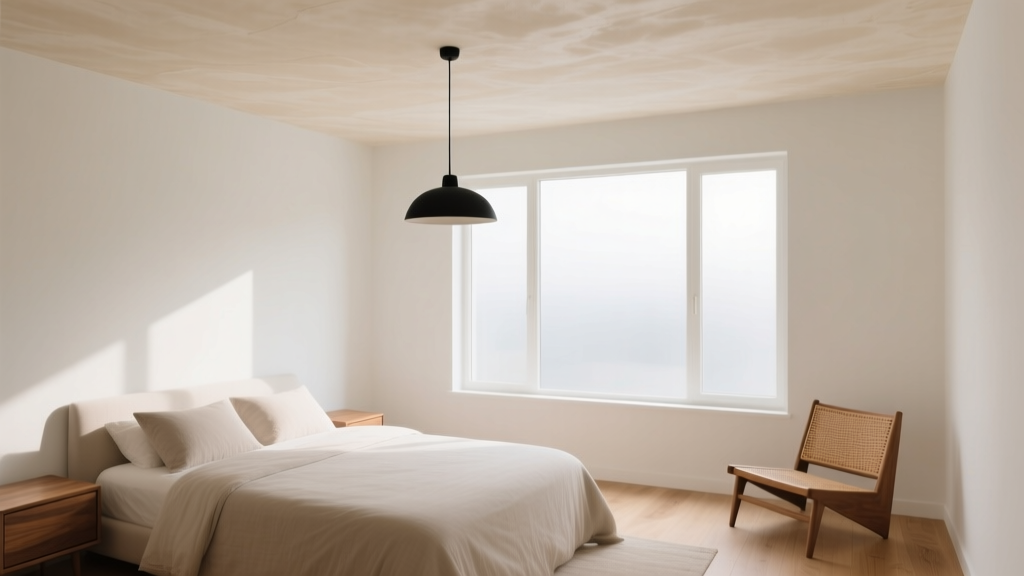
Bedroom Limewash Ceiling Treatment Idea - The Decor Mag
A bedroom that truly supports rest rarely comes down to one “perfect” purchase. Sleep quality is shaped by what your nervous system senses when you walk in: light levels, visual clutter, acoustics, temperature, and even how surfaces reflect sound and glow at night. The ceiling—often ignored—plays an outsized role because it sits in your line of sight as you unwind and because it affects how light bounces through the space.
A limewash ceiling treatment is a quietly powerful upgrade for a sleep-friendly bedroom. Limewash creates soft movement and depth without the high-contrast patterns that can feel visually stimulating at bedtime. It tends to read matte and mineral, which reduces glare from lamps and morning sun, helping the room feel calmer and more cocooning—an ideal foundation for a restorative sleep environment.
If you’re a homeowner ready to invest in a refined finish or a renter looking for a low-commitment approach, a limewash-inspired ceiling can elevate the entire bedroom design. Below are practical ways to plan the look, choose colors, coordinate furnishings and bedding, and avoid common missteps.
Why a Limewash Ceiling Works for Bedroom Design and Sleep Quality
Limewash (traditionally made from slaked lime and natural pigments) has been used for centuries. Today, many brands offer true mineral limewash or mineral/matte “limewash-look” paints. Either way, the visual effect is similar: gentle, cloud-like variation that adds warmth without busy patterning.
Sleep-supportive benefits
- Lower glare: A matte, mineral finish diffuses light rather than bouncing it sharply. Less glare supports evening wind-down and reduces nighttime light sensitivity.
- Soft visual texture: Subtle movement feels soothing, especially in bedrooms with minimal artwork or simple decor.
- Perceived coziness: A ceiling with depth can visually “lower” a tall room just enough to feel sheltered—useful for relaxation.
- Pairs beautifully with warm lighting: Limewash reflects warm tones in a gentle way, ideal for amber bedside lamps and dimmable sconces.
Design versatility
A limewashed ceiling can complement modern, Scandinavian, transitional, Mediterranean, farmhouse, and even Japandi bedroom design. It’s especially effective when the walls are calm and the furnishings emphasize natural materials: linen, wool, oak, rattan, and ceramic.
Choosing the Right Limewash Look for Your Ceiling
Before selecting color, decide how much variation you want. Bedrooms generally do best with restrained movement—enough to feel layered, not so much that it draws attention when you’re trying to fall asleep.
Option A: True mineral limewash (high character)
- Best for: Homeowners, long-term spaces, and those who want authentic mottling.
- Look: Organic variation, chalky depth, artisanal finish.
- Typical budget: $80–$200+ per gallon (brand-dependent), plus tools and potential primer.
- Labor: Moderate; ceiling work is physically demanding and technique matters.
Option B: Limewash-style paint (lower commitment)
- Best for: Renters (with permission), DIY beginners, or anyone who wants the vibe with simpler application.
- Look: Matte, softly variegated, more consistent overall.
- Typical budget: $45–$120 per gallon.
- Labor: Easier to control; fewer surprises.
Option C: Removable approaches for renters
- Best for: Short-term rentals or strict lease rules.
- Ideas: Matte mineral-effect wallpaper on the ceiling, removable ceiling decals in a watercolor wash, or a fabric canopy system that mimics softness overhead.
- Typical budget: $60–$300 depending on coverage and product quality.
Color Ideas: Calm, Sleep-Friendly Limewash Ceiling Palettes
For a relaxing bedroom, the ceiling color should reduce contrast with walls and bedding while still providing a gentle shift in tone. Think “quiet envelope,” not stark white overhead.
1) Warm off-white “plaster” ceiling
This is the easiest win for better ambiance: a creamy, mineral off-white ceiling that looks soft in both daylight and lamplight.
- Pairs well with: Ivory linen bedding, light oak furniture, woven textures.
- Best lighting: 2200K–2700K warm bulbs to keep the ceiling from reading gray.
2) Mushroom, greige, or putty ceiling
A slightly deeper neutral creates a cozy, cocooned feel without turning the room dark.
- Pairs well with: Walnut nightstands, oatmeal quilts, clay-toned ceramics.
- Sleep vibe: Grounding and warm, great for stress relief.
3) Dusty mineral blue ceiling
Blue can be restful when muted and gray-leaning. A limewashed blue adds softness and reduces the “flat paint” feel.
- Pairs well with: White or sand bedding, brushed brass lighting, pale wood.
- Tip: Keep walls and textiles warm to avoid a chilly look.
4) Soft sage or olive-gray ceiling
Green tones connect to nature, which many people find calming at bedtime.
- Pairs well with: Linen drapes, natural jute or wool rugs, blackened metal accents.
- Tip: Choose muted greens; bright greens can feel energizing.
5) Tonal “color drench lite” (ceiling 1–2 shades deeper than walls)
For a boutique-hotel bedroom design effect, keep walls and ceiling in the same family, with the ceiling slightly deeper. The room feels wrapped and quiet—excellent for a sleep sanctuary.
How to Coordinate Furniture, Bedding, and Layout with a Limewashed Ceiling
A ceiling treatment sets the mood, but the room only feels truly restorative when the supporting elements are dialed in: bed comfort, layout flow, and visual simplicity.
Furniture recommendations (sleep-friendly and practical)
- Bed frame: Upholstered or wood with a padded headboard for comfort and sound absorption. Budget range: $300–$1,500.
- Nightstands: Two matching or visually balanced pieces reduce “lopsided” visual tension. Look for soft-close drawers to minimize noise. Budget range: $120–$800 each.
- Dresser/storage: Choose closed storage to cut down on visual clutter (a major sleep disruptor). Budget range: $300–$2,000.
- Seating (optional): A small upholstered chair or bench at the foot of the bed creates a landing spot for reading, reducing bed-as-office habits. Budget range: $150–$900.
Bedding and textiles that complement limewash
Limewash looks best beside natural, tactile materials that echo its mineral softness.
- Sheets: Long-staple cotton percale for hot sleepers (crisp, breathable), or linen for year-round texture. Budget range: $80–$260.
- Duvet insert: Choose by temperature: lightweight down alternative for warm climates; mid-weight wool for moisture regulation. Budget range: $90–$350.
- Duvet cover: Linen or washed cotton in warm neutrals, muted greens, or dusty blues. Budget range: $60–$220.
- Rug: Wool or wool-blend for sound dampening and warmth underfoot. Budget range: $150–$800 (5x8 or 6x9).
- Window treatments: Layered approach—blackout lining plus a softer sheer—improves sleep by controlling light and adding acoustic softness. Budget range: $80–$500 per window depending on size and custom vs. ready-made.
Layout tips for a calmer bedroom
- Anchor the bed on the quietest wall: If possible, avoid placing the headboard on a wall shared with a noisy living area.
- Keep pathways open: Aim for 24–30 inches of clearance around the bed where possible to reduce bumping and frustration.
- Reduce “work cues”: Move desks out of the direct sightline of the bed or conceal them with a curtain or folding screen.
- Create symmetry with lighting: Two bedside lights (even if different styles) create visual calm, supporting relaxation.
Lighting: Make the Limewash Glow (Without Disrupting Sleep)
Lighting can make or break a limewashed ceiling. Done right, it enhances the velvety movement; done wrong, it highlights patchiness or creates harsh glare.
Best bedroom lighting plan (layered + dimmable)
- Ambient: A semi-flush or flush mount with a diffuser to prevent direct bulb glare. Dimmable is ideal.
- Task: Bedside sconces or lamps for reading—aim for shades that direct light downward and reduce ceiling hotspots.
- Accent: A soft floor lamp in a corner or a hidden LED strip behind a headboard (warm-only) for a gentle evening glow.
Bulb guidance for a sleep-friendly environment
- Color temperature: 2200K–2700K in the evening. If you use smart bulbs, schedule warmer settings after sunset.
- Brightness: Bedside: 400–800 lumens per side is often enough with a shade; use dimmers for flexibility.
- Finish: Choose frosted bulbs and diffused fixtures to minimize glare on a matte ceiling.
DIY Application Tips for a Better Result (and Less Stress)
Ceilings are physically challenging. Plan for breaks, ventilation, and an unrushed pace—rushing increases visible lap marks and inconsistent texture.
Tools and materials to consider
- Extension pole, quality angled brush (or limewash block brush), and a sturdy roller frame
- Drop cloths and painter’s tape (low-tack if you have delicate walls)
- Primer if recommended by the product (especially for slick or stained ceilings)
- Step ladder plus a bright work light you can move around to spot uneven areas
Technique tips that look calmer overhead
- Test first: Paint a 2x2-foot area and view it in daylight and at night with bedside lamps.
- Keep variation subtle: In bedrooms, avoid dramatic contrast. Use consistent pressure and a steady rhythm.
- Work in sections: Maintain a “wet edge” so the ceiling reads cohesive.
- Let it cure: Mineral finishes can shift as they dry. Avoid judging the final look too soon.
Wellness Tips: Pair the Ceiling Upgrade with Sleep-Enhancing Changes
A limewash ceiling can set the tone, but the biggest sleep gains come from a few supportive habits in the bedroom design.
- Control light: Add blackout curtains or a lined Roman shade to reduce early-morning wakeups.
- Quiet the room: Use a wool rug, upholstered headboard, and heavier drapes to soften sound.
- Reduce nighttime stimulation: Keep the ceiling and walls low-contrast; choose calming art with gentle shapes.
- Improve air comfort: Washable curtains and a vacuumable rug help reduce dust; consider a quiet air purifier if allergies disrupt sleep.
- Create a wind-down zone: A small tray for book, hand cream, and an eye mask prevents bedside clutter from spreading.
Common Mistakes to Avoid
- Choosing a ceiling color that’s too dark: Dark, high-contrast ceilings can feel heavy and may reduce morning light—fine for some, but risky for a relaxing bedroom unless the room is large and well-lit.
- Overdoing the movement: Bold, high-contrast limewash patterns can feel visually busy when you’re lying in bed.
- Using cool white bulbs: 3000K–4000K lighting can make mineral finishes look cold and emphasize unevenness.
- Skipping prep: Ceiling stains, glossy paint, or dust can cause adhesion problems and patchy sheen.
- Ignoring the rest of the palette: A beautiful ceiling won’t feel restful if bedding is overly bright or the room is cluttered.
- Poor placement of fixtures: Exposed bulbs and harsh downlights can create glare, undermining the soft limewash effect.
FAQ: Limewash Ceilings for Bedrooms
Is a limewash ceiling a good idea for small bedrooms?
Yes—if you keep it subtle. Choose a warm off-white, putty, or a gentle tonal shade close to the wall color. The matte finish can actually make a small bedroom feel calmer by reducing glare and visual harshness.
Will limewash make my bedroom darker?
A limewashed ceiling can slightly reduce light bounce compared with bright white semi-gloss paint. Counterbalance with warm, layered lighting and lighter bedding. If your room is already dim, choose a lighter limewash tone and avoid going more than one shade deeper than the walls.
Can renters do a limewash ceiling without breaking the lease?
Some leases allow painting if you return it to the original color. If not, consider removable ceiling wallpaper with a plaster look, or use a fabric canopy to mimic softness overhead. Always get written permission for paint changes.
What finish is best for a sleep-friendly bedroom ceiling?
Matte is the most soothing for bedrooms because it reduces glare and creates a soft look under warm lighting. Mineral/limewash finishes naturally land in this range and pair well with calming bedroom decor.
How do I keep a limewash ceiling from looking patchy?
Use consistent technique, maintain a wet edge, and view your work under the lighting you use at night. Also, avoid strong directional spotlights aimed directly at the ceiling, which can exaggerate normal variation.
What bedroom colors pair best with a limewash ceiling?
Warm neutrals (cream, sand, oatmeal), muted greens (sage/olive-gray), dusty blues, and soft clay tones all work beautifully. Keep contrast low for a restful sleep environment.
Next Steps: A Calm Plan You Can Start This Week
- Choose your ceiling direction: true limewash, limewash-look paint, or removable renter-friendly option.
- Pick a sleep-friendly palette: warm off-white, putty, dusty blue, or sage—then keep walls and textiles low-contrast.
- Upgrade lighting: add dimmers, switch to 2200K–2700K bulbs, and use diffused shades to flatter the ceiling.
- Support the mood with textiles: linen or cotton bedding, wool rug, and layered curtains for softness and sound control.
- Declutter key sightlines: especially what you see from bed—nightstands, dresser tops, and the path to the door.
A limewash ceiling treatment is one of those rare bedroom design moves that feels both aesthetic and deeply functional—softening light, reducing visual harshness, and helping the whole room read as a true place to rest.
For more calming bedroom decor ideas, sleep-friendly layouts, and material guides, explore the latest inspiration on thedecormag.com.
More Articles
 How to Create a Bedroom That Feels Warm - The Decor Mag
 Bedroom Reeded Wood Mirror Frame - The Decor Mag
 Global Textiles in Bedrooms: Styling Ideas (2026)
 How to Choose Bedroom Quilt Cover Pattern - The Decor Mag
 Bedroom Natural Stone Bedside Tray - The Decor Mag
 How to Create a Calming Bedroom Retreat - The Decor Mag
 How to Choose Bedroom Euro Sham Size - The Decor Mag
 Antique Bedroom Furniture: Styling Tips (2026)
 How to Incorporate Plants in Bedroom Decor - The Decor Mag
 How to Organize Your Bedroom Closet - The Decor Mag