How to Choose Bedroom Blanket Ladder Style - The Decor Mag
A bedroom that supports deep rest is rarely about one “big” purchase. It’s the quieter details—where you place things, what you see from bed, and how easily you can keep the room calm and uncluttered—that shape your sleep environment. A blanket ladder might sound like a small decor choice, yet it can have an outsized impact on how your bedroom feels at the end of the day: organized, soft, warm, and ready for sleep.
Blanket ladders work at the intersection of function and atmosphere. They keep throws and quilts off the floor, reduce chair-piling, and make it simple to adjust your bedding layers with the seasons. That matters for sleep quality, because comfort and temperature regulation are major drivers of how quickly you fall asleep and how often you wake. When your room feels orderly and your textiles are easy to reach, your bedtime routine becomes smoother—and a smooth routine is one of the most reliable signals for your body to wind down.
This guide walks through how to choose a bedroom blanket ladder style that fits your space, your decor, and your sleep wellness goals. You’ll find practical sizing advice, material recommendations, layout ideas, and common mistakes to avoid—plus budget ranges so you can plan without guesswork.
What a Blanket Ladder Adds to a Sleep-Friendly Bedroom
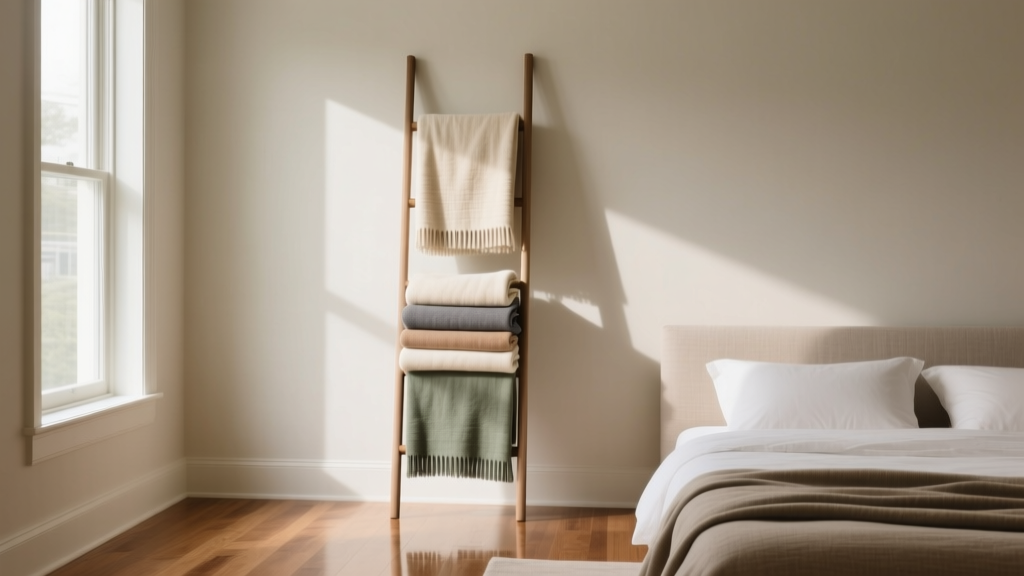
A blanket ladder is a leaning or freestanding ladder-style rack designed to hold throws, coverlets, quilts, or even a robe. In bedroom design, it functions as visual warmth and storage in one slim footprint. When used thoughtfully, it supports a calmer sleep environment by:
- Reducing clutter: fewer textiles on chairs, benches, or the floor means less visual noise.
- Supporting temperature control: easy access to layers encourages better nighttime thermoregulation.
- Creating a soothing “soft zone”: the texture of linen, cotton, or wool becomes part of the room’s restful styling.
- Improving bedtime flow: you can grab a throw for reading, meditation, or extra warmth without rummaging.
Step 1: Choose the Right Blanket Ladder Type
Leaning Blanket Ladder (Most Common)
Leaning ladders rest against the wall and are ideal for renters because they typically require no drilling. They’re also easy to move for cleaning—helpful if you’re managing dust for allergies.
- Best for: small bedrooms, apartments, flexible layouts
- Watch for: wall scuffs; consider felt pads where the ladder touches the wall
Freestanding Blanket Ladder
Freestanding styles have a built-in support structure or a wider base. They’re a good choice if you don’t want anything leaning on the wall, or if your walls are textured or delicate.
- Best for: larger rooms, homes with kids/pets where stability matters
- Watch for: footprint—some take up more floor space than expected
Wall-Mounted Ladder Rack
This option mounts like a towel rack but with ladder rungs. It’s sleek and space-saving, especially where floor space is tight.
- Best for: very small bedrooms, narrow walkways, minimalist decor
- Watch for: installation; use anchors appropriate for drywall
Step 2: Get the Size and Proportions Right
Good bedroom layout is a sleep wellness tool: it reduces bump hazards, supports tidy routines, and makes the room feel less crowded. Blanket ladder sizing should respect your “pathways” and sightlines.
Recommended Height
- Small bedrooms: 48–60 inches tall (fits under many windows and feels less imposing)
- Standard bedrooms: 60–72 inches tall (most versatile for throws and quilts)
- Large bedrooms/high ceilings: 72–84 inches tall (balanced scale, more rungs)
Width, Rung Spacing, and Capacity
- Width: 18–24 inches works well for most throws and avoids a bulky look.
- Rung spacing: 10–14 inches between rungs helps airflow so blankets don’t trap moisture or odor.
- Rung count: 4–6 rungs is plenty for most bedrooms; more can look crowded if overfilled.
Clearance and Placement
For a calm, safe bedroom environment, aim for:
- 24–30 inches of clear walking space in main pathways
- At least 12 inches from HVAC vents or humidifiers (to prevent textiles from collecting dust or moisture)
- Not directly beside the bed if it becomes a snag point at night; slightly farther is often better
Step 3: Match Blanket Ladder Style to Your Bedroom Decor
Your ladder should look “native” to the room—supporting a cohesive bedroom design that feels restful rather than busy. Choose a style that echoes existing finishes (wood tone, metal accents, wall color) and your preferred mood.
Modern Minimalist
- Look for: slim profiles, clean lines, black metal or light oak
- Pairs well with: crisp cotton bedding, neutral palette, simple sconces
- Pro tip: keep only 2–3 throws on display to maintain visual quiet
Scandinavian / Cozy Contemporary
- Look for: pale wood (birch, ash), matte finish, rounded edges
- Pairs well with: linen duvet covers, warm white lighting, natural wool throws
- Pro tip: choose a ladder that complements light flooring to keep the room airy
Rustic / Farmhouse
- Look for: reclaimed wood, distressed finishes, chunkier rails
- Pairs well with: textured quilts, warm neutrals, layered rugs
- Pro tip: avoid overly rough reclaimed surfaces that can snag delicate blankets
Industrial
- Look for: black steel, pipe-inspired frames, darker wood
- Pairs well with: charcoal bedding, leather accents, exposed bulb fixtures (but use warm bulbs)
- Pro tip: choose a matte finish to reduce glare in low evening light
Boho / Eclectic
- Look for: bamboo, rattan, light woods, woven details
- Pairs well with: patterned throws, mixed textures, soft ambient lighting
- Pro tip: limit patterns to 1–2 pieces on the ladder so the room still reads soothing
Step 4: Pick Materials That Support Comfort, Cleanliness, and Longevity
Materials influence both style and practicality. In a sleep-focused bedroom, you want finishes that are stable, low-odor, and easy to clean.
Wood (Pine, Oak, Walnut, Bamboo)
- Best for: warmth, classic bedroom decor, wide style range
- Sleep-friendly tip: if you’re sensitive to smells, look for low-VOC finishes or unfinished/sealed natural wood.
- Care: dust weekly; avoid soaking the wood
Metal (Steel, Iron, Aluminum)
- Best for: modern, industrial, slim profiles
- Sleep-friendly tip: choose powder-coated finishes to reduce chips and squeaks that can become annoying during quiet evenings.
- Care: wipe with a soft cloth; check for wobble and tighten fasteners
Rattan or Bamboo
- Best for: boho, airy bedrooms, softer visual feel
- Sleep-friendly tip: keep away from humid corners; woven materials can trap dust if neglected.
- Care: vacuum with a brush attachment; spot clean gently
Step 5: Style It for Rest (Not Visual Noise)
A blanket ladder should make the room feel calmer, not busier. Think of it as a curated “textile vignette” that supports your sleep routine.
What to Hang (Best Bedroom Textiles)
- Cotton throws: breathable, easy-care, ideal for warm sleepers
- Linen blankets: great for temperature regulation and a relaxed look
- Lightweight quilts: perfect transitional layer for spring/fall
- Wool or wool-blend throws: cozy for winter; choose softer weaves to avoid itch
A Simple Styling Formula
- Top rung: the “prettiest” throw (texture or subtle pattern)
- Middle rung: an everyday blanket you actually use
- Lower rung: a spare layer or a folded quilt (kept higher off the floor for cleanliness)
Color Recommendations for a Soothing Bedroom Palette
Color affects mood and can influence how settled you feel at bedtime. For a sleep-friendly bedroom decor approach, consider:
- Soft neutrals: ivory, oatmeal, warm gray for calm and flexibility
- Muted greens/blues: sage, dusty blue for a cooler, quieter feel
- Warm earth tones: clay, sand, mushroom for cozy grounding
If your bedding is patterned, keep ladder textiles mostly solid to reduce stimulation. If your bedding is solid, a single subtle pattern (like a small check or herringbone) can add depth without feeling busy.
Step 6: Integrate Lighting and Layout for a Calmer Nighttime Routine
Your blanket ladder often sits in a corner that could otherwise feel forgotten. With a few adjustments, it can support a relaxing bedroom layout and better wind-down cues.
Where to Place a Blanket Ladder
- Near a reading chair: makes it easy to grab a throw during evening downtime
- Next to a dresser: visually balances taller furniture and creates a tidy dressing zone
- Beside (but not blocking) a window: works well if you keep clearance and avoid heating vents
- Across from the bed: offers a soft focal point when you’re winding down
Lighting Tips
- Use warm bulbs: 2200K–2700K for bedside lamps or floor lamps near the ladder
- Avoid glare: don’t position the ladder where it reflects harsh overhead light onto metal finishes
- Consider a dimmable floor lamp: placed a few feet away for gentle ambient light
Budget Ranges: What to Expect
- $30–$70: basic metal or lightweight wood ladders; best for light throws, renter-friendly setups
- $70–$150: sturdier wood, better finishes, more stable construction; ideal for quilts and daily use
- $150–$300+: solid hardwood, designer profiles, wall-mounted systems, or artisan-made pieces
If you’re trying to improve your sleep environment on a budget, prioritize stability and finish quality over extra rungs. A ladder that wobbles or squeaks can become an irritant in a quiet bedroom.
Sleep-Friendly Considerations and Wellness Tips
- Support thermoregulation: keep one lighter layer and one warmer layer accessible so you can adjust without fully waking up.
- Mind allergens: wash throws regularly (every 2–4 weeks if used nightly). If allergies are a concern, choose tightly woven cotton or washable wool blends.
- Reduce bedtime friction: store only what you use. Extra textiles can go in a lidded basket or closet to keep the room visually calm.
- Keep the air fresh: avoid heavily scented sprays on textiles; if you like fragrance, choose mild, low-irritant options and keep them away from pillows.
Common Mistakes to Avoid
- Choosing a ladder that’s too tall for the wall: it can feel looming and throw off bedroom proportions.
- Overloading it: too many blankets look messy and can create a dust trap—limit to 2–4 textiles.
- Placing it in a tight walkway: bumping into decor raises stress and can be a nighttime safety issue.
- Ignoring finish and odor: strong chemical smells from some finishes can be unpleasant in a sleep space; look for low-VOC where possible.
- Letting blankets drag near the floor: it reads untidy and collects dust—fold thicker items over a rung so the ends sit higher.
- Mismatch with other metals/woods: a black metal ladder can look abrupt in a room filled with warm brass unless you repeat that black elsewhere (frame, lamp base, hardware).
FAQ: Choosing a Bedroom Blanket Ladder
What height blanket ladder works best in a bedroom?
Most bedrooms do well with a 60–72 inch ladder. Go shorter (48–60 inches) for small rooms or under windows, and taller (72–84 inches) for high ceilings or larger walls that need balance.
Can renters use a blanket ladder without damaging walls?
Yes. A leaning blanket ladder is typically renter-friendly. Add felt pads or clear bumpers where it touches the wall and non-slip pads at the base to prevent sliding and scuffing.
How many blankets should I put on a blanket ladder?
For a calming bedroom decor look, keep it to 2–4 pieces. A mix of one everyday throw plus one seasonal or decorative layer is usually enough for both function and style.
Is wood or metal better for a sleep-friendly bedroom?
Wood often feels warmer and visually softer, which many people find more relaxing. Metal can be sleek and minimal, but choose a matte, powder-coated finish to reduce glare and noise from shifting textiles.
Where should I place a blanket ladder in a small bedroom?
Try a corner near the dresser or beside a reading chair, keeping 24–30 inches of walkway clearance. Avoid tight spots right next to the bed where it may feel crowded or become a nighttime bump hazard.
How do I keep blankets on a ladder from looking messy?
Fold each blanket to a similar width, vary textures (not patterns), and keep lengths from dragging near the floor. Place the thickest or most structured item on the bottom rung for a grounded look.
Next Steps: Choose Calm, Practical Style
Start by measuring your wall height and the walking space around where the ladder will go. Choose a ladder type that suits your home (leaning for flexibility, freestanding for stability, wall-mounted for tight rooms), then match the material and finish to your existing bedroom design. Style it with just a few breathable layers—cotton, linen, or soft wool—so your sleep environment feels orderly and inviting.
When your bedroom is easy to maintain and your comfort layers are within reach, your nighttime routine becomes gentler, and that supports better sleep over time. For more calming bedroom ideas, practical decor guidance, and sleep-friendly styling tips, explore more articles on thedecormag.com.
More Articles
 Modern Bedroom Design Ideas for 2026 - The Decor Mag
 Bedroom Curved Headboard Upholstery Trend - The Decor Mag
 Best Bedroom Bench Options for Foot of Bed - The Decor Mag
 How to Choose the Right Bed Frame - The Decor Mag
 Budget-Friendly Bedroom Makeover Ideas - The Decor Mag
 How to Choose Bedroom Comforter Fill - The Decor Mag
 How to Choose Bedroom Furniture Scale - The Decor Mag
 Bedroom Curved Nightstand Design Trend - The Decor Mag
 Bedroom Warm Plaster Nightstand Finish - The Decor Mag
 How to Create a Bedroom That Feels Collected - The Decor Mag