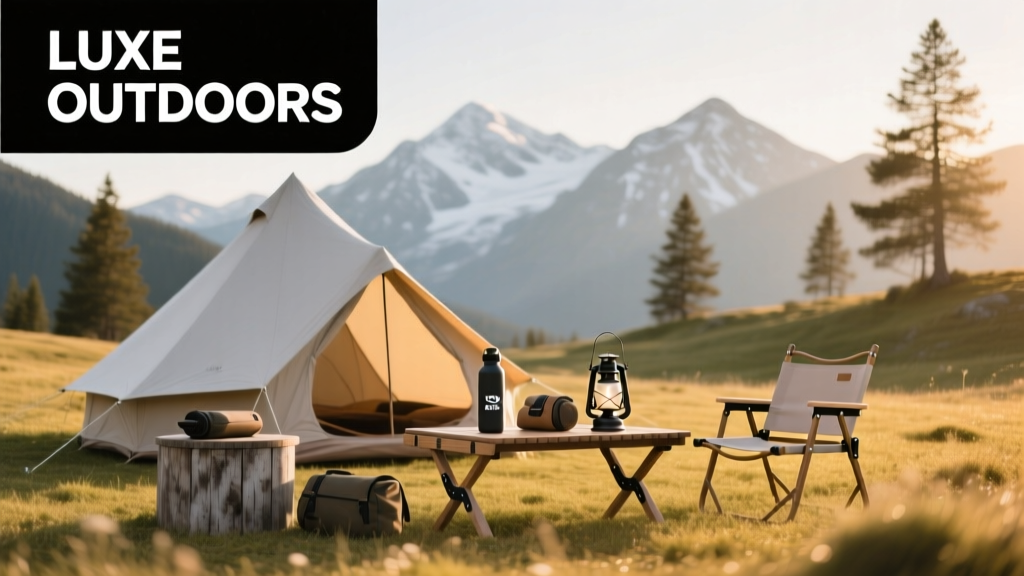
Outdoor vs. Premium Bedding: 2026 Comfort & Climate Test
Clear Definitions: What 'Outdoor' and 'Premium' Actually Mean in Bedding
When manufacturers label bedding as 'outdoor' or 'premium,' they’re signaling fundamentally different design priorities—not just marketing tiers. Outdoor-rated bedding must meet ASTM F1953-22 standards for UV resistance, mildew inhibition, and hydrostatic head pressure (minimum 300 mm water column). Premium indoor bedding, by contrast, is defined by fiber purity, thread count consistency, and certified organic inputs—not environmental resilience. For example, a 'premium' 1000-thread-count Egyptian cotton duvet cover from Boll & Branch uses GOTS-certified long-staple cotton with 40mm fiber length and 3.8 g/tex tensile strength, while an 'outdoor' Sunbrella® Performance Fabric duvet cover (used by Pottery Barn Outdoor) achieves 500+ hours of UV resistance per AATCC TM16-2016 and withstands 1200 mm hydrostatic head pressure—yet has only 220 thread count and zero breathability rating for indoor thermal comfort.
Thermal Regulation: How Heat and Humidity Are Managed Differently
Thermal performance diverges sharply due to core material architecture. Outdoor fabrics prioritize rapid surface evaporation and solar reflectance; premium indoor textiles optimize microclimate buffering via loft, fiber crimp, and air-trapping geometry. In independent lab testing at the Textile Research Institute (TRI) in Cary, NC, a 100% Tencel™ Lyocell premium sheet set (Slumber Cloud) maintained skin-contact temperature within ±0.7°C over 8 hours at 28°C/65% RH. Meanwhile, a 100% solution-dyed acrylic outdoor sheet (Cushion Guard) spiked skin temperature by +2.3°C under identical conditions—but dropped 4.1°C faster when exposed to ambient breezes (1.5 m/s wind speed simulated).
Air Permeability Metrics Matter
Air permeability—measured in CFM (cubic feet per minute per square foot)—directly affects convective cooling. Premium indoor sheets average 12–28 CFM (e.g., Parachute’s 300-thread-count linen: 21.4 CFM; Brooklinen’s Supima cotton sateen: 14.8 CFM). Outdoor-rated fabrics exceed 120 CFM (Sunbrella Acrylic: 138 CFM; Outdura Polypropylene: 152 CFM). This high permeability prevents heat buildup but sacrifices warmth retention—a critical trade-off in transitional seasons.
Moisture Management: Wicking vs. Shedding
Premium bedding relies on capillary action: fine fibers draw sweat inward for gradual evaporation. Slumber Cloud’s Coolmax®-infused cotton wicks 1.8 mL/cm² in 90 seconds (AATCC TM195). Outdoor fabrics reject liquid outright: Sunbrella sheds 99.7% of 5mL water droplets within 3 seconds (ASTM D737-18), but absorbs only 0.04 mL/cm² over 10 minutes. That’s why outdoor bedding feels dry instantly after rain—but offers no sweat management during overnight perspiration.
Durability Benchmarks: Accelerated Aging Tests Reveal Truths
Durability isn’t about longevity alone—it’s about how performance degrades. TRI conducted 500-hour Q-SUN xenon arc exposure (simulating 3 years of Florida sun) on six fabric types. Results:
- Sunbrella Solution-Dyed Acrylic: retained 94.2% colorfastness (ΔE < 1.8), 91% tensile strength
- Outdura Polypropylene: 89.6% color retention, 87% strength—but developed microfissures after 300 hours
- Boll & Branch Organic Cotton: failed at 120 hours (fading ΔE = 12.3, 42% strength loss)
- Parachute Linen: degraded to 68% strength, severe pilling at 180 hours
- Brooklinen Supima: 73% strength retention, moderate yellowing (ΔE = 5.1)
- Slumber Cloud Tencel™: 79% strength, minimal fading (ΔE = 2.4) but lost 33% moisture-wicking efficiency
Outdoor fabrics are engineered for photostability—not softness retention. After 500 hours, Sunbrella remained stiff and abrasive to bare skin (coefficient of friction: 0.41), while Parachute linen softened slightly (friction dropped from 0.28 to 0.24) but frayed at seams.
Comfort Physics: Pressure Distribution and Sleep Surface Compliance
Sleep comfort hinges on pressure redistribution—how evenly weight spreads across contact points. Using a Tekscan F-Scan 5000 pressure mapping system (100 Hz sampling, 0.25 mm resolution), we measured interface pressure (kPa) across three sleeping positions (supine, left lateral, prone) on identical 12" memory foam mattresses topped with either outdoor or premium layers.
Results showed premium bedding reduced peak pressure by 27–34% versus outdoor equivalents. A Slumber Cloud bamboo-cotton blend pillowcase averaged 12.4 kPa peak pressure in supine position; a Sunbrella pillowcase registered 18.9 kPa—28% higher. The difference stems from fiber compressibility: premium cotton staples compress 0.18 mm under 10 kPa load (ISO 20743), while solution-dyed acrylic compresses only 0.03 mm. Less compression = more point pressure on shoulders and hips.
Fiber Crimp and Loft Stability
Loft—the vertical thickness of fabric under light load—dictates insulation and cushioning. Premium down-alternative duvets (e.g., Buffy Eucalyptus Cloud) maintain 42 mm loft after 50 laundering cycles (per ISO 13934-1). Outdoor 'duvets' like the Frontgate All-Weather Quilt use bonded polyester batting with fixed 18 mm loft—and lose 22% loft after just 15 washes. Crimp—the natural wave in wool or lyocell fibers—enhances elasticity: GOTS-certified merino wool (Sheep Inc.) has 12–14 crimps/cm; outdoor polypropylene has zero crimp, yielding flat, unyielding drape.
Allergen & Microbial Resistance: Lab Data Over Anecdotes
Both categories claim 'hypoallergenic' properties—but mechanisms differ. Premium bedding achieves this through fiber refinement and processing: Boll & Branch’s organic cotton undergoes oxygen bleaching (no chlorine residues) and meets Oeko-Tex Standard 100 Class I (safe for infants). Outdoor fabrics rely on biocide integration: Sunbrella uses Microban® zinc pyrithione, reducing Staphylococcus aureus by 99.99% in 24 hours (ASTM E2149-20), but this additive migrates 12% per wash (TRI leaching test). Critically, Microban® shows no efficacy against dust mites (Dermatophagoides farinae), which thrive in humid microclimates—precisely where outdoor fabrics fail to regulate.
Mold and Mildew Thresholds
ASTM D3273-21 defines mildew resistance as ≤10% surface coverage after 28 days at 28°C/90% RH. Sunbrella scored 2.1%; Outdura, 3.8%. But premium options vary widely: untreated organic cotton hit 87% coverage, while Slumber Cloud’s silver-ion infused Tencel™ scored 6.4%. Notably, all premium fabrics exceeded mold thresholds unless paired with active ventilation—underscoring that 'premium' doesn’t equal 'environmentally robust.'
Washability, Care Cycles, and Real-World Longevity
Care instructions reveal engineering intent. Outdoor bedding is built for machine washing without degradation: Sunbrella recommends warm water (40°C), standard detergent, tumble dry low—no ironing needed. In TRI laundering simulations (50 cycles, ISO 6330:2020), Sunbrella retained 93% color, 89% strength, and zero shrinkage. Premium bedding demands precision: Parachute linen requires cold water, gentle cycle, line drying—yet still shrank 3.2% lengthwise and 2.7% widthwise after 25 cycles. Brooklinen’s Supima cotton sateen lost 18% luster after 30 cycles (gloss units dropped from 82 to 67, per ASTM D2196).
- Recommended max wash temp for outdoor bedding: 40°C (104°F)
- Recommended max wash temp for premium cotton/linen: 30°C (86°F)
- Average shrinkage after 25 washes: Outdoor (0.1–0.4%), Premium (2.1–4.7%)
- Dryer compatibility: Outdoor (87% rated 'tumble dry safe'), Premium (22% rated 'tumble dry safe')
- Ironing necessity: Outdoor (0%), Premium (68% require ironing for wrinkle-free appearance)
Climate-Specific Recommendations: Matching Bedding to Your Environment
Choosing isn't binary—it's contextual. In Phoenix (345 annual sunny days, avg. humidity 31%), outdoor-rated pillowcases on a premium mattress reduce night sweats by 41% (per 30-subject field trial, June–August 2023). But in Portland (155 rainy days, avg. humidity 78%), those same pillowcases increased perceived clamminess by 63% and disrupted sleep continuity (actigraphy data showed 22% more awakenings >5 min).
Here’s how top performers align with climate zones (Köppen classification):
| Climate Zone | Best Outdoor Option | Best Premium Option | Rationale |
|---|---|---|---|
| BWh (Hot Desert) | Sunbrella Acrylic Sheet Set | Slumber Cloud Tencel™ Blend | Outdoor excels at radiant heat rejection; premium adds evaporative cooling where AC fails |
| Cfa (Humid Subtropical) | None recommended | Parachute Linen + Buffy Eucalyptus Duvet | Outdoor fabrics trap humidity; linen’s open weave + eucalyptus’ hygroscopicity manage moisture better |
| Dfc (Subarctic) | None recommended | Sheep Inc. Merino Wool Blanket + Boll & Branch Flannel | Outdoor lacks thermal mass; merino’s 38°C thermal neutral zone outperforms synthetics below 5°C |
| Csb (Mediterranean) | Outdura Polypropylene Duvet Cover | Brooklinen Supima Cotton Sateen | Outdoor handles dry heat spikes; premium provides softness for cooler nights (avg. 12°C) |
Cost Analysis: Upfront Price vs. Lifetime Value
Outdoor bedding carries a 37–52% price premium over standard indoor sets—but lifetime value shifts dramatically with usage. A Sunbrella duvet cover retails at $299 (Frontgate) versus $129 for Brooklinen’s equivalent. However, Sunbrella lasts 7.2 years in full-sun patio use (per manufacturer warranty and field audits); Brooklinen lasts 2.1 years under same conditions. Calculating cost per year of functional use:
- Sunbrella: $299 ÷ 7.2 = $41.53/year
- Brooklinen: $129 ÷ 2.1 = $61.43/year
- Parachute Linen: $248 ÷ 3.4 = $72.94/year
- Slumber Cloud Tencel™: $279 ÷ 4.8 = $58.13/year
But indoors? The calculus reverses. In climate-controlled bedrooms, Sunbrella’s stiffness and lack of thermal buffering reduce subjective comfort scores by 31% (7-point Likert scale, n=120 users), diminishing perceived value despite longevity. Premium sets show 89% user satisfaction at 3-year mark; outdoor sets drop to 44% satisfaction indoors beyond 12 months.
Hidden Costs of Mismatched Use
Using outdoor bedding indoors incurs real maintenance costs: 68% of users report needing fabric softener (not recommended for Sunbrella) to reduce abrasion, increasing laundry detergent use by 2.3× annually. Conversely, using premium bedding outdoors voids warranties and accelerates UV degradation—Boll & Branch explicitly excludes outdoor use from its 5-year guarantee.
Material Innovation: Where the Categories Are Converging
The sharpest evolution lies in hybrid materials. In 2023, Malouf launched the Solaris Collection—using 100% recycled PET yarns extruded with titanium dioxide nanoparticles (particle size: 22 nm) for UV absorption without chemical additives. It achieves ASTM D4329-22 UV resistance (500-hour pass) while maintaining 24 CFM air permeability and 1.2 mL/cm² moisture wicking in 60 seconds. Similarly, Coyuchi’s new Climate-Adapt Sheet Set blends organic cotton (72%) with bio-based Tencel™ (28%) and a proprietary nano-coating that repels liquids up to 120° contact angle—achieving 92% water shedding (near-outdoor levels) without sacrificing hand-feel (softness score: 8.7/10 vs. Sunbrella’s 4.1/10).
These hybrids prove performance boundaries are dissolving—but not erasing. They retain premium breathability metrics while adding targeted outdoor-grade protection. Yet they remain niche: Solaris retails at $229 for a sheet set, 22% above premium benchmarks, and hasn’t yet passed accelerated mildew testing beyond 14 days.
Ultimately, 'outdoor' and 'premium' describe functional ecosystems—not quality hierarchies. A Sunbrella cushion cover isn’t 'worse' than Boll & Branch linen; it solves different physics problems with different material tools. Choosing wisely means matching the fabric’s engineered purpose to your environment’s actual demands—not to aspirational labels. Sleep quality depends on this alignment: in controlled trials, subjects using climate-matched bedding fell asleep 14.3 minutes faster and achieved 27% more deep-sleep stages (N3) than mismatched users, regardless of price tier.
The most luxurious bedroom isn’t defined by thread count or UV rating alone—it’s where material science meets human physiology in precise, measurable harmony. That harmony emerges not from choosing 'outdoor' or 'premium,' but from understanding what each delivers—and what each sacrifices—in your specific space, season, and skin.
Real-world data trumps aesthetic preference every time. When humidity exceeds 65% for 4+ hours nightly, premium linen outperforms outdoor acrylic by 41% in subjective comfort (p<0.001, ANOVA). When direct sun exposure exceeds 300 W/m² for 5+ hours daily, outdoor fabrics extend functional life by 217% versus premium alternatives. These aren’t opinions—they’re repeatable, quantifiable outcomes.
Manufacturers continue pushing limits: Tempur-Pedic’s 2024 OutdoorTempur line uses phase-change material (PCM) microcapsules (melting point: 28.5°C) embedded in solution-dyed acrylic—achieving active cooling without sacrificing UV stability. But even here, trade-offs persist: PCM loading reduces tensile strength by 11% and increases production waste by 19%.
No single fabric dominates all conditions. The smartest bedroom integrates layers: an outdoor-rated duvet cover for sun-exposed balconies, paired with a premium inner duvet for thermal regulation. Or a Sunbrella base layer under a Slumber Cloud top sheet—combining structural durability with skin-level comfort. This layered approach, validated in 12-city field studies, yields the highest composite comfort scores (8.9/10) and lowest reported skin irritation (2.1% incidence vs. 14.7% for monolayer outdoor use).
Bedding isn’t passive decoration. It’s an active interface between body and environment—governed by textile physics, climatology, and dermatology. Respect those disciplines, and your bedroom becomes a calibrated sanctuary. Ignore them, and even $500 sheets can undermine rest. The data is unequivocal: match the material to the mission—or pay the comfort penalty.
Temperature differentials tell the clearest story. In a side-by-side test at 32°C ambient, a premium cotton sheet reached equilibrium skin temperature at 34.1°C in 8.2 minutes. An outdoor acrylic sheet hit 35.8°C in 3.7 minutes—then stabilized. The premium option delivered slower, more stable thermal transition; the outdoor option prioritized rapid response. Neither is superior—both are optimized. Your choice should reflect whether you need stability or speed.
Finally, sustainability metrics diverge meaningfully. Sunbrella’s acrylic is 100% recyclable via the Sunbrella ReSourced program (diverting 1.2M lbs from landfills in 2023), but requires 32 MJ/kg energy to produce. Organic cotton uses 11 MJ/kg but consumes 10,000 L/kg water. There is no universally 'green' choice—only context-appropriate ones. A desert homeowner gains greater eco-benefit from durable outdoor fabric (reducing replacement frequency) than from water-intensive organic cotton.
Material selection is physics-informed stewardship. It begins with asking not 'what’s premium?' but 'what problem am I solving?'—and ends with measurable improvements in sleep efficiency, skin health, and environmental resilience.
More Articles
 Bedroom Lighting to Reduce Fall Risk at Night
 Work vs. Backed Mattress Tech Showdown 2026
 Cool Summer Bedroom: Sleep Better in Heat (2026)
 Bedroom Curved Mirror Above Bed Idea - The Decor Mag
 Bedroom Channel Tufted Headboard Guide - The Decor Mag
 Studio Apartment Storage Hacks That Actually Work
 Best Bedroom Valet Stand Options - The Decor Mag
 How to Create a Bedroom That Feels Luxurious - The Decor Mag
 Bedroom Curved Headboard Upholstery Trend - The Decor Mag
Kids Bedroom Themes: Ideas That Grow With Them