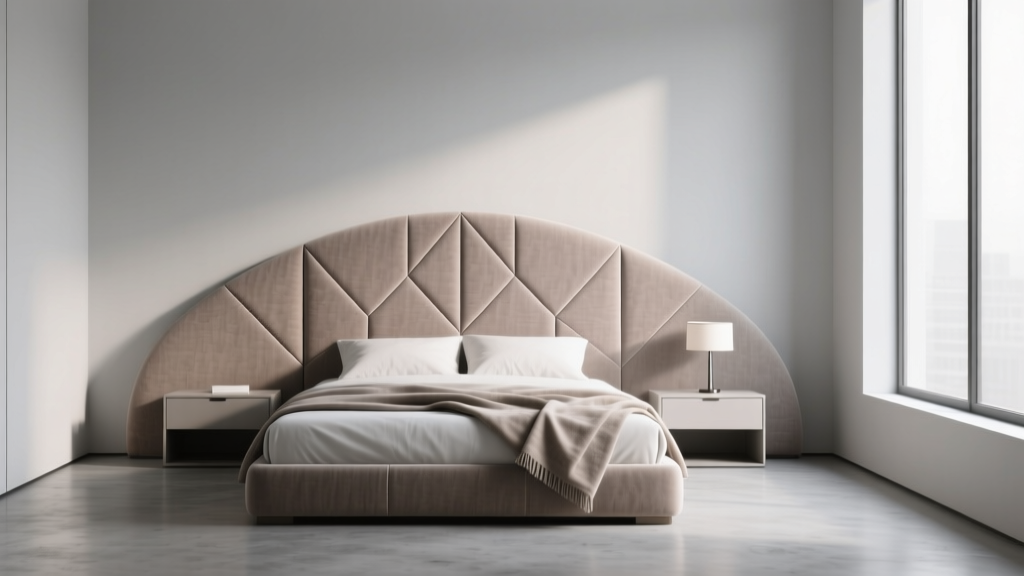
Bedroom Curved Headboard Upholstery Trend - The Decor Mag
The bedroom is one of the few places in a home that can actively improve your wellbeing. When your space feels calm, comfortable, and visually “quiet,” your nervous system tends to follow—making it easier to unwind at night and wake up feeling restored. That’s why the curved headboard upholstery trend is more than a pretty design moment. It’s a practical shift toward softer shapes, cushioned surfaces, and bedrooms that feel safer and more restful.
Curved upholstered headboards bring a gentle sense of enclosure without heaviness. They reduce harsh visual lines, add warmth through texture, and make the bed feel like a true retreat. For homeowners and renters alike, this trend offers a high-impact upgrade that supports a better sleep environment—especially when paired with breathable bedding, layered lighting, and a thoughtful layout.
If you’ve been searching for a bedroom design update that looks elevated and feels genuinely comforting, a curved upholstered headboard is a smart place to start.
Why Curved Upholstered Headboards Are Everywhere Right Now
They visually soften the room
Bedrooms full of straight edges (rectangular headboards, boxy nightstands, sharp-angled decor) can feel rigid. Curves introduce flow, which many people perceive as calming. In design terms, curved lines reduce “visual tension.” In real life, that can translate into a space that feels easier to settle into at night.
They add comfort where you actually use it
An upholstered headboard isn’t just decorative. It supports evening routines that help sleep quality:
- Reading without stacking extra pillows behind your back
- Journaling or meditating upright before bed
- Reducing cold wall drafts behind the bed in older homes
They create a boutique-hotel feeling at home
Curved silhouettes—arched, scalloped, wingback-inspired, or softly rounded corners—signal “intentional design.” Even simple bedding looks more polished when framed by a sculptural headboard, which can reduce the urge to over-decorate (a common cause of visual clutter in bedrooms).
Popular Curved Headboard Styles (and Who They Suit)
1) Arch / Cathedral Curve
A tall, single arch reads classic and serene. It works well in:
- Small bedrooms that need a focal point without busy decor
- Traditional, transitional, and modern organic interiors
- Rooms with symmetrical nightstands and lamps
2) Scalloped or Channel-Tufted Curves
These add texture and a more “designed” look. Choose this if you want your bed to be the statement piece. Best for:
- Neutral bedrooms that need dimension
- People who prefer a plush, cozy vibe
- Spaces with minimal wall art (let the headboard do the work)
3) Curved Wingback / Wraparound
Curved wings create a cocoon effect, which can be especially soothing for light sleepers. Ideal for:
- Bedrooms with open layouts or minimal architectural separation
- Anyone who wants a quieter sleep space (wings can subtly dampen sound)
- Readers who sit up in bed often
4) Low, Rounded Corners
If you like curves but want something subtle, choose a rectangular headboard with rounded top corners. Great for:
- Modern rentals where you want a versatile piece
- Shorter ceilings (low profile keeps the room feeling open)
- Budget-friendly makeovers
Material Guide: Upholstery Choices That Look Good and Sleep Better
The best bedroom decor supports comfort, cleanliness, and long-term use. Upholstery matters because it’s close to your face and bedding, and it can hold dust if neglected. Here are the most sleep-friendly materials and finishes.
Performance fabric (poly blends, stain-resistant weaves)
- Best for: Kids, pets, spills, renters
- Feel: Often smooth and tightly woven
- Why it helps sleep: Easy maintenance reduces allergens and stress
- Budget: $250–$900 for headboard/bed frame, depending on brand and size
Bouclé (looped texture)
- Best for: Cozy, modern organic bedrooms
- Feel: Soft, tactile, warm
- Sleep note: Can trap dust more than tight weaves—vacuum regularly with upholstery attachment
- Budget: $400–$1,500+
Linen or linen-blend
- Best for: Breathable, airy bedrooms; coastal or minimalist design
- Feel: Light texture, relaxed
- Sleep note: A naturally “cooler” look and feel; choose a blend for easier cleaning
- Budget: $500–$2,000+
Velvet (cotton or synthetic)
- Best for: Plush, glamorous, or moody bedrooms
- Feel: Smooth, luxurious
- Sleep note: Velvet shows marks and dust; brush/vacuum lightly to keep it fresh
- Budget: $350–$1,800+
Leather or faux leather
- Best for: Sleek, easy-wipe surfaces
- Feel: Smooth, structured
- Sleep note: Can feel cool to the touch; consider if your room runs warm
- Budget: $400–$2,500+
How to Choose the Right Curved Headboard for Your Room
Step 1: Match scale to ceiling height
- 8-foot ceilings: Aim for a headboard height of roughly 48–56 inches for balance.
- Higher ceilings: Taller arches and wingbacks can look striking and intentional.
- Low ceilings: Choose a lower curved profile to avoid a top-heavy feel.
Step 2: Consider mattress thickness and pillow stack
If you use a thick mattress + topper, a short headboard can disappear behind pillows. For most setups, a mid-height upholstered headboard offers the best day-to-night function.
Step 3: Decide between headboard-only vs. full bed frame
- Headboard-only: Often cheaper; good for renters; pairs with a basic metal frame.
- Upholstered bed frame: More cohesive and “finished” look; typically higher cost.
- Storage bed base: Great for small bedrooms, but ensure drawers open fully with your layout.
Bedroom Design Pairings: Bedding, Lighting, Color, and Layout
Furniture recommendations that complement curves
Let the headboard set the tone, then echo the softness elsewhere for a cohesive bedroom design.
- Nightstands: Rounded-edge or oval nightstands; slim pedestal tables for tight spaces
- Bench: Upholstered or curved-end bench at the foot of the bed (if you have 24–30 inches of clearance)
- Rug: Plush wool or wool-blend rug to reduce echo and add warmth
Sleep-friendly lighting (layered and dimmable)
Light is one of the biggest drivers of sleep quality. Build a calming bedroom lighting plan that supports evening wind-down.
- Bedside lighting: Warm bulbs (2700K), ideally on dimmers
- Wall sconces: Great for small nightstands; keeps surfaces clear
- Overhead light: Use sparingly at night; add a fabric or frosted diffuser to soften glare
- Night light: Low amber plug-in light for safe nighttime movement without “waking” your brain
Color palettes that enhance a restful sleep environment
Curved upholstered headboards shine in calm, low-contrast palettes. Consider:
- Warm neutrals: Oatmeal, sand, stone, cream
- Soft earth tones: Clay, muted terracotta, warm taupe
- Gentle greens: Sage, olive-gray (excellent for a nature-inspired bedroom)
- Quiet blues: Dusty blue, blue-gray (cooling and serene)
Bedding types that look tailored with a curved headboard
- Duvet + cover: Crisp cotton percale for hot sleepers; cotton sateen for a smoother feel
- Quilt layering: Add a quilt over a duvet for hotel-like structure and adjustable warmth
- Pillows: Two sleeping pillows + one or two supportive Euro shams for reading comfort
- Throw: Soft wool, cotton, or bamboo blend at the foot for temperature flexibility
Layout tips for better flow and relaxation
- Keep clear pathways around the bed (ideally 24 inches or more on each side if possible).
- Center the bed on the main wall when you can; it reduces visual imbalance.
- Place the bed away from direct drafts (windows/vents) to reduce nighttime wake-ups.
Wellness Tips: Make the Curved Headboard Part of a Better Sleep Routine
The best sleep environment supports your habits, not just your style. Use your upholstered headboard as an anchor for a calmer nightly rhythm.
- Create a “soft landing” zone: Keep a small tray on your nightstand for lip balm, book, glasses—so bedtime doesn’t feel scattered.
- Reduce allergens: Vacuum the headboard monthly (more often for bouclé/velvet). Wash pillowcases 1–2x weekly.
- Support your body: If you sit up in bed, add a supportive reading pillow so your neck and shoulders can fully relax.
- Quiet the wall: Upholstery naturally absorbs a bit of sound; add curtains and a rug to further reduce echo in a minimalist room.
Budget Ranges: What to Expect and Where to Spend
- Budget ($150–$400): Headboard-only options, simple rounded silhouettes, polyester/performance fabrics. Best upgrade: spend on a sturdy mounting system and a fabric you can clean easily.
- Mid-range ($400–$1,200): More distinctive curves (arched, winged), better foam density, performance upholstery, more color options. Best upgrade: choose a taller headboard for maximum impact.
- High-end ($1,200–$3,500+): Designer shapes, premium fabrics (linen, mohair blends), custom sizing, higher craftsmanship. Best upgrade: invest in a fabric that matches your lifestyle and a frame that won’t squeak.
Common Mistakes to Avoid
- Choosing a fabric that doesn’t match your real life: Bouclé and velvet are beautiful, but if you have pets or allergies, a tight-weave performance fabric may be more sleep-friendly and lower stress.
- Going too tall in a small room: A dramatic arch can overwhelm a compact bedroom. Balance with simpler bedding and minimal wall decor.
- Ignoring lighting temperature: Cool white bulbs (4000K+) can make even the softest headboard feel stark and energizing at night.
- Overcrowding the bed wall: A curved headboard is already a statement. Skip busy gallery walls directly above it if your goal is a calm bedroom.
- Forgetting maintenance: Upholstery needs occasional vacuuming, especially if you lean on it daily.
FAQ: Curved Upholstered Headboards
Are upholstered headboards good for sleep quality?
They can be. Upholstered headboards add comfort for wind-down routines (reading, breathing exercises) and help a bedroom feel warmer and more soothing. When paired with soft lighting, breathable bedding, and low clutter, they support a calmer sleep environment.
What’s the easiest upholstery to keep clean?
Tight-weave performance fabric is typically the easiest. Look for stain-resistant or washable performance upholstery, and choose mid-tones that won’t show every mark.
Do curved headboards work in small bedrooms?
Yes—especially a simple arch or rounded-corner design. Keep the scale appropriate (not overly tall), use wall sconces to save space, and choose light-to-mid neutral colors to keep the room feeling open.
What colors are best for a relaxing bedroom?
Warm neutrals, soft greens, dusty blues, and muted earth tones tend to feel restful. If your goal is better sleep, avoid high-contrast palettes right around the bed and keep nighttime lighting warm and dimmable.
Should I buy a headboard-only or a full upholstered bed frame?
Headboard-only is a flexible choice for renters and tighter budgets. A full upholstered bed frame looks more tailored and hotel-like, but it’s usually pricier and heavier to move. If you need storage, consider an upholstered storage bed—but measure carefully for drawer clearance.
How do I prevent an upholstered bed from squeaking?
Choose a frame with solid center support, tighten hardware after the first few weeks, and use felt pads where wood or metal meets. A stable foundation reduces micro-movements that cause noise—helpful for light sleepers.
Next Steps: Bring the Trend Home, Gently
Start with one clear goal: make your bed feel like a softer, calmer place to land. Choose a curved upholstered headboard in a practical fabric, pair it with breathable bedding, and add warm, dimmable lighting for a sleep-friendly bedroom. Keep the palette quiet, the layout open, and the surfaces easy to maintain—small choices that add up to better rest.
For more calming bedroom decor, sleep environment tips, and renter-friendly design ideas, explore the latest inspiration on thedecormag.com.
More Articles
 The Best Nightstands for Every Bedroom Style - The Decor Mag
 Best Bedroom Lingerie Drawer Organizers - The Decor Mag
 How to Style a Bedroom with Earth Tones - The Decor Mag
 Global Textiles in Bedrooms: Styling Ideas (2026)
 Best Bedroom Chandelier Styles - The Decor Mag
 Modern Bedroom Design Ideas for 2026 - The Decor Mag
 Best Bedroom Sleep Eye Mask Collection - The Decor Mag
 How to Choose Bedroom Curtain Length - The Decor Mag
 Bedroom Rattan Furniture Trends - The Decor Mag
 How to Incorporate Vintage Linens in Bedroom - The Decor Mag