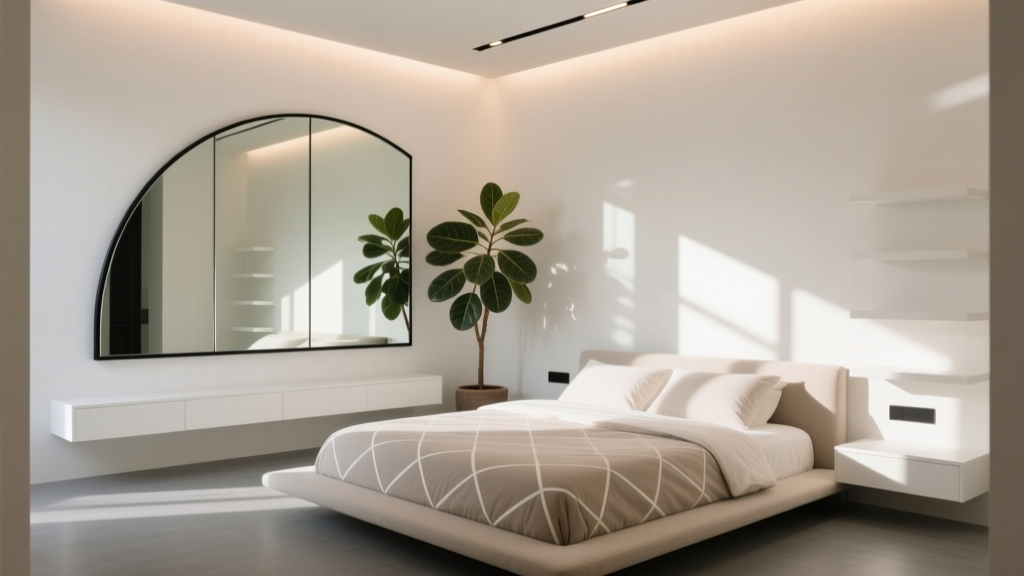
Bedroom Curved Mirror Above Bed Idea - The Decor Mag
A bedroom should feel like a soft landing place—visually calm, physically comfortable, and supportive of deep sleep. Yet many bedrooms end up either under-styled and unfinished or over-decorated in ways that create visual noise. A curved mirror above the bed is one of the rare design moves that can elevate the room quickly while still keeping the space restful—when it’s chosen and placed with sleep quality in mind.
Mirrors influence how we experience light, space, and balance. The right mirror can brighten a dim bedroom, make a small room feel more open, and create a gentle focal point that replaces clutter with intention. The curve is key: rounded shapes tend to read as softer and more soothing than hard angles, which matters in a space designed for relaxation and restoration.
This guide walks through curved mirror styles, ideal sizing, safe installation, and sleep-friendly considerations—from glare control to lighting temperature. Whether you’re a homeowner planning a full bedroom refresh or a renter looking for a high-impact change, you’ll find practical options, budget ranges, and common mistakes to avoid.
Why a Curved Mirror Above the Bed Works for Bedroom Design (and Sleep)
In bedroom design, the area above the headboard is prime real estate. When it’s empty, the bed can feel visually “unfinished.” When it’s overloaded with busy art or shelves, the room can feel mentally stimulating. A curved mirror can land in the sweet spot: reflective enough to add dimension, simple enough to keep the sleep environment calm.
Design benefits
- Softens the room’s lines: Curves balance out straight headboards, nightstands, and window frames.
- Improves light distribution: A mirror can bounce natural light during the day and reduce the need for harsh overhead lighting.
- Creates a clean focal point: One strong, minimal statement often feels quieter than multiple small decor pieces.
- Makes small bedrooms feel larger: Especially effective in apartments, guest rooms, and narrow layouts.
Sleep-friendly benefits (when done thoughtfully)
- Supports a calmer visual field: A simple arched or oval mirror can be less visually “busy” than gallery walls.
- Helps reduce clutter: When the bed wall feels complete, you’re less likely to compensate with extra decor elsewhere.
- Encourages better lighting habits: Using the mirror to amplify warm bedside lamps can reduce reliance on bright ceiling fixtures at night.
Choosing the Right Curved Mirror Style for Above the Bed
Not all curved mirrors feel the same. The frame shape and material influence the mood of the bedroom and how restful it feels.
Arched (window-style) mirror
An arched mirror resembles a softened rectangle with a rounded top—classic and versatile.
- Best for: Traditional, modern classic, farmhouse, transitional bedrooms
- Sleep-friendly vibe: Grounded and stable; the straight sides add structure while the arch adds softness
- Frame materials to consider: Matte black metal (crisp), warm oak (cozy), painted wood (quiet and clean)
Oval mirror
Ovals feel gentle and minimal, making them a strong choice for a calming bedroom decor plan.
- Best for: Scandinavian, minimalist, contemporary, Japandi bedrooms
- Sleep-friendly vibe: Very soft and low visual tension
- Frame materials to consider: Thin metal, light wood, or even frameless with polished edges
Round mirror
Round mirrors add symmetry and a centered focal point. They’re great when the bed wall needs a strong anchor.
- Best for: Mid-century modern, eclectic, modern bedrooms
- Sleep-friendly vibe: Balanced; can feel energizing if oversized or too reflective, so plan lighting carefully
- Frame materials to consider: Brushed brass (warm), bronze (moody), black (graphic)
Organic or irregular curved mirror
These “blob” or freeform shapes add an artistic touch. They can still be restful if the rest of the room stays simple.
- Best for: Contemporary, boho, artistic interiors
- Sleep-friendly vibe: Relaxed and playful; keep surrounding decor minimal to avoid visual clutter
- Frame materials to consider: Frameless or very slim frames; avoid overly ornate edges in a sleep-focused room
Size, Proportion, and Placement: The Rules That Make It Look Intentional
Proper scale is what turns “mirror above bed” into a polished bedroom design moment. These guidelines help the mirror complement the headboard and support a balanced, soothing layout.
Ideal width
- Sweet spot: 50–75% of the bed’s width
- Queen bed (60"): Mirror width around 30–45"
- King bed (76"): Mirror width around 38–57"
- Full bed (54"): Mirror width around 27–40"
Ideal height above the headboard
- Leave breathing room: 4–8 inches between the top of the headboard and the bottom of the mirror
- Overall wall balance: If you have tall ceilings, you can hang slightly higher, but keep it visually connected to the bed
Centered vs. off-center
- Centered: Best for symmetry, calm, and a “hotel bedroom” feel
- Slightly off-center: Works if you have a bedside sconce, a reading nook, or an asymmetrical layout—just keep it deliberate
Sleep-Friendly Mirror Placement: Light, Glare, and What the Mirror Reflects
Mirrors are powerful because they reflect. In a sleep environment, what they reflect can either feel peaceful or subtly disruptive.
What the mirror should reflect
- Soft, simple elements: curtains, a tidy dresser, a plant, or a calm piece of art across the room
- Natural light (daytime): a window can brighten the room—especially helpful in darker bedrooms
What to avoid reflecting
- Bright LEDs or screens: Reflected light from TVs, monitors, or charging station indicators can feel stimulating at night
- Clutter zones: Laundry baskets, busy shelves, or open closets—reflections double visual mess
- Direct glare from a window: If morning sun hits the mirror and bounces into your eyes, it can disrupt sleep on weekends
Glare-control tips (simple but effective)
- Choose a warmer lighting plan: 2200K–2700K bulbs for bedside lamps help keep the room melatonin-friendly
- Use dimmable bulbs or smart bulbs: Dim lights 60–90 minutes before bed to support a wind-down routine
- Layer window treatments: sheer + blackout curtains reduce harsh reflections and improve sleep quality
Curved Mirror + Bed Wall Styling Ideas (That Still Feel Restful)
The mirror is the hero. Everything around it should support calm. These bedroom decor ideas add warmth without clutter.
1) Minimal and serene (best for small bedrooms)
- One arched or oval mirror centered above the headboard
- Two matching bedside lamps with linen shades
- Crisp bedding in solid neutrals: ivory, warm white, stone, or soft greige
2) Cozy layered look (soft hotel feel)
- Round or arched mirror with a warm wood frame
- Upholstered headboard (linen, cotton, performance fabric)
- Textured bedding: cotton percale sheets + quilt + throw blanket at the foot of the bed
3) Modern contrast (clean, not cold)
- Thin black metal arched mirror
- Warm lighting (avoid cool white LEDs)
- Muted wall color like clay-beige, dusty olive, or soft taupe
Furniture, Bedding, Lighting, and Color Recommendations
Furniture choices that pair well with a curved mirror above the bed
- Headboard: Upholstered (quiet and soft), cane/rattan (breathable texture), or simple wood with rounded corners
- Nightstands: Rounded edges or waterfall profiles to echo the mirror curve
- Bench at the foot of the bed: Upholstered or boucle for softness; also keeps “clothes piles” off the bed
Bedding for a calmer sleep environment
- Sheets: Cotton percale for cool sleepers; cotton sateen for a smoother, warmer feel
- Duvet insert: Choose weight based on your climate (lightweight, all-season, or winter)
- Colors: Soft neutrals, gentle earth tones, or muted blues/greens—these tend to feel more sleep-friendly than high-contrast patterns
Lighting that flatters the mirror (and supports winding down)
- Bedside lamps: Linen or paper shades diffuse light beautifully in reflections
- Wall sconces: Great for small nightstands; choose dimmable and warm temperature
- Avoid: bare bulbs, cool white lighting, and strong overhead light as the main evening source
Bedroom color palette ideas
- Warm quiet neutrals: ivory, oatmeal, mushroom, sand
- Restful greens: sage, olive-gray, eucalyptus
- Soft blues: dusty blue, slate blue (use sparingly to keep it cozy)
- Moody calm: deep taupe or charcoal with warm lamps for a cocoon effect
Budget Ranges and What to Look for When Shopping
A curved mirror can be affordable or investment-level. The key is choosing materials and mounting hardware that feel secure and quiet in a sleep space.
- Budget-friendly ($40–$120): Lightweight metal or MDF frames, smaller ovals/rounds. Best for renters or smaller beds.
- Mid-range ($120–$350): Better frame finishes, thicker glass, cleaner edges, and sturdier mounting. A great sweet spot for most bedrooms.
- Investment ($350–$900+): Solid wood frames, artisan finishes, larger arches, and premium glass. Ideal for primary bedrooms and long-term homes.
Materials and features worth prioritizing
- Tempered glass or mirrors with safety backing (especially above the bed)
- Quality hanging hardware: D-rings, French cleats, or robust brackets
- Low-VOC finishes on wood frames to keep the bedroom air cleaner
Safe Installation Tips (Especially Above a Bed)
Because this mirror sits above where you sleep, secure installation matters for both safety and peace of mind.
- Use a stud finder: Whenever possible, anchor into studs.
- Use the right wall anchors: If studs aren’t available, choose heavy-duty anchors rated well above the mirror’s weight.
- Choose stable hanging systems: French cleats distribute weight and reduce shifting.
- Check for level and lock-in: Add rubber bumpers at the bottom corners to prevent tapping or sliding.
- Test for movement: Gently push from the sides; it should feel fixed, not wobbly.
Renter-friendly options
- Lean a tall arched mirror behind the headboard only if it’s fully secured and cannot tip (generally better on the floor across from the bed than directly above it).
- Use picture ledges cautiously: Not recommended above the bed unless professionally installed and very stable.
- Removable hooks: Only for very lightweight mirrors and only if the hook system is rated appropriately; avoid above-bed placement if you’re unsure.
Wellness Tips: Make the Mirror Part of a Better Sleep Routine
Your bedroom decor should support your habits. A curved mirror can reinforce a calmer bedtime environment when paired with a few simple wellness upgrades.
- Reduce blue light at night: Keep screens out of the mirror’s reflection line. Use amber bedside lighting for the last hour before sleep.
- Create a visual “shutdown” cue: When you turn off lamps, the room should look calm—no bright reflections, no clutter doubled.
- Improve air quality: Choose low-VOC paints and finishes; consider a quiet air purifier if allergies affect sleep.
- Keep sound soft: Add a rug, curtains, and upholstered elements to reduce echo—mirrors can amplify a “hard surface” feel if the room lacks textiles.
Common Mistakes to Avoid
- Choosing a mirror that’s too small: A tiny mirror above a queen or king bed looks lost and can create visual tension.
- Hanging it too high: If the mirror floats far above the headboard, the bed wall feels disconnected and less grounding.
- Ignoring reflections: If it reflects a messy corner or bright window glare, the room will feel less restful.
- Using harsh lighting: Cool bulbs and bright overhead fixtures create strong glare and a more alert state.
- Unsafe mounting: Weak anchors, poor hardware, or unstable hooks are never worth the risk above the bed.
- Over-styling around the mirror: Keep the bed wall simple—one mirror plus calm lighting is often enough.
FAQ: Curved Mirror Above the Bed
Is it okay to put a mirror above the bed?
Yes, if it’s securely mounted and doesn’t create glare or reflect disruptive light sources at night. Choose safety-backed or tempered glass when possible and use appropriate hardware.
What shape mirror is most calming for a bedroom?
Oval and softly arched mirrors tend to feel the most soothing because the curves reduce the sharpness of the bed wall. Organic shapes can also work if the rest of the decor is minimal.
How big should the mirror be above a queen bed?
A good guideline is 30–45 inches wide (about 50–75% of the bed width). The exact size depends on your headboard height and ceiling height.
Will a mirror above the bed make the room brighter?
It can, especially if it reflects a window or a warm bedside lamp. If the mirror catches direct sun in the morning, add layered window treatments to prevent glare.
What frame material is best for a sleep-friendly bedroom?
Wood frames (oak, walnut, ash) and matte metal frames (black, bronze) tend to feel calm and timeless. Avoid overly glossy finishes if you’re sensitive to reflections.
What can I do if I’m a renter and can’t drill into walls?
Consider placing the mirror on a different wall (like opposite the bed) to get the light-expanding benefits without hanging above the headboard. If you do hang it, only use hardware rated for the mirror’s weight and confirm your lease guidelines.
Next Steps: A Simple Plan to Try This Look This Week
- Stand at your bedroom doorway and notice what your bed wall needs: more height, softness, or light.
- Pick one curved mirror style (arched, oval, round) that matches your headboard and nightstands.
- Measure for proportion: aim for 50–75% of bed width and hang 4–8 inches above the headboard.
- Adjust lighting: swap bedside bulbs to 2200K–2700K and add dimming if possible.
- Declutter what the mirror will reflect so the room feels calmer the moment you walk in.
A curved mirror above the bed can be more than a decor upgrade—it can help create a bedroom that feels softer, brighter, and more supportive of real rest. Explore more calming bedroom design ideas, sleep-friendly layouts, and bedroom decor inspiration on thedecormag.com.
More Articles
 Best Bedroom Storage Solutions Under Bed - The Decor Mag
 How to Create a Bedroom That Feels Collected - The Decor Mag
 Bedroom Four Poster Bed Styling - The Decor Mag
 Best Bedroom Bedside Tea Setup - The Decor Mag
 Best Bedroom Humidifier Placement - The Decor Mag
 Best Bedroom Herbal Tea Bedside Setup - The Decor Mag
 The Best Nightstands for Every Bedroom Style - The Decor Mag
 How to Style a Bedroom That Feels Effortless - The Decor Mag
 Best Bedroom Perfume Collection Display - The Decor Mag
 Wellness Bedroom Decor: Design Tips for 2026