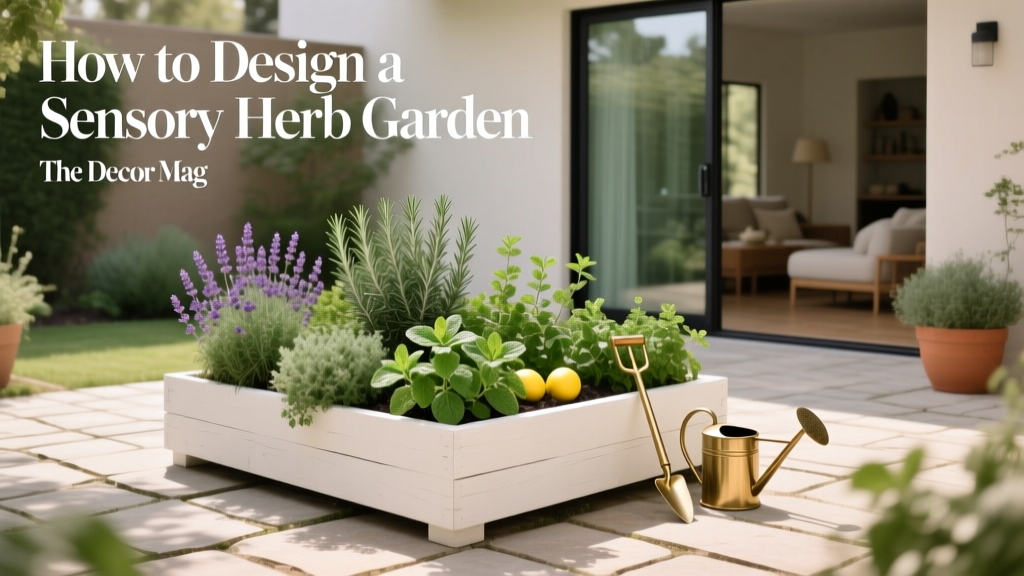
How to Design a Sensory Herb Garden - The Decor Mag
A great outdoor living space isn’t just something you look at—it’s something you experience. A sensory herb garden turns a patio, side yard, balcony, or backyard into a place that invites you to touch soft leaves, breathe in fragrant oils, listen to rustling stems, and taste what you grow. It’s one of the most satisfying landscape design upgrades because it delivers beauty and function in the same square footage.
Herbs are also the perfect “gateway plants” for homeowners who want a more intentional garden without the pressure of high-maintenance ornamental beds. Many herbs thrive in containers, handle heat, recover quickly after harvest, and reward you all season long. With thoughtful layout, materials, and furniture choices, your sensory herb garden can feel like a mini outdoor retreat—part kitchen garden, part spa, part entertaining zone.
Whether you’re designing a small patio herb garden or a larger outdoor kitchen garden, the goal is the same: create an immersive, year-round outdoor living experience that’s practical, beautiful, and easy to maintain.
What Makes an Herb Garden “Sensory”?
A sensory garden is designed around the five senses. Herbs are uniquely suited to this because their essential oils, textures, and flavors are meant to be handled and harvested.
- Sight: Layered greens, silver foliage, purple blooms, and tidy edging create a calming landscape design moment.
- Smell: Fragrant herbs release aroma when you brush past—perfect for pathways near seating areas.
- Touch: Fuzzy leaves, fine textures, and sturdy stems invite interaction.
- Taste: Snip-and-eat plants elevate everyday cooking and outdoor entertaining.
- Sound: Grasses and woody herbs rustle in the breeze; pollinators add gentle garden “music.”
Step 1: Choose the Best Location for Patio Living and Easy Harvest
Sun, access, and proximity to the kitchen
Most culinary herbs want 6–8 hours of sun. Place your herb garden where you naturally spend time: near the patio dining area, outdoor kitchen, grill station, or the door you use most. The more convenient it is, the more you’ll harvest—and regular harvesting keeps herbs bushy and healthy.
- Best placement: Along a patio edge, beside a walkway, near outdoor dining, or bordering an outdoor seating area.
- If you have part shade: Grow parsley, mint, cilantro (cool season), chives, lemon balm, and some thyme varieties.
- Windy sites: Add a low screen (slatted wood panel, trellis, or tall planters) to reduce stress on basil and tender herbs.
Drainage is non-negotiable
Herbs hate soggy roots. For in-ground beds, amend heavy soil with compost and consider a raised garden bed. For containers, choose pots with drainage holes and use a high-quality potting mix (not garden soil).
Step 2: Pick a Layout That Invites Interaction
The best sensory herb gardens are designed like outdoor rooms—easy to step into, move through, and pause within.
4 layout ideas that work in real homes
- Patio perimeter border: A narrow bed (12–24 inches) along the patio edge with stepping stones for access.
- U-shaped raised bed: Creates a “chef’s garden” feel and keeps everything within arm’s reach.
- Container cluster: Group pots of varying heights near seating—ideal for renters or small yards.
- Pathway brush-by strip: Plant fragrant herbs along a path so you release aroma with every pass.
Design rule: put the most fragrant herbs where you’ll touch them
Line the edge of a walkway or the front of a bed with low, aromatic plants like thyme and chamomile. Place taller herbs (rosemary, sage, lemongrass) behind them to create a layered, landscaped look.
Step 3: Choose Plants for Every Sense (and Every Season)
Use a mix of evergreen, annual, and flowering herbs so your garden delivers year-round outdoor living value—color and fragrance in warm months, structure and texture in cooler months.
Fragrance-forward herbs (smell + touch)
- Lavender (Lavandula): Classic scent, pollinator magnet, excellent in sunny, dry sites.
- Rosemary (Salvia rosmarinus): Piney fragrance; doubles as a low hedge in warm climates.
- Thyme (Thymus): Great for edging and between pavers; releases scent when stepped on lightly.
- Lemon balm (Melissa officinalis): Bright citrus scent; best in containers to control spread.
- Mint (Mentha): Powerful fragrance; always plant in pots to prevent takeover.
Flavor essentials for outdoor entertaining (taste)
- Basil: Summer star; plant in warm weather and pinch often for fullness.
- Parsley: Reliable, mild, and great in partial sun.
- Chives: Oniony flavor; pretty purple blooms.
- Oregano: Hardy and drought-tolerant; excellent for Mediterranean-style gardens.
- Cilantro: Cool-season favorite; let it flower for coriander seed.
Texture and visual contrast (sight + touch)
- Sage: Velvety leaves; many varieties offer purple, tricolor, or silvery tones.
- Artemisia ‘Powis Castle’ (ornamental herb-like foliage): Silvery softness and drought tolerance.
- Chamomile: Fine texture, daisy-like flowers; calming look near seating.
- Lemongrass: Tall, architectural blades that add movement and sound.
- Fennel (bronze fennel is especially pretty): Feathery foliage and pollinator-friendly blooms.
Year-round structure (especially for cooler climates)
- Thyme, sage, chives: Often overwinter well in many regions.
- Rosemary: Perennial in warmer zones; container-grow in cold climates and overwinter indoors.
- Bay laurel: Beautiful in a pot as a patio “mini tree”; bring inside for freezes.
Step 4: Materials That Make It Feel Like a Designed Outdoor Space
A sensory herb garden should look intentional—like part of your overall outdoor design, not an afterthought. The right materials elevate the experience and improve usability.
Raised bed and edging material recommendations
- Cedar raised beds: Naturally rot-resistant, warm tone, great for patio living aesthetics. Budget-friendly and easy to DIY.
- Galvanized steel beds: Modern look, long lifespan, great for contemporary landscaping; warms soil earlier in spring.
- Stone or brick edging: Classic, durable, and helps define an outdoor room. Excellent near patios and walkways.
- Gravel + steel edging: Clean, modern lines; great drainage; pairs well with container gardens.
Pathways that invite a slow stroll
Paths make a garden feel like a destination. Keep them comfortable and stable for barefoot patio living and quick harvest runs.
- Decomposed granite: Natural look, good drainage, budget-friendly (add stabilizer for less tracking).
- Large-format pavers: Polished and easy to clean; add creeping thyme between joints for scent.
- Brick: Timeless, warm, and great for cottage-style herb gardens.
Mulch and top-dressing for performance and polish
- Fine bark mulch: Great for in-ground beds; keeps roots cool and reduces weeds.
- Pea gravel top-dress (around Mediterranean herbs): Helps with drainage and reflects heat—ideal for lavender, thyme, rosemary.
- Compost: Use as a seasonal top-dress in spring and fall to improve soil health.
Step 5: Add Furniture and Features That Encourage You to Use the Garden
The fastest way to make herbs part of daily life is to create a reason to linger. Treat your herb garden as an extension of the patio—an outdoor living space, not just planting beds.
Furniture recommendations for a sensory herb garden
- Compact bistro set: Perfect for morning coffee near fragrant plants; choose powder-coated steel or teak for weather resistance.
- Outdoor bench with a back: Place it along the herb border so you can sit and prune; look for acacia, teak, or aluminum frames.
- Potting/harvest station: A small outdoor console or potting bench (preferably stainless steel or sealed wood) makes harvesting and rinsing herbs easier.
- Side table or serving cart: Ideal for outdoor entertaining—keep clippers, twine, and a basket nearby.
Lighting for evening patio living
- Warm LED path lights: Safer harvest trips after dark; choose low-glare fixtures.
- String lights over a seating nook: Cozy ambience; pair with a nearby rosemary or lavender planter for scent.
- Solar spotlights for feature pots: Highlight a bay laurel or vertical herb wall.
Water features (optional, but powerful)
A small fountain or bubbling urn adds gentle sound and cools the mood of the space. Keep it simple and place it where overspray won’t soak herbs that prefer drier conditions.
Climate and Maintenance Considerations (So It Stays Beautiful)
Match plant choices to your region
- Hot, dry climates: Prioritize rosemary, thyme, oregano, sage, lavender. Use drip irrigation and gravel top-dressing.
- Humid climates: Improve airflow with spacing, avoid overcrowding, and choose resistant varieties. Basil can thrive but watch for fungal issues.
- Cold winters: Grow rosemary and bay in containers to bring indoors. Use raised beds for faster spring warm-up.
- Coastal areas: Select tough, wind-tolerant herbs like rosemary and thyme; rinse salt spray off foliage occasionally.
Simple maintenance plan (15 minutes a week)
- Harvest regularly: Pinch basil tips, snip thyme sprigs, and trim mint—harvesting is pruning.
- Water deeply, less often: Especially for Mediterranean herbs; avoid daily shallow watering.
- Feed lightly: Too much fertilizer reduces flavor. Use compost top-dressing or a diluted organic fertilizer monthly in containers.
- Mulch and weed: A tidy surface keeps the garden looking designed and reduces competition for water.
- Seasonal reset: Replace spent annuals (like basil) and refresh soil in pots each spring.
Container herb garden care
- Pot size matters: Use 10–14 inch pots for basil, parsley, and cilantro; 14–18 inch pots for rosemary and bay.
- Use saucers carefully: Empty standing water to prevent root rot and mosquitoes.
- Group by water needs: Keep thirsty herbs (basil, parsley, mint) together and drought-lovers (rosemary, thyme, lavender) together.
Budget Ranges: What a Sensory Herb Garden Costs
Costs vary based on hardscaping, bed materials, and how many mature plants you buy. These ranges help homeowners plan realistically.
- Budget-friendly ($75–$250): A cluster of 6–10 nursery herbs, 3–5 basic containers, potting mix, and a pair of snips.
- Mid-range ($300–$900): One or two raised beds (cedar or metal), gravel or paver path accents, drip kit, and a small bistro set.
- High-end ($1,000–$3,500+): Custom raised beds, expanded patio or paver walkway, landscape lighting, premium containers, and a dedicated seating or outdoor kitchen garden zone.
Common Mistakes to Avoid
- Planting mint in the ground: It spreads aggressively and can take over beds. Keep it in a pot.
- Overwatering Mediterranean herbs: Lavender, rosemary, thyme, and oregano prefer drying out between waterings.
- Mixing incompatible needs in one pot: Basil and lavender have very different water preferences.
- Crowding plants for a “full” look: Poor airflow leads to mildew and weak growth. Let herbs mature into their space.
- Using rich fertilizer like a vegetable bed: Herbs grown too “lush” often lose flavor intensity.
- Forgetting access: If you can’t reach the center of a bed, you won’t harvest it. Keep beds narrow or add stepping stones.
FAQ: Sensory Herb Garden Design
What are the best herbs for a small patio herb garden?
Choose compact, high-use plants: basil, parsley, chives, thyme, and mint (in its own pot). Add one “feature” plant like rosemary or bay in a larger container for structure.
Can I design a sensory herb garden in partial shade?
Yes. Aim for 3–5 hours of sun and grow parsley, mint, chives, lemon balm, and thyme (it tolerates light shade). Basil prefers more sun but can still perform with bright afternoon light.
How do I keep my herb garden looking landscaped, not messy?
Use crisp edging (brick, steel, or stone), repeat container styles, and group herbs by height. Add a simple path or gravel strip and keep plants pinched and harvested for a tidy shape.
What’s the easiest irrigation for an herb garden?
A basic drip irrigation kit with a timer is the most reliable for raised beds and container groupings. It saves water, reduces leaf wetness (fewer diseases), and supports low-maintenance outdoor living.
Which herbs come back every year?
In many climates, thyme, chives, oregano, and sage are reliable perennials. Rosemary and bay are perennial in warm zones and can be overwintered indoors in colder regions.
How do I keep harvesting without killing the plant?
Follow the “one-third rule”: harvest no more than about one-third of the plant at a time. For basil, pinch above a set of leaves to encourage branching and a fuller plant.
Your Next Steps: Build a Garden You’ll Use Every Day
Start by choosing a sunny spot near your patio or outdoor dining area, then pick a layout that makes it easy to brush past, touch, and harvest. Combine fragrance heroes (lavender, rosemary, thyme) with everyday kitchen staples (basil, parsley, chives), and finish it off with a comfortable seat, warm lighting, and a clear path that invites you outside in every season.
- Sketch your space and choose one layout (border, U-bed, containers, or brush-by strip).
- Pick 8–12 herbs: 3 fragrance-forward, 3 cooking essentials, 2 texture plants, and 1–2 seasonal swaps.
- Decide on materials: cedar or metal beds, gravel or pavers, and a cohesive set of pots.
- Add one “linger” feature: a bench, bistro set, or small harvest station.
For more inspiring outdoor design, landscaping ideas, and patio living upgrades that make your yard feel like a destination, explore the latest guides on thedecormag.com.
More Articles
 Outdoor Pizza Oven Installation Guide - The Decor Mag
 Upcycled Garden Planters for Balconies (2026)
 Outdoor Kitchen Pizza Stone Installation - The Decor Mag
 Best Outdoor Bar Lemon Wedge Bowl - The Decor Mag
 Best Outdoor Loveseat Options - The Decor Mag
 Outdoor Pavilion and Cabana Structures - The Decor Mag
 How to Create a Bat Friendly Garden - The Decor Mag
 How to Create a Moss Garden - The Decor Mag
 Outdoor Living Budget Checklist: A Practical, Step-by-Step Planning Tool for Homeowners
 Best Outdoor Lantern and Candle Options - The Decor Mag