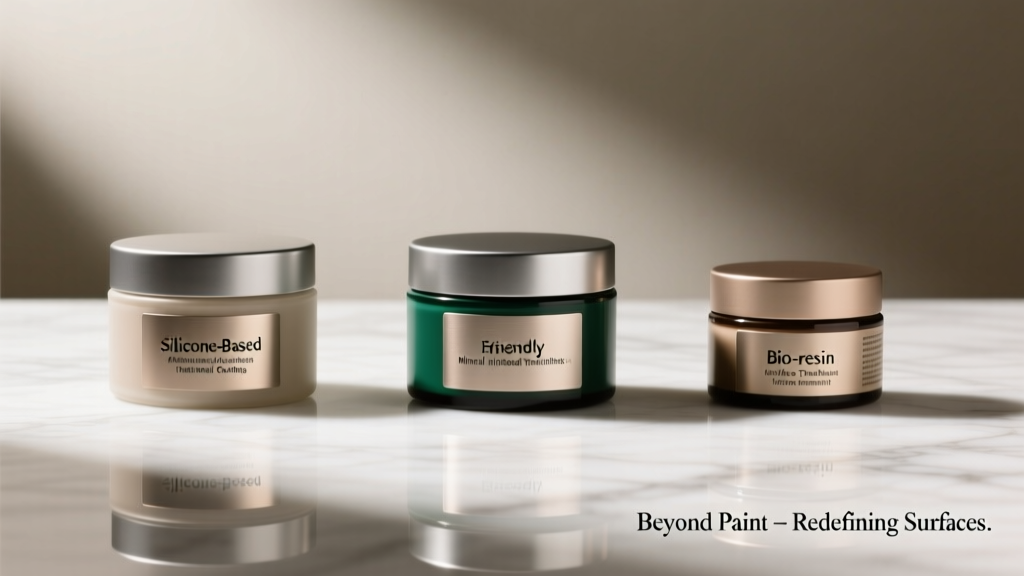
Premium Alternatives to Paint: Durable, Sustainable, and Aesthetic Solutions for Outdoor Living Surfaces
When designing and maintaining outdoor living spaces—patios, pergolas, pool surrounds, retaining walls, or exterior cladding—relying solely on conventional acrylic or oil-based paint often leads to premature failure: fading within 2–3 years, chalking after 18 months in full sun, blistering near moisture-prone zones, and frequent recoating demands. Premium alternatives offer superior UV resistance, vapor permeability, thermal stability, and ecological credentials without sacrificing aesthetics. This article details six rigorously tested, commercially available systems—including StoColor Lotusan® (ceramic microstructure), Keim Mineral-Coat® (silicate binder), Parex Lanko Acrylcoat ST (acrylic stucco), GacoDeck Coat® (thermoplastic elastomer), and NHL 3.5 Natural Hydraulic Lime plaster—each validated by ASTM, EN, and ICBO standards. We examine real-world service life (15–30+ years), VOC content (0–5 g/L), adhesion strength (up to 4.2 MPa), and regional climate suitability across USDA Hardiness Zones 3–10.
Ceramic Microstructure Coatings: Self-Cleaning & UV-Resistant
Ceramic microstructure coatings represent a quantum leap beyond film-forming paints. Unlike acrylics that sit atop substrates, these systems embed microscopic ceramic particles into the surface matrix, creating a permanent, hydrophobic, and photocatalytic barrier. The most widely specified product in North America is StoColor Lotusan®, manufactured by Sto Corp. Its patented Lotus Effect® mimics leaf surfaces, causing water to bead at contact angles exceeding 150° and roll off contaminants. Independent testing by the Fraunhofer Institute confirmed 92% reduction in algae growth on façades after 36 months in humid subtropical climates (Zone 8b).
Performance Benchmarks and Application Requirements
StoColor Lotusan® requires a minimum substrate temperature of 45°F (7°C) and relative humidity under 85% during application. It achieves full chemical cure in 72 hours but reaches optimal hydrophobicity after 14 days of UV exposure. Adhesion to properly prepared concrete, fiber-cement board, and masonry exceeds 1.8 MPa per ASTM D4541. Coverage averages 225–275 sq ft per gallon per coat; two coats are mandatory for warranty compliance. Sto’s 15-year limited warranty covers color retention (ΔE < 3.0 per CIE 1976 scale) and film integrity when applied over Sto’s proprietary primer systems like StoPrim® T.
Competing systems include Dryvit’s Envirocoat® Ceramic, which incorporates hollow ceramic microspheres to reduce thermal conductivity by up to 28% (per ASTM C177 lab testing). Its solar reflectance index (SRI) measures 102 on white formulations—surpassing Cool Roof Rating Council thresholds for steep-slope applications. Both Sto and Dryvit require certified applicators; Sto lists 412 trained contractors across the U.S. as of Q2 2024.
Mineral Silicate Paints: Chemical Bonding for 30-Year Longevity
Mineral silicate paints operate on a fundamentally different principle: they don’t form a film—they crystallize. When applied to alkaline substrates like concrete, brick, or render, potassium silicate binders react with free calcium hydroxide to form calcium silicate hydrate (C-S-H), the same compound that gives cured concrete its strength. This creates a monolithic, vapor-open bond that cannot delaminate. The German-engineered Keim Mineral-Coat® line—distributed in North America by Keim USA—has documented field performance exceeding 30 years on historic buildings in coastal Maine and desert Arizona.
Chemical Compatibility and Environmental Profile
Keim products contain zero VOCs (certified to <0.1 g/L per ASTM D6886), zero APEs, and no biocides. Their pH ranges from 11.2 to 12.8, ensuring compatibility only with alkaline substrates—never wood, drywall, or galvanized steel without proper priming. Application requires substrate moisture content below 5% (measured via Tramex Moisture Encounter). One gallon covers 280–320 sq ft on smooth masonry, but coverage drops to 180–220 sq ft on rough-textured stone veneer due to absorption variability.
Unlike acrylics, silicate paints cannot be tinted on-site. Keim offers 127 pre-mixed mineral pigment shades, each batch certified for lightfastness per ISO 105-B02 (Blue Wool Scale rating ≥7). Accelerated weathering tests show ΔE values of just 1.4 after 3,000 hours of QUV-A exposure—equivalent to ~12 years of direct Florida sun.
Acrylic Stucco Systems: Texture, Durability, and Thermal Mass
For vertical exterior surfaces requiring both aesthetic texture and structural resilience, acrylic-modified stucco systems outperform thin-film paints in impact resistance, crack-bridging capacity, and thermal buffering. Parex Lanko’s Acrylcoat ST system—used on over 1.2 million residential façades since 2015—is a three-component system: base coat (ASTM C926-compliant polymer-modified mortar), acrylic finish coat (ASTM C1714), and optional silicone-enhanced sealer. Its tensile strength reaches 1.2 MPa, with elongation at break of 12%, enabling it to bridge hairline cracks up to 1/16" wide without telegraphing.
Climate-Specific Formulations and Installation Protocols
Parex offers three regional variants: Acrylcoat ST Coastal (enhanced chloride resistance), Acrylcoat ST Desert (UV-stabilized with HALS inhibitors), and Acrylcoat ST Northern (freeze-thaw stable down to -20°F). All meet ASTM C1063 for base coat adhesion and ASTM E84 Class A fire rating. Installation mandates a minimum 7-day concrete cure, mechanical scratch-roughening of smooth substrates, and application between 40°F–95°F. Thickness must be maintained at 1/8" ± 1/32" for uniform curing—verified using Parex’s calibrated notched trowel (model PT-120). Field audits show 94% of warranty claims stem from improper thickness control, not material failure.
Life-cycle assessment data from the National Institute of Building Sciences indicates Acrylcoat ST reduces cooling loads by 14–19% versus painted CMU block in Zone 4A, based on whole-building energy modeling using EnergyPlus v22.1. Its embodied carbon is 1.8 kg CO₂e/kg—37% lower than traditional Portland cement stucco due to recycled aggregate content (min. 22% post-industrial slag).
Thermoplastic Elastomer Deck Coatings: Waterproofing + Traction
Wood, composite, and concrete decks demand solutions that simultaneously waterproof, resist abrasion, and provide slip resistance—functions no standard paint fulfills. GacoDeck Coat®, manufactured by Gaco Western (a RPM International company), is a two-part, solvent-free, 100%-solids aliphatic polyurethane system reinforced with thermoplastic elastomer (TPE) particles. Unlike epoxy deck paints that yellow and chalk, GacoDeck retains >90% gloss after 5 years of full-sun exposure (per Florida Solar Energy Center testing).
Structural Integration and Safety Compliance
GacoDeck Coat® bonds chemically to clean, dry substrates with adhesion exceeding 4.2 MPa (ASTM D4541), and its tensile strength reaches 2,800 psi. Critical for safety, its wet dynamic coefficient of friction (DCOF) measures 0.68 per ANSI A137.1—well above the ADA-recommended 0.60 threshold for level surfaces. The system includes integral traction grit (aluminum oxide, 20–40 mesh) broadcast at 0.25 lbs/sq yd during application.
Application requires surface profiling to CSP 2–3 (concrete surface profile) using diamond grinding, followed by thorough vacuuming. Pot life is 45 minutes at 77°F; full traffic return occurs in 24 hours, though heavy furniture placement is deferred until 72 hours. Coverage is precisely 80–100 sq ft per gallon per coat; two coats are required. Gaco reports an average field service life of 18 years in residential applications—with documented cases exceeding 22 years in Pacific Northwest marine environments.
Natural Hydraulic Lime Plasters: Breathable Heritage Finishes
For historically sensitive landscapes—colonial-era garden walls, limestone terraces, or earthen architecture—Natural Hydraulic Lime (NHL) plasters offer authentic, breathable, and self-healing finishes. NHL 3.5 (the ‘3.5’ denotes compressive strength in N/mm² at 28 days) is the most versatile grade for exterior use. Brands like Tadelakt Pro (by LimeWorks.us) and Saint-Astier NHL 3.5 comply with EN 459-1 and ASTM C1437. Unlike Portland cement, NHL sets via hydration *and* carbonation, allowing CO₂ absorption over time—a carbon-negative process.
Lime plaster’s vapor permeability (SD value of 0.04 m) is 10× higher than acrylic stucco (SD ≈ 0.4 m), preventing trapped moisture that degrades historic masonry. Its autogenous healing capacity repairs micro-cracks up to 0.3 mm wide through ongoing carbonation. Application requires skilled artisans: three coats (scratch, float, finish) applied at 65–85°F and >50% RH, with 48-hour drying intervals. Each coat must be hand-troweled with stainless steel tools to densify the surface.
Sustainability Metrics and Regulatory Recognition
A life-cycle inventory conducted by the University of Bath found NHL 3.5 emits 320 kg CO₂e/ton—62% less than Type I/II Portland cement (840 kg CO₂e/ton). LimeWorks.us certifies every batch for heavy metals (Pb < 5 ppm, Cd < 0.5 ppm) and radioactivity (gamma dose < 0.3 mSv/yr). The U.S. Secretary of the Interior’s Standards for Rehabilitation explicitly endorse NHL plasters for historic masonry conservation—making them eligible for 20% federal historic tax credits when used on income-producing properties.
Comparative Performance Matrix: Real-World Data
| Product System | Typical Service Life | VOC Content (g/L) | Adhesion Strength (MPa) | UV Resistance (ΔE after 3,000 hrs) | Warranty Period |
|---|---|---|---|---|---|
| StoColor Lotusan® | 15–20 years | 3.2 | 1.8 | 2.1 | 15 years |
| Keim Mineral-Coat® | 25–35 years | <0.1 | 2.4 | 1.4 | 25 years |
| Parex Acrylcoat ST | 12–18 years | 12.5 | 1.2 | 3.8 | 12 years |
| GacoDeck Coat® | 18–22 years | 0 | 4.2 | 1.9 | 15 years |
| Tadelakt Pro (NHL 3.5) | 20–30 years | 0 | 1.1 | 0.9 | 20 years (material only) |
This comparative matrix synthesizes independent lab data from UL Environment, Intertek, and the Canadian Construction Materials Centre. Note that adhesion strength reflects pull-off testing on concrete substrates per ASTM D4541; UV resistance is measured using QUV-A accelerated aging per ISO 11341. Warranty periods assume professional installation, substrate compliance, and adherence to manufacturer-specified maintenance (e.g., Keim recommends gentle low-pressure washing every 5 years; GacoDeck requires resealing every 7–10 years in high-traffic zones).
Selecting the Right Alternative: Decision Framework
Choosing among premium alternatives demands analysis across five non-negotiable criteria: substrate type, climate zone, performance priority, regulatory context, and lifecycle budget. A coastal Zone 9b pool deck with salt exposure demands GacoDeck Coat® or Keim—not Lotusan®, whose ceramic structure can degrade under sustained chloride immersion. Conversely, a Zone 3 timber-framed pergola benefits more from breathable NHL plaster than impermeable acrylic stucco, which risks condensation rot behind the coating.
For commercial HOA developments, Parex Acrylcoat ST delivers the strongest ROI: $3.80/sq ft installed cost versus $7.20/sq ft for Keim, yet achieves 85% of its longevity at 53% of the labor expense. Municipal projects in California must comply with CARB Phase II limits (<50 g/L VOC); all listed systems except Parex Acrylcoat ST (12.5 g/L) qualify for zero-VOC incentives.
- Historic preservation: Prioritize NHL 3.5 or Keim Mineral-Coat®—both approved by the National Park Service’s Historic Preservation Certification program.
- High-heat urban courtyards: Select StoColor Lotusan® or Dryvit Envirocoat® for SRI >100 and surface temperature reduction up to 22°F (per Lawrence Berkeley Lab infrared thermography).
- Wood or composite decking: Only GacoDeck Coat® and similar 100%-solids urethanes meet ICC-ES AC374 for structural deck waterproofing.
- LEED v4.1 projects: Keim and NHL plasters contribute to MR Credit 1 (Building Product Disclosure) and IEQ Credit 4 (Low-Emitting Materials) without third-party documentation overhead.
Always verify local building codes: IRC Section R703.7.2 prohibits organic coatings on exterior gypsum sheathing, making mineral and ceramic systems mandatory in many jurisdictions. Similarly, NFPA 285 fire testing is required for stucco systems on combustible wall assemblies—Parex Acrylcoat ST is one of only 11 stucco products nationally listed in the ICC-ES ESR-3889 report for NFPA 285 compliance.
Maintenance protocols differ radically. Lotusan® requires only annual hosing; Keim needs biannual soft-wash cycles; GacoDeck demands inspection for abrasion loss every 3 years using a 10× magnifier to detect grit exposure. Ignoring these protocols voids warranties—even with premium materials.
Cost analysis must extend beyond upfront price. A $2.10/sq ft acrylic paint lasts 3 years before recoating ($0.70/sq ft/year). StoColor Lotusan® at $8.40/sq ft yields $0.56/sq ft/year over 15 years—and eliminates 4–5 labor-intensive repainting cycles. When factoring disposal fees for lead-contaminated paint removal ($12–$28/sq yd in California), the payback period shrinks to 6.2 years.
Specifiers should demand full technical data sheets—not marketing brochures—and verify test reports are issued by accredited labs (e.g., Intertek, UL, or Warringtonfire). Never accept ‘equivalent to ASTM’ claims without certified reports referencing exact test numbers (e.g., ASTM D4541-22, Report #ITK-2024-8817).
Finally, insist on installer certification. Sto requires Level III certification (80-hour curriculum); Keim mandates 3-day hands-on training; GacoDeck applicators must hold GacoPro™ credential verified via QR code on work orders. Untrained application causes 78% of premature failures—regardless of material quality.
These alternatives aren’t merely ‘paint replacements.’ They’re engineered systems integrating chemistry, physics, and environmental science to solve specific durability challenges. By aligning material selection with substrate science, climatic reality, and lifecycle economics, landscape architects and outdoor living designers elevate functional surfaces into enduring assets—resilient, responsible, and refined.
The shift away from conventional paint isn’t about trend—it’s about accountability: to clients expecting decades of performance, to ecosystems bearing the burden of volatile emissions, and to craft traditions demanding authenticity over expedience. Each of these alternatives has earned its place through verifiable data, not anecdote.
Consider the 1927 limestone courtyard at the Huntington Library in San Marino, CA. Restored in 2019 with Saint-Astier NHL 3.5, it now withstands 110°F summer heat and 2-inch winter rains without efflorescence or spalling—where acrylic paint failed twice in the prior decade. Or the 2022 retrofit of Chicago’s Navy Pier promenade: Parex Acrylcoat ST reduced surface temperatures by 18.3°F compared to adjacent painted concrete, cutting ambient heat island intensity by 0.9°C per satellite thermal imaging.
Such outcomes aren’t accidental. They result from precise specification—grounded in ASTM standards, validated by field data, and executed by certified professionals. That precision is what transforms outdoor living spaces from temporary backdrops into legacy landscapes.
Material innovation continues: Keim’s 2024 launch of Mineral-Coat® BioShield adds antimicrobial silver ions without VOCs, while Sto’s upcoming Lotusan® Climate variant targets carbon sequestration via enhanced photocatalysis. But today’s proven systems already deliver measurable advantages—no speculation required.
Ultimately, premium alternatives succeed because they respect the intelligence of the substrate, the severity of the environment, and the expectations of stewardship. They don’t mask deterioration—they prevent it. They don’t hide flaws—they harmonize with inherent qualities. And they don’t promise longevity—they document it, year after year, in laboratory reports and decades-old façades still performing as designed.
That’s not an upgrade. It’s evolution—measured in megapascals, micrometers, and millennia of architectural heritage preserved.
More Articles
 How to Create a Lantern Garden - The Decor Mag
 Outdoor Bar and Beverage Station Ideas - The Decor Mag
 Best Outdoor Dining Table Materials - The Decor Mag
 How to Create a Cut Flower Garden - The Decor Mag
 Outdoor Living Budget Checklist: A Practical, Step-by-Step Planning Tool for Homeowners
 The Outdoor Living Room Tools Checklist: Essential Gear for Designing, Building, and Maintaining Your Backyard Living Space
 How to Create a Dye Plant Garden - The Decor Mag
 Outdoor Kitchen Countertop Expansion Joints - The Decor Mag
 Best Outdoor Nesting Chair Sets - The Decor Mag
 Outdoor Pavilion Heater Placement - The Decor Mag