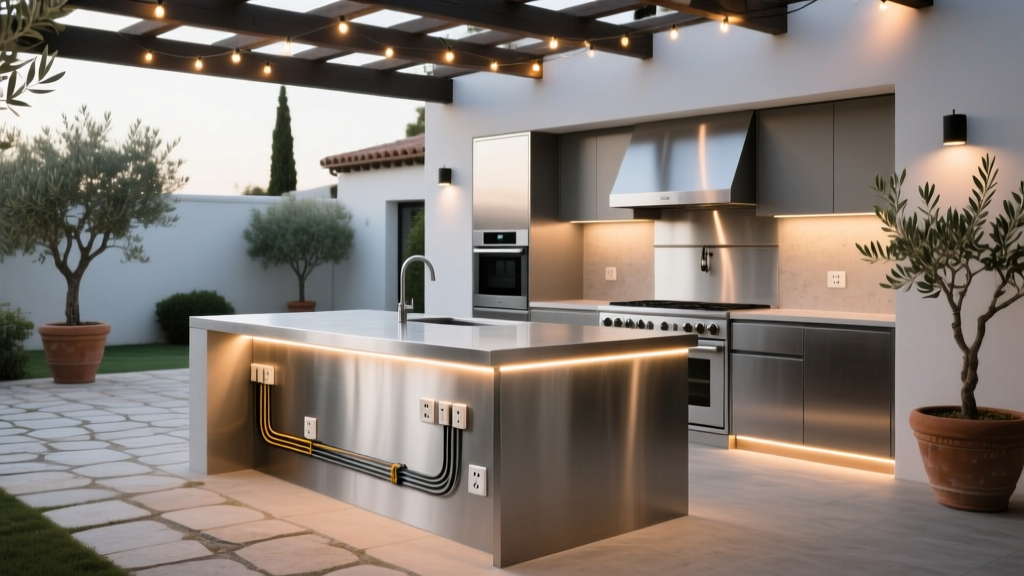
Outdoor Kitchen Electrical Planning Guide - The Decor Mag
An outdoor kitchen can turn an ordinary patio into the heart of your home—where summer birthdays spill into the backyard, where weeknight dinners feel like mini-vacations, and where year-round outdoor living becomes a real possibility. But nothing disrupts the vibe faster than tripped breakers, dim task lighting, or discovering (too late) that your dream pizza oven and beverage fridge can’t share the same circuit.
Electrical planning is the behind-the-scenes work that makes outdoor cooking feel effortless. It impacts safety, convenience, lighting, sound, heating, and even how your landscape design performs after dark. A smart plan also prevents costly change orders once hardscape and countertops are installed.
This guide walks you through practical, homeowner-friendly electrical planning for an outdoor kitchen—complete with layout tips, material recommendations, climate considerations, budget ranges, and common mistakes to avoid—so your patio living space feels polished, inviting, and built to last.
Start with How You’ll Actually Use the Outdoor Kitchen
Before you talk circuits, define your lifestyle goals. Your “electrical wish list” should match the way your household entertains, cooks, and relaxes outdoors.
Choose your outdoor kitchen “level”
- Grill Station (basic): Grill, prep counter, a couple outlets, task lighting.
- Entertainer’s Bar (mid-range): Grill + beverage fridge, ice maker, undercounter lighting, speakers, extra outlets for slow cookers/blenders.
- Full Outdoor Kitchen (premium): Multiple cooking appliances, warming drawer, ventilation hood, specialty lighting, smart controls, heating, TV, high-end audio.
Map your activity zones (best layout approach)
Borrow the same planning logic used in indoor kitchens and apply it outdoors:
- Cook zone: grill, side burner, pizza oven, smoker area
- Prep zone: countertops, sink, trash, small appliance outlet
- Serve zone: bar counter, pass-through, warming area
- Hangout zone: dining set, lounge seating, fire feature, TV
Electrical planning is easiest (and often cheaper) when zones are clear because circuits and conduit runs can be grouped logically.
Electrical Safety Basics for Outdoor Kitchens
Outdoor kitchens combine electricity, water, heat, and weather—so the safety bar is higher than a typical patio outlet. Local building codes vary widely, so plan to involve a licensed electrician early, especially if you’re adding a subpanel or multiple dedicated circuits.
Core requirements to discuss with your electrician
- GFCI protection: Outdoor outlets and many outdoor appliances typically require ground-fault protection.
- Weather-resistant receptacles: Use outdoor-rated receptacles with in-use (bubble) covers where required.
- Wet location vs. damp location ratings: Covered patios may still be considered damp; fully exposed outlets and fixtures need wet-rated products.
- Proper grounding and bonding: Especially important with metal frames, grills, and any nearby pool/spa areas.
- Dedicated circuits: Many appliances (fridges, ice makers, electric grills, heaters) perform best and safest on dedicated lines.
Plan for a subpanel (often worth it)
If your outdoor kitchen is far from the main electrical panel or you’re adding multiple circuits, a small outdoor-rated subpanel can simplify the build and reduce voltage drop. It also makes future upgrades—like a pergola fan, more lighting, or a hot tub—much easier.
Build Your Appliance and Power “Load List”
The quickest way to avoid overloads is to list every electrical component you want now (and what you might want later). Share this list with your electrician during the design phase, before hardscape goes in.
Common outdoor kitchen electrical components
- Refrigeration: beverage fridge, undercounter fridge, wine cooler
- Cooking: electric grill, pellet smoker, rotisserie motor, induction cooktop
- Convenience: ice maker, disposal, instant hot water, warming drawer
- Comfort: ceiling fan, infrared heaters, misting system pump
- Entertainment: outdoor TV, sound system, Wi-Fi extender
- Lighting: task lights, pendant lights, undercounter LEDs, landscape lighting, step lights
- Extras: phone charging drawer, beer tap system, security camera
Practical circuit planning idea (real-world approach)
Many homeowners do best with a “separate the heavy hitters” strategy:
- Put refrigeration on its own circuit.
- Put high-draw appliances (ice maker, electric grill, heaters) on dedicated circuits.
- Keep lighting on a separate circuit so the party doesn’t go dark if an appliance trips.
- Add at least one “general-use” circuit for small appliances and phone charging.
Outlet Placement That Feels Seamless (Not Afterthought)
Outlets are where outdoor kitchen design meets daily convenience. The goal: easy access without cluttering your backsplash or ruining a beautiful stone facade.
Where to put outlets in an outdoor kitchen
- Prep counter: for blender, speaker, warming tray, or laptop when hosting.
- Bar/serve area: for phone charging, small accent lamps, or a margarita machine.
- Island ends: discreet locations that keep cords off work surfaces.
- Near seating zones: especially if you’ll add string lights, portable heaters, or device charging.
Outlet style recommendations (materials + durability)
- Stainless steel or UV-stable polymer cover plates: resist yellowing and corrosion.
- Marine-grade hardware in coastal climates: better against salt air and rust.
- In-use covers: allow cords to remain plugged in during rain, great for refrigerators or accent lighting.
Lighting Design: Make the Outdoor Kitchen Glow
Lighting is the secret ingredient for patio living. It boosts safety, elevates ambiance, and helps your landscape design look intentional after sunset.
Use a layered lighting plan
- Task lighting: bright, focused light over grill and prep counters (essential for safe cooking).
- Ambient lighting: pergola downlights, wall sconces, or soft overhead fixtures for overall glow.
- Accent lighting: undercounter LEDs, toe-kick lighting, spotlighting for trees or architectural features.
- Path and step lighting: keeps routes to the kitchen, pool, or garden safe.
Best fixture and bulb recommendations for outdoor kitchens
- LED fixtures: long life, low energy, excellent for year-round outdoor living.
- Warm white color temperature (2700K–3000K): flattering and inviting for dining and entertaining.
- Powder-coated aluminum or stainless fixtures: durable in rain and sun; choose marine-grade stainless in coastal areas.
- Dimmable circuits: bright for cooking, soft for dessert and conversation.
Smart controls that actually help
- Separate switches: task, ambient, and landscape lighting on their own controls.
- Timers/photocells: landscape lights that automatically turn on at dusk.
- Smart dimmers: scenes like “Cook,” “Dinner,” and “Late Night.”
Integrate Electrical with Hardscape, Materials, and Layout
The best outdoor kitchen electrical plans are coordinated with the patio, pergola, and landscape—so you’re not cutting into finished pavers or drilling through brand-new stone veneer.
Recommended outdoor kitchen materials that pair well with electrical planning
- Non-combustible island structure: concrete block or metal framing for durability.
- Countertops: granite, concrete, or sintered stone/porcelain slabs for heat and weather resistance.
- Backsplash and cladding: natural stone veneer, porcelain tile, or stucco for a clean finish around outlets and switches.
- Conduit planning: run conduit before pouring concrete pads or setting pavers; sleeve beneath hardscape where possible for future pulls.
Design tip: hide outlets without sacrificing convenience
- Place outlets on island side panels rather than directly above the counter line.
- Use matching outlet covers that blend with stone or tile tones.
- Consider discrete pop-up outlets only if they’re truly outdoor-rated and protected from water intrusion.
Climate, Seasonal Use, and Maintenance Planning
Outdoor kitchens live in the elements. Your climate affects everything: corrosion risk, conduit depth, fixture ratings, and how you protect equipment during the off-season.
Cold climates (freeze/thaw, snow)
- Choose fixtures rated for wet locations even under a roof—wind-driven moisture finds its way in.
- Plan winter shutoff: switch off and cover appliances; consider dedicated disconnects for certain equipment.
- Use durable pathway lighting: step and path lights help with icy conditions during winter entertaining.
Hot, sunny climates (UV + heat)
- UV-resistant materials: outdoor-rated cable jackets, covers, and fixtures reduce cracking and fading.
- Shade matters: pergolas with fans and task lighting make summer cooking more comfortable.
- Ventilation planning: if adding a hood, coordinate electrical needs early.
Coastal or humid climates (corrosion + salt air)
- Marine-grade stainless and sealed fixtures: prevents premature rust and electrical failures.
- Regular inspection: check covers, gaskets, and mounting hardware every season.
Easy maintenance checklist (seasonal)
- Spring: test GFCI outlets, check lighting, clean fixture lenses, inspect covers.
- Summer: keep cords tidy; avoid running extension cords across high-traffic patio zones.
- Fall: clean fans, confirm heaters work, check landscape lighting timers.
- Winter: cover appliances; shut down non-essential circuits if recommended by your electrician.
Landscaping and Planting Tips Around Outdoor Kitchen Electrical
Great landscape design makes the outdoor kitchen feel like it belongs in the yard—not dropped onto a slab. When planting near electrical features, prioritize low-maintenance, non-messy choices and keep clear access to outlets, panels, and lighting transformers.
Plant suggestions that pair beautifully with patios and outdoor kitchens
- Fragrant herbs (containers near prep zone): rosemary, thyme, basil, chives (easy to clip while cooking).
- Architectural evergreens (structure year-round): boxwood, dwarf yaupon holly, juniper varieties suited to your zone.
- Ornamental grasses (movement and soft screening): fountain grass (warm climates), feather reed grass (cooler climates).
- Pollinator-friendly color away from food prep: salvia, lavender, coneflower—place them a few feet away to reduce bee traffic near dining.
Smart planting rules around electrical and cooking areas
- Keep plants clear of vents, outlet covers, and any subpanel access.
- Avoid thorny shrubs near walkways and island corners.
- Minimize messy fruit drop near countertops and seating (save fruiting trees for other yard zones).
Budget Ranges: What Outdoor Kitchen Electrical Planning Can Cost
Costs vary by region, distance from the main panel, trenching needs, and how many circuits you add. Use these ranges as a starting point for planning your outdoor living budget.
- Basic electrical upgrade ($500–$1,500): a few outdoor-rated outlets, one or two circuits, simple lighting.
- Mid-range outdoor kitchen electrical ($1,500–$4,000): multiple circuits, dedicated line for fridge, layered lighting, some trenching.
- Premium electrical + controls ($4,000–$10,000+): subpanel, extensive lighting/landscape lighting integration, heaters, smart controls, entertainment wiring, longer runs.
Pro tip: Allocate 10–20% of your total outdoor kitchen build budget to electrical and lighting if you’re aiming for a finished, resort-like patio living feel.
Common Outdoor Kitchen Electrical Mistakes to Avoid
- Underestimating future needs: not leaving capacity for heaters, additional lighting, or a second fridge later.
- Putting everything on one circuit: leads to nuisance trips and unreliable appliance performance.
- Forgetting task lighting: a beautiful patio that’s frustrating to cook on after sunset.
- Placing outlets where cords cross walkways: creates trip hazards and looks messy.
- Using indoor-rated components outside: fixtures and outlets fail quickly and can become unsafe.
- Skipping coordination with hardscape: cutting pavers or drilling stone after installation is expensive and avoidable.
FAQ: Outdoor Kitchen Electrical Planning
How many outlets should an outdoor kitchen have?
Most homeowners are happiest with at least 3–6 outlets distributed across prep, serving, and seating zones, plus dedicated connections for fixed appliances like a refrigerator or ice maker. Your exact count depends on layout and how you entertain.
Do outdoor kitchen outlets need GFCI?
In many areas, yes—outdoor receptacles commonly require GFCI protection. It’s a key safety feature in wet or damp conditions. Confirm requirements with your local building department and electrician.
Should I add a subpanel for my outdoor kitchen?
If you’re adding multiple appliances, landscape lighting, heaters, or a future hot tub, a subpanel is often a smart investment. It simplifies circuit management and can reduce voltage drop on longer runs.
What’s the best lighting color for an outdoor kitchen?
For inviting outdoor living spaces, aim for 2700K–3000K. Use brighter task lighting over the grill and prep areas, then dim the ambient layers for dining and lounging.
Can I run extension cords to power an outdoor kitchen?
Extension cords are fine for temporary use, but they’re not a long-term outdoor kitchen solution. Permanent appliances, lighting, and entertainment features should be powered by properly installed outdoor-rated circuits for safety and reliability.
How do I make my outdoor kitchen work for year-round outdoor living?
Plan for layered lighting, weather-rated outlets and fixtures, and comfort features like infrared heaters or a ceiling fan. Add wind-blocking elements (privacy screens, evergreen plantings, or a pergola with curtains) so the space stays usable beyond summer.
Next Steps: Turn Your Plan into a Patio-Ready Reality
Start by sketching your outdoor kitchen layout with clear cook, prep, and hangout zones. Build a complete list of appliances and lighting features, then schedule a walk-through with a licensed electrician before any pavers, countertops, or stone veneer are installed. When electrical planning is handled early, the finished space feels effortless—bright where you need it, cozy where you want it, and ready for every season.
For more inspiring outdoor design, landscaping ideas, and patio living upgrades, explore the latest guides and project features on thedecormag.com.
More Articles
 Outdoor Gazebo Design Inspiration - The Decor Mag
 Outdoor Kitchen Drawer Slide Materials - The Decor Mag
 Safety Alternatives to Aging: Practical, Evidence-Based Outdoor Living Solutions for Older Adults
 Trends for Height: Elevating Outdoor Living with Smart Vertical Design
 How to Design a Rooftop Terrace - The Decor Mag
 Outdoor Pavilion Sound System Setup - The Decor Mag
 Best Outdoor Dining Table Materials - The Decor Mag
 Outdoor Pavilion and Cabana Structures - The Decor Mag
 Premium Outdoor Living Trends 2026: Innovation, Sustainability, and Elevated Craftsmanship
 Best Outdoor Swinging Chair Picks - The Decor Mag