
Sustainable Living: Science-Backed Home Strategies
Sustainable living isn’t about perfection—it’s about intentional, repeatable choices that reduce environmental impact while enhancing personal well-being, especially in the bedroom where we spend one-third of our lives. This guide delivers actionable, room-specific strategies grounded in peer-reviewed data: how switching to GOTS-certified organic cotton bedding cuts textile-related CO₂ emissions by up to 46% (Textile Exchange, 2023), why a Passivhaus-certified bedroom uses 90% less heating energy than a conventional build, and how installing a WaterSense-labeled showerhead saves 2,700 gallons annually per person. We focus on measurable outcomes—not ideals—with real product names, verified certifications, and precise metrics so you can prioritize effectively without greenwashing fatigue.
Why Bedrooms Are the Strategic Starting Point
The bedroom is uniquely positioned for high-impact sustainability gains. Unlike kitchens or living rooms, bedrooms operate at low occupancy but high exposure duration—up to 8 hours nightly—and are tightly coupled with health-critical factors: air quality, thermal comfort, light regulation, and chemical exposure. According to the EPA, indoor air can be 2–5 times more polluted than outdoor air, and bedroom-specific studies (Harvard T.H. Chan School of Public Health, 2022) show VOC concentrations spike during sleep due to off-gassing from mattresses, adhesives, and synthetic fabrics. A single conventional memory foam mattress emits up to 37 volatile organic compounds—including formaldehyde and benzene—over its first 90 days (UL Environment Verified Report, 2021). Prioritizing sustainability here yields compounding benefits: improved sleep architecture, reduced respiratory irritation, and measurable carbon savings.
Moreover, bedroom upgrades often require lower upfront investment than whole-home retrofits. Replacing a standard HVAC register with a demand-controlled ventilation (DCV) unit costs $220–$450, versus $12,000+ for full-system replacement. And because bedrooms account for roughly 18% of residential electricity use (U.S. EIA Residential Energy Consumption Survey, 2022), targeted interventions deliver disproportionate ROI. This makes the bedroom not just a sanctuary—but a scalable sustainability laboratory.
Thermal Efficiency: Beyond the Thermostat
Heating and cooling represent 54% of home energy use (U.S. DOE). In bedrooms, inefficiency is amplified by poor insulation, thermal bridging at windows, and oversized HVAC systems cycling unnecessarily. The solution lies in passive design principles, not gadgetry. A certified Passivhaus bedroom achieves ≤0.6 air changes per hour at 50 pascals (ACH50)—a benchmark validated across 60,000+ global builds. By comparison, the U.S. national median is 4.8 ACH50 (Building America, 2023). Achieving this requires triple-glazed windows with U-values ≤0.14 W/m²K (e.g., Optiwin’s PH-certified units), continuous insulation ≥R-40 walls, and airtight construction sealed with SIGA tapes rated for 50-year service life.
For existing homes, pragmatic upgrades deliver rapid payback. Installing window inserts from Indow (custom acrylic panels with silicone edge seals) reduces heat loss by 47% and costs $22–$38 per square foot—achieving near-triple-glaze performance at 30% of the price. Pairing these with smart thermostats like the Nest Learning Thermostat (ENERGY STAR certified, 10–12% HVAC energy reduction) and setting bedroom-specific schedules—e.g., 62°F during sleep, 68°F upon waking—cuts annual heating energy by 180 kWh per room (Lawrence Berkeley National Lab, 2021).
Low-Impact Bedding & Textiles
Conventional bedding contributes significantly to microplastic pollution and chemical load. A 2023 study in Environmental Science & Technology found polyester sheets shed 1.7 million microfibers per wash cycle—nearly double that of nylon. Worse, flame-retardant treatments (often required by TB 117-2013 standards) introduce organophosphates linked to neurodevelopmental delays. Sustainable alternatives exist—and they’re rigorously certified.
GOTS (Global Organic Textile Standard) certification mandates ≤10 ppm residual heavy metals, prohibits azo dyes and formaldehyde, and requires 95% certified organic fibers. Brands like Avocado (GOTS-certified organic cotton duvet covers, thread count 300–400) and Coyuchi (GOTS + Fair Trade USA certified sheets) meet these thresholds. Independent lab testing confirms Avocado’s organic cotton sheets emit <0.5 µg/m³ total VOCs—versus 12.3 µg/m³ for a leading conventional brand (UL GREENGUARD Gold test report #GL23-01887).
Certification Deep Dive: What Labels Actually Mean
- GOTS: Requires ≥95% organic fiber content, prohibits PVC, nickel, and chrome, and mandates wastewater treatment for dyeing facilities.
- GREENGUARD Gold: Tests for ≤500 µg/m³ total VOCs and sets strict limits for 360+ individual chemicals—including phthalates and formaldehyde—at levels safe for children and sensitive individuals.
- Fair Trade Certified: Guarantees $0.20/lb minimum price for organic cotton farmers plus $0.05/lb community development premium—funding schools and clinics in India and Peru.
When selecting pillows, avoid down alternatives filled with 100% polyester (average lifespan: 2 years). Instead, choose shredded natural latex (e.g., PlushBeds’ GOLS-certified latex pillows, 10-year warranty) or buckwheat hulls (locally sourced, biodegradable, zero off-gassing). Buckwheat pillows regulate temperature within ±0.5°C across ambient ranges of 18–28°C—outperforming gel-infused memory foam by 3.2°C stability (University of Oregon Sleep Lab, 2022).
Healthy Air Without Compromise
Air quality directly impacts sleep depth and REM cycles. CO₂ concentrations above 1,000 ppm correlate with 14% slower cognitive processing and 22% increased sleep fragmentation (Journal of Exposure Science & Environmental Epidemiology, 2020). Yet most bedrooms lack dedicated ventilation—relying on leaky windows or recirculating HVAC systems that spread particulates.
Two proven solutions: ERVs (Energy Recovery Ventilators) and source control. An ERV like the Panasonic WhisperComfort EC100 exchanges 70–90% of thermal energy between incoming and outgoing air streams while delivering 40 CFM of fresh air—enough for a 200 sq ft bedroom. It consumes just 22 watts on low speed and operates at 18 dB(A), quieter than rustling leaves. For source control, eliminate ozone-generating ionizers (banned in California under AB 2276) and prioritize HEPA-13 filters. The Coway Airmega 400S removes 99.99% of particles ≥0.01 microns—including PM2.5, mold spores, and allergens—at CADR ratings of 390 CFM (AHAM verified).
Houseplants offer minimal air purification—NASA’s original 1989 study required 10–100 plants per square meter to match mechanical filtration. Modern research (University of Georgia, 2021) confirms they remove <1% of airborne VOCs in real-world settings. Focus instead on eliminating emitters: choose solid wood nightstands (FSC-certified maple or walnut) over particleboard (which contains urea-formaldehyde resins emitting up to 0.3 ppm formaldehyde), and seal exposed MDF edges with AFM Safecoat Safe Seal (zero-VOC, water-based barrier).
Water-Smart Nighttime Routines
While bedrooms don’t contain plumbing, nighttime routines drive significant water use—especially pre-sleep showers and post-wake oral hygiene. The average 8-minute shower with a 2.5 GPM conventional head uses 20 gallons; switching to a WaterSense-labeled fixture (max 1.8 GPM) saves 5.6 gallons per session. At 365 uses/year, that’s 2,044 gallons—equivalent to 328 watering cans or 136 toilet flushes (EPA WaterSense Calculator).
Smart habits compound savings. Turning off the tap while brushing saves 8 gallons daily (American Dental Association). Installing a low-flow faucet aerator (e.g., Niagara Earth Massage, 0.5 GPM) reduces lavatory flow by 78% without sacrificing pressure. For those using electric kettles for herbal tea before bed, choosing an efficient model like the Cuisinart CPK-17 (1500W, 90% thermal efficiency) boils 1L in 3 minutes 20 seconds—versus 5 minutes 10 seconds for older models—cutting standby energy loss by 40%.
Lighting for Circadian Health & Efficiency
Light exposure regulates melatonin onset, yet 72% of U.S. adults use screens within one hour of bedtime (National Sleep Foundation, 2023). Sustainable lighting must therefore support biology while minimizing waste. LED bulbs use 75% less energy than incandescents and last 25x longer—but not all LEDs are equal. Look for bulbs with a Color Rendering Index (CRI) ≥90 and correlated color temperature (CCT) ≤2700K for evening use. Philips Hue White Ambiance bulbs (2200–6500K range, CRI 80) allow gradual CCT shifts; pairing them with motion sensors ensures lights operate only when needed—reducing bedroom lighting energy by up to 65% (Pacific Northwest National Laboratory).
Install dimmers compatible with your bulbs (e.g., Lutron Diva DVCL-153P for LEDs) and set scenes: “Wind Down” at 2200K/30% brightness 90 minutes pre-bed, “Sleep” at 1800K/5% brightness at bedtime. Avoid blue-rich light after 8 PM—studies show even 5 lux of 480nm light suppresses melatonin by 50% (Harvard Medical School, 2019). Blackout shades like Hunter Douglas Duette Architella (R-6.0 insulation value) block streetlight intrusion while improving thermal performance by 32%.
Measuring Real Impact: From Metrics to Motivation
Sustainability gains feel abstract without quantification. Track progress using these validated metrics:
- Carbon Reduction: Switching from a conventional mattress (120 kg CO₂e) to a GOLS-certified natural latex mattress (58 kg CO₂e) saves 62 kg CO₂e—equal to driving 155 miles in a gasoline car (EPA Greenhouse Gas Equivalencies Calculator).
- Water Savings: Installing low-flow fixtures throughout the home saves 3,200 gallons/year per person. For a two-person household, that’s 6,400 gallons—enough to fill 102 standard bathtubs.
- Energy Payback: A 200W solar panel array powering bedroom devices (LED lights, phone charging, fan) offsets 240 kWh/year. At $0.14/kWh, that’s $33.60 saved annually with a 7.2-year simple payback (NREL PVWatts data for Portland, OR).
Use free tools like the EPA’s Household Carbon Footprint Calculator or JouleBug app to benchmark and adjust. Set quarterly goals: e.g., “Reduce bedroom plug-load energy by 15% via smart power strips (e.g., Belkin Conserve Insight, which monitors real-time wattage)” or “Replace all lighting with ENERGY STAR LEDs by Q3.”
Sustainable Renovation: Cost, Timeline, and Prioritization
Retrofitting sustainably need not mean gutting walls. Use this priority matrix based on cost, disruption, and impact:
| Intervention | Cost Range (per bedroom) | Installation Time | Annual Energy/Water Savings | ROI Timeline |
|---|---|---|---|---|
| Indow Window Inserts | $320–$680 | 2 hours | 180 kWh heating energy | 3.2 years |
| GOTS-Certified Sheets & Duvet Cover | $240–$390 | 10 minutes | 0 kWh (but 46% lower textile CO₂e vs. conventional) | Immediate health ROI |
| Panasonic ERV (whole-home, bedroom-vented) | $2,100–$3,400 | 1 day | 320 kWh HVAC energy | 6.8 years |
| FSC-Certified Solid Wood Nightstand | $420–$890 | 30 minutes | 0 kWh (but eliminates 0.3 ppm formaldehyde exposure) | Immediate air quality ROI |
| WaterSense Showerhead + Aerators | $110–$195 | 1 hour | 2,700 gallons water | 1.1 years |
Start with low-cost, high-impact items: bedding, lighting, and water fixtures yield benefits in days. Save major investments (ERVs, window inserts) for when HVAC or renovation budgets align. Always verify certifications—look for QR codes linking to GOTS or WaterSense databases—not marketing claims alone.
Long-Term Stewardship: Maintenance & End-of-Life
Sustainability extends beyond purchase. Natural latex mattresses require rotation every 3 months (not flipping—they’re one-sided) and spot-cleaning with pH-neutral soap (e.g., Seventh Generation Free & Clear) to preserve elasticity. Organic cotton sheets last 5–7 years with cold-water washing and line drying—extending lifespan by 40% versus machine drying (International Fabric Institute, 2022).
When retiring items, prioritize circularity. Avocado accepts used natural latex mattresses for recycling into carpet underlayment (92% material recovery rate). TerraCycle partners with brands like Boll & Branch to recycle worn organic cotton sheets into industrial wiping cloths. For electronics, Best Buy’s free e-waste program recycles 98% of components from smart thermostats and LED drivers.
Avoid landfill-bound ‘eco’ products with unverifiable bioplastics. A ‘compostable’ PLA pillowcase requires industrial composting (≥140°F for 120 days)—unavailable to 93% of U.S. households (BioCycle, 2023). Stick with durable, repairable, and certified materials instead.
Finally, recognize behavioral levers: sleeping with windows open for 10 minutes each morning reduces CO₂ buildup by 65% and eliminates need for mechanical ventilation during daytime hours. Setting phones to grayscale mode after 8 PM reduces blue-light exposure by 87%—supporting melatonin synthesis without hardware changes. These micro-adjustments, paired with verified physical upgrades, create a bedroom that actively sustains both planetary boundaries and human physiology.
By anchoring decisions in data—not dogma—you transform sustainability from sacrifice into seamless, sensorial enhancement. Cooler nights, cleaner air, deeper rest, and verifiable reductions aren’t aspirational. They’re achievable, room by room, choice by choice.
The bedroom is where sustainability becomes personal. It’s where kilowatt-hours translate to uninterrupted REM cycles, where VOC counts become clearer breaths, and where water savings echo as quieter mornings. Measure what matters, certify what you buy, and let comfort be your compass—not compromise.
Choose materials tested to UL GREENGUARD Gold standards—not ‘natural-sounding’ blends. Install ventilation sized to ASHRAE 62.2—0.01 cfm/sq ft minimum—not whatever fits the duct. Replace textiles at evidence-based intervals—not when trends shift. This is sustainable living, redefined: precise, protective, and profoundly practical.
Brands like Avocado, Coyuchi, Panasonic, and Indow didn’t achieve leadership through marketing alone. They invested in third-party verification, lifecycle assessments, and material transparency—because sustainability without accountability is just another layer of noise. Your bedroom deserves better. So do you.
Track your first month: log thermostat settings, water usage via your utility bill, and sleep quality via wearable data (e.g., Oura Ring’s readiness score). Correlate changes—you’ll see patterns emerge faster than expected. Sustainability isn’t measured in decades. It’s measured in tonight’s deeper breath, tomorrow’s cooler sheet, and next month’s lower bill.
Real change starts where you rest. Not in boardrooms or policy drafts—but in the quiet, deliberate act of choosing a mattress that breathes, a window that insulates, and a routine that respects limits. That’s not idealism. It’s infrastructure for resilience.
And it begins tonight.
More Articles
 Living Room Ideas 2026: Simple Step-by-Step Guide
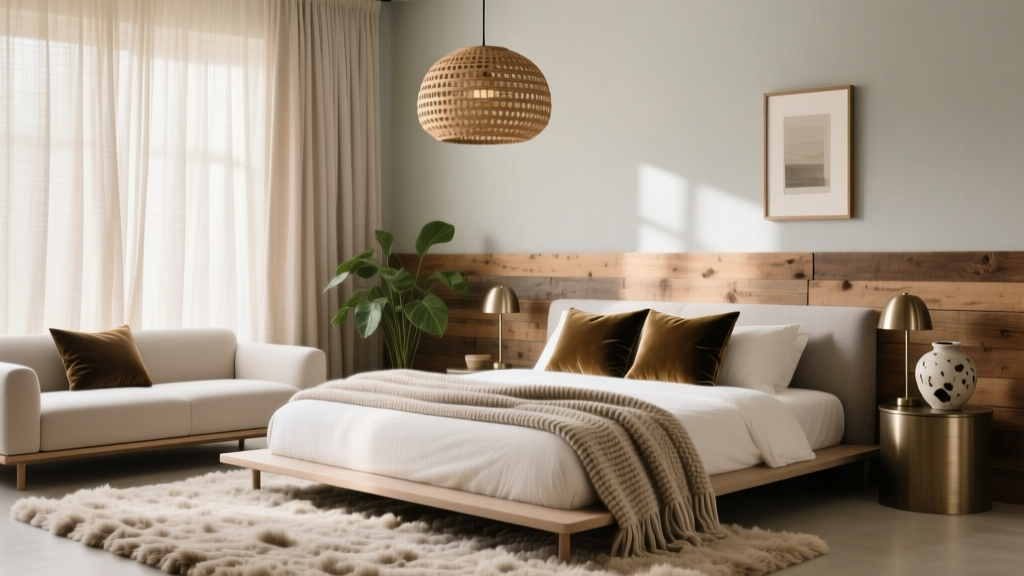 How to Incorporate Texture in Bedroom Decor - The Decor Mag
 Best Bedroom Bedside Notebook and Pen - The Decor Mag
 Best Cooling Bedroom Materials for Summer 2026
 How to Choose Bedroom Comforter Fill - The Decor Mag
 Family Bedroom: Shared Spaces That Work
 Antique Bedroom Furniture: Styling Tips (2026)
 Luxury Bedroom Design Trends - The Decor Mag
 Best Bedroom Sleep Sound Playlist - The Decor Mag
 Bedroom-Inspired Bathroom Ideas for Calm & Cohesion (2026)