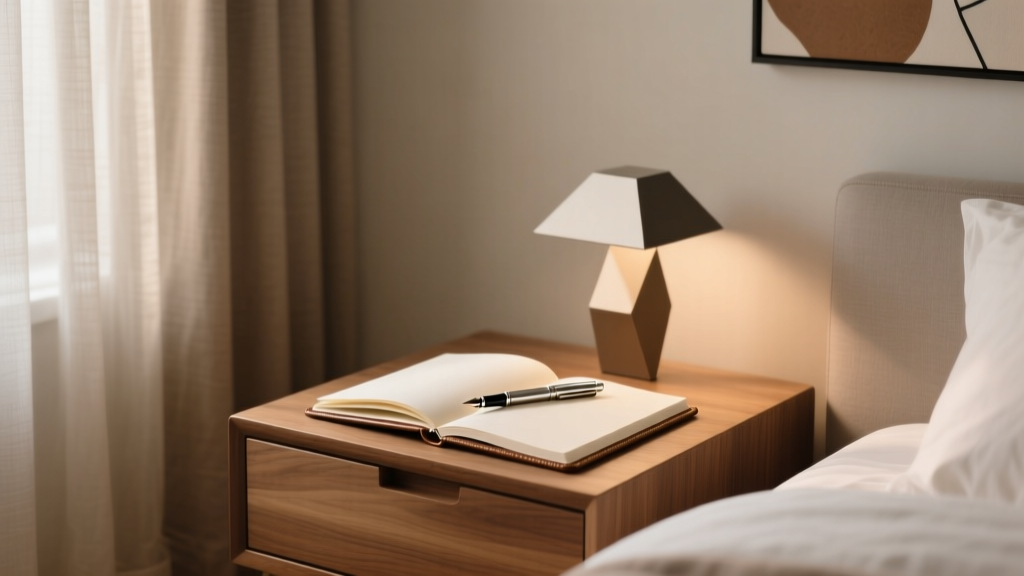
Best Bedroom Bedside Notebook and Pen - The Decor Mag
There’s a quiet kind of luxury in a bedroom that supports your nervous system. Soft lighting, breathable bedding, uncluttered surfaces—each choice sends a signal to your brain that it’s safe to power down. A bedside notebook and pen might seem like a minor accessory, but in a well-designed sleep environment, it can be one of the most effective tools for reducing bedtime anxiety and improving sleep quality.
When thoughts race at night, many people reach for their phone. The problem: screens add blue light, stimulation, and endless opportunities to scroll. A dedicated bedside notebook offers a calmer alternative. You can “park” tomorrow’s to-dos, process emotions, or capture a creative idea—then return to rest without the bright, alerting glow of a device.
This guide covers the best types of bedside notebooks and pens, how to style them so they complement your bedroom decor, and how to place them within an intentional layout. You’ll also find sleep-friendly wellness tips, budget ranges, and the common mistakes that accidentally turn a helpful habit into bedside clutter.
Why a Bedside Notebook Belongs in a Sleep-Friendly Bedroom
It supports mental offloading (and less midnight spiraling)
Sleep specialists often recommend “cognitive offloading”—writing down worries or tasks so your brain stops trying to rehearse them. A bedside notebook creates a consistent landing spot for loose thoughts, which can reduce rumination and help you fall asleep faster.
It replaces the phone with a calmer ritual
Bedroom design and sleep quality are closely linked, and screens are one of the biggest disruptors. A notebook-and-pen setup supports a bedtime routine without lighting up your circadian rhythm. It’s also quieter, simpler, and more aligned with a relaxing bedroom atmosphere.
It helps your bedroom feel intentional
A thoughtfully chosen notebook and pen can function like decor: a small texture moment on the nightstand, a pleasing color accent, a cue that your room is designed for rest. The key is choosing materials and placement that feel serene, not busy.
What Makes the “Best” Bedside Notebook (and What to Avoid)
Notebook features that work well for bedtime
- Paper that resists bleed-through: Look for thicker pages (often 80–120 gsm) so ink doesn’t show on the back.
- A cover that feels calming: Linen, soft-touch, leather (or vegan leather), or matte hardcovers reduce glare and feel more “bedroom appropriate” than glossy covers.
- Lay-flat binding: Thread-sewn or flexible binding is easier to write in while sitting in bed.
- Size that fits your nightstand: A5 or “medium” journals tend to balance comfort and footprint. Smaller is better for narrow floating shelves.
- Minimal visual noise: Neutral tones and simple typography keep your bedside table from feeling cluttered.
Formats to consider (choose based on your habits)
- Dot grid: Ideal if you like structure without harsh lines; great for lists, habit tracking, or gentle journaling.
- Ruled: Best for nightly reflections and long-form writing.
- Blank: Great for sketching or mind-mapping, but can feel “open-ended” if you’re anxious at night.
- Guided sleep journal: Helpful prompts can reduce decision fatigue (especially if you’re new to journaling).
What to avoid for a restful bedroom setup
- Neon colors or busy patterns that visually stimulate the space.
- Very large notebooks that take over a small nightstand and invite clutter.
- Spiral bindings if you dislike the feel while writing in bed (they can snag sheets and feel bulky).
- Thin paper that smudges or ghosts—frustration is not a bedtime vibe.
Best Types of Bedside Notebooks (with Materials and Budget Ranges)
1) The Minimal Linen-Cover Journal (best for calming bedroom decor)
Look for: linen or book-cloth cover, neutral tones (oat, sand, gray-blue), dot grid or ruled pages, lay-flat binding.
- Why it works: Linen adds soft texture that pairs well with upholstered headboards, natural wood nightstands, and layered bedding.
- Ideal bedroom styles: Scandinavian, Japandi, modern organic, coastal.
- Budget range: $12–$35.
2) The Soft-Touch Hardcover Notebook (best for renters and small spaces)
Look for: matte soft-touch finish, elastic closure, built-in ribbon marker, interior pocket.
- Why it works: Feels elevated without being precious; easy to tuck away to keep the nightstand clean.
- Ideal bedroom styles: Contemporary, minimalist, eclectic (when paired with a matching pen).
- Budget range: $10–$28.
3) A Guided Sleep or Gratitude Journal (best for anxiety-prone sleepers)
Look for: short prompts, a two-minute format, sections for “brain dump” and “tomorrow’s plan.”
- Why it works: Prompts prevent overthinking and keep bedtime writing from turning into an emotional deep dive right before sleep.
- Ideal bedroom styles: Any—choose a muted cover that blends with your bedroom color palette.
- Budget range: $14–$40.
4) The Tear-Off Notepad + Slim Clipboard (best for micro nightstands)
Look for: A5 or smaller notepad, recycled paper, a thin board or clipboard that slides into a bedside caddy.
- Why it works: Great for narrow ledges, floating shelves, or wall-mounted nightstands. Pages can be removed to reduce clutter.
- Ideal bedroom styles: Small apartments, studio layouts, minimalist rooms.
- Budget range: $8–$25.
Best Bedside Pens (Quiet, Reliable, No Smudges)
Choose a pen that won’t wake you up
A “bedside pen” should be smooth, dependable, and low-maintenance. You want zero fiddling—no loud clicking, no scratchy starts, and no smearing that makes you redo a page.
Pen types that work best in a sleep-friendly bedroom
- Gel pen (0.5–0.7mm): Smooth and dark with minimal pressure. Choose quick-dry ink if you’re left-handed.
- Ballpoint: Less likely to smear; great for quick to-do lists and brain dumps.
- Rollerball: Very smooth and expressive, but can smudge on thinner paper.
- Fountain pen (beginner-friendly): Beautiful ritual if you enjoy slow living; best with thicker paper and a calm, consistent routine.
Materials and finishes that match bedroom decor
- Brushed metal or matte barrels: Reduce glare under bedside lamps.
- Wood or cork grips: Adds warmth and ties into natural bedroom textures.
- Neutral tones: Black, soft white, taupe, olive, or muted brass look intentional on a nightstand.
Budget range for a bedside pen that feels “good enough to use nightly”
- Everyday reliable: $3–$10 (single pen or small set)
- Upgraded tactile experience: $12–$35
- Heirloom-worthy (optional): $40–$150+
How to Style a Bedside Notebook and Pen Without Creating Clutter
Create a “sleep station” on the nightstand
Good bedroom design relies on zones. Keep your nightstand simple and calming by giving each item a designated home.
- Use a small tray (8–12 inches wide): Holds notebook, pen, and lip balm while visually containing them.
- Add a pen rest or slim pen cup: Prevents the pen from rolling off in the dark.
- Limit surface items to 3–5 total: Example: lamp, coaster/water, book, notebook, pen.
Match the notebook to your bedroom color palette
For a relaxing bedroom atmosphere, aim for low-contrast, nature-based tones:
- Warm neutrals: oat, camel, mushroom, soft ivory
- Cool calming hues: misty blue, sage, dusty lavender
- Deep restful shades (as accents): navy, charcoal, forest green
Smart layout placement for better sleep
- Place the notebook on the far side of your dominant hand: Easy reach without fully sitting up.
- Keep it below lamp height: Reduces visual busyness and keeps light diffusion soft.
- If you share a bed: Consider two slim notebooks or a shared one with a divider tab to avoid late-night searching.
Lighting Tips: The Right Glow for Bedtime Writing
Lighting is one of the most overlooked parts of a sleep environment. If your bedside notebook habit requires harsh overhead lighting, it will feel stimulating rather than soothing.
Best lighting choices for journaling without disrupting sleep
- Warm bulb temperature: 2200K–2700K for a cozy, sleep-friendly glow.
- Dimmer or 3-way bulb: Lets you write without flooding the room with light.
- Directional bedside lamp: Shades that aim light downward reduce glare for a partner.
- Clip-on reading light (amber setting if possible): Great for small bedrooms or wall shelves.
Bedroom decor tip
A fabric or linen lampshade softens light and adds texture—especially effective in minimalist bedrooms where you want warmth without extra objects.
Wellness Tips: A Simple Bedtime Notebook Routine That Supports Rest
A 3-minute “close the day” method
- Brain dump (60 seconds): Write any looping thoughts without judging them.
- Tomorrow list (60 seconds): 3 priorities max. Keep it realistic.
- Release line (30–60 seconds): One sentence: “I’ve done enough for today.”
If you wake during the night
- Use the notebook for a single line (“Remember: call the plumber”) and return to the pillow.
- Avoid turning it into full journaling at 2 a.m.—keep the bedroom associated with rest.
Pair it with calming sensory cues
- Breathable bedding: Cotton percale, bamboo lyocell, or linen to prevent overheating.
- Soft textures nearby: A throw at the foot of the bed, a wool rug, or an upholstered headboard to make the room feel grounded.
- Subtle scent (optional): Light lavender sachet in a drawer rather than strong diffusers that can irritate sensitive sleepers.
Bedroom Design Recommendations That Make the Notebook Habit Easier
Choose the right nightstand style
- Nightstand with a drawer: Ideal for hiding the notebook in the morning and keeping a clutter-free bedroom.
- Floating nightstand or shelf: Works in tight spaces; add a slim tray to keep items contained.
- Upholstered or rounded-edge nightstand: Softer look and safer in narrow walkways.
Organizers that look like decor
- Wood tray (oak, walnut, bamboo): Warm, calming, pairs well with neutral bedrooms.
- Stone or ceramic catchall: Adds a spa-like feel; choose matte finishes to reduce glare.
- Bedside caddy: Great for renters who don’t want new furniture; keeps journal and pen accessible without crowding the tabletop.
Common Mistakes to Avoid
- Turning the notebook into a second workspace: If you’re writing emails, budgeting, or problem-solving in bed, your brain associates the bedroom with alertness. Keep it light and brief.
- Choosing a pen that smears: Smudges create frustration and extra light exposure as you try to “fix” the page.
- Overfilling the nightstand: A cluttered surface can increase stress and make the bedroom feel less restful.
- Using bright white bulbs: Cool light (4000K–6500K) can interfere with sleep onset and makes the room feel clinical.
- Leaving the notebook open: An open page can look visually busy. Close it, use an elastic band, or tuck it into a tray.
FAQ: Bedside Notebooks and Pens for a Better Sleep Environment
What size notebook is best for a nightstand?
A5 (about 5.8 x 8.3 inches) is the sweet spot for most bedrooms—large enough to write comfortably, small enough to keep your bedside table clean. For very small nightstands, choose a pocket notebook or an A6 size.
Should I keep my notebook in a drawer or on top of the nightstand?
If you value a minimalist bedroom, store it in a drawer and place it on a tray only at night. If consistency is your priority, keep it on the nightstand in a tray so it’s always ready.
Will journaling before bed make me feel more awake?
It depends on content and timing. Keep it short (2–5 minutes) and avoid intense processing. A simple brain dump and tomorrow list usually feels settling rather than energizing.
What pen ink is best to avoid smearing at night?
A quality ballpoint is the least smudgy option. If you prefer gel, choose quick-dry gel ink and pair it with thicker paper (80–120 gsm) to reduce smearing and bleed-through.
Can a bedside notebook replace my phone as an alarm?
A notebook can replace the phone for capturing thoughts, but you’ll still need an alarm solution. A simple bedside clock keeps the bedroom calmer than a smartphone and reduces late-night screen temptation.
How do I keep the setup looking stylish, not messy?
Use a dedicated tray, choose a notebook color that matches your bedroom decor, and limit the “sleep station” to essentials: notebook, pen, and one extra item (like a coaster). Everything else goes in a drawer.
Next Steps: Build Your Calm Bedside Setup Tonight
Start simple: choose one notebook that fits your nightstand, one pen that writes smoothly, and one warm bedside light setting. Set a gentle boundary around the habit—three minutes of writing, then the notebook closes and your room returns to being a space for rest. This small design-and-wellness pairing can reduce mental noise, support a calmer bedtime routine, and make your bedroom feel more intentionally soothing.
For more sleep-friendly bedroom design ideas, lighting guides, and relaxing decor inspiration, explore the latest articles on thedecormag.com.
More Articles
 Bohemian Bedroom Decor Inspiration - The Decor Mag
 Best Bedroom Memory Display Shelf - The Decor Mag
 Bedroom Arched Headboard Design Trend - The Decor Mag
 The Best Bedding Sets for Every Season - The Decor Mag
 Best Bedroom Sleep Temperature Guide - The Decor Mag
 Bedroom Layout Common Mistakes: What 92% of Homeowners Get Wrong (And How to Fix Them)
 Hotel Bedroom Decor: Transform Your Space (2026)
 Best Bedroom Lingerie Drawer Organizers - The Decor Mag
 Best Bedroom Humidifier Placement - The Decor Mag
 How to Choose Bedroom Curtain Length - The Decor Mag