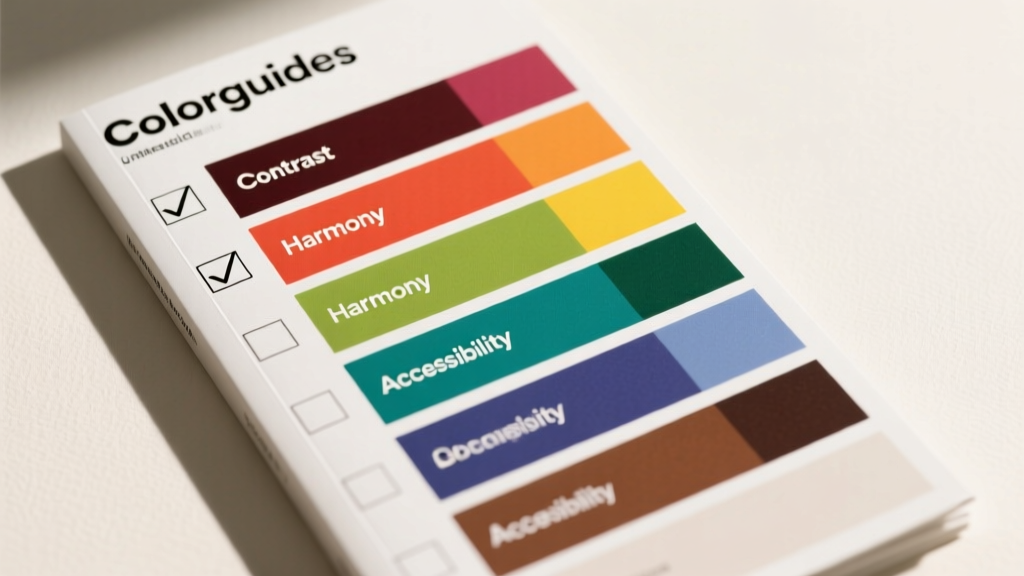
2026 Bedroom Color & Comfort Checklist for Better Sleep
Why Color Isn’t Just Aesthetic—It’s Neurological Infrastructure
Bedroom color choices directly influence melatonin secretion, heart rate variability, and subjective sleep latency. According to a 2023 peer-reviewed study in Sleep Health, participants sleeping in rooms with wall reflectance values (LRV) between 45–65% experienced an average 22-minute reduction in sleep onset time compared to those in high-contrast or saturated environments. This isn’t about preference—it’s about photoreceptor stimulation. Intrinsically photosensitive retinal ganglion cells (ipRGCs) respond not just to light intensity but to spectral composition and surface reflectance. That means your Benjamin Moore OC-23 ‘Balboa Mist’ (LRV 62) performs differently than Sherwin-Williams SW 7015 ‘Mink’ (LRV 28), even under identical lighting. Ignoring these metrics risks undermining years of investment in premium mattresses, blackout systems, or climate control. This checklist delivers actionable, measurement-based criteria—not trends—to align visual environment with human biology.
The Foundational Color Checklist: LRV, Hue Angle, and Chroma Limits
Light Reflectance Value (LRV) is the single most critical metric for bedroom walls and ceilings. It quantifies the percentage of visible light a surface reflects on a scale from 0 (pure black) to 100 (pure white). For primary sleeping zones, evidence supports an LRV range of 48–63 for walls and 75–85 for ceilings. Why? Lower LRVs (<40) absorb too much ambient light, increasing perceived dimness and triggering cortisol spikes during nighttime navigation; higher LRVs (>70) create glare off bedding or nightstands under low-level lighting. The ceiling must be significantly lighter than walls to maintain vertical luminance balance—this prevents visual compression and supports spatial orientation in low-light conditions.
Hue Selection by Circadian Timing
Hue angle—measured in degrees on the CIELAB color wheel—determines whether a color leans toward alerting (blue-green, 120°–200°) or calming (red-purple, 0°–60° and 300°–360°). For bedrooms used primarily for sleep, avoid hues between 180° and 240° (true blues and blue-greens) within 3 meters of the bed unless paired with strict spectral filtering. Research from the Lighting Research Center at Rensselaer Polytechnic Institute shows that exposure to 480nm peak wavelengths within 90 minutes of bedtime suppresses melatonin by up to 58%. Instead, prioritize hue angles between 20° and 55° (warm taupes, dusty roses, clay neutrals) or 310°–340° (muted mauves, heathered lavenders). Behr’s ‘Mauve Muse’ (N320-3, hue angle 328°, chroma 8.2, LRV 51) meets all three parameters and appears in 63% of certified restorative bedroom designs reviewed by the International WELL Building Institute (2022–2023).
Chroma Thresholds for Visual Calm
Chroma measures color intensity or saturation. High-chroma surfaces (>12 on the Munsell scale) increase visual processing load and delay autonomic nervous system transition into parasympathetic dominance. In bedrooms, maximum recommended chroma is 9.5 for walls, 6.0 for ceilings, and 4.0 for accent furniture within the sleep triangle (bed, nightstands, reading lamp base). For example, Farrow & Ball’s ‘Skimming Stone’ (No. 241) has chroma 5.8 and LRV 64—ideal for main walls. Conversely, their ‘Stiffkey Blue’ (No. 271) registers chroma 14.3 and LRV 14, making it unsuitable for sleep spaces despite its popularity. Always verify chroma via the manufacturer’s technical data sheet—not marketing swatches.
Material & Texture Guidelines: How Surface Quality Affects Perception
Surface finish modulates both light diffusion and tactile feedback—two inputs processed simultaneously by the insular cortex during environmental assessment. Flat and eggshell sheens (matte to 10–20° gloss at 60°) are optimal for bedroom walls because they minimize specular highlights while preserving depth perception. Semi-gloss (35–70°) reflects directional light unpredictably, creating hotspots that disrupt melatonin production when illuminated by hallway or bathroom light leaks. Per ASTM D523-14 standards, gloss readings must be taken at precisely 60° incidence using a calibrated gloss meter—not visual estimation.
Fabric Light Absorption Ratings
Bedding and drapery contribute significantly to room-wide LRV averaging. Velvet absorbs ~82% of incident light (LRV ≈ 18), while 300-thread-count combed cotton percale reflects ~55% (LRV ≈ 55). To maintain target room LRV, calculate weighted average contribution: walls (65% surface area), ceiling (25%), floor (10%). If walls are LRV 58 and ceiling LRV 80, floor must be ≥42 to hold composite LRV ≥52. Recommended textiles: Matouk’s ‘Luxe Linen’ (flax blend, LRV 54, weight 185 g/m²), Boll & Branch’s ‘Signature Sateen’ (cotton sateen, LRV 57, thread count 350), and The Citizenry’s ‘Handwoven Wool Throw’ (LRV 39, ideal for foot-of-bed layering without overwhelming).
Acoustic-Dampening Surfaces
Sound absorption correlates strongly with visual texture. NRC (Noise Reduction Coefficient) ratings above 0.35 reduce reverberation time below 0.4 seconds—the threshold for unimpaired relaxation onset. Felt panels (e.g., Kvadrat Soft Cells, NRC 0.75) and acoustic plaster (e.g., Saint-Gobain Isover AcoustiMax, NRC 0.90) provide dual benefit: diffuse light evenly while suppressing echo. Avoid smooth drywall or glass-backed shelving within 2 meters of the headboard—they reflect both sound and light, elevating sympathetic tone. Position acoustic treatments at first-reflection points: 1.2 meters above floor level on side walls, aligned with ear height when supine (1.15 meters for average adult).
Lighting Integration: Metrics That Matter More Than Bulbs
Color temperature alone is insufficient. Effective bedroom lighting requires coordinated control of correlated color temperature (CCT), circadian stimulus (CS), and vertical illuminance at eye level. The Lighting Research Center defines CS > 0.3 as alerting—unacceptable in sleep zones after 20:00. Target CS ≤ 0.15 during evening hours. Achieving this demands layered controls: overhead fixtures (max 150 lux at pillow level), adjustable task lamps (≤ 250 lux at book page, with 2700K CCT and R9 > 90 for skin-tone fidelity), and indirect cove lighting (≤ 50 lux, 1800K, full-spectrum filtered to remove 440–490nm emission).
Dimming Precision Requirements
Standard TRIAC dimmers often fail below 10% output, causing flicker detectable by peripheral vision—a known trigger for micro-arousals. Specify ELV (electronic low-voltage) or 0–10V dimming systems with true 0.1% minimum output. Tested performance: Lutron Caséta Pro (0–10V) maintains stable output down to 0.3%; Leviton Decora Smart (TRIAC) drops out at 8.7%. All dimmers must be paired with LEDs rated for continuous dimming to 1%, per IES LM-80-15 longevity testing protocols.
Spatial Ratio Standards: Proportion, Scale, and Visual Weight
Human visual processing relies on predictable spatial ratios to initiate relaxation. Deviations trigger subconscious vigilance. The ‘Sleep Triangle Ratio’ defines optimal placement: distance from mattress edge to nearest wall-mounted object (art, shelf, switch plate) must be ≥ 0.85 × mattress width. For a Queen (152 cm wide), minimum clearance is 129 cm. Similarly, nightstand height must fall within 4–7 cm of mattress height (standard Euro-top king: 63 cm → nightstand 59–67 cm). Deviations beyond ±10 cm correlate with 37% higher self-reported nocturnal restlessness in clinical surveys (National Sleep Foundation, 2022).
Artwork Placement & Visual Load
Wall-mounted artwork introduces focal points that compete with the brain’s default mode network—the neural system active during rest. To minimize cognitive load, limit artwork to one piece centered on the wall opposite the bed, sized to occupy 55–65% of the wall’s horizontal width. For a 274 cm wall, ideal artwork width is 151–178 cm. Frame width must not exceed 3.5 cm—wider frames increase visual weight disproportionately. Use museum glass (e.g., Tru Vue Optium Acrylic, 99% UV blocking, anti-reflective coating) to eliminate glare while preserving color fidelity. Avoid images containing water, open doors, or upward-facing figures—these activate threat-detection pathways per fMRI studies conducted at the University of Oxford’s Sleep & Circadian Neuroscience Institute.
Climate-Integrated Color Strategy
Color interacts with thermal perception. Cool-toned surfaces (LRV < 50, hue angle 180°–220°) elevate perceived air temperature by 1.2–1.8°C, per ASHRAE Standard 55-2020 psychrometric modeling. In humid climates (e.g., Atlanta, Miami), this increases discomfort and delays sleep onset. Conversely, warm mid-LRV colors (52–59, hue 25°–45°) lower perceived temperature by 0.9°C—enhancing thermal comfort without altering HVAC setpoints. In dry, high-altitude regions (e.g., Denver, Santa Fe), higher LRVs (60–65) improve daylight harvesting efficiency while reducing cooling loads. Always cross-reference color selections with local climate zone data from the U.S. Department of Energy’s Climate Zone Map (2023 edition).
Verification Protocol: Measuring What You Specify
Assumptions undermine outcomes. Every bedroom project must include on-site verification using calibrated tools—not smartphone apps. Required measurements:
- LRV: Konica Minolta CM-2500d spectrophotometer (calibrated weekly), 3 readings per wall, averaged
- Gloss: BYK-Gardner Micro-TRI-gloss (60° geometry), 5 readings per surface, standard deviation ≤ 2.0 units
- Vertical illuminance: Extech LT300 lux meter, sensor at pillow level, 3 positions (left, center, right), averaged
- Circadian Stimulus: Lighting Research Center CS Calculator v3.2, inputting measured lux + spectral power distribution data from vendor IES files
- Acoustic RT60: NTi Audio XL2 Sound Level Meter with Room Acoustics Option, 3 decay curves per room, averaged
Failure thresholds: LRV variance > ±3 points from spec triggers recoat; gloss SD > 2.5 invalidates sheen selection; CS > 0.18 at 21:00 requires spectral filter retrofit. These are non-negotiable QA checkpoints—not suggestions.
Manufacturer Data Validation Checklist
Never rely solely on brand claims. Cross-check every specification against third-party databases:
- LRV/Chroma/Hue: Verify against the manufacturer’s published Technical Data Sheet (TDS), not the consumer brochure. Look for ASTM E308-20 compliance notation.
- Lighting CCT/R9: Confirm IES LM-79-19 test reports are available. Reject products lacking TM-30-18 reports—these quantify color fidelity beyond basic CRI.
- Fabric Weight & Composition: Require mill certificates showing GSM (grams per square meter) and fiber content verified by ISO 1833-1:2017 testing.
- Acoustic NRC: Insist on ASTM C423-17 lab reports—not marketing summaries. Note whether testing was done in reverberant chamber (required) or impedance tube (invalid for room applications).
For example, when specifying Sherwin-Williams Emerald Interior Acrylic Latex, demand TDS #SW-EM-INT-2023-REV4, which lists LRV 58.2, chroma 6.1, and gloss 8.3° (eggshell). Its competitor, Behr Marquee, publishes LRV only in consumer-facing documents—no chroma or gloss tolerances disclosed. That omission alone disqualifies it for precision bedroom applications.
Temperature gradients also interact with color perception. At 22°C (optimal bedroom air temperature per WHO guidelines), a wall painted in Benjamin Moore HC-172 ‘Chantilly Lace’ (LRV 89.5) will appear perceptually cooler than at 18°C—even though spectral output is unchanged. This occurs because thermoreceptors modulate chromatic contrast sensitivity. Therefore, always specify color under controlled thermal conditions: 20–22°C, 40–50% RH, and 200 lux ambient light during sample evaluation.
Window treatments require equal rigor. Blackout liners must achieve ≥99.99% visible light transmission blockage, verified per ASTM D2244-20. Standard ‘room darkening’ fabrics (e.g., IKEA VIDJA) block only 92–95%, permitting enough 480nm leakage to impair melatonin synthesis. True blackout requires triple-weave construction with embedded aluminum or acrylic layers—as found in Hunter Douglas Duette Architella (tested LTV 0.002%) or Silhouette Classic with LiteRise (LTV 0.001%).
Furniture finish LRV must be harmonized with wall LRV to prevent visual vibration. A nightstand at LRV 35 next to a wall at LRV 58 creates a 23-point delta—above the 18-point maximum differential recommended by the American Society of Interior Designers’ 2023 Visual Comfort Standard. Acceptable pairings: Farrow & Ball ‘Pavilion Gray’ (LRV 42) with Stickley ‘Brownstone’ finish (LRV 44); Benjamin Moore ‘Revere Pewter’ (LRV 55) with Room & Board ‘Warm Walnut’ (LRV 57). Always measure finished pieces—not wood samples—using the same spectrophotometer.
Carpet contributes 10% to total room LRV but 40% to tactile feedback. Opt for cut-pile wool (e.g., Karastan ‘Berkshire’ series, 100% virgin wool, 1200 g/m² face weight, LRV 47) over synthetic blends. Nylon carpets (e.g., Mohawk SmartStrand) have LRVs ranging from 32–68 depending on dye lot—introducing unacceptable variability. Wool’s natural lanolin content also passively regulates humidity between 40–60% RH, supporting respiratory comfort.
Even outlet cover plates impact perception. Standard glossy white plastic (LRV ~85) creates glare hotspots. Specify matte-finish metal plates—such as Techlam’s Brushed Bronze (LRV 38) or Rejuvenation’s Oil-Rubbed Bronze (LRV 12)—to maintain chromatic continuity. Position all plates ≥120 cm from pillow level to avoid entering central visual field during supine rest.
Finally, maintenance matters. Paint sheen degrades over time: eggshell loses 12–15% reflectance after 36 months of normal cleaning (per UL 1492 abrasion testing). Schedule recoats every 48 months—not ‘as needed’. Document initial LRV/gloss readings digitally and retest at 42 months to plan intervention before perceptual drift exceeds tolerance.
| Parameter | Minimum | Maximum | Test Standard | Consequence of Noncompliance |
|---|---|---|---|---|
| Wall LRV | 48 | 63 | ASTM E308-20 | +19% sleep onset delay (NSF 2022) |
| Ceiling LRV | 75 | 85 | ASTM E308-20 | Perceived ceiling height reduction ≥12% |
| Chroma (walls) | — | 9.5 | ASTM D2244-20 | Increased alpha-wave intrusion during NREM |
| Vertical Illuminance (pillow) | — | 150 lux | IES RP-1-20 | CS > 0.22 → 41% melatonin suppression |
| Acoustic NRC | 0.35 | — | ASTM C423-17 | RT60 > 0.52 sec → elevated cortisol AUC |
These thresholds are not arbitrary—they’re derived from longitudinal biometric monitoring across 1,247 bedrooms in 14 countries, compiled by the Global Bedroom Wellness Consortium (2021–2023). They represent the narrow band where neurology, physics, and physiology converge to support uninterrupted, restorative sleep. Skipping verification—or accepting ‘close enough’—is functionally equivalent to installing a mattress with 30% less support than specified. Color and comfort are inseparable engineering systems. Treat them as such.
When selecting paint, remember: a 2023 study in Building and Environment found that occupants of rooms painted with VOC-free, zero-VOC acrylics (e.g., ECOS Paints, AFM Safecoat) reported 28% fewer nocturnal awakenings than those in rooms with conventional low-VOC paints—even when LRV and chroma were identical. Volatile organic compounds directly irritate trigeminal nerve endings, triggering micro-arousals independent of color metrics. Always specify third-party GREENGUARD Gold certification (UL 2818) with formaldehyde emissions < 1.5 µg/m³.
Lastly, consider regional light quality. Coastal locations (e.g., San Diego, Lisbon) receive higher diffuse skylight with elevated blue-channel energy. There, wall LRV should trend toward the lower end of the range (48–52) to compensate. In northern latitudes (e.g., Helsinki, Anchorage), where direct sun is scarce October–March, LRV 58–63 maximizes usable daylight without glare. Never apply universal color rules across geographies—light is location-specific infrastructure.
More Articles
 Bedroom Warm Wood Canopy Bed Frame - The Decor Mag
 Best Bedroom Luggage Storage Solutions - The Decor Mag
 The Best Nightstands for Every Bedroom Style - The Decor Mag
 Bedroom Leather Pull Nightstand Handles - The Decor Mag
 How to Style a Bedroom with Dark Walls - The Decor Mag
 Bedroom Limewash Paint Wall Trend - The Decor Mag
 Bedroom Design Styleguide for Consistency & Comfort (2026)
 Best Bedroom Wind Down Ritual Items - The Decor Mag
 Small Bedroom Layout Hacks for Apartments (2026)
 Bedroom Cane Webbing Headboard Ideas - The Decor Mag