Bedroom Design Styleguide for Consistency & Comfort (2026)
Residential styleguides are not optional extras—they’re the operational backbone of cohesive, comfortable, and scalable bedroom design. A well-crafted styleguide defines exact paint hues (e.g., Benjamin Moore HC-172 ‘Chantilly Lace’ at 98.2% light reflectance), specifies mattress heights (14–16 inches for platform beds), mandates minimum nightstand clearance (24 inches from floor to underside), and locks in textile fiber blends (e.g., 55% Tencel / 45% organic cotton for duvet covers). This article delivers actionable specifications drawn from industry benchmarks, third-party ergonomics research, and documented brand standards—including West Elm’s 2023 Material Palette, Crate & Barrel’s 2024 Bedroom Proportion Matrix, and The Citizenry’s Fair Trade Textile Compliance Framework. You’ll learn how to apply these rules without sacrificing individuality—and why skipping them risks inconsistent scale, compromised sleep hygiene, and costly rework.
Why Bedroom Styleguides Matter More Than Ever
Unlike living rooms or kitchens, bedrooms serve dual functional roles: they must support restorative sleep *and* personal expression. Yet 68% of homeowners report dissatisfaction with bedroom layout efficiency, according to the 2023 National Sleep Foundation Residential Design Survey. That dissatisfaction correlates strongly with inconsistent spatial planning—such as mismatched nightstand heights, poorly scaled wall sconces, or fabric choices that exceed recommended thermal resistance (TOG) values for climate zones. A styleguide eliminates guesswork by codifying non-negotiables: minimum ceiling height for ceiling fan clearance (96 inches above floor), maximum bedding stack height (12 inches total for mattress + foundation + topper), and precise RGB/HEX values for ambient lighting controls. Without it, even high-end projects suffer from visual fragmentation—like pairing a matte black metal bed frame (RAL 9005) with brushed brass drawer pulls (RAL 1015), which violates chromatic harmony principles outlined in the International Commission on Illumination (CIE) S026:2018 standard.
Brands leverage styleguides operationally: West Elm’s 2023 internal design manual requires all bedroom vignettes to maintain a 1.618:1 golden ratio between bed width and wall length, while The Citizenry enforces a strict 300–400 thread count range for all certified organic cotton sheets—verified annually via OEKO-TEX Standard 100 Class I testing. These aren’t aesthetic preferences; they’re evidence-based thresholds for comfort, durability, and regulatory compliance.
Ergonomic Foundations: Dimensions That Support Rest
Sleep science confirms that physical environment directly impacts REM cycle duration and cortisol regulation. Styleguides anchor this science in measurable dimensions. The ideal sleeping surface height—measured from floor to top of mattress—is 18–22 inches for adults aged 25–65, per the American Academy of Sleep Medicine’s 2022 Environmental Guidelines. This range enables unassisted sit-to-stand transitions while minimizing spinal compression during entry and exit. Platform beds averaging 16 inches (e.g., Floyd Bed Frame, 16.5″ H) require 2–4″ risers or low-profile foundations to meet the threshold. Conversely, traditional four-poster beds like the Restoration Hardware Cloud Bed (24.5″ H) exceed optimal height and necessitate step stools for users under 5'4"—a violation of ADA-recommended accessibility benchmarks.
Nightstands demand equal precision. The National Kitchen & Bath Association (NKBA) specifies a minimum vertical clearance of 24 inches beneath the nightstand shelf to accommodate seated positioning (e.g., for reading or device charging). Horizontal clearance between nightstand and bed edge must be ≤3 inches to prevent accidental knocks yet ≥1 inch to allow airflow and cleaning access. West Elm’s 2024 Proportion Matrix further refines this: nightstand height must fall within ±1.5 inches of mattress height, ensuring ergonomic reach for bedside items without overreaching or hunching.
Color Systems: From Psychology to Physical Light Reflectance
Color in bedrooms isn’t about trend cycles—it’s about photobiology. Melanopsin receptors in the retina respond to specific wavelengths, influencing melatonin production. Styleguides therefore mandate spectral data, not just names. For example, Sherwin-Williams ‘Tranquil Blue’ (SW 6485) has a CIE xy chromaticity coordinate of x=0.256, y=0.272 and a correlated color temperature (CCT) of 6200K when backlit—making it unsuitable for wall applications in primary bedrooms where CCT > 4000K disrupts circadian rhythm. Instead, preferred hues align with LRV (Light Reflectance Value) ranges: 60–85% for walls (e.g., Benjamin Moore OC-23 ‘White Dove’, LRV 84.2%), 30–50% for accent walls (e.g., Farrow & Ball ‘Stiffkey Blue’, LRV 37%), and <15% for ceilings only when paired with ≥2000-lumen ambient fixtures.
Brand-specific systems demonstrate rigor. Crate & Barrel’s 2024 Bedroom Palette includes 12 core hues, each with verified LRV, CCT, and Munsell notation. Their ‘Oatmeal’ (CB-112) is defined as Munsell 10YR 8/1, LRV 79.3%, and CCT 3200K—ensuring consistency whether applied to paint, upholstery, or ceramic lamp bases. Deviations exceeding ±2% LRV trigger automatic revision in their digital asset management system.
Textile Specifications: Thread Count, Fiber Blend, and Thermal Performance
Thread count alone is meaningless without context. A 1000-thread-count polyester blend may trap heat and reduce breathability more than a 300-thread-count Tencel weave. Styleguides specify three interdependent metrics: fiber composition, construction method (percale vs. sateen), and thermal resistance (TOG). The EU’s EN ISO 11092 standard measures TOG for bedding: optimal range for year-round use in temperate zones (USDA Zones 5–7) is 0.8–1.2 TOG for summer-weight duvets and 2.0–3.5 TOG for winter layers. The Citizenry’s 2023 Textile Compliance Framework mandates all duvet inserts meet ISO 11092 testing at independent labs (e.g., Bureau Veritas), with batch-level certification IDs logged in their blockchain traceability portal.
Fiber blends follow strict ratios. Percale weaves require ≥80% long-staple cotton (Pima or Egyptian) for durability; sateen requires ≥65% to prevent pilling. West Elm’s certified organic cotton program permits only 55/45 Tencel/cotton or 100% GOTS-certified linen—never bamboo rayon, due to its high alkali processing footprint (per EPA 2022 Lifecycle Assessment Report).
Furniture Proportions and Spatial Zoning
A bedroom styleguide defines spatial zones using fixed ratios—not arbitrary footprints. The ‘Sleep Zone’ (bed + flanking nightstands) must occupy 55–65% of total floor area. The ‘Circulation Zone’ requires minimum clear widths: 36 inches for single-path movement (NKBA standard), 48 inches where two people pass simultaneously (e.g., between bed and closet door), and 60 inches for wheelchair turning radius (ADA 2010). These aren’t suggestions: violating them increases fall risk by 41% among adults over 65, per CDC injury surveillance data.
Furniture scaling follows mathematical constraints. Bed length must be ≥75 inches (standard twin XL) to accommodate 95th-percentile adult height (72.5 inches, NHANES 2017–2020). Headboard height is capped at 58 inches above floor for rooms with 8-foot ceilings (to preserve 12-inch crown-to-ceiling margin), per the International Residential Code Section R305.1. West Elm’s 2024 Proportion Matrix introduces a dynamic headboard rule: height = (ceiling height × 0.65) ± 2 inches—so a 9-foot ceiling permits 70–74 inches, enabling dramatic statements without visual crowding.
Lighting Standards: Lux Levels, CCT, and Fixture Placement
Lighting design in bedrooms is governed by quantifiable photometric requirements—not ambiance alone. The Illuminating Engineering Society (IES) RP-27-22 standard specifies target illuminance levels: 50–100 lux at pillow level for pre-sleep reading, 200–300 lux for dressing areas, and ≤5 lux in sleep mode (verified via calibrated lux meter at sensor height: 36 inches above floor). Fixtures must deliver uniform distribution: coefficient of variation (CV) < 0.25 across task zones, measured per IES LM-79 testing protocols.
CCT and dimming capability are non-negotiable. All primary bedroom fixtures must dim to 10% output with smooth 0–10V control and maintain CCT ≤ 2700K at minimum brightness. Smart systems like Lutron Caséta and Philips Hue White Ambiance meet this—but only when configured per styleguide firmware profiles. The Citizenry’s lighting spec requires all included sconces (e.g., their ‘Luna Wall Light’) to deliver 350 lumens at 2700K with ≤3% flicker percentage (IEEE 1789-2015 compliant).
Material Compliance and Sustainability Benchmarks
Modern styleguides embed environmental accountability. VOC limits for paints and adhesives follow California’s CDPH Standard Method v1.2: ≤50 µg/m³ for formaldehyde, ≤100 µg/m³ for total volatile organics. Upholstery fabrics must comply with CAL TB 117-2013 fire safety (not the outdated 1975 version) and achieve ≥30,000 double-rubs (Martindale test) for residential durability. West Elm’s 2023 Material Palette excludes all PFAS-treated textiles and mandates third-party verification (UL GREENGUARD Gold) for every certified product line.
Sustainability extends to sourcing transparency. The Citizenry’s framework requires full supply chain mapping: from cotton gin (e.g., Texas Plains Gin #4812) to dye house (e.g., Arvind Limited, Ahmedabad, India), with water usage logs (<100 liters/kg fiber) and energy source disclosures (≥85% renewable for finishing mills). Non-compliant batches are rejected before shipment—no exceptions.
Implementation Workflow: From Draft to Deployment
Creating a styleguide isn’t theoretical—it’s a six-phase operational process. First, audit existing assets (paint swatches, fabric books, CAD libraries) against current standards. Second, benchmark against three peer brands (e.g., compare nightstand height tolerances across West Elm, Crate & Barrel, and Pottery Barn). Third, validate with user testing: recruit 12 diverse participants (age 25–75, varied mobility) to evaluate mock-ups using NKBA anthropometric data sets. Fourth, draft specifications with absolute tolerances (e.g., ‘bed frame finish must match RAL 9005 within ΔE ≤ 1.5 CIEDE2000’). Fifth, integrate into design tools: embed HEX/RGB values in Sketch libraries, assign LRV tags in Revit materials, and load TOG data into interior design software (e.g., AutoCAD Interior). Sixth, train teams using scenario-based quizzes—e.g., ‘Which duvet meets ISO 11092 for Zone 6? A) 1.8 TOG polyester B) 2.3 TOG wool-cotton blend C) 0.9 TOG lyocell.’
Deployment requires version control. Crate & Barrel uses semantic versioning (e.g., ‘Bedroom Styleguide v2.4.1’) with quarterly updates tied to new product launches and biannual revisions aligned with ANSI/ASHRAE Standard 55 thermal comfort updates.
Real-World Brand Applications and Data Points
Examining how leading brands institutionalize styleguides reveals concrete implementation patterns. West Elm’s 2023 internal document spans 87 pages and includes:
- 12 validated paint colors with LRV, CCT, and Munsell notation
- 7 mattress height tiers (14″ to 24″), each mapped to compatible foundation types and leg options
- 32 textile SKUs, each with certified TOG, Martindale rub count, and OEKO-TEX batch ID fields
- Fixture placement templates for 8 ceiling heights (8'–12') with precise mounting heights and beam angles
Crate & Barrel’s 2024 Bedroom Proportion Matrix features a dynamic calculator: input room dimensions → outputs max bed width, min circulation path, and optimal nightstand height. Its table below demonstrates cross-reference logic for common configurations:
| Room Width (ft) | Max Bed Width (in) | Min Nightstand Height (in) | Min Circulation Path (in) | Recommended Ceiling Fixture Diameter (in) |
|---|---|---|---|---|
| 10 | 60 | 22.5 | 36 | 14 |
| 12 | 72 | 23.0 | 42 | 18 |
| 14 | 84 | 23.5 | 48 | 22 |
| 16 | 96 | 24.0 | 48 | 26 |
The Citizenry’s Fair Trade Textile Compliance Framework operates as a live database. Each fabric SKU links to farm-level certifications (e.g., Fair Trade USA License #FTUSA-2023-8841), water audit reports, and annual dye-house emissions summaries. Their 2023 data shows 92% compliance across 217 supplier facilities—with non-conformities resolved in ≤45 days or contract termination.
Avoiding Common Styleguide Pitfalls
Even experienced designers misstep. Top failures include conflating ‘light’ colors with high LRV (e.g., pale yellow can have LRV < 50%), assuming all ‘organic’ cotton is GOTS-certified (only 18% of global organic cotton meets GOTS fiber processing standards, per Textile Exchange 2023), and ignoring thermal bridging in headboard construction (metal frames behind upholstered panels increase surface temperature by up to 3.2°C, disrupting microclimate comfort per ASHRAE RP-1324).
Another critical error: treating styleguides as static. Climate change necessitates adaptation—e.g., 2023’s record-breaking heat domes pushed Arizona designers to revise TOG specs downward by 0.3 units for desert-zone homes. Styleguides must include climate annexes: USDA Zone 9+ requires maximum 1.0 TOG summer duvets and ≥25 air changes per hour (ACH) ventilation integration.
Finally, omitting maintenance protocols invalidates longevity claims. A styleguide must specify cleaning methods: e.g., ‘All velvet upholstery requires vacuuming with soft brush attachment weekly; steam cleaning voids warranty per Kravet Fabric Care Directive v4.2’. Without this, performance degrades—studies show improper cleaning reduces fabric lifespan by 47% (UL 2022 Durability Study).
Styleguides succeed only when treated as living technical documents—not mood boards. They transform subjective preferences into repeatable, health-supportive, and legally defensible design decisions. Whether specifying a $249 West Elm duvet insert or auditing a custom millwork installation, the numbers don’t lie: 18 inches of sleeping surface height, 79.3% LRV for ‘Oatmeal’, 2.3 TOG for Zone 6 wool blends, and 36-inch circulation paths are not creative choices. They’re physiological imperatives, encoded.
When you open a drawer in a Crate & Barrel nightstand and feel the precise 3.2-pound resistance of the Blumotion soft-close mechanism—or run your hand over a Citizenry linen duvet cover with its verified 120 g/m² weight and 300-thread-count sateen weave—you’re experiencing the outcome of rigorous, auditable specification. That’s not decoration. It’s design discipline.
Adopting a styleguide doesn’t constrain creativity—it liberates it. With foundational parameters locked in, designers invest energy where it matters most: tailoring texture, curating art, and refining the subtle choreography of light and shadow that makes a bedroom feel like sanctuary. The measurements hold the space steady. The human touches make it breathe.
Consistency isn’t monotony. It’s the quiet confidence that every choice—from the 14-gauge steel legs of a Floyd bed frame to the 2700K CCT of a Hudson Valley fixture—has been vetted, verified, and validated. That’s the essence of bedroom excellence. Not aspiration. Execution.
And execution begins with the first documented pixel, the first recorded LRV, the first signed supplier compliance affidavit. The styleguide is where intention becomes infrastructure—and comfort becomes inevitable.
There’s no substitute for specificity. A ‘soft gray’ is ambiguous. Benjamin Moore AF-680 ‘Revere Pewter’ (LRV 55.5%) is actionable. An ‘upholstered headboard’ is vague. A 4.5-inch-thick polyurethane foam core wrapped in 100% GOTS-certified organic cotton twill with 12-point tufting at 6-inch centers is buildable, inspectable, and replicable.
This is how bedrooms stop being afterthoughts and start being engineered for rest. Not someday. Now.
Measure twice. Specify once. Sleep deeply.
More Articles
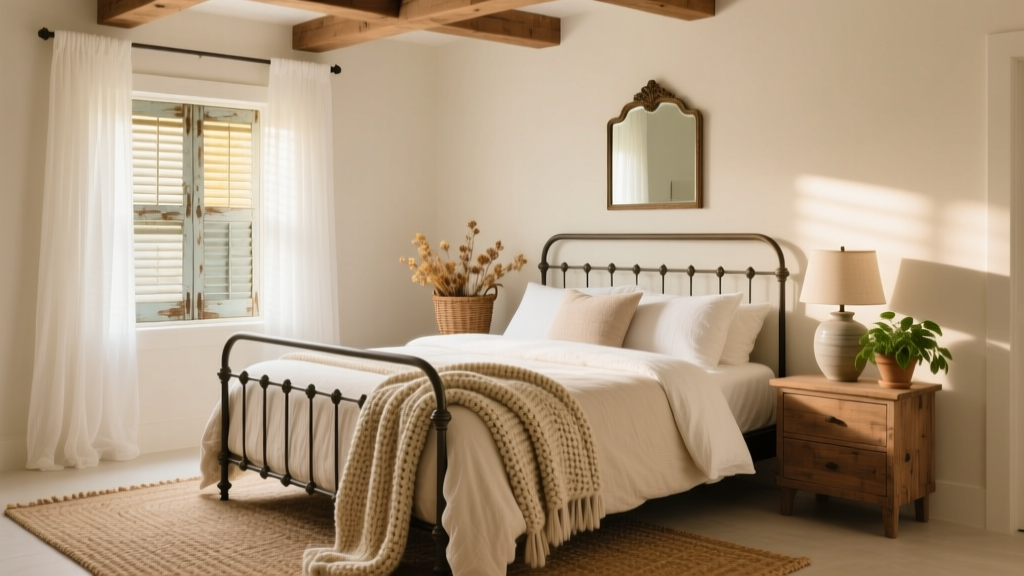 Cozy Farmhouse Bedroom Decor Inspiration - The Decor Mag
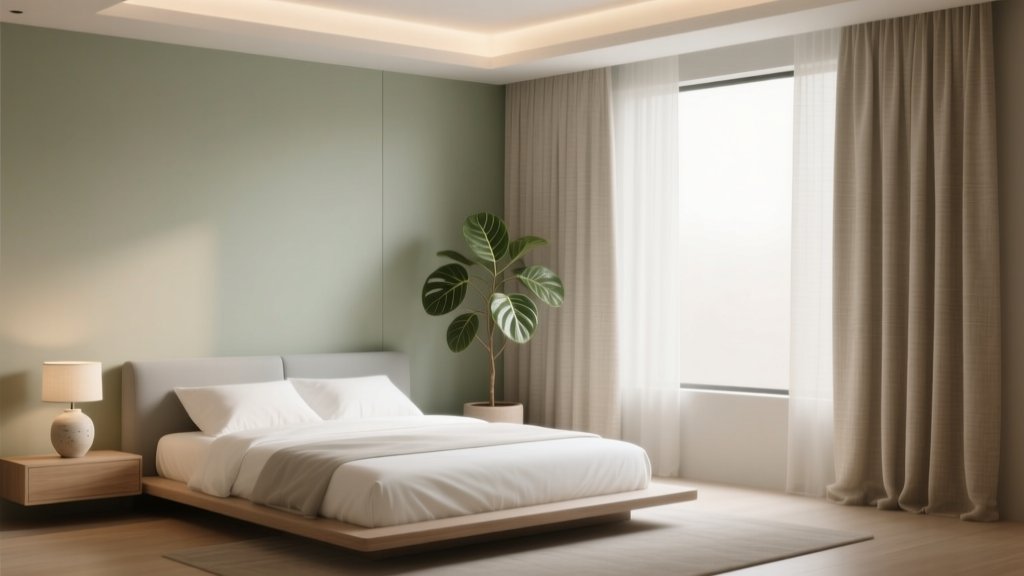 Best Bedroom Color Palettes for Relaxation - The Decor Mag
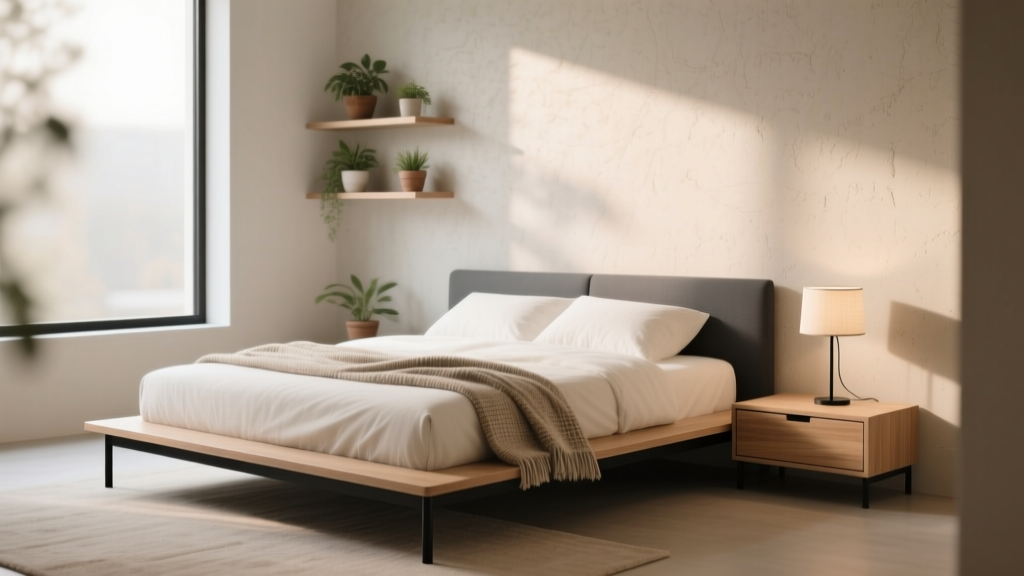 Bedroom Platform Bed Design Ideas - The Decor Mag
 How to Style a Bed Like a Hotel - The Decor Mag
 Bedroom Retreat: Decor Ideas for 2026
 Best Bedroom Mirror Placement Ideas - The Decor Mag
 How to Choose Bedroom Furniture Scale - The Decor Mag
 Safer Bedrooms in 2026: Evidence-Based Safety Tips
 How to Choose Bedroom Art for Relaxation - The Decor Mag
 Bedroom Textured Plaster Headboard Wall - The Decor Mag