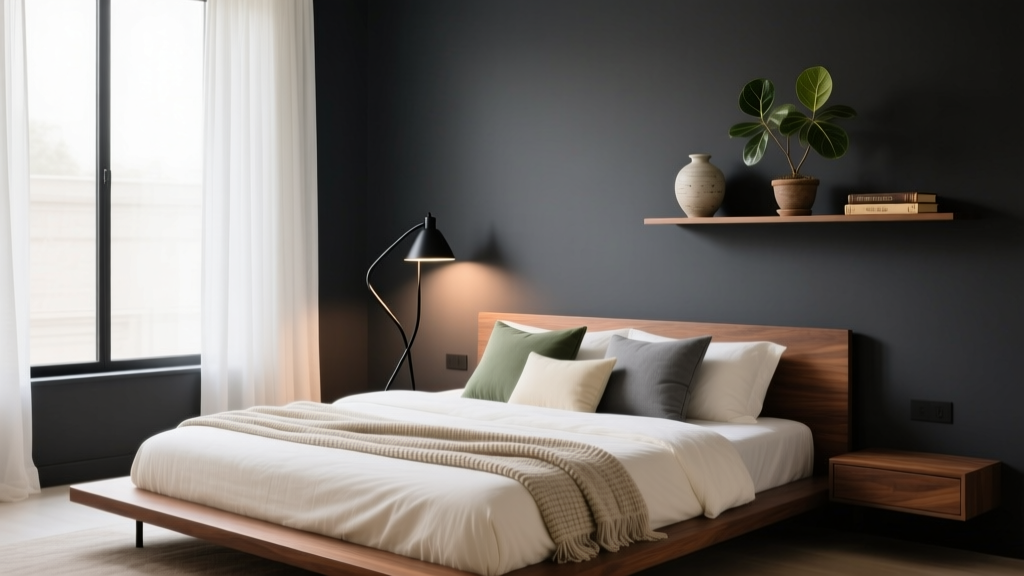
How to Style a Bedroom with Dark Walls - The Decor Mag
Dark walls in a bedroom can feel like a deep exhale at the end of the day. They soften visual noise, reduce glare, and create a sense of enclosure that many people find instantly calming. When styled well, a dark-walled bedroom becomes a true sleep sanctuary—cocoon-like, grounded, and intentionally restful.
That said, dark paint can also magnify design mistakes. The wrong lighting can make the room feel gloomy, and the wrong bedding or furniture can disappear into the walls. Because your sleep environment affects everything from how quickly you fall asleep to how refreshed you feel in the morning, styling a bedroom with dark walls is more than a decor choice—it’s a wellness decision.
This guide breaks down practical, renter-friendly and homeowner-ready ways to decorate dark walls for a balanced, sleep-friendly bedroom. You’ll find clear color pairings, lighting plans, material recommendations, budget ranges, and common pitfalls to avoid—so your room feels moody in the best way, not heavy or dim.
Why Dark Walls Work for Sleep (When Done Right)
Bedrooms are meant to support the body’s shift into rest. Dark colors naturally absorb light, which can help create a lower-stimulation setting at night—especially helpful if you’re sensitive to brightness. Many people also report feeling safer and more relaxed in spaces that feel visually “contained,” which dark walls can enhance.
Sleep-friendly benefits of darker paint colors
- Reduced glare and visual stimulation: Dark, matte finishes can minimize reflections from lamps and screens.
- A cozy, enclosed feeling: Useful for large bedrooms that feel echoey or exposed.
- Better contrast control: When paired with warm lighting and lighter bedding, dark walls help the bed stand out as the focal point—signaling “this is the place to rest.”
To keep the space restorative, you’ll want to balance darkness with warmth, texture, and layered lighting. That combination supports melatonin-friendly dim evenings while still making mornings functional.
Choose the Right Dark Color: Undertones Matter
Not all dark walls read the same. A deep charcoal can feel modern and quiet; a navy can feel serene and classic; a forest green can feel earthy and grounding. Undertones determine whether the room feels soothing or muddy.
Dark wall colors that tend to feel calming
- Charcoal gray with warm undertones (less blue, more brown/soft black)
- Deep navy (especially in matte or eggshell)
- Forest green or deep olive (pairs beautifully with warm wood)
- Chocolate brown (excellent in rooms with lots of natural light)
- Aubergine/plum (best in small doses or with strong lighting)
Finish recommendations for a sleep environment
- Matte: Soft, low-glare, cozy; can show scuffs more easily (great for adults-only rooms).
- Eggshell: Slightly more durable while still calming; a smart all-around pick for renters and families.
- Avoid high-gloss: Reflective finishes bounce light around, which can feel harsh at night.
Budget range: Quality interior paint typically runs $35–$80 per gallon. If you’re painting a single accent wall, you can often stay under $60–$150 total including supplies.
Create Contrast Without Losing the Mood
The biggest styling secret with dark bedroom walls is intentional contrast. Contrast helps the room feel designed, not cave-like. Focus your contrast on the bed, window treatments, and lighting.
Best color pairings for dark walls
- Dark walls + warm whites: Cream, ivory, oatmeal—softer than bright white and easier on the eyes.
- Dark walls + natural wood: Oak, walnut, acacia, bamboo for warmth and organic texture.
- Dark walls + muted earth tones: Clay, terracotta, camel, sand, mushroom, soft rust.
- Dark walls + gentle metallics: Aged brass, bronze, blackened steel (skip overly shiny chrome).
Easy contrast “recipe” for a restful look
- Choose one dominant light element (usually bedding).
- Add one warm natural element (wood nightstands, rattan, woven shade).
- Layer two textures (linen + wool, cotton + velvet, boucle + crisp percale).
- Repeat a mid-tone accent 2–3 times (pillow, throw, artwork) to keep things cohesive.
Furniture That Looks Right Against Dark Walls
Dark walls can make bulky furniture feel heavier. The goal is to anchor the room while keeping sightlines clean and the bed area calm.
Bed frame and headboard recommendations
- Upholstered headboard (linen, performance fabric): Softens the room visually and acoustically.
- Warm wood frame (oak/walnut): Adds warmth and contrast without starkness.
- Black metal frame: Works best when you add lighter bedding and warm lighting so it doesn’t disappear.
Budget range: A solid, stylish bed frame runs $250–$900, while upholstered headboards often range $200–$700. Secondhand wood frames can be excellent values; plan $40–$150 for refinishing supplies if needed.
Nightstands and dressers: proportion over matching sets
- Choose nightstands with closed storage (drawers) to reduce visual clutter—great for sleep hygiene.
- Opt for lighter wood if your floor is dark, or medium walnut if your floor is light.
- If the room is small, use wall-mounted shelves as nightstands to free up floor space.
Layout tips for better rest
- Keep the bed as the clear focal point; place it on the darkest wall when possible for a grounded look.
- Create a clear path from door to bed (24–30 inches is comfortable for most rooms).
- Avoid placing a dresser where it reflects light into the bed via a mirror.
Bedding and Textiles: Make the Bed Feel Like a Soft Landing
With dark walls, bedding becomes the visual “lift” that keeps the room from feeling closed in. It’s also where sleep comfort is most directly affected—temperature, breathability, and tactile softness all matter.
Best bedding colors for dark wall bedrooms
- Ivory, cream, warm white: Brightens gently without feeling clinical.
- Stone, taupe, oatmeal: Creates a layered, hotel-like calm.
- Dusty blush, muted clay, soft sage: Adds warmth while staying quiet.
Material recommendations for sleep comfort
- Cotton percale: Crisp, breathable; ideal for hot sleepers.
- Cotton sateen: Slightly smoother and warmer; nice for cooler climates.
- Linen: Breathable with a relaxed look; great for temperature regulation year-round.
- Wool throw or blanket: Naturally temperature-balancing; excellent for layering in winter.
Budget range: Quality sheet sets typically run $60–$220. Linen sets often start around $150–$350. A good duvet insert ranges $80–$250, and a duvet cover around $40–$160.
Layering formula (simple and effective)
- Breathable sheets (percale or linen)
- Mid-weight duvet with a washable cover
- Throw blanket at the foot (wool, cotton, or textured knit)
- 2 sleeping pillows + 1–3 decorative pillows (keep it minimal for easy bed-making)
Lighting Plan: The Difference Between Cozy and Cave
Dark walls need layered lighting—especially if you want the room to support both winding down and functional tasks like getting dressed. Overhead-only lighting tends to feel harsh and shadowy in dark spaces.
The ideal lighting layers for a dark-walled bedroom
- Ambient: Ceiling fixture or semi-flush mount on a dimmer
- Task: Bedside lamps or wall sconces for reading
- Accent: Picture light, LED strip behind a headboard, or a small floor lamp
Bulb recommendations for sleep-friendly evenings
- Choose 2700K (warm white) for most bedroom lights.
- If you’re very sensitive to light, try 2200K–2400K in bedside lamps.
- Use dimmers or smart bulbs to lower brightness 1–2 hours before bed.
Budget range: Warm LED bulbs cost $3–$15 each. Plug-in dimmers can be $15–$40. A pair of bedside lamps often ranges $60–$250, and plug-in sconces $40–$200 each.
Window Treatments That Control Light and Add Softness
For sleep quality, light control is non-negotiable—especially in a dark bedroom where any streetlight leak can feel more noticeable.
What to use
- Blackout curtains or blackout liner for deeper, uninterrupted sleep
- Double-layer setup: Sheers for daytime privacy + blackout panels for night
- Roman shades (blackout) if you want a tailored look with less fabric
Color tips for curtains with dark walls
- Match curtains close to the wall color for a seamless, luxe feel.
- Or choose a warm neutral (oatmeal/linen) to soften contrast and keep things airy.
Budget range: Blackout curtain panels typically run $30–$120 per pair. Custom options can reach $250–$800+ depending on fabric and size.
Decor and Styling: Keep It Restful, Not Busy
Dark walls make art and accessories pop—so a little goes a long way. The goal is calm visual rhythm, not constant stimulation.
Wall art ideas for dark bedrooms
- Large-scale art over the bed with lighter matting for contrast
- Muted landscapes or abstract pieces in warm neutrals
- Black frames for a modern look; wood frames for warmth
Texture-forward accents that suit dark walls
- Woven baskets for blankets
- Ceramic table lamps with linen shades
- A wool or jute rug to soften footsteps (helpful for nighttime waking)
- One or two plants (snake plant, pothos) if the room gets adequate light
Budget range: Area rugs start around $120–$400 for decent quality in common bedroom sizes; higher-end wool rugs often range $600–$2,000+.
Wellness Tips: Make Your Dark Bedroom a Sleep Sanctuary
- Declutter surfaces: Dark rooms can feel heavy when there’s visual mess. Keep nightstands to essentials (lamp, water, book).
- Use soft-close storage or fabric bins: Quieter mornings and nights reduce stress cues.
- Add gentle scent only if it relaxes you: Lavender, cedar, or chamomile in a light-touch diffuser. Avoid strong fragrances that linger.
- Improve sound comfort: Consider a thick rug, upholstered headboard, or curtains to dampen echoes.
- Keep the room cool: Many sleepers do best around 60–67°F (15–19°C). Breathable bedding helps.
Common Mistakes to Avoid with Dark Bedroom Walls
- Relying on one overhead light: It creates harsh shadows and makes the room feel smaller. Use at least two lighting layers.
- Choosing cool bulbs (4000K+): They can feel clinical and more alerting at night.
- Going too monochrome without texture: Dark-on-dark can look flat. Add linen, wool, wood, or woven elements.
- Using bright white everywhere: High contrast can feel stark. Warmer whites are calmer and more bedroom-friendly.
- Overdecorating the walls: Too many frames or shelves increases stimulation. Fewer, larger pieces usually feel more restful.
- Ignoring light control at windows: Without blackout coverage, the room may look stylish but sleep poorly.
FAQ: Styling a Bedroom with Dark Walls
Will dark walls make my bedroom look smaller?
Dark walls can feel more intimate, but they don’t automatically shrink a room. Use warm, layered lighting, lighter bedding, and a few well-placed reflective surfaces (like a softly framed mirror) to keep it balanced.
What bedding color looks best with dark walls?
Warm neutrals—ivory, oatmeal, taupe, and soft stone—tend to look best and feel calming. They create contrast without the harshness of stark white.
How do I brighten a dark bedroom without repainting?
Upgrade your lighting first: add bedside lamps or plug-in sconces, use warm bulbs (2700K), and put your main light on a dimmer. Then add lighter textiles: a pale duvet cover, warm neutral curtains, and a textured rug.
Are dark walls a bad idea for renters?
Not necessarily. Many rentals allow paint with approval, but if not, try removable wallpaper in a deep tone, or create a dark accent using temporary wall panels or large-scale textiles behind the bed.
What kind of curtains should I use with dark walls?
Blackout curtains (or liners) are ideal for sleep quality. Color-wise, match the wall for a seamless look or choose linen-toned panels to soften and warm the space.
Which lighting is best for sleep in a dark-walled bedroom?
Warm, dimmable light is best—aim for 2700K in general lighting and consider 2200K–2400K at the bedside. Layer ambient, task, and accent lighting so evenings can be gentle and mornings can be functional.
Next Steps: A Calm, Practical Plan for Styling Dark Walls
If you want a dark-walled bedroom that supports real rest, start with the elements that affect sleep first, then refine the decor. Try this order:
- Light control: blackout curtains or shades
- Lighting: warm bulbs + at least two layers (bedside + ambient)
- Bedding: breathable sheets and a lighter-toned duvet cover for contrast
- Furniture balance: warm wood or upholstered pieces to soften the dark palette
- Texture and finishing touches: rug, throw, minimal art
Dark walls can be one of the most comforting choices you make in bedroom design—moody, quiet, and deeply soothing when paired with the right lighting, textiles, and layout. For more restful bedroom decor ideas, color guides, and sleep-friendly styling tips, explore the latest inspiration on thedecormag.com.
More Articles
 How to Style a Bedroom That Feels Effortless - The Decor Mag
 The Best Nightstands for Every Bedroom Style - The Decor Mag
 Best Bedroom Sleep Journal Prompts - The Decor Mag
 Bedroom Reeded Glass Wardrobe Doors - The Decor Mag
 Best Bedroom Sound Machine Placement - The Decor Mag
 Bedroom Curtains for Better Sleep (2026)
 Stylish Bedroom Design for Hot Summers
 Reading Corner in Bedroom: Decor Ideas (2026)
 Bedroom Curved Mirror Above Bed Idea - The Decor Mag
 Bedroom Curved Architectural Bedroom Detail - The Decor Mag