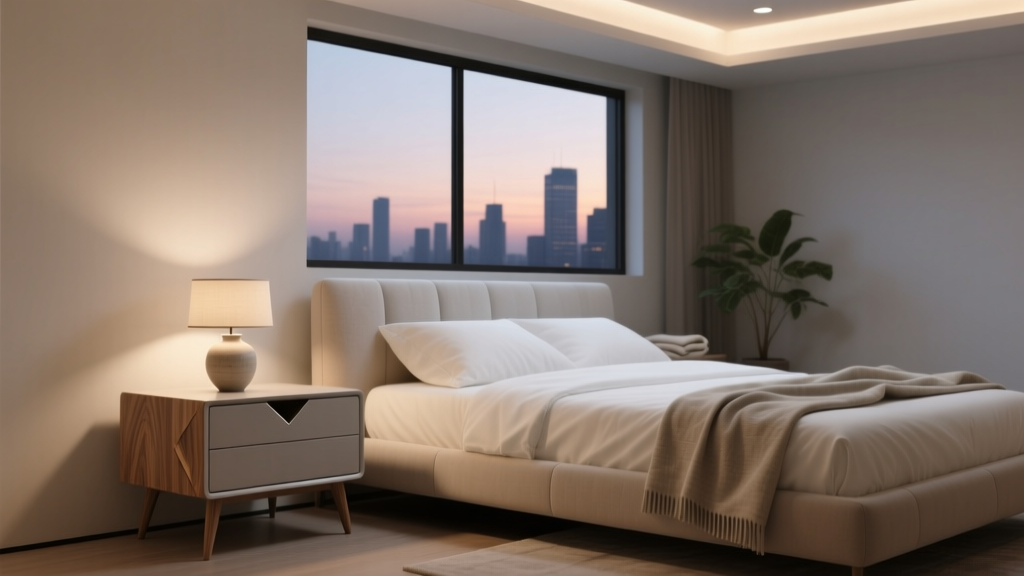
How to Choose Bedroom Nightstand Height - The Decor Mag
A bedroom designed for rest is built on small decisions that quietly support your body’s rhythms. One of the most overlooked: nightstand height. When your phone, water, book, lamp, and glasses are within easy reach, your brain reads the space as safe, settled, and ready for sleep. When you’re stretching, twisting, or fumbling for essentials, your nervous system stays a little more alert than it needs to be.
Nightstand height also affects lighting comfort (glare vs. glow), bedtime routines (reading, skincare, journaling), and overall bedroom flow. A nightstand that aligns well with your mattress height reduces strain on shoulders and wrists and helps you keep a calm, uncluttered sleep environment—two things that often translate into better sleep quality.
Below, you’ll find practical, room-by-room guidance to choose the right nightstand height, along with design recommendations, wellness tips, budget ranges, and common mistakes to avoid.
Why Nightstand Height Matters for Bedroom Comfort and Sleep
The best bedroom decor choices do more than look good—they remove friction from your routine. Your nightstand is the “landing zone” that supports:
- Ease of reach: You can grab water, tissues, a book, or an eye mask without sitting up fully.
- Better lighting control: A properly scaled lamp reduces harsh light in your eyes and helps you wind down.
- Less clutter: A nightstand that fits your needs prevents piles that can feel visually stressful at bedtime.
- Body-friendly movement: Less twisting and reaching can reduce neck/shoulder tension—helpful if you wake at night.
These details shape your sleep environment: a room that feels easy to use tends to feel more restful.
The Ideal Nightstand Height: The Simple Rule (and When to Break It)
Start with mattress height, not the bed frame
For most bedrooms, a nightstand should sit level with the top of your mattress or up to 1–2 inches (2.5–5 cm) higher. This puts your essentials at a natural, relaxed arm height.
Quick guideline:
- Best range: Nightstand top = mattress top to 2 inches higher
- Acceptable range: Up to 2 inches lower if you prefer a lower profile look and don’t use a tall lamp
Why slightly higher often feels better
A nightstand that’s slightly higher is often more comfortable for:
- Reaching for items without leaning forward
- Using a lamp switch easily
- Keeping a drink safer from tipping
When a lower nightstand makes sense
Lower nightstands can work well if you have:
- A low platform bed and want a minimalist, grounded look
- Wall-mounted sconces (so lamp height is less of a factor)
- A small bedroom where visual openness matters
How to Measure Nightstand Height (Step-by-Step)
- Measure your mattress height: From the floor to the top of the mattress. Include toppers if you use one.
- Sit on the bed as you would at night: Notice where your hand naturally falls beside you.
- Match the nightstand top to that level: Aim for mattress height to 2 inches higher.
- Factor in your lamp and shade: The nightstand and lamp work as a pair; more on that below.
Common mattress heights (approximate):
- Low platform beds: 18–22 inches
- Standard beds: 23–26 inches
- Tall beds/pillow-top setups: 27–30+ inches
If your mattress height is 26 inches, a nightstand around 26–28 inches will typically feel right.
Nightstand Height + Lamp Height: The Combo That Protects Your Wind-Down
Lighting is one of the strongest signals to your brain that bedtime is near. The wrong lamp height can create glare, harsh shadows, and a “too-bright” feeling that interrupts relaxation.
Best lamp placement for reading and ambiance
- When seated in bed, the bottom of the lampshade should sit around eye level or slightly below to reduce glare.
- For most beds, a table lamp 24–30 inches tall works well with a 24–28 inch nightstand.
Sleep-friendly lighting tips
- Choose warm bulbs (2200K–2700K) for a calming bedroom atmosphere.
- Use dimmable bulbs or a 3-way lamp to keep light low during the evening.
- Prefer fabric or linen shades for softer diffusion.
- If you wake at night, add a motion-sensor night light or a low amber plug-in light to avoid turning on bright overheads.
If your ideal nightstand height forces an awkward lamp setup, consider swapping the lamp style (taller base, different shade) or installing a wall sconce to free up surface space.
Choosing Nightstand Height for Different Bed Styles
Platform beds and modern low profiles
Low beds look best with nightstands that don’t tower over them. Aim for:
- Nightstand height: 18–24 inches (depending on mattress height)
- Great pairings: Floating nightstands, low wood cubes, slim metal frames
Upholstered beds and tall mattresses
Plush mattresses and thick toppers often push your ideal height higher than most “standard” nightstands.
- Nightstand height: 26–30 inches
- Great pairings: Drawer nightstands with deeper storage, sturdy hardwood pieces
Canopy beds and statement headboards
When the bed is visually dominant, nightstands that are too low can look lost.
- Choose a height that’s practical first, then add presence with a taller lamp or vertical decor (a vase, small art lean).
Nightstand Height in Small Bedrooms (Layout Tips That Feel Calmer)
In compact spaces, nightstand height is only half the story—width and clearance matter just as much for a peaceful bedroom layout.
Space-saving options that still support sleep
- Wall-mounted/floating nightstands: Visually light, easy to clean under, great for narrow walkways.
- Nightstand shelves: Best if you keep bedside items minimal.
- Narrow pedestal tables: Useful when you only need a surface for a lamp and book.
- Storage ottoman + small tray: Works in a pinch, but avoid soft surfaces for drinks.
Clearance guidelines for better flow
- Try to keep 24–30 inches of walkway clearance beside the bed when possible.
- If you have less, choose a slimmer nightstand rather than lowering height too much.
What to Put on Your Nightstand for a Better Sleep Environment
A calm nightstand setup supports a calm mind. The goal is a bedroom surface that feels intentional, not crowded.
A sleep-friendly bedside “starter kit”
- Warm, dimmable light: Table lamp or wall sconce
- Small tray: Corral items (lip balm, rings, earplugs) to reduce visual clutter
- Carafe or lidded water cup: Less spill risk, fewer nighttime disruptions
- Book or journal: A low-stimulation wind-down alternative to scrolling
- Charging setup (ideally hidden): Cable management box or rear-cord cutout
Wellness tip: create a “phone boundary”
If you use your phone as an alarm, place it in a drawer or on a lower shelf to reduce blue-light temptation. Better yet, use a small analog clock or sunrise alarm clock and charge your phone across the room.
Materials and Styles That Feel Good at Bedtime
Your nightstand is something you touch daily. Choose materials that feel stable, soothing, and easy to maintain.
Best nightstand materials for bedrooms
- Solid wood (oak, walnut, maple): Warm, durable, timeless; great for cozy bedroom decor.
- Wood veneer: Budget-friendly; look for quality edging and sturdy drawer slides.
- Metal frames: Airy and modern; pair with a wood top to soften the look.
- Upholstered or leather-wrapped: Soft and quiet (no clinking), but needs more care.
- Stone or marble tops: Elegant and cool to the touch; use coasters to protect from rings and stains.
Colors that support a restful bedroom palette
- Soft neutrals: Warm white, oatmeal, taupe
- Muted nature tones: Sage, clay, dusty blue
- Deep calming shades: Charcoal, navy, forest green (especially in larger rooms)
If you’re working with a rental bedroom, consider a nightstand in a warm wood tone to add comfort without painting walls.
Budget Ranges: What to Expect at Different Price Points
- $50–$150: Basic veneer or metal-frame nightstands; best for minimal use. Look for stable legs and smooth drawer movement.
- $150–$350: Strong value zone—better finishes, soft-close hardware, more durable construction.
- $350–$800: Solid wood options, premium veneers, design-forward silhouettes, higher-quality hardware.
- $800+: Heirloom solid wood, custom pieces, luxury materials (stone tops, leather wrap), artisan craftsmanship.
If your budget is tight, prioritize correct height and stability first. You can elevate the look with a better lamp, a tray, and intentional styling.
Common Nightstand Height Mistakes to Avoid
- Choosing based on looks alone: A nightstand that photographs well but sits 4–6 inches off your mattress height becomes annoying fast.
- Forgetting the mattress topper: Even 2–3 inches of topper can throw off your ideal reach zone.
- Pairing a tall bed with a tiny nightstand: It often looks underscaled and feels impractical for lamps.
- Ignoring lamp glare: If the bulb is visible from bed, it’s too bright or the shade height is wrong.
- Overstuffing the surface: Clutter can increase stress and make your sleep environment feel less restful.
- Not considering drawer access: If the bed frame blocks drawers from opening fully, storage becomes unusable.
FAQ: Bedroom Nightstand Height
How tall should a nightstand be compared to the bed?
Most people prefer a nightstand that’s level with the top of the mattress or up to 1–2 inches taller. This makes it easy to reach items without straining and supports a comfortable bedtime routine.
Is it okay if my nightstand is lower than my mattress?
Yes, if it’s only slightly lower (about 1–2 inches) and you don’t rely on a tall table lamp. If it’s much lower, it can be inconvenient and may require awkward reaching—especially at night.
What if my bed is very tall and I can’t find a nightstand high enough?
Look for 28–32 inch “tall nightstands,” small bedside chests, or compact dressers. You can also raise a shorter nightstand with furniture risers (choose sturdy, non-slip versions), though a properly scaled piece usually looks and feels better.
Should both nightstands be the same height?
They’ll look most cohesive when they’re the same height, but it’s not required. In shared bedrooms, it can be more comfortable to tailor each side to the sleeper’s needs (especially if one side uses a different lamp or storage setup).
Can I use a side table instead of a nightstand?
Absolutely. A side table works well if it matches your ideal height and has enough surface space for essentials. If you need storage, choose a table with a shelf or add a small basket underneath to keep the bedroom clutter-free.
How do I choose nightstand height if I’m using wall sconces?
If lighting is handled by sconces, you can prioritize reach and aesthetics. Aim for mattress height to slightly above, and make sure the surface is large enough for what you actually use at night (water, book, glasses, and a tray).
Actionable Next Steps for a Better Bedside Setup
- Measure your mattress height (include topper) and write down the number.
- Choose a nightstand that lands at mattress height to 2 inches higher.
- Pair it with warm, dimmable lighting to support your wind-down routine.
- Edit your nightstand surface to the essentials, using a tray to keep it visually calm.
- Fine-tune the layout so you have comfortable clearance and easy drawer access.
Your bedroom should make rest feel natural, and the right nightstand height is one of those subtle design upgrades that improves daily comfort. For more calming bedroom design ideas, sleep-friendly lighting tips, and decor guides, explore the latest at thedecormag.com.
More Articles
 Best Bedroom Perfume Collection Display - The Decor Mag
 Best Bedroom Throw Pillow Combinations - The Decor Mag
 Best Bedroom Sound Machine Placement - The Decor Mag
 Bedroom Textured Wallpaper Ideas - The Decor Mag
 Small Bedroom Layout Hacks for Apartments (2026)
 Bedroom Cane Webbing Headboard Ideas - The Decor Mag
 How to Choose Bedroom Euro Sham Size - The Decor Mag
 Bedroom Woven Pendant Light Ideas - The Decor Mag
 How to Style a Bedroom Around a View - The Decor Mag
 Scheme Kitchen Design Essentials: Precision, Proportion, and Purpose-Built Functionality