Bedroom Textured Plaster Headboard Wall - The Decor Mag
A bedroom should feel like a soft exhale at the end of the day. When the space is visually noisy or overly bright, your nervous system stays a little too “on,” making it harder to unwind. One of the most effective ways to create a calm, sleep-supportive atmosphere is to treat the wall behind your bed as a grounding focal point—something that signals rest the moment you walk in.
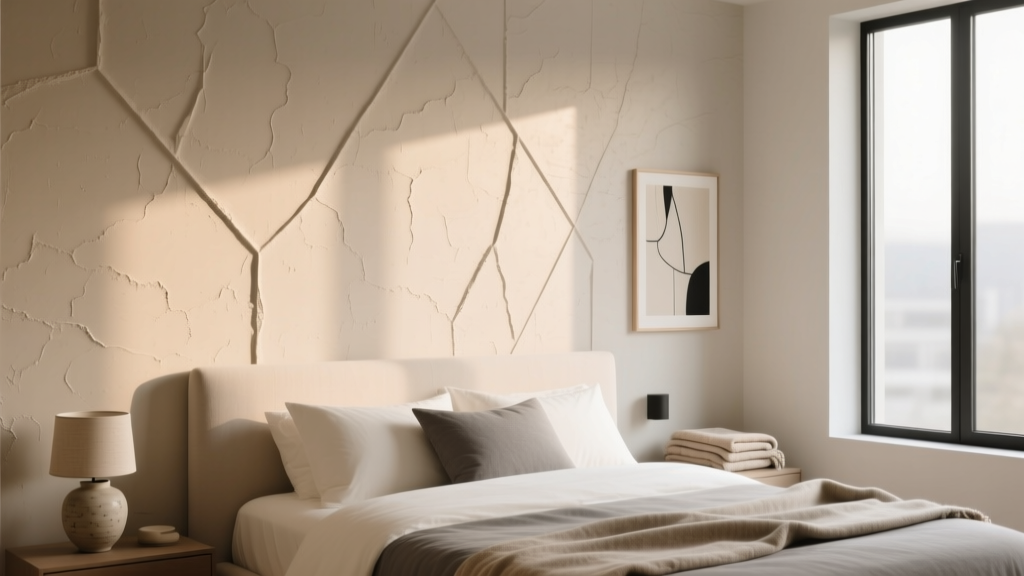
A textured plaster headboard wall does exactly that. It adds depth without clutter, warmth without heavy pattern, and a boutique-hotel sense of intention without needing a bulky headboard or a full-room renovation. The gentle, matte texture also plays beautifully with low, warm lighting—an underrated factor in supporting melatonin and easing the transition into sleep.
Whether you’re a homeowner ready for a weekend project or a renter looking for a removable approach, a plaster-look headboard wall can upgrade your bedroom design and improve your sleep environment by making the room feel quieter, softer, and more settled.
Why a Textured Plaster Headboard Wall Helps Your Sleep Environment
Good bedroom design isn’t only about style; it’s about how the room makes your body feel. Texture affects perception—matte, organic finishes tend to read as calmer than glossy, high-contrast surfaces. A plaster headboard wall can support sleep quality in a few practical ways:
- Reduces visual “sharpness”: Soft texture diffuses light and makes the wall feel less stark than flat paint.
- Creates a stable focal point: A defined bed zone makes the room feel orderly, which can reduce bedtime restlessness.
- Encourages warmer lighting: Plaster finishes look best under warm, low light—exactly what you want for evening wind-down.
- Minimizes clutter: When the wall is the feature, you can simplify art and accessories, helping the space feel more restful.
Choosing the Right Plaster Look: Materials and Options
1) Traditional Plaster (Lime or Venetian Plaster)
For homeowners or long-term renovations, lime plaster and Venetian plaster offer a timeless, breathable finish with subtle movement. Lime plaster can also help regulate moisture, which may support comfort in humid climates.
- Best for: Long-term upgrades, high-end finishes, humidity-prone bedrooms
- Typical budget: $8–$25 per sq. ft. installed (varies widely by region and artisan)
- Look: Smooth-to-cloudy depth, softly reflective (Venetian can be more polished)
2) Acrylic/Polymer-Modified Plaster or Tadelakt-Style Finishes
Modern plaster systems are more forgiving and crack-resistant, making them popular for DIY or mid-range projects. You still get that organic, hand-troweled feel without the same learning curve as traditional lime.
- Best for: DIYers, mid-budget projects, walls with minor imperfections
- Typical budget: $2–$6 per sq. ft. DIY materials; $6–$15 per sq. ft. installed
- Look: Matte, lightly textured, earthy
3) Textured Paint Techniques (Budget-Friendly “Plaster Effect”)
If you want the mood without the mess, there are paint-and-compound methods (joint compound skim coat, sand swirl, or specialty “suede” paints) that mimic plaster.
- Best for: Tight budgets, quick makeovers, first-time DIY
- Typical budget: $50–$200 in materials for a headboard wall (depends on wall size)
- Look: Subtle texture and softness, less depth than true plaster
4) Renter-Friendly Alternatives: Removable Panels and Wallpaper
Renters can still get the textured plaster headboard wall look using peel-and-stick plaster-effect wallpaper or lightweight textured wall panels designed for temporary installation (check removal instructions carefully).
- Best for: Rentals, dorms, short-term refreshes
- Typical budget: $60–$300 for wallpaper; $200–$800 for panels depending on coverage
- Look: Convincing from a few feet away, especially in warm light
Designing the Headboard Wall: Color, Texture Level, and Scale
Sleep-Friendly Color Ideas (Calm, Low-Contrast Palettes)
For a relaxing bedroom, aim for colors that feel grounded and muted rather than icy or high-contrast. Textured plaster looks best when the color is a quiet neutral or a softened earth tone.
- Warm off-white: Cream, almond, ivory (cozy and bright without glare)
- Greige and mushroom: A balanced neutral that pairs with wood and linen
- Soft clay or blush-beige: Warmth without feeling “pink”
- Sage or olive-gray: Restful, nature-inspired, great with light oak
- Sand and putty: Subtle, hotel-like, easy to style
Avoid: Stark pure white (can feel harsh at night), super-saturated colors, and high-gloss finishes that bounce light into your eyes.
How Much Texture Is Too Much?
The goal is tactile calm, not visual drama. For sleep-friendly bedroom decor, choose:
- Fine to medium texture for small bedrooms (keeps the wall soft, not busy)
- Medium texture for larger rooms (adds depth and warmth)
- Skip heavy peaks or deep grooves if you’re sensitive to visual stimulation or you prefer minimalist bedroom design
Ideal Coverage: Whole Wall vs. Headboard-Width “Panel”
You have two common layout options:
- Full headboard wall (entire wall behind the bed): Best for creating a true sanctuary feel. It visually anchors the bed and reduces the need for extra decor.
- Plaster “panel” behind the bed: A rectangle or arch shape that frames the bed. Great for rentals (using wallpaper) or if you want to keep the rest of the room light and simple.
Furniture, Bedding, and Layout Recommendations That Pair Well with Plaster
Bed and Headboard Choices
A textured plaster headboard wall can replace a traditional headboard, but you can also layer one for added comfort.
- Headboard-free look: Choose a substantial bed frame (upholstered or wood) so the bed doesn’t feel unfinished.
- Low-profile upholstered headboard: Linen, cotton, or performance fabric in oatmeal, taupe, or soft gray for a cozy, sound-absorbing feel.
- Wood headboard: Light oak, ash, or walnut brings warmth and contrast without harshness.
Budget ranges:
- Bed frame: $250–$700 (budget), $800–$2,000 (mid-range), $2,500+ (investment)
- Upholstered headboard: $150–$500 (budget), $600–$1,500 (mid-range)
Bedding Materials for Comfort and Temperature Regulation
The wall sets the mood; bedding determines how you sleep. Pair the organic look of plaster with breathable, natural fibers that support temperature balance.
- Sheets: Cotton percale (cool and crisp) or linen (airy and textured)
- Duvet insert: Down alternative for easy care, or wool for excellent temperature regulation
- Cover: Linen duvet cover or washed cotton for a relaxed, matte finish
- Throw: Light wool or cotton knit at the foot of the bed (cozy without overheating)
Budget ranges:
- Sheet set: $50–$120 (budget), $130–$250 (mid-range), $300+ (luxury)
- Duvet insert: $60–$150 (budget), $160–$350 (mid-range), $400+ (premium)
Nightstands and Styling (Keep It Quiet)
Textured plaster already provides visual interest. Keep surfaces simple to support a calmer sleep environment.
- Nightstands: Closed-drawer styles reduce visual clutter; look for rounded edges for a softer feel.
- Materials: Light wood, cane, matte-painted wood, or stone-look tops.
- On top: Lamp, book, water, and a small catchall tray. That’s enough.
Layout Tips for Better Rest
- Center the bed on the plaster wall for symmetry and ease (especially helpful for anxious sleepers).
- Leave breathing room on both sides if possible—at least 18–24 inches for comfortable movement.
- Keep a clear path from bed to door and bed to bathroom; fewer obstacles reduce nighttime stress.
Lighting: Make the Texture Glow (Without Disrupting Sleep)
Lighting can either soften a plaster wall into a warm cocoon or make it feel flat and clinical. For sleep-friendly bedroom lighting, think warm, dimmable, and layered.
Best Lighting Types for a Plaster Headboard Wall
- Plug-in wall sconces: Great for renters; frees nightstand space and creates gentle side-light that highlights texture.
- Table lamps with fabric shades: Diffuse light softly, ideal for winding down.
- Picture light above a plaster “panel”: If you add art, a small warm picture light can create a calm focal glow.
Bulb Recommendations (Sleep Support)
- Color temperature: 2200K–2700K for evening (warm and soothing)
- Dimming: Use dimmable bulbs and a dimmer switch or smart dimmer plug
- Shades: Linen or parchment tones reduce glare and harsh shadows
Tip: Keep brighter, cooler light (if needed) limited to daytime tasks, and avoid it for the last hour before sleep to protect circadian rhythm.
Wellness Tips: Making the Bedroom Feel Like a Sanctuary
- Sound softness: Add a wool rug or thick underlay to absorb noise—especially helpful if your plaster wall is paired with hardwood floors.
- Air quality: Choose low-VOC plaster/paint and ventilate well during installation. Consider an air purifier if you’re sensitive to dust.
- Clutter boundaries: Let the textured headboard wall be the statement, and keep the rest of the room visually calm.
- Evening routine cue: Use the wall as a “sleep anchor”—dim lights, close curtains, and keep the bed area reserved for sleep and reading.
Common Mistakes to Avoid
- Going too high-contrast: Bright white plaster next to dark bedding can feel dramatic rather than restful. Choose softer transitions.
- Over-decorating the wall: Too many frames or shelves compete with texture and increase visual stimulation.
- Ignoring lighting direction: Overhead-only lighting flattens texture and can feel harsh. Add side lighting for a gentle glow.
- Skipping surface prep: Plaster highlights uneven walls. Fill major holes, sand rough patches, and prime as recommended for your product.
- Using glossy sealers: Shine reflects light into the room and can look busy. Stick to matte or soft-matte finishes unless a wet-area sealer is required.
- Choosing a trend color you’ll tire of: The wall is a big visual anchor; neutral, nature-based tones age more gracefully.
FAQ: Bedroom Textured Plaster Headboard Walls
Is a textured plaster headboard wall suitable for small bedrooms?
Yes. Choose a fine-to-medium texture and a light, warm neutral (like creamy off-white or soft greige). It adds depth without making the room feel smaller, especially when paired with warm, diffused lighting.
Can renters get the plaster look without damaging walls?
Many renters use peel-and-stick plaster-effect wallpaper or removable panels. Test a small area first, follow removal instructions, and avoid applying to fragile or poorly painted surfaces.
What’s the easiest DIY method for a plaster-look wall?
A joint-compound skim coat with a gentle trowel texture, then painted in a matte finish, is one of the most budget-friendly DIY options. It creates softness and movement without specialized plaster materials.
What colors work best with a plaster headboard wall for sleep?
Warm whites, mushroom, greige, sand, sage-gray, and soft clay tones. These hues tend to feel grounding and reduce visual intensity, which can support relaxation and sleep quality.
How do I decorate the wall without ruining the calm look?
Keep it simple: one large piece of art, a subtle textile, or nothing at all. If you add art, use warm lighting and avoid high-contrast, busy prints.
Does texture affect acoustics in the bedroom?
Light wall texture alone won’t soundproof a room, but a calmer, layered bedroom design can reduce echo. Pair the wall with fabric elements—curtains, a rug, upholstered headboard, and bedding—to soften sound.
Next Steps: A Calm Plan You Can Start This Weekend
- Choose your approach: true plaster, modern plaster, textured paint technique, or renter-friendly wallpaper/panels.
- Pick a sleep-friendly color: warm neutral or muted earth tone that complements your bedding.
- Upgrade lighting: add two warm, dimmable bedside lights (sconces or lamps) to make the texture glow.
- Simplify styling: reduce wall decor and nightstand clutter so the bed area feels quiet and intentional.
- Support comfort: choose breathable bedding and a rug/curtains to soften sound and increase coziness.
A textured plaster headboard wall is one of those rare bedroom upgrades that looks beautiful in daylight and feels even better at night—calmer, warmer, and more supportive of real rest.
For more soothing bedroom ideas, smart sleep environment upgrades, and decor inspiration that works for real life, explore the latest guides on thedecormag.com.
More Articles
 How to Style a Bedroom Around a View - The Decor Mag
 Stylish Bedroom Design for Hot Summers
 Best Bedroom Nighttime Routine Essentials - The Decor Mag
 Bedroom Window Seat Design Ideas - The Decor Mag
 Best Bedroom Sunglasses Organization - The Decor Mag
 How to Choose Bedroom Mattress Firmness - The Decor Mag
 Best Bedroom Valet Stand Options - The Decor Mag
 Best Bedroom Bedside Hydration Station - The Decor Mag
 How to Style a Bedroom with Dark Walls - The Decor Mag
 Bedroom Natural Stone Nightstand Top - The Decor Mag